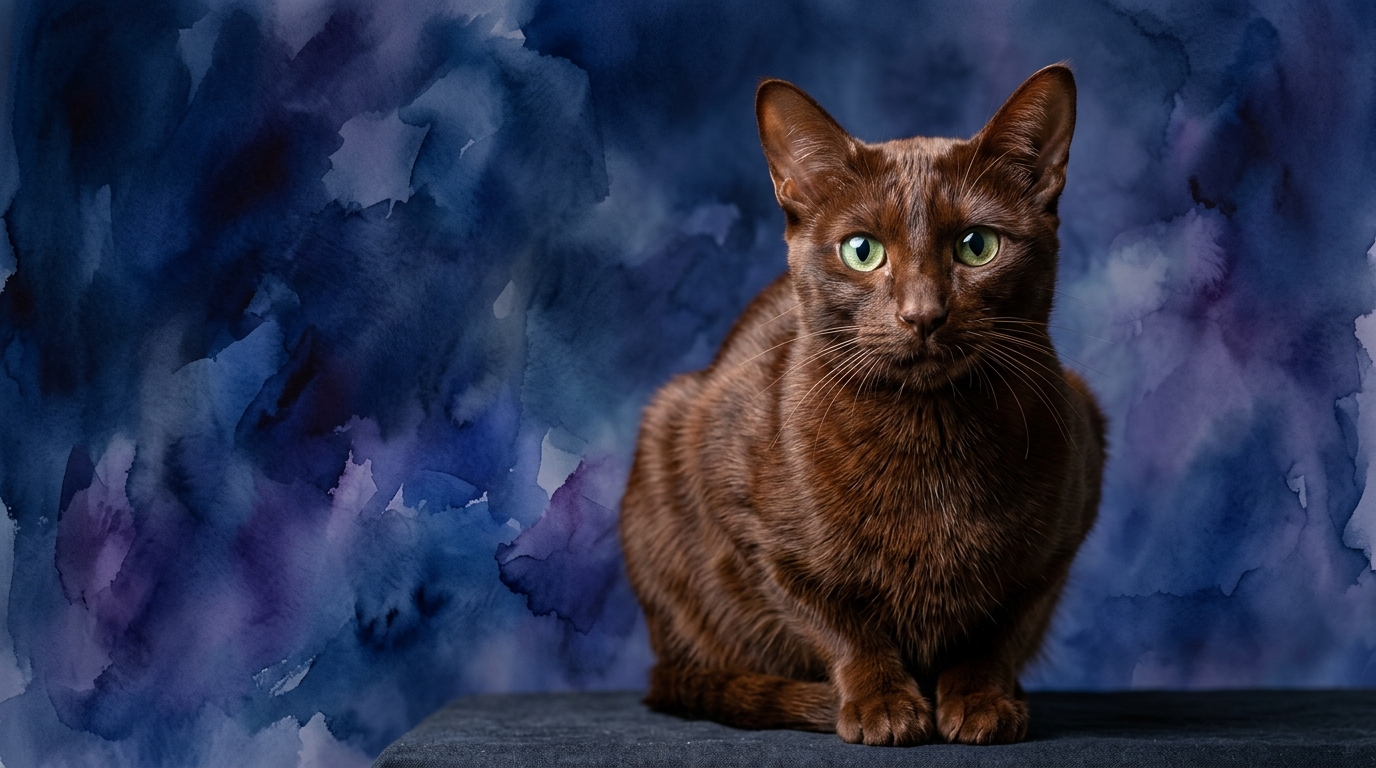
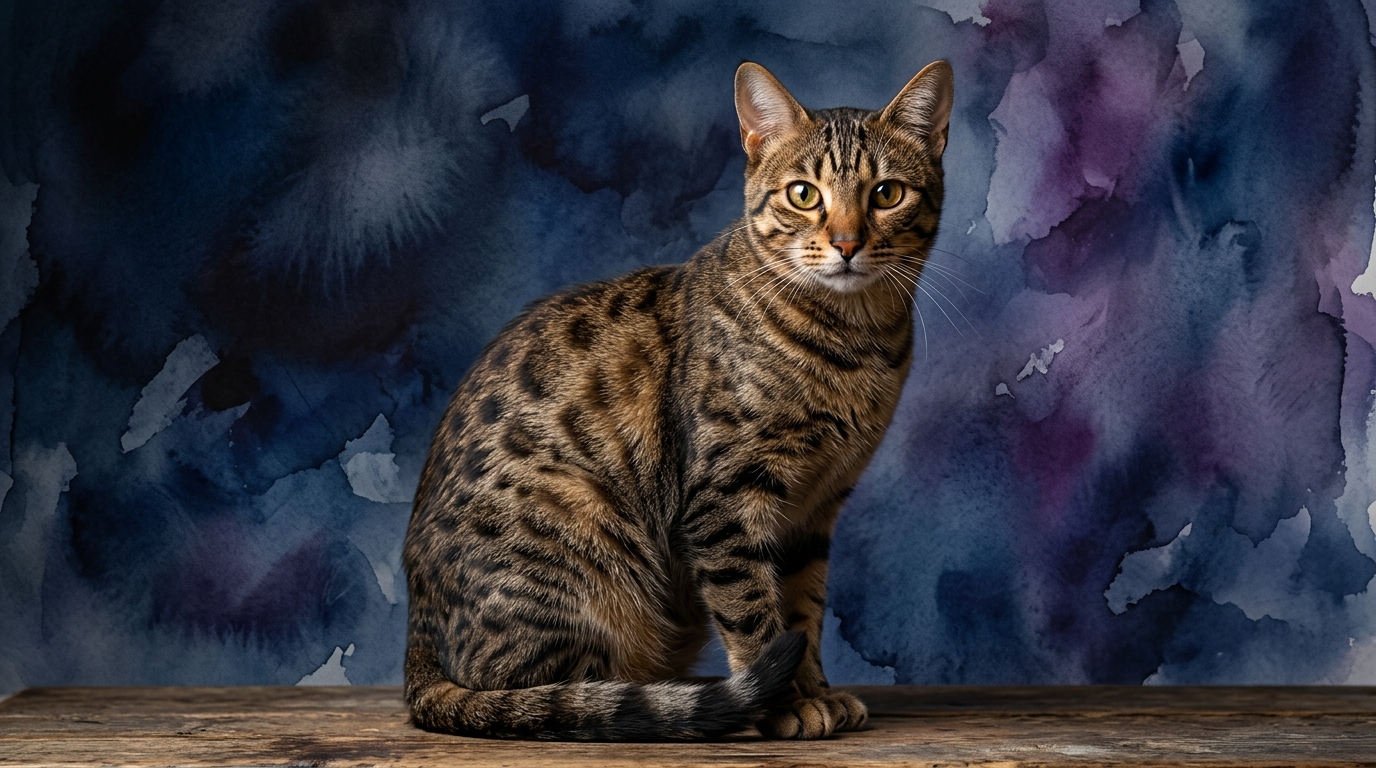
Side-by-Side Cognitive Profiles
At The Cosmic Pet Pet IQ Lab, we evaluate feline intelligence across five key dimensions, providing a granular view of each breed's unique mental landscape. For both the Havana Brown and the Egyptian Mau, our assessments reveal consistent scores of 3 out of 5 across all categories, indicating a balanced and capable cognitive foundation. However, the *expression* of these scores differs significantly, reflecting their distinct breed characteristics and evolutionary paths.
The Havana Brown’s Problem Solving ability (3/5) manifests as a thoughtful, analytical approach. These cats often observe situations before acting, preferring to understand the process rather than immediately jumping to a solution. They excel at figuring out routines and the mechanics of their familiar environment, such as how to access a favorite treat cupboard through observation and methodical attempts. Their solutions are often patient and well-considered.
In contrast, the Egyptian Mau’s Problem Solving (3/5) is characterized by a more practical, often physically adept methodology. Maus are keen manipulators of their environment, quickly finding efficient ways to overcome obstacles like opening doors or reaching high shelves. Their solutions are typically direct and results-oriented, driven by a strong curiosity and an innate understanding of spatial relationships.
When it comes to Training Speed, the Havana Brown (3/5) learns new commands and routines at a steady, reliable pace. They thrive on consistent, gentle reinforcement and a calm learning atmosphere, absorbing information deeply over time. Their learning is often reinforced by the desire to maintain a harmonious relationship with their human companions.
The Egyptian Mau’s Training Speed (3/5) is also commendable, particularly when training sessions are engaging and incorporate elements of play or physical challenge. They respond well to varied, stimulating activities that capture their attention and leverage their natural athleticism, often learning tricks quickly when motivated by interactive rewards.
Social Intelligence in the Havana Brown (3/5) involves forming deep, affectionate bonds with their human family. They display a nuanced understanding of emotional cues and household dynamics, generally adapting well to various social situations. Once trust is established, they are comfortable interacting with a wider circle of people, though their deepest connections remain with their primary caregivers.
The Egyptian Mau’s Social Intelligence (3/5) is marked by profound loyalty and strong attachments to a select few individuals. While often reserved or even shy with strangers, they exhibit an intensely communicative and responsive nature within their chosen inner circle. Their social understanding is sharp and specific, making them incredibly attuned to the moods and habits of their closest companions.
The Havana Brown’s Instinctive Drive (3/5) is balanced, enjoying interactive play that simulates hunting without becoming overly obsessive. Their curiosity often manifests as exploration of their immediate environment and playful engagement with toys, rather than intense, relentless pursuit. They appreciate games that involve moderate physical activity and mental engagement.
Conversely, the Egyptian Mau possesses a robust Instinctive Drive (3/5), reflected in their impressive agility, speed, and keen observation skills. They thrive on vigorous play that allows them to stalk, chase, and pounce, channeling their natural athleticism and predatory instincts. This drive often translates into a need for ample physical and mental stimulation.
Finally, the Havana Brown’s Memory (3/5) allows them to retain information about routines, preferred interactions, and the layout of their home environment with dependable accuracy. They reliably remember favored resting spots, the location of treats, and the patterns of their human companions, contributing to their sense of security and predictability.
The Egyptian Mau’s Memory (3/5) is equally sharp, particularly for environmental details, learned behaviors, and the habits of their household members. They often anticipate events based on past experiences and recall specific interactions with precision, making them highly aware of changes in their surroundings or daily schedule.
Where the Havana Brown Cognitively Excels
The Havana Brown exhibits a particular cognitive strength in their adaptable social intelligence and methodical problem-solving. While the Mau can be reserved, the Havana Brown often displays a more universally welcoming demeanor, making them adept at integrating into diverse family structures or households with frequent visitors once they've established trust. Their ability to subtly read human emotions and adapt their behavior accordingly suggests a nuanced social processing capacity.
Furthermore, their problem-solving, though not always as physically dynamic as the Mau's, shines in scenarios requiring patience and a step-by-step approach. They are less likely to become frustrated by complex, multi-stage puzzles and instead, will meticulously work through a challenge. This methodical thinking allows them to master routines and understand intricate household patterns, contributing to a calm and predictable presence in the home.
Where the Egyptian Mau Cognitively Excels
The Egyptian Mau truly excels in the practical application of its instinctive drives and a highly selective, yet profound, social intelligence. Their innate predatory instincts translate into superior environmental manipulation skills; they are often the cats figuring out how to open closed cabinets or navigate complex vertical spaces with remarkable agility and purpose. This physical problem-solving is a direct cognitive advantage, allowing them to interact with their surroundings in a highly effective manner.
Additionally, while their social circle may be smaller, the depth of their connection and understanding within that circle is exceptional. Maus are incredibly attuned to the nuances of their chosen humans, often anticipating needs or moods with uncanny accuracy. This focused social intelligence allows for a very deep, responsive bond, making them remarkably interactive and communicative with their preferred companions.
Training Ease: Havana Brown vs. Egyptian Mau
Both breeds score a 3/5 for Training Speed, but the optimal training approach differs based on their inherent behavioral traits. The Havana Brown tends to be easier to train through gentle, consistent methods that emphasize positive reinforcement and strengthen the human-feline bond. They respond well to praise and affection, and their steady learning pace ensures that once a behavior is learned, it is well-retained. Their less intense instinctive drive means they are often less distracted during training sessions, focusing intently on their human.
The Egyptian Mau, while equally capable of learning, benefits from training that incorporates their high instinctive drive and playful nature. They thrive on sessions that are dynamic, varied, and offer opportunities to engage their physical prowess, such as clicker training for agility tricks or games that simulate hunting. Motivation through interactive play or high-value treats often yields faster results with a Mau, as it taps into their natural curiosity and desire for engagement. However, their independent streak means training needs to be consistently stimulating to hold their attention.
Owner Suitability: Active vs. Relaxed Lifestyles
For owners seeking a companion that adapts gracefully to a range of lifestyles, the Havana Brown is often an excellent fit. While they enjoy interactive play and mental stimulation, they are equally content with quiet companionship and affectionate cuddles. Their balanced instinctive drive means they don't demand constant, high-intensity activity, making them suitable for individuals or families who appreciate a steady, loving presence that integrates smoothly into daily routines.
The Egyptian Mau, with its robust instinctive drive and pronounced athleticism, is ideally suited for active owners. These cats require regular outlets for physical and mental stimulation, thriving in environments where they can run, jump, climb, and engage in vigorous play. Owners who enjoy interactive games, can provide challenging puzzle toys, and perhaps even consider leash training or catio access will find their Mau to be a highly engaged and rewarding companion. They need an owner who can match their zest for activity and exploration.
The Verdict: When to Choose Each Feline
The Verdict
Choose the Havana Brown if you seek a consistently affectionate, adaptable companion with a steady learning curve and a calm, yet socially aware, demeanor. They thrive in harmonious homes valuing gentle interaction and a predictable, loving presence.
Opt for the Egyptian Mau if you appreciate a dynamic, athletically inclined cat with a strong predatory drive, and are prepared to provide ample engagement for their sharp, selective mind. They suit owners who enjoy interactive play and can meet their need for physical and mental stimulation.
🧠 Find Your Pet's IQ Score
Our Pet IQ Lab assessment covers 25+ tests across 5 cognitive dimensions — personalized to your breed.
Take the Full IQ Test →Frequently Asked Questions
Are Havana Browns typically good with children?
Havana Browns generally exhibit a patient and adaptable temperament, often making them suitable companions for respectful children. Their social intelligence allows them to understand household dynamics, and they tend to form strong bonds with family members, including younger ones, provided interactions are gentle and supervised.
Do Egyptian Maus vocalize much, or are they quiet cats?
Egyptian Maus are known for their unique vocalizations, which can range from soft chirps and chortles to a distinct 'chattering' sound, especially when excited or observing prey. While not excessively loud, they are communicative cats who use a variety of sounds to interact with their chosen humans, making them quite expressive.
What kind of environmental enrichment do these breeds need to stay cognitively stimulated?
Both breeds benefit from vertical space, scratching posts, and interactive toys. Havana Browns appreciate puzzle feeders and gentle play sessions that engage their methodical minds. Egyptian Maus, with their higher instinctive drive, thrive on vigorous chase toys, feather wands, and opportunities for climbing and 'hunting' in a safe environment, requiring more dynamic and physically challenging enrichment.