
Side-by-Side IQ Profile: Unpacking the Identical Scores
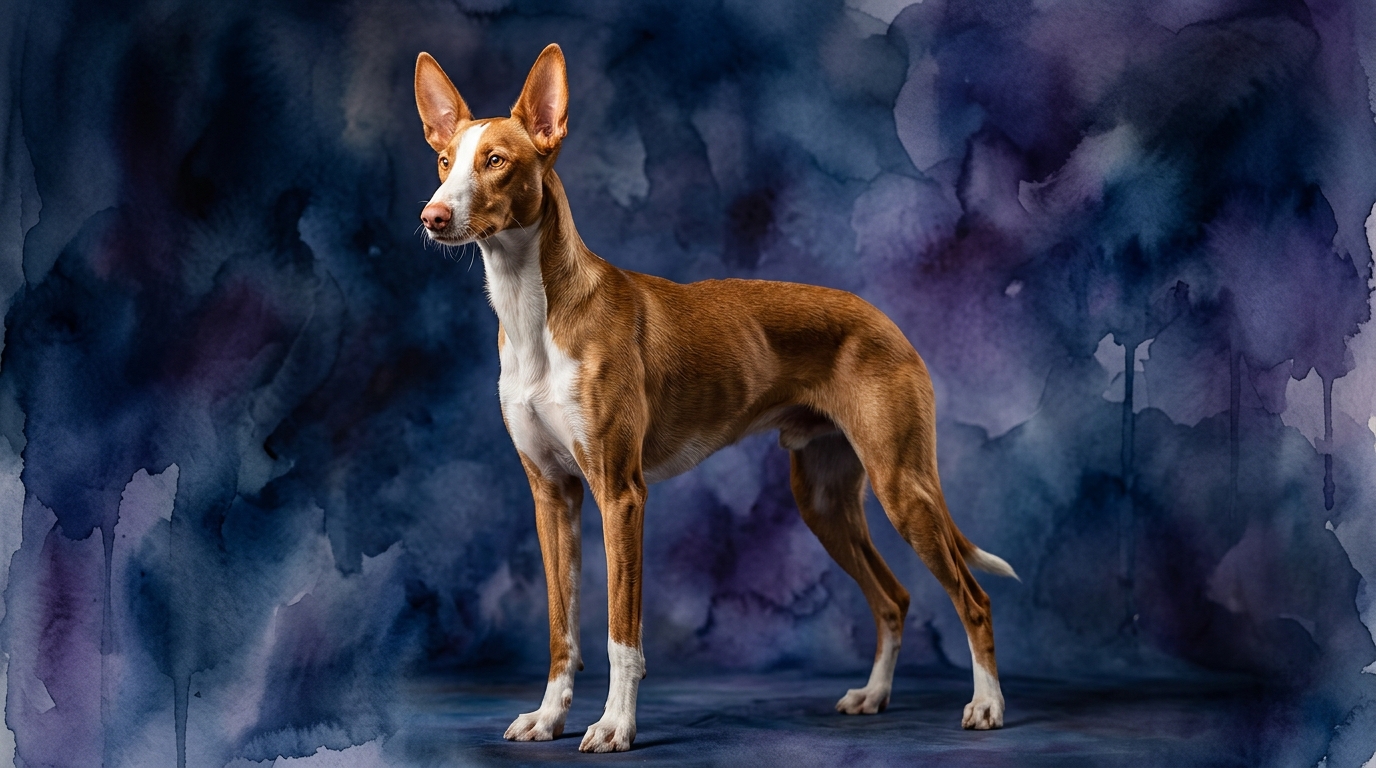
The Ibizan Hound, a sighthound originating from the Balearic Islands, stands at Coren rank #53, a respectable position among working breeds. Their Problem Solving score of 3/5 reflects an independent mind capable of strategizing during a hunt, navigating complex terrains, and making quick decisions to pursue prey, rather than relying solely on human direction. Training Speed, also at 3/5, indicates they learn commands at a moderate pace, but their innate self-reliance means consistent compliance often hinges on strong motivation and a clear understanding of purpose.
Social Intelligence at 3/5 for the Ibizan suggests a capacity to read human cues and integrate into a family unit, though they often maintain a dignified reserve, especially with strangers. Their Instinctive Drive, a solid 3/5, is profoundly shaped by their sighthound heritage, manifesting as a powerful urge to chase and an acute visual awareness of movement. Finally, a Memory score of 3/5 highlights their ability to recall hunting routes, learned commands, and established routines, contributing to their efficiency in their traditional roles.
The Russian Toy, a delicate companion breed from Russia, is not listed on the Coren ranking, yet shares the exact same 3/5 scores across all five IQ dimensions. Their Problem Solving at 3/5 often translates into clever tactics for gaining attention, manipulating toys, or even figuring out how to access desired treats, showcasing a sharp wit within their domestic sphere. A Training Speed of 3/5 means they are generally receptive to learning, often picking up new tricks and commands with enthusiasm, though their small size and companion focus can sometimes lead to perceived “stubbornness” if not properly motivated.
Social Intelligence at 3/5 for the Russian Toy underscores their deep attunement to their human companions, often mirroring emotions and seeking close interaction, making them highly responsive to social cues within their immediate family. Their Instinctive Drive, also 3/5, manifests less as prey drive and more as a strong desire for companionship, alertness to environmental changes (often expressed through vocalization), and sometimes a protective instinct towards their owners. Lastly, their Memory at 3/5 allows them to remember routines, the location of favored people and objects, and previously learned social interactions, contributing to their adaptability as beloved household members.
Where the Ibizan Hound Excels Cognitively
The Ibizan Hound’s cognitive strengths lie deeply embedded in their ancestral purpose as agile, independent hunters. Their 3/5 in Problem Solving truly shines when faced with open spaces and the thrill of the chase; they demonstrate an impressive ability to survey terrain, anticipate prey movements, and adjust their pursuit strategy in real-time without constant human direction. This isn't about solving abstract puzzles, but about dynamic, instinct-driven decision-making in a complex, fast-moving environment.
Furthermore, their 3/5 Instinctive Drive is not merely a physical urge but a sophisticated cognitive framework for observation and execution. They possess a remarkable visual acuity and an almost preternatural ability to detect subtle movements from a distance, filtering out irrelevant stimuli to focus solely on potential quarry. This specialized sensory processing, coupled with their memory for successful hunting patterns, allows them to operate effectively as self-sufficient units, a cognitive advantage honed over centuries.
Where the Russian Toy Excels Cognitively
The Russian Toy's cognitive prowess, while matching the Ibizan's scores, manifests distinctly in their role as an attentive companion. Their 3/5 Social Intelligence is particularly acute in reading human emotions and intentions; they often seem to anticipate their owner's needs or moods, offering comfort or seeking play with uncanny timing. This sophisticated emotional radar allows for a nuanced communication within the family unit, making them exceptionally responsive and integrated household members.
Their Problem Solving at 3/5, rather than being applied to hunting, often centers on navigating the domestic landscape to achieve social goals. This can involve ingeniously positioning themselves for maximum cuddles, subtly indicating a desire for a walk, or even “training” their humans to provide treats on demand. Their memory (3/5) plays a crucial role here, enabling them to recall which behaviors elicit desired responses, creating intricate patterns of interaction that reinforce their bond with their owners.
Which is Easier to Train and Why
Despite both breeds scoring 3/5 in Training Speed, the practical experience of training them can differ considerably due to their inherent motivations and drives. The Ibizan Hound, with its strong 3/5 Instinctive Drive for chasing, can present unique challenges, particularly with recall in an open environment. Their independent problem-solving mind means they often weigh the perceived reward of chasing a squirrel against the command to “come,” and the allure of the chase frequently wins. Training requires immense patience, positive reinforcement, and a deep understanding of their sighthound nature, focusing on creating a bond where compliance is genuinely rewarding.
The Russian Toy, conversely, often thrives on positive reinforcement and engagement, with their 3/5 Social Intelligence making them keen to please their beloved human. However, their small size can sometimes lead to owners being less diligent with formal training, inadvertently allowing behaviors like excessive barking or selective hearing to develop. While they learn quickly, their attention spans can be shorter, requiring training sessions to be brief, fun, and highly motivating. House training, a common challenge for many small breeds, might also demand extra consistency and patience from Russian Toy owners.
Which Suits Active Owners vs. Relaxed Owners
For the active owner, the Ibizan Hound is an unparalleled match. Their substantial physical needs are directly tied to their cognitive profile; the 3/5 Instinctive Drive and Problem Solving in action demand vast opportunities for running, exploring, and engaging their senses in large, secure areas. These dogs thrive on vigorous exercise, not just for physical health but for mental stimulation, which prevents boredom-driven behaviors. An owner who enjoys hiking, lure coursing, or long runs will find the Ibizan Hound a willing and enthusiastic partner, capable of keeping pace and navigating varied terrains with graceful efficiency.
The Russian Toy, while certainly enjoying activity, generally suits a more relaxed or moderately active lifestyle. Their smaller stature and companion focus mean their exercise requirements are easily met with daily walks, indoor play, and interactive games. An owner who prefers cozy evenings at home, punctuated by strolls in the neighborhood or trips to dog-friendly cafes, will find the Russian Toy a perfectly content companion. Their 3/5 Social Intelligence ensures they are happy to share quiet moments, but their alertness and memory also mean they appreciate mental engagement through puzzles and short training sessions, adapting well to apartment living.
The Verdict
Choose the Ibizan Hound if you are an experienced dog owner seeking an independent, athletic companion who thrives on extensive outdoor adventures, values a dignified yet affectionate bond, and can provide ample secure space for them to express their natural sighthound instincts.
Opt for the Russian Toy if you desire a charming, highly social, and adaptable companion who flourishes in close companionship, enjoys moderate activity, and can be easily integrated into a family-oriented, often indoor-centric, lifestyle.
🧠 Find Your Pet's IQ Score
Our Pet IQ Lab assessment covers 25+ tests across 5 cognitive dimensions — personalized to your breed.
Take the Full IQ Test →Frequently Asked Questions
Are Ibizan Hounds difficult to train because of their independence?
Ibizan Hounds, while scoring 3/5 in training speed, do possess a strong independent streak and a powerful prey drive, which can make recall and off-leash training challenging. Success hinges on consistent positive reinforcement, understanding their sighthound nature, and making training sessions highly rewarding to capture their attention over distractions.
Do Russian Toys have "small dog syndrome" because of their size?
Russian Toys, with their 3/5 social intelligence and alertness, can sometimes develop behaviors associated with "small dog syndrome" if not properly socialized and trained from a young age. Consistent boundaries, early exposure to various environments, and formal training prevent them from becoming overly protective or vocal, allowing their charming personalities to shine.
How do both breeds' 3/5 instinctive drive manifest differently?
For the Ibizan Hound, their 3/5 instinctive drive is primarily expressed as an intense sighthound prey drive, leading to an urge to chase moving objects and requiring secure environments. For the Russian Toy, this 3/5 drive manifests more as a strong desire for companionship, alertness to their surroundings (often expressed through barking), and a tendency to form deep bonds with their owners.