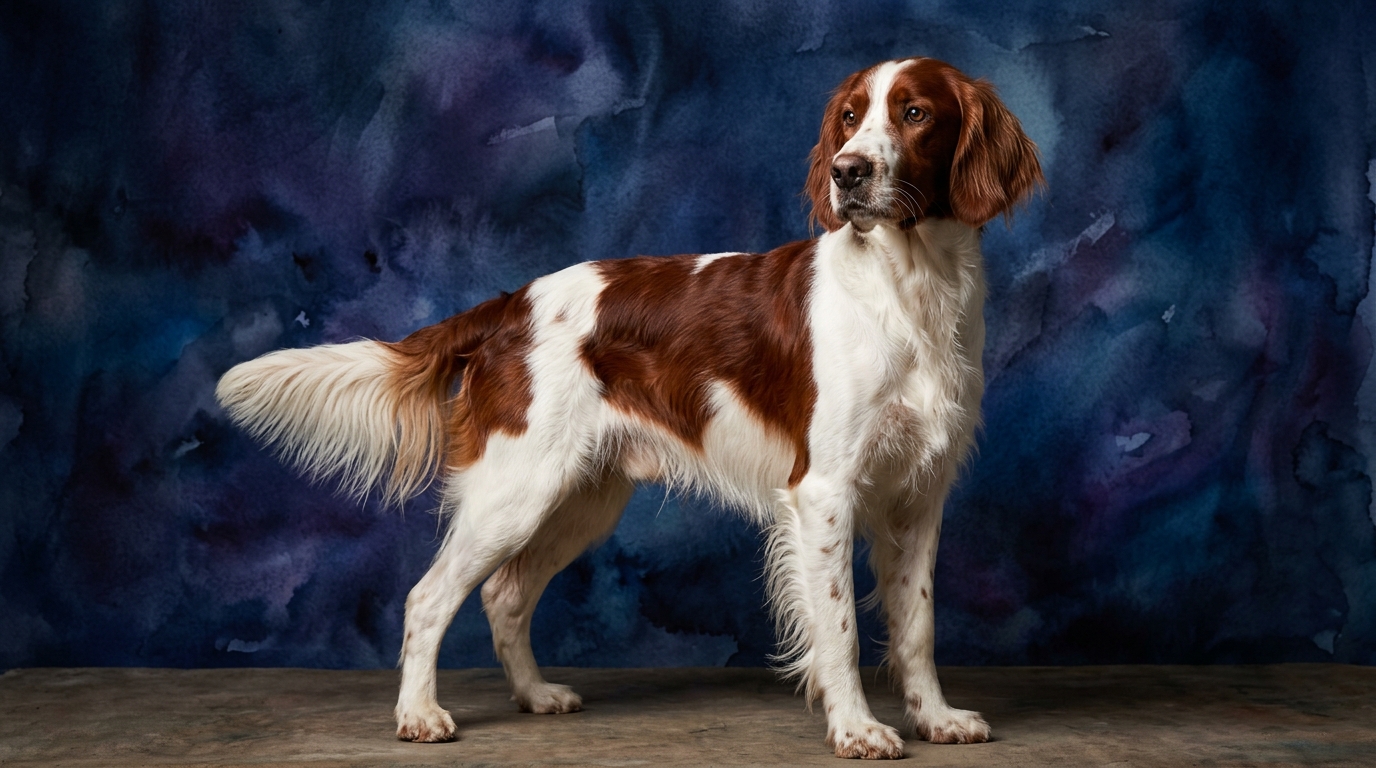
Side-by-Side IQ Profile: Irish Red and White Setter
The Irish Red and White Setter (IRWS) exhibits a Problem Solving score of 3/5, reflecting their capacity to navigate complex field scenarios to locate and 'set' game, often requiring them to interpret subtle environmental cues and work in cooperation with a handler. Their problem-solving leans towards tasks requiring keen observation and responsive decision-making within a structured hunting context.
With a Training Speed of 3/5, the IRWS demonstrates a moderate pace in acquiring new commands and behaviors. Their biddable nature and desire to please often contribute to steady progress, particularly when training methods are consistent and positive, leveraging their natural attentiveness to human direction.
Exhibiting a moderate level of Social Intelligence (3/5), the IRWS typically forms strong bonds with their human family, often displaying a keen awareness of handler moods and intentions. This manifests in their cooperative hunting style and their ability to integrate well into a family unit, albeit sometimes with a reserved initial approach to strangers.
Their Instinctive Drive (3/5) is primarily rooted in their ancestral role as bird dogs, encompassing a strong scenting ability, a natural inclination to quarter fields, and the instinct to 'set' or point game. This moderate drive is channeled towards specific hunting behaviors, making them focused and persistent when engaged in these tasks.
The IRWS possesses a moderate Memory (3/5), enabling them to recall learned commands, familiar routes, and the locations of previously encountered game. This cognitive function supports their ability to perform sequential tasks in the field and remember household routines, contributing to their reliability as working dogs and companions.
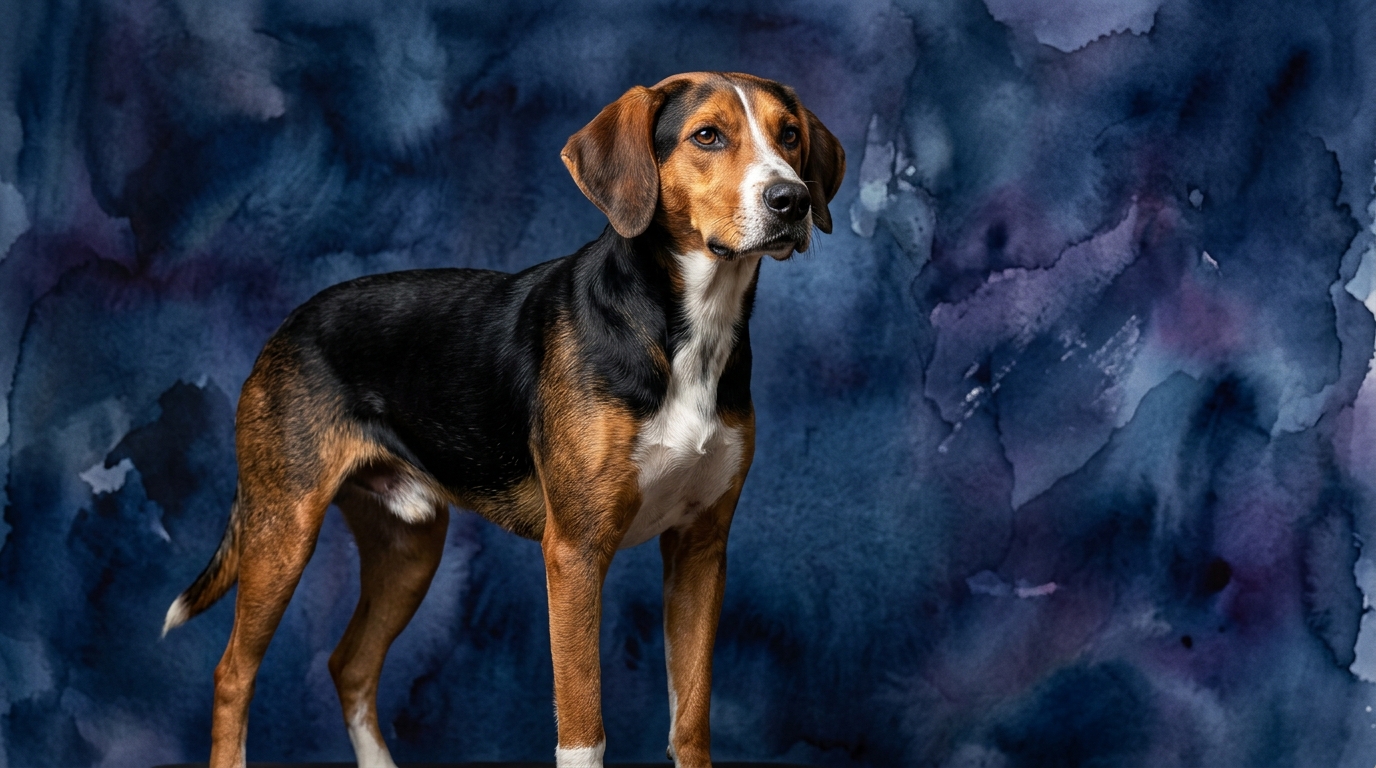
Side-by-Side IQ Profile: American Foxhound
The American Foxhound's Problem Solving aptitude, also rated 3/5, is geared towards independently unraveling complex scent trails over vast distances. They excel at deciphering environmental puzzles related to tracking, often requiring sustained focus and the ability to ignore distractions while pursuing a quarry.
While also scoring 3/5 for Training Speed, the Foxhound's learning curve can differ from the Setter's. They learn at a moderate pace, but their deep-seated independence and intense focus on scent can sometimes make traditional obedience training a nuanced endeavor, requiring patience and highly motivating rewards.
Their Social Intelligence (3/5) is often expressed within a pack dynamic, showing a nuanced understanding of canine social hierarchies and communication. While affectionate with their families, their primary social drive in a working context is often directed towards their fellow hounds and the pursuit, rather than constant handler interaction.
The Foxhound’s moderate Instinctive Drive (3/5) is powerfully channeled into their formidable scenting ability, endurance, and the relentless pursuit of game. This drive is a core component of their identity, motivating them to cover miles with unwavering determination, often with a characteristic bay that signals their progress.
Possessing a moderate Memory (3/5), the American Foxhound is adept at remembering intricate scent patterns and geographical layouts encountered during a hunt. This memory is crucial for retracing steps, recognizing established trails, and recalling the nuances of a specific quarry's scent signature, supporting their impressive tracking capabilities.
Where the Irish Red and White Setter Wins Cognitively
Despite identical scores, the Irish Red and White Setter often demonstrates a cognitive advantage in tasks requiring close collaboration and responsiveness to human direction. Their Problem Solving (3/5) is frequently applied to handler-centric challenges, where interpreting subtle cues from their human partner is paramount to success, such as quartering a field efficiently or executing complex retrieves. This contrasts with the Foxhound's more independent problem-solving.
Furthermore, their Social Intelligence (3/5) often manifests as a more immediate willingness to engage and adapt to human expectations, making them particularly adept at learning and performing tasks that require a strong partnership. Their Memory (3/5) often includes a greater retention for specific verbal commands and hand signals, crucial for precision work in the field alongside a handler, making them more predictable in structured environments.
Where the American Foxhound Wins Cognitively
The American Foxhound, while equally rated, truly excels in cognitive domains centered on sustained, independent pursuit. Their Problem Solving (3/5) is uniquely tailored to complex scent work, demonstrating an impressive ability to follow faint trails, differentiate between scents, and overcome environmental obstacles autonomously for extended periods. This is a very different application of problem-solving than the Setter's.
Their Instinctive Drive (3/5), deeply ingrained for scent tracking and endurance, is arguably more singular and intense in its focus than the Setter's. This drive fuels their relentless determination, enabling them to maintain focus on a distant scent for hours, a feat of cognitive stamina. The Foxhound's Memory (3/5) is particularly strong when it comes to recalling intricate scent patterns and the geography of vast territories, allowing them to navigate and persist in their pursuit without constant human guidance, showcasing a remarkable internal map and scent library.
Which is Easier to Train and Why
Given their respective cognitive leanings, the Irish Red and White Setter generally presents as the easier breed to train, particularly for traditional obedience and cooperative tasks. Their Training Speed (3/5) is often augmented by their higher biddability and desire to please their handler, which aligns well with standard reward-based training methods. They are typically more attuned to human communication and eager to understand what is expected of them, making the learning process smoother and more predictable.
In contrast, while the American Foxhound also has a Training Speed of 3/5, their profound independent streak and overwhelming focus on scent can make them more challenging. Their Social Intelligence (3/5), while present, is often more directed towards their pack and the hunt itself, meaning they may require more creative and highly motivating training techniques to maintain focus and override their powerful instinctive drives, often perceiving a captivating scent as far more rewarding than a command.
Which Suits Active Owners vs. Relaxed Owners
Both breeds are undeniably suited for active owners, but the nature of that activity differs significantly. The Irish Red and White Setter, while energetic, often thrives with owners who enjoy varied activities such as long walks, hiking, dog sports like agility or obedience, and field work. Their need for physical exercise is substantial, but their cooperative nature means they often enjoy being an integrated part of family adventures, and their social intelligence makes them adaptable to different environments.
Conversely, the American Foxhound is best suited for owners with an exceptionally active lifestyle, ideally those who participate in hunting, running, or can provide extensive, secure acreage for them to explore. Their relentless Instinctive Drive (3/5) for scent work and endurance means they require vast amounts of exercise and mental stimulation centered around tracking. A 'relaxed owner' is unlikely to meet the profound physical and mental demands of an American Foxhound, who will become bored and potentially destructive without appropriate outlets for their intense energy and tracking instincts.
The Verdict
Opt for an Irish Red and White Setter if you seek a cooperative, responsive companion for varied outdoor activities and dog sports, valuing a strong partnership in training and daily life.
Select an American Foxhound if you are an exceptionally active individual or hunter, prepared to accommodate a powerful independent streak and an insatiable drive for scent work and endurance.
🧠 Find Your Pet's IQ Score
Our Pet IQ Lab assessment covers 25+ tests across 5 cognitive dimensions — personalized to your breed.
Take the Full IQ Test →Frequently Asked Questions
Do their similar IQ scores mean they learn at the same pace?
While both breeds score 3/5 for Training Speed, their motivation and focus differ. The Setter is often more handler-oriented, making traditional training seem faster, whereas the Foxhound’s independence and scent drive can make training more challenging despite their learning capacity.
Which breed is better with children or other pets?
The Irish Red and White Setter often integrates well into family life, generally being patient and adaptable with children and other pets, though early socialization is always key. The American Foxhound, while affectionate with its family, is primarily driven by scent and pack dynamics, which may require more careful management around smaller pets due to their prey drive.
How do their instinctive drives manifest differently in a home environment?
The Setter's instinctive drive often manifests as a desire for structured activity, like retrieving or field work, and can be channeled into dog sports. The Foxhound's powerful scent drive means they are prone to following interesting smells, potentially wandering off or vocalizing (baying) when they pick up a trail, requiring secure containment and consistent recall training.