Side-by-Side Cognitive Profiles
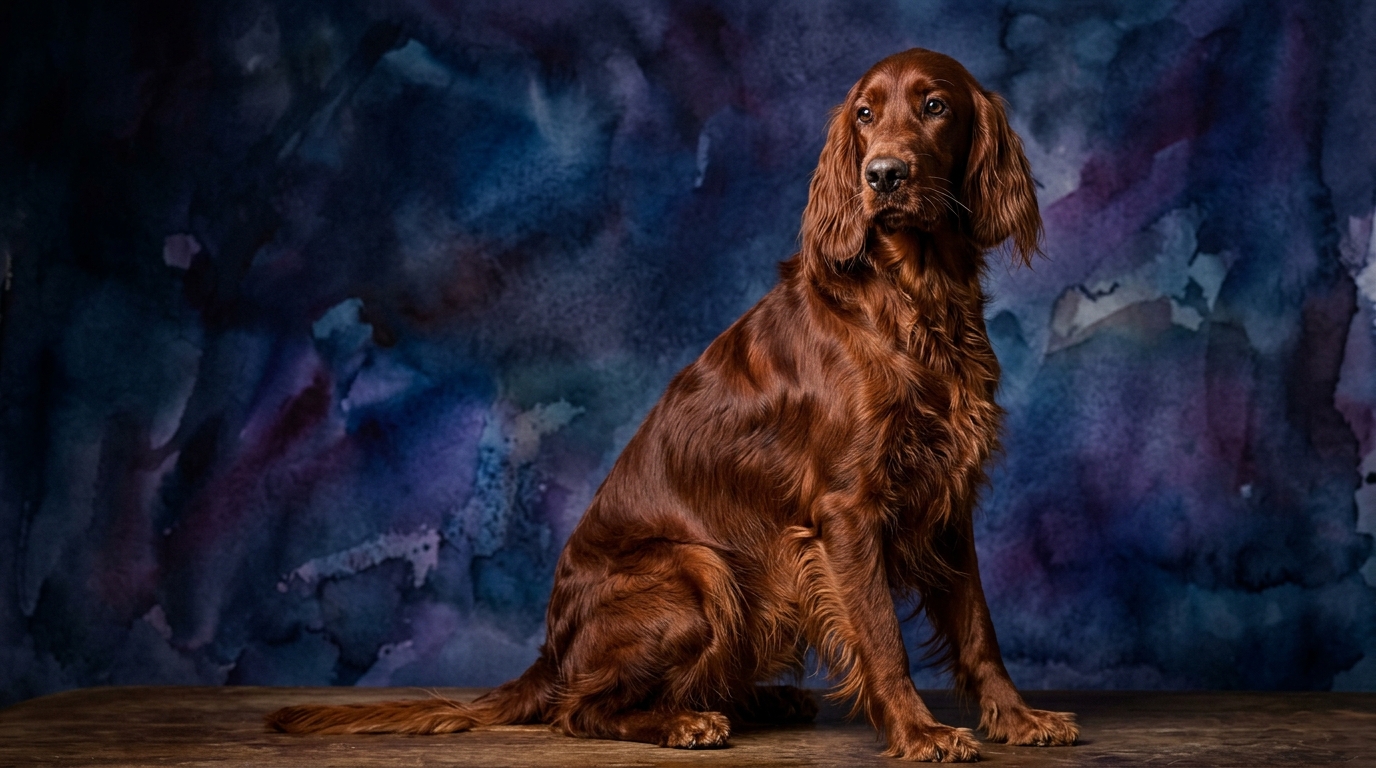
**Irish Setter (Sporting Group)**: This elegant sporting dog exhibits a cognitive makeup finely tuned for cooperative field work. **Problem Solving (4/5)** for the Irish Setter speaks to their ability to strategize in expansive outdoor environments, such as figuring out the optimal path to retrieve a downed bird across varied terrain or navigating complex scent trails. Their problem-solving often involves spatial reasoning and sustained focus over distance. **Training Speed (4/5)** indicates they absorb new commands quickly, driven by a strong desire to cooperate with their handler, which is crucial for a gun dog needing to respond to varied signals in the field. They generally enjoy structured learning and excel at retaining multi-step sequences. **Social Intelligence (3/5)** is geared towards harmonious interaction within a human family unit and polite interaction with other dogs. They are typically affable and responsive to human cues, seeking connection and approval, aiding their cooperative working role. **Instinctive Drive (3/5)** primarily focuses on their hunting instincts—scenting, pointing, and retrieving. While strong, this drive is often channeled and refined through training, making them responsive to direction rather than purely independent. **Memory (4/5)** is vital for a sporting dog, allowing Irish Setters to recall complex routes, specific commands learned months ago, and the location of hidden objects or scent markers, aiding significantly in both field work and domestic life.
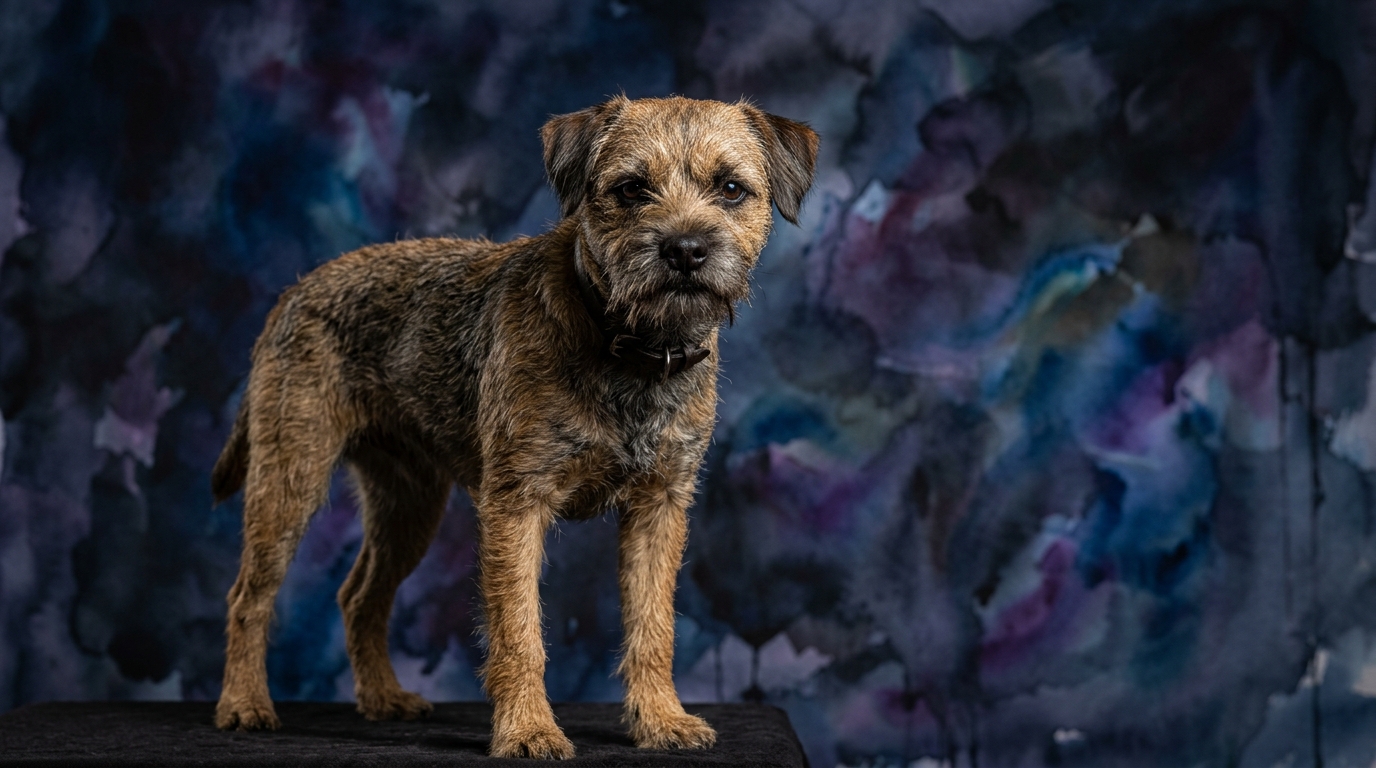
**Border Terrier (Terrier Group)**: This plucky terrier's intelligence is forged in its history as a fearless vermin hunter. **Problem Solving (4/5)** for the Border Terrier often manifests as tenacious ingenuity in confined, challenging spaces. This might mean figuring out how to navigate a complex burrow system, outsmarting small prey, or independently overcoming obstacles to achieve a goal, often with a direct, persistent approach. **Training Speed (4/5)** highlights them as quick studies, absorbing new information rapidly. Their swift learning is often paired with an independent streak; they grasp concepts quickly but may weigh the benefit of compliance against their own agenda, requiring engaging and consistent methods. **Social Intelligence (3/5)** is exhibited within their pack (human or canine), understanding hierarchies and communicating needs effectively. While capable of forming deep bonds, their social interactions can sometimes be direct and assertive, reflecting their working background of needing to hold their own. **Instinctive Drive (3/5)** is profoundly rooted in their vermin-hunting heritage. This translates to a strong desire to chase, dig, and explore, often with fearless determination. While manageable, this drive requires consistent channeling and appropriate outlets. **Memory (4/5)** for Border Terriers is robust, enabling them to recall training cues, routines, and the locations of interesting smells or previously encountered 'prey.' This memory aids their independent problem-solving and allows them to navigate familiar territories with precision.
Where the Irish Setter Excels Cognitively
While both breeds exhibit impressive problem-solving, the Irish Setter often demonstrates a superior capacity for sustained, wide-ranging cognitive tasks that require a partnership with a human handler. Their hunting heritage demands an ability to process information across vast open fields, tracking scents and maintaining focus on distant targets for extended periods. This translates into an aptitude for intricate scent work, advanced obedience sequences involving multiple steps and distances, and complex retrieving scenarios where they must recall specific instructions in a dynamic environment. Their problem-solving is often collaborative, aimed at achieving a shared goal with their human counterpart, rather than purely independent action. For instance, an Irish Setter might excel at learning and executing a complex 'blind retrieve' where they are directed by hand signals over a long distance to an unseen object, demonstrating a nuanced understanding of spatial commands and trust in their handler's guidance.
Where the Border Terrier Holds the Cognitive Edge
Conversely, the Border Terrier's cognitive strengths shine brightest in scenarios demanding tenacity, independent decision-making, and rapid adaptability within close quarters or challenging environments. Their historical role of 'going to ground' after foxes required them to think on their feet, problem-solve individually in tight spaces, and persist relentlessly in the face of obstacles. This gives them an edge in tasks requiring quick, decisive action and a certain degree of cunning. For example, a Border Terrier might outmaneuver an Irish Setter in puzzle toys that require manipulative skills and persistent trial-and-error, or excel at agility courses that demand tight turns and quick changes of direction. Their problem-solving often involves a more physical, hands-on approach, coupled with an unwavering determination to achieve their self-appointed objective, whether it's navigating a complex tunnel or 'hunting' a squeaky toy under the sofa.
Trainability: Nuances Beyond Speed
Despite both breeds scoring 4/5 in training speed, the *nature* of their trainability differs. The Irish Setter, originating from the Sporting Group, generally approaches training with an eager-to-please attitude. Their strong desire to work cooperatively with a handler, combined with their sustained attention span, makes them highly responsive to positive reinforcement and consistent instruction. They often thrive on the structured repetition common in obedience training and can master complex multi-step commands and lengthy sequences relatively smoothly, viewing training as a collaborative activity. Their willingness to maintain focus on their human partner, even amidst distractions, contributes to a perception of easier, more flowing training sessions. In contrast, while the Border Terrier learns quickly, their Terrier heritage imbues them with a more independent spirit. They might grasp a command in fewer repetitions than many breeds, but their inherent drive to make their own decisions or pursue an interesting scent can occasionally override their desire to comply. Training a Border Terrier often requires more creativity, variety, and a greater emphasis on making the training itself a rewarding 'game' that appeals to their tenacious, problem-solving nature. They might challenge a command if they perceive a more interesting alternative, meaning consistency and engaging motivation are paramount to harness their quick learning without fostering stubbornness.
Matching Canine Minds to Lifestyles
When considering owner lifestyles, both breeds lean towards active engagement, but with different nuances. The Irish Setter, a breed built for covering vast distances, unequivocally suits highly active owners. They require substantial daily exercise – think long runs, vigorous fetching sessions, or extensive hikes – to satisfy their physical and mental needs. An owner who enjoys outdoor sports, trail running, or competitive dog activities like field trials or agility will find a joyful, tireless companion in an Irish Setter. Without adequate outlets, their energy can manifest as restlessness or destructive behaviors. For truly relaxed owners, the Irish Setter's boundless enthusiasm and need for motion would likely be overwhelming. The Border Terrier, while also energetic, presents a slightly different profile. They possess a robust stamina for their size and require regular, engaging exercise, including brisk walks, off-leash exploration in secure areas, and opportunities for 'terrier sports' like Earthdog trials or agility. Their energy is often characterized by bursts of intense activity and a strong desire to explore and 'hunt,' even if it's just in the backyard. While they can adapt to slightly less relentless exercise than an Irish Setter, they are certainly not suited for sedentary lifestyles. A Border Terrier thrives with an owner who can provide consistent mental and physical stimulation, channel their instinctive drives, and appreciate their plucky, adventurous spirit, making them unsuitable for owners seeking a purely 'lap dog' companion.
The Verdict
Choose an Irish Setter if you are an active individual or family seeking a highly cooperative, elegant companion for expansive outdoor adventures, who thrives on collaborative training and sustained physical activity in partnership with you.
Opt for a Border Terrier if you appreciate a tenacious, independent thinker in a compact package, who will thrive with an owner providing engaging mental challenges, opportunities for exploration, and consistent, creative training to channel their spirited terrier drive.
🧠 Find Your Pet's IQ Score
Our Pet IQ Lab assessment covers 25+ tests across 5 cognitive dimensions — personalized to your breed.
Take the Full IQ Test →Frequently Asked Questions
Do Irish Setters and Border Terriers have similar energy levels?
Both breeds are energetic, but their energy manifests differently. Irish Setters have sustained, high-endurance energy for covering large distances, while Border Terriers have bursts of tenacious activity and a strong drive for exploration and 'hunting' within their environment.
Are either of these breeds good for first-time dog owners?
Both breeds can be good for first-time owners who are committed to consistent training, socialization, and providing ample exercise. However, the Irish Setter's cooperative nature might be slightly more forgiving, while the Border Terrier's independent streak requires a more proactive and creative approach to training.
How do their grooming needs compare?
Irish Setters have a long, flowing coat requiring regular brushing (daily to weekly) to prevent mats and tangles, plus occasional professional grooming. Border Terriers have a wiry, double coat that requires weekly brushing and hand-stripping a few times a year to maintain its texture and health.