
Side-by-Side IQ Profile: Digging Deeper
The Cosmic Pet Pet IQ Lab employs a five-dimensional framework to assess canine intelligence, offering a nuanced view of how breeds process information and interact with their environment. For the Jack Russell Terrier, we observe a remarkable Problem Solving score of 5/5, indicating an exceptional capacity for independent thought and figuring out complex situations. Their Training Speed is a moderate 3/5, suggesting they learn at an average pace, but their high problem-solving ability might sometimes be applied to outsmarting training attempts. Social Intelligence also registers at 3/5, meaning they understand social cues adequately but might prioritize their own goals. A striking 5/5 in Instinctive Drive highlights their profound innate motivation for tasks like hunting and pursuit, a relentless characteristic of their terrier heritage. Finally, their Memory is strong at 4/5, allowing them to retain learned behaviors and experiences effectively.
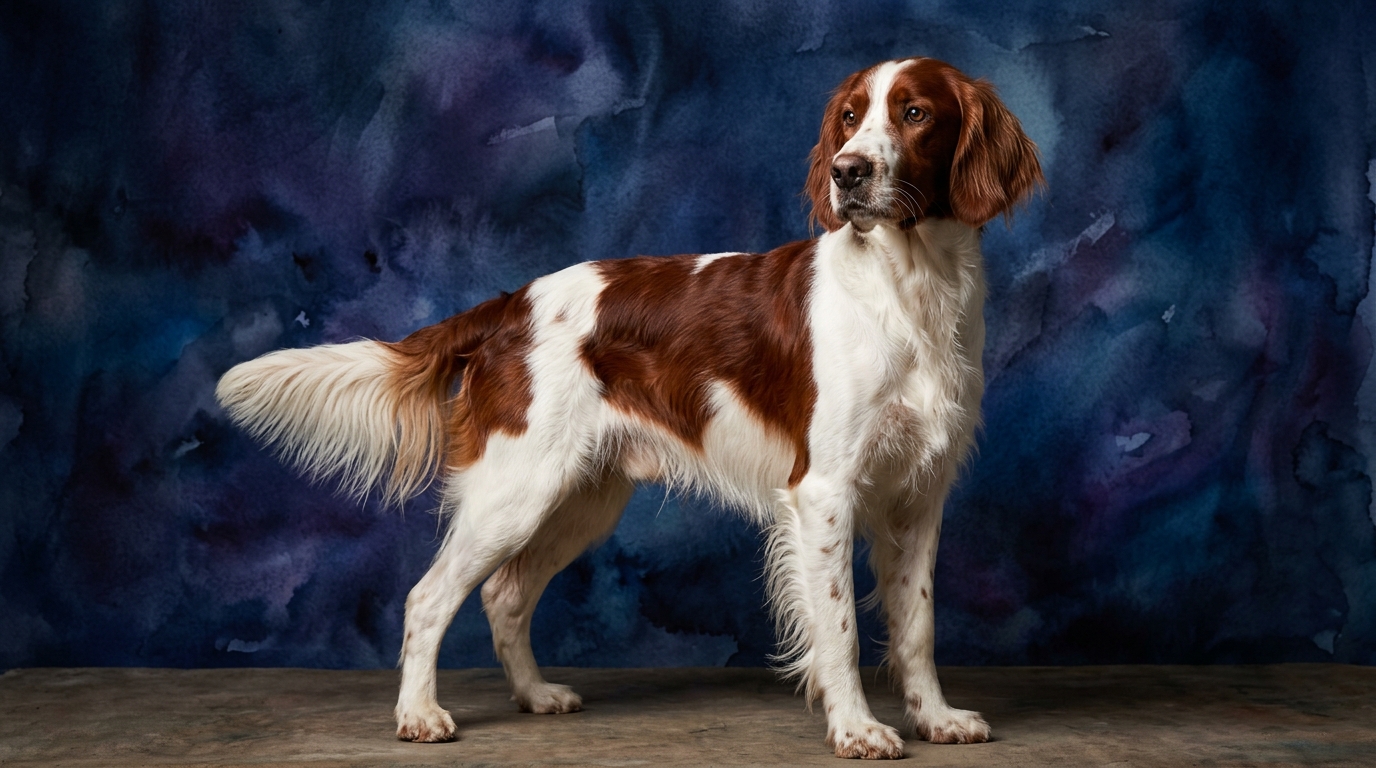
In contrast, the Irish Red and White Setter presents a more balanced, albeit generally lower, cognitive profile across these dimensions. Their Problem Solving is rated 3/5, indicating a competent ability to navigate typical canine challenges without the terrier's intense, independent resourcefulness. Training Speed matches the JRT at 3/5, meaning they too learn at a moderate pace, but often with a more cooperative disposition. Social Intelligence is also 3/5, suggesting a similar capacity for understanding social dynamics. The Setter's Instinctive Drive is 3/5, reflecting a pronounced sporting dog instinct for pointing and retrieving, yet without the singular, tenacious intensity seen in the terrier. Their Memory also scores 3/5, providing a solid foundation for recalling commands and routines, though perhaps not with the vivid recall of the JRT.
Where the Jack Russell Terrier Excels Cognitively
The Jack Russell Terrier's cognitive prowess shines brightest in its problem-solving abilities and instinctive drive. With a 5/5 in Problem Solving, these dogs are natural strategists, capable of devising ingenious ways to achieve their objectives, whether it's escaping a yard or locating a hidden toy. This isn't just about learning tricks; it's about applying foresight and creativity to novel situations, often surprising owners with their cleverness. This high score means they don't just react to stimuli; they actively analyze and manipulate their environment. Their 5/5 Instinctive Drive fuels this problem-solving, providing an unyielding persistence that ensures they rarely give up on a challenge, especially if it involves scent work or pursuing small prey. This combination creates a dog that is always 'on,' constantly processing and strategizing, particularly when their innate drives are engaged. Their 4/5 Memory supports this by allowing them to quickly recall successful past strategies and apply them to new, similar scenarios, making them exceptionally adaptive in their pursuits. For instance, if they figure out how to open a specific latch once, they will remember and repeat that action, demonstrating a clear cognitive advantage in learning from experience to achieve self-directed goals.
Where the Irish Red and White Setter Excels Cognitively
While the Irish Red and White Setter may not possess the Jack Russell Terrier's extreme problem-solving or instinctive tenacity, its cognitive strengths lie in its balanced and cooperative nature, particularly in contexts requiring sustained focus on a handler. With a 3/5 in Instinctive Drive, the Setter's drive is purposeful for its sporting role but less independently overwhelming than the JRT's. This means its cognitive resources are often directed towards collaborative tasks, making it less prone to becoming singularly fixated on self-driven pursuits that might conflict with human intentions. Its moderate Problem Solving (3/5) ensures it can navigate typical situations without overthinking or attempting to outmaneuver its owner, fostering a more straightforward cognitive engagement. The Setter's cognitive profile allows it to excel in environments where biddability and a steady, focused partnership are paramount, rather than independent initiative. For example, in field work, its cognitive energy is channeled into systematic searching and pointing, requiring a different kind of mental endurance and precision that is less about outsmarting and more about attentive, consistent execution under direction. This balanced cognitive makeup means it is less likely to develop complex, self-directed 'trouble-making' schemes, making its mental landscape more predictable and manageable for many owners.
Which is Easier to Train and Why?
Comparing the ease of training between these two breeds reveals interesting nuances, despite both having a 3/5 Training Speed. While both can learn commands at a moderate pace, the Jack Russell Terrier's exceptional 5/5 Problem Solving and 5/5 Instinctive Drive often present unique challenges. A JRT might quickly understand what you want, but their high problem-solving capacity means they're also adept at finding loopholes or alternative ways to achieve their own goals, especially if those goals conflict with the training task. Their intense instinctive drive, particularly for chasing and digging, can make them incredibly distractible and persistent in pursuing a scent or perceived prey, often overriding learned commands with primal impulses. This means a JRT might learn a 'stay' command quickly but then problem-solve how to break it to chase a squirrel, requiring constant mental engagement and redirection from the trainer.
The Irish Red and White Setter, with its 3/5 scores across Problem Solving, Training Speed, and Instinctive Drive, tends to be more straightforward to train. While they learn at the same pace, their more moderate instinctive drive means they are generally less prone to being overwhelmed by their hunting instincts in a way that derails training. Their problem-solving isn't geared towards outwitting their handler, but rather understanding the task at hand. This results in a dog that is often more biddable and cooperative, focusing its cognitive energy on working with its human partner rather than pursuing independent agendas. While both breeds require consistent training, the Setter's cognitive profile makes it less likely to challenge the trainer's authority through clever diversions or unwavering prey drive, making the training process feel more collaborative and less like a constant mental chess match.
Active Owners vs. Relaxed Owners: A Cognitive Match
When matching these breeds to owner lifestyles, their cognitive profiles dictate vastly different requirements. The Jack Russell Terrier is unequivocally suited for highly active owners who thrive on mental and physical challenges. Their 5/5 Problem Solving and 5/5 Instinctive Drive demand constant mental engagement and outlets for their profound energy and tenacity. Owners must be prepared to provide structured activities that tap into their innate drives, such as advanced scent work, agility, or complex puzzle toys, to prevent their sharp minds from inventing their own, potentially destructive, entertainment. A JRT will not be content with short walks and occasional play; their cognitive wiring requires an owner who can consistently provide intellectual stimulation and physical exertion, channeling their relentless drive into productive pursuits. An owner who enjoys training for competitive sports or has a very active outdoor lifestyle, and who appreciates a dog that thinks independently, will find a JRT a stimulating companion.
The Irish Red and White Setter, while still an active sporting breed, aligns well with active owners who appreciate a more cooperative and less intensely independent canine partner. Their moderate 3/5 Instinctive Drive means they require regular exercise and mental stimulation, but their focus is often more on collaborative activities like long hikes, retrieving games, or participation in dog sports with their handler. Their balanced cognitive scores make them less demanding in terms of constant vigilance against independent problem-solving antics. They enjoy being part of family activities and are generally more amenable to following direction, making them a good fit for owners who are active but perhaps prefer a dog that is less inclined to constantly test boundaries or embark on solo missions. Owners who enjoy consistent outdoor activities and a dog with a steady, affectionate disposition, without the extreme mental intensity of a JRT, will find the Setter a rewarding companion.
The Verdict
Choose the Jack Russell Terrier if you are a highly engaged, experienced owner who thrives on providing consistent mental and physical challenges, appreciating a dog's profound independent problem-solving skills and relentless drive.
Opt for the Irish Red and White Setter if you are an active owner seeking a cooperative, biddable companion who enjoys collaborative activities and possesses a balanced cognitive profile that is less prone to extreme independent behaviors.
🧠 Find Your Pet's IQ Score
Our Pet IQ Lab assessment covers 25+ tests across 5 cognitive dimensions — personalized to your breed.
Take the Full IQ Test →Frequently Asked Questions
Does a Jack Russell Terrier's high problem-solving make them harder to live with?
Yes, their 5/5 problem-solving means they are constantly thinking and can quickly figure out how to open gates or get into cabinets. This requires owners to be equally clever and consistent in managing their environment and providing appropriate mental outlets to prevent mischief.
Is the Irish Red and White Setter's moderate instinctive drive a disadvantage?
Not at all; a 3/5 instinctive drive is ideal for a sporting dog, meaning they possess the drive to work without becoming overly independent or difficult to recall. It indicates a focused drive that is more amenable to handler direction, making them excellent partners in field work or other cooperative activities.
How does memory differ between these two breeds in daily life?
The Jack Russell Terrier's 4/5 memory means they are excellent at recalling past successful strategies, like where they found a dropped treat weeks ago. The Irish Red and White Setter's 3/5 memory is perfectly adequate for remembering routines and commands, but perhaps with less vivid detail for complex, self-initiated events.