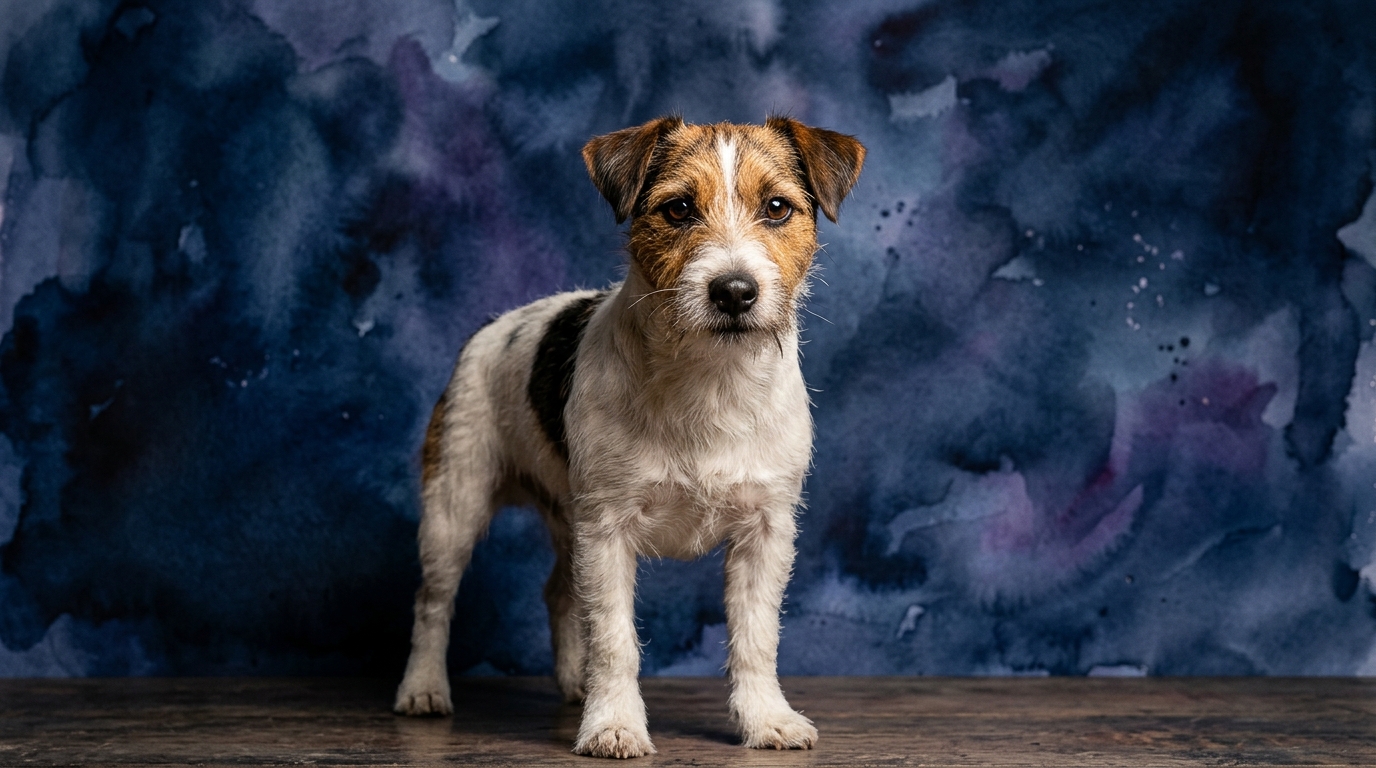
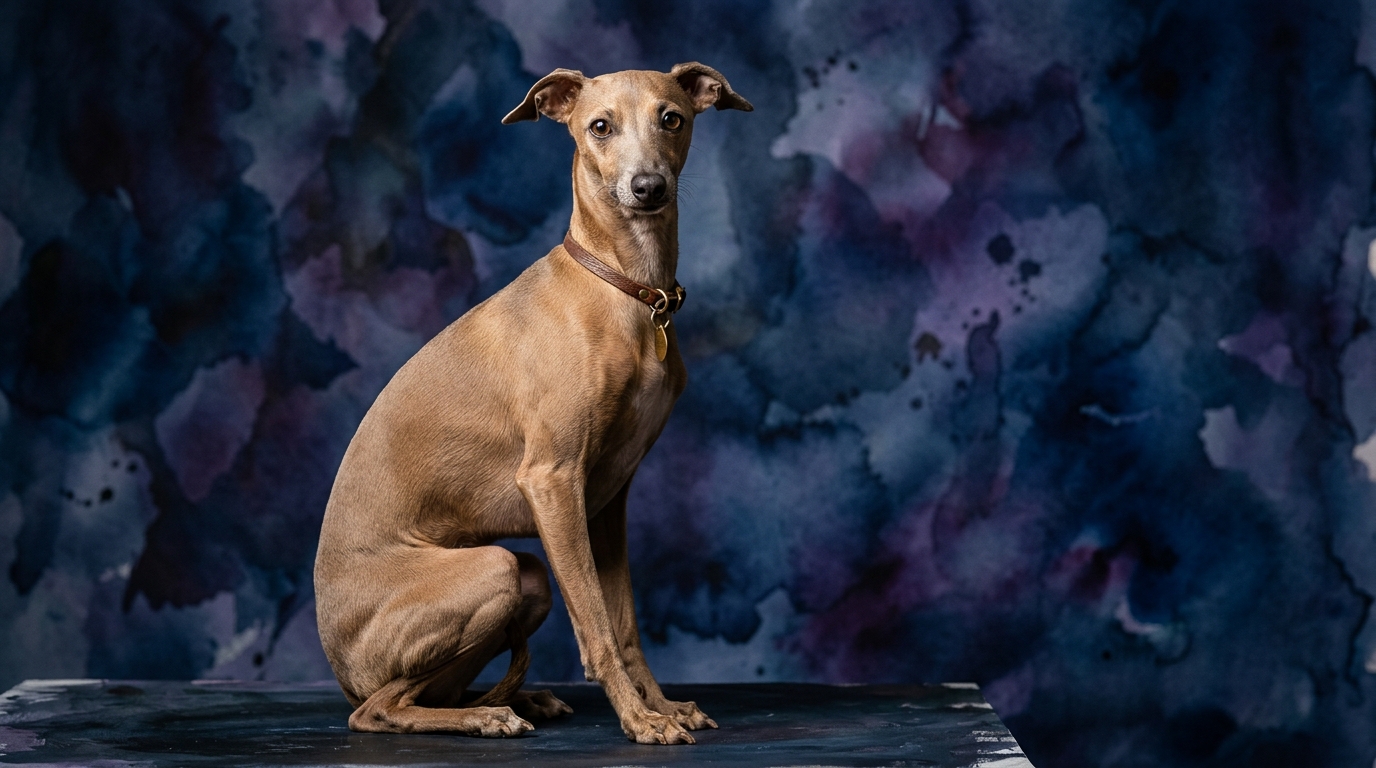
Side-by-Side Cognitive Profiles: JRT vs. IG
The Cosmic Pet Pet IQ Lab employs a five-dimensional framework to assess canine cognitive abilities, offering a nuanced perspective beyond simple obedience. For the Jack Russell Terrier, we observe a profile marked by intense focus and independent thought, while the Italian Greyhound presents a more subtle, comfort-oriented cognitive landscape.
The Jack Russell Terrier (JRT), a robust Terrier breed, exhibits a problem-solving score of 5/5, indicating exceptional aptitude for independent thought and strategic action to achieve goals. Their training speed is rated 3/5, suggesting they grasp concepts adequately but might not always prioritize human directives over their own interests. Social intelligence stands at 3/5, meaning they are capable of reading cues but often apply them within the context of their strong personal agendas. Crucially, their instinctive drive is a perfect 5/5, reflecting an inherent, powerful urge to hunt, chase, and explore. Finally, memory is strong at 4/5, enabling them to recall complex sequences and past experiences effectively.
In contrast, the Italian Greyhound (IG), a delicate Toy sighthound, shows a problem-solving score of 3/5, indicating a moderate capacity for navigating challenges, often preferring simpler solutions or seeking human assistance. Their training speed matches the JRT at 3/5, though this often stems from a sensitive nature or a preference for comfort over engagement. Social intelligence is also 3/5; they are often deeply attuned to their immediate family’s emotions but can be reserved with strangers. Their instinctive drive is 3/5, primarily manifesting as a visual chase instinct rather than the multifaceted drives of a terrier. Memory for the Italian Greyhound is 3/5, sufficient for routines and familiar commands but perhaps less comprehensive for intricate, multi-step tasks.
Where the Jack Russell Terrier Excels Cognitively
The Jack Russell Terrier’s cognitive architecture is designed for action and independent resolution. Their standout problem-solving score of 5/5 means they are highly adept at figuring out how to overcome obstacles, whether it's escaping a seemingly secure enclosure, locating a hidden treat, or strategizing to get attention. This isn't just about physical agility; it’s a mental tenacity that drives them to persist until a solution is found.
Complementing this is their 5/5 instinctive drive, which isn't merely a physical attribute but a powerful cognitive engine. This drive fuels their focus, determination, and ability to 'work' a problem, such as scent-tracking a perceived critter or digging to unearth something interesting. Their minds are constantly engaged in assessing their environment for opportunities to fulfill these innate urges, making them exceptionally goal-oriented.
Furthermore, their 4/5 memory supports these strengths, allowing JRTs to recall successful strategies, remember the locations of past discoveries, and navigate complex environments with confidence. This robust memory system means they learn from experience and can adapt their tactics, making them formidable in any pursuit they commit to, from canine sports to personal mischief.
Cognitive Strengths of the Italian Greyhound
While the Italian Greyhound's scores might appear lower in certain dimensions, their cognitive profile offers distinct advantages, particularly in their nuanced social engagement and adaptable nature. Their 3/5 social intelligence, though similar in score to the JRT, often manifests as a deep, sensitive attunement to their human companions' emotional states. They excel at offering quiet companionship and seeking comfort, demonstrating a subtle understanding of their immediate family's needs for connection.
The IG’s lower instinctive drive (3/5 compared to the JRT’s 5/5) translates into a cognitive 'win' for certain living situations. This means their minds are generally less consumed by relentless urges to hunt, dig, or bark incessantly within the home. Their primary drive is often visual pursuit, which is typically manageable in a secure environment, leading to a calmer and less demanding indoor presence cognitively.
Their problem-solving at 3/5 often involves seeking human intervention or finding the path of least resistance to comfort. This isn't a lack of ability but rather a preference for a simpler, more harmonious existence. They thrive in predictable environments, and their cognitive efforts are often directed towards maintaining their comfort and closeness to their chosen people, making them less prone to challenging boundaries through complex, independent schemes.
Training Dynamics: A Tale of Two Temperaments
Both the Jack Russell Terrier and the Italian Greyhound score 3/5 in training speed, yet the underlying reasons for this rating and the required training approaches differ significantly. For the JRT, their moderate training speed is less about learning capacity and more about their independent spirit and powerful instinctive drive (5/5). They grasp commands quickly but may choose to prioritize a captivating scent or the thrill of a chase over immediate compliance. Training a JRT requires unwavering consistency, clear boundaries, and making training sessions more engaging and rewarding than their inherent distractions. They often perceive training as a collaborative puzzle, and their strong will can lead to 'testing' limits.
The Italian Greyhound, on the other hand, also scores 3/5, but their training challenges stem from a sensitive temperament and a strong desire for comfort. Harsh correction can easily shut them down, making positive reinforcement, gentle encouragement, and patience paramount. They can be easily distracted by novel stimuli or simply by the allure of a cozy nap. House training, in particular, can be a hurdle for IGs due to their delicate bladder and aversion to cold or wet weather, requiring consistent access to appropriate potty areas and understanding of their physical needs. While capable of learning, their motivation often hinges on warmth, positive interaction, and the absence of stress, making their training more about building trust and comfort than channeling raw drive.
Matching Owners: Active Engagement vs. Relaxed Companionship
Understanding these cognitive profiles is key to matching a breed with an owner’s lifestyle. For active owners who relish mental and physical engagement, the Jack Russell Terrier is an ideal companion. Their 5/5 problem-solving and 5/5 instinctive drive demand substantial outlets, thriving on structured activities like agility, earthdog trials, or long, varied walks that engage all their senses. An under-exercised or mentally unchallenged JRT will often invent its own 'work,' which can manifest as digging, excessive barking, or destructive behaviors. They require an owner who can consistently provide stimulating challenges and channel their formidable cognitive energy.
Conversely, the Italian Greyhound is better suited for relaxed owners seeking a gentle, devoted companion. Their lower instinctive drive (3/5) and moderate problem-solving (3/5) mean they are generally content with shorter bursts of activity, such as a brisk walk or a supervised romp in a secure yard, followed by extended periods of rest and warmth. They are not dogs that demand constant mental puzzles or strenuous physical exertion, preferring the comfort of a lap, a soft bed, or a sunny spot. Their sensitive social intelligence makes them deeply responsive to their human family, thriving in a calm, predictable home environment where they can offer quiet affection and receive gentle attention.
The Verdict: When to Choose Each Breed
The Verdict
Choose the Jack Russell Terrier if you are an active individual or family who thrives on providing consistent mental stimulation and physical outlets for a tenacious, independent thinker with a strong will to work and solve problems.
Opt for the Italian Greyhound if you seek a gentle, emotionally responsive companion who thrives on close human connection, requires moderate exercise, and prefers a calm, predictable home environment over constant mental and physical demands.
🧠 Find Your Pet's IQ Score
Our Pet IQ Lab assessment covers 25+ tests across 5 cognitive dimensions — personalized to your breed.
Take the Full IQ Test →Frequently Asked Questions
Are Jack Russell Terriers good apartment dogs?
While small, their intense problem-solving and high instinctive drive mean they require significant mental and physical engagement daily. Without consistent outlets, an apartment can quickly become a canvas for their inventive, often destructive, projects, making them challenging for urban living unless their needs are meticulously met.
Do Italian Greyhounds get along with other pets?
Italian Greyhounds often do well with other calm dogs, especially other IGs, and can coexist peacefully with cats if introduced carefully. Their sighthound heritage means small, fast-moving animals might trigger their chase instinct, but their generally lower instinctive drive (3/5) makes this less intense than in some other breeds.
How do JRT and IG compare in terms of house-training difficulty?
Both breeds can present training challenges. Jack Russell Terriers might use house-soiling as a form of protest or due to insufficient outdoor access, while Italian Greyhounds are notoriously sensitive to cold and wet weather, making them reluctant to go outside, often leading to indoor accidents if not managed with patience and consistency.