Side-by-Side IQ Profile
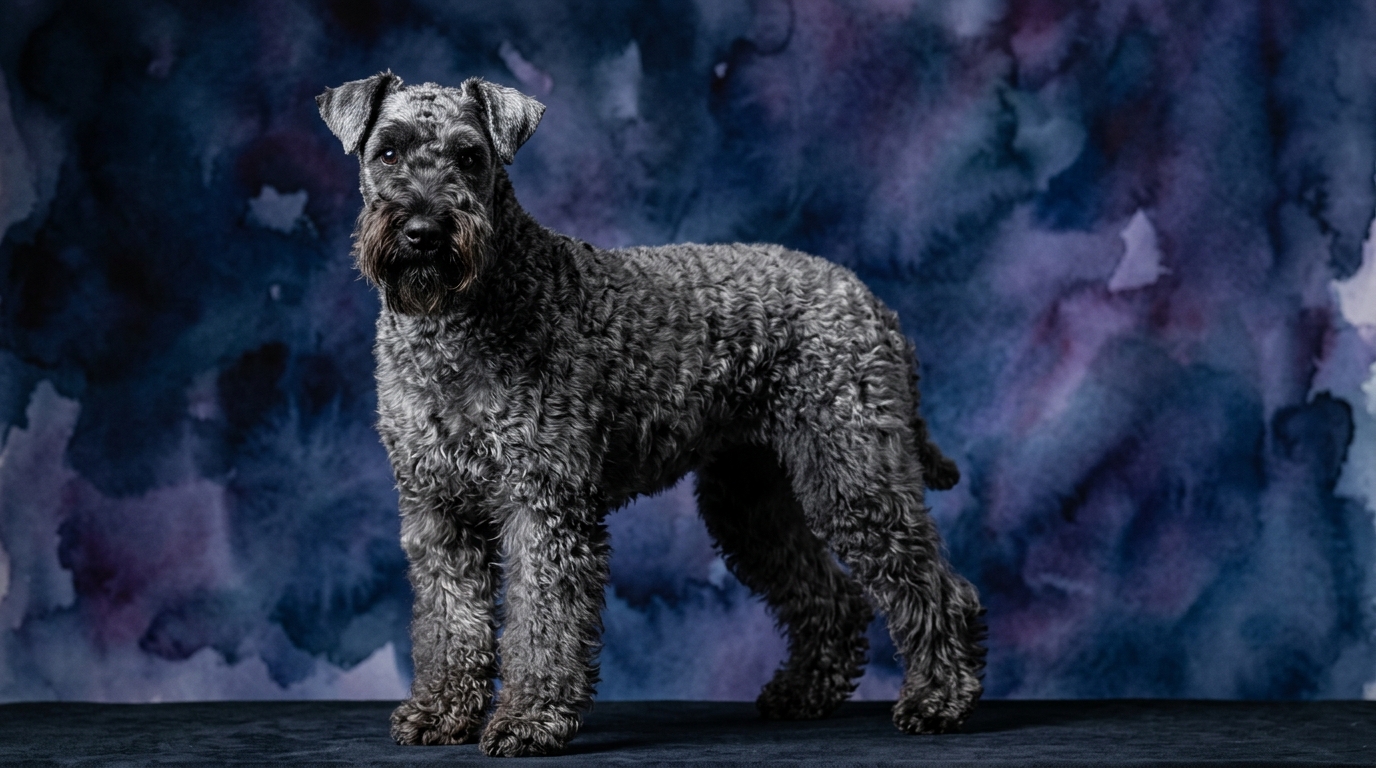
The Kerry Blue Terrier, a robust working dog from Ireland, exhibits a problem-solving capacity of 3/5, demonstrating a moderate ability to navigate environmental challenges, often through persistent effort and a degree of creative resourcefulness when faced with obstacles, particularly those related to their ancestral role in pest control. Their training speed, also 3/5, indicates they can learn new commands at a steady pace, though their inherent independent streak means consistent application requires engaging methods and clear motivation. Social intelligence at 3/5 suggests they can read human cues and adapt to family dynamics, yet their assertive nature means they might interpret signals from strangers or other animals with a discerning, sometimes challenging, stance. An instinctive drive of 3/5 reflects their moderate yet strong prey drive, protective instincts, and a propensity for surveying their territory, making them vigilant companions. Finally, a memory score of 3/5 means they retain learned behaviors, routines, and significant experiences with moderate reliability, remembering both cherished interactions and past perceived slights.
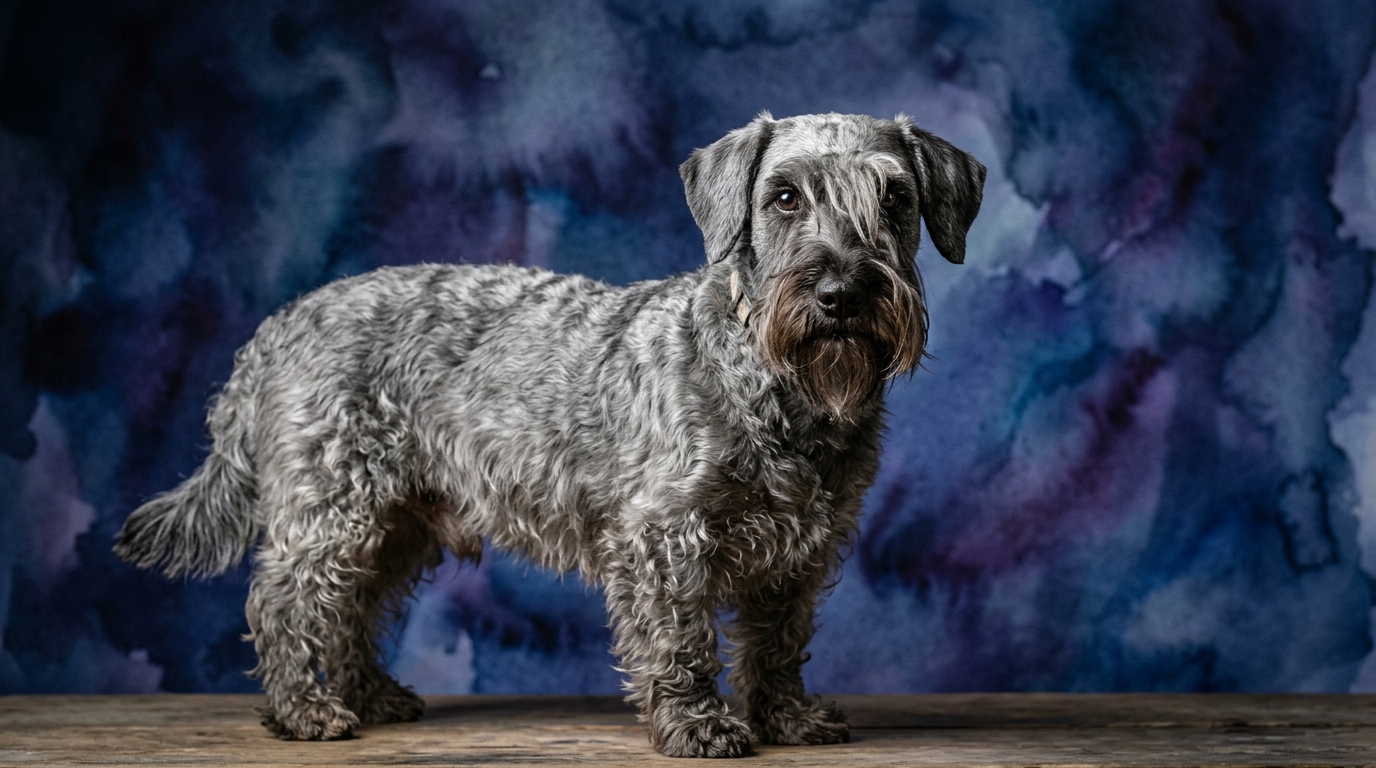
Originating from Czechoslovakia as a specialized hunting companion, the Cesky Terrier also scores 3/5 in problem-solving, often displaying a more focused and perhaps analytical approach to overcoming challenges, particularly those requiring navigation of confined spaces or the pursuit of specific quarry. Their training speed, matching at 3/5, means they acquire new skills at a moderate rate, but their often calmer and more biddable temperament compared to many terriers can translate into a smoother training process once a concept is grasped. With a social intelligence of 3/5, Ceskys are moderately adept at understanding human emotions and social structures, typically interacting with a gentle yet discerning demeanor, less prone to the overt challenges sometimes seen in more boisterous terriers. Their instinctive drive, rated at 3/5, includes a moderate prey drive for smaller game and a natural inclination for digging, though generally expressed with less intensity than some of their terrier cousins. A memory score of 3/5 indicates they moderately retain information, from learned commands to the locations of preferred napping spots, contributing to their adaptable nature within a home environment.
Where Kerry Blue Terrier Wins Cognitively
The Kerry Blue Terrier often showcases a nuanced cognitive edge in situations demanding sheer tenacity and a broad spectrum of problem-solving adaptability. Their background as versatile farm dogs, tasked with everything from herding to pest control, has likely honed a capacity for persistent, physically-driven problem-solving. A Kerry Blue might demonstrate superior cognitive flexibility in figuring out how to bypass a new fence to explore an interesting scent, or inventively retrieve a toy from an awkward space, relying on their robust physical presence and unwavering determination. This breed's assertive social intelligence, while sometimes requiring careful management, can also be a strength in situations demanding vigilance or a quick, decisive response to perceived threats, demonstrating a rapid assessment of environmental shifts that impact their perceived territory or family unit.
Where Cesky Terrier Wins Cognitively
Conversely, the Cesky Terrier frequently exhibits a cognitive advantage in scenarios requiring a more refined, precise application of their moderate intelligence. Bred specifically for hunting in dense, often underground conditions, their problem-solving tends to be more concentrated and strategic. A Cesky might excel at navigating complex indoor obstacle courses with greater finesse, remembering specific sequences of turns, or demonstrating a more patient, methodical approach to figuring out a puzzle toy that requires delicate manipulation rather than brute force. Their calmer social intelligence also allows for a more subtle interpretation of human moods and household dynamics, often leading to a remarkably adaptable and less confrontational demeanor, making them adept at blending into various social settings with quiet observation.
Which Is Easier to Train and Why
Despite both breeds sharing a 3/5 rating for training speed, the Cesky Terrier generally presents a more straightforward training experience for the average owner. This isn't due to a faster acquisition of commands, but rather their inherent temperament. Ceskys are often described as more amenable and less overtly stubborn than many terriers; their desire to please, while still retaining a terrier's independent thought, tends to be more pronounced. This translates into a dog that, once understanding a command, is more consistently willing to execute it without needing constant negotiation or redirection. Their calmer disposition also aids in maintaining focus during training sessions, reducing distractions and promoting a more receptive learning environment.
The Kerry Blue Terrier, while equally capable of learning at a moderate pace, often requires a more experienced and consistent trainer. Their strong-willed, assertive nature means they might learn a command quickly but then decide whether or not to comply based on their own assessment of the situation or their perceived value of the reward. Their robust instinctive drive can also make it challenging to maintain attention when exciting stimuli are present. Training a Kerry Blue often involves a greater emphasis on establishing clear leadership and making training feel like a collaborative, engaging game rather than a strict lesson, to harness their energy and channel their problem-solving into desired behaviors.
Which Suits Active Owners vs. Relaxed Owners
For owners leading an active, outdoors-oriented lifestyle, the Kerry Blue Terrier often proves to be an ideal match. Their robust build, higher energy levels, and strong instinctive drive mean they thrive with consistent physical exercise and engaging mental challenges. They are excellent companions for long hikes, vigorous playtime, and even dog sports like agility or earthdog trials, where their problem-solving and memory can be put to good use in dynamic environments. Owners who enjoy teaching complex sequences or engaging in competitive activities will find their Kerry Blue a willing, albeit spirited, partner, benefiting from an owner who can consistently channel their considerable drive.
In contrast, the Cesky Terrier is typically better suited for owners who appreciate a more relaxed, yet still engaged, home environment. While they certainly enjoy walks and playtime, their energy levels are generally lower than the Kerry Blue, making them more adaptable to apartment living or homes with smaller yards, provided their moderate exercise needs are met. Their calm social intelligence and more biddable nature make them excellent indoor companions who are content with family interaction, puzzle toys, and moderate daily activity. They suit owners who seek a loyal, affectionate presence that doesn't demand constant high-intensity engagement, but still appreciate a dog with a keen mind and an independent spirit.
The Verdict
Choose the Kerry Blue Terrier if you are an active, experienced owner ready to channel a spirited, persistent intellect into dynamic activities and consistent, engaging training. Their robust problem-solving and assertive social intelligence thrive with leadership and consistent interaction.
Opt for the Cesky Terrier if you seek a calmer, adaptable companion with a keen, focused mind, suitable for a more relaxed home environment and a training approach that values cooperation and nuanced interaction. Their biddable nature and moderate instincts make them a joy for attentive owners.
🧠 Find Your Pet's IQ Score
Our Pet IQ Lab assessment covers 25+ tests across 5 cognitive dimensions — personalized to your breed.
Take the Full IQ Test →Frequently Asked Questions
Are Kerry Blue Terriers good with children?
Kerry Blue Terriers can be excellent family dogs and are generally good with children, especially when raised with them. However, their assertive nature and strong play drive mean supervision is important, particularly with very young children, to ensure respectful interactions.
Do Cesky Terriers shed a lot?
Cesky Terriers have a unique coat that is relatively low-shedding, making them a good option for individuals with mild allergies. Their coat requires regular grooming, including stripping or clipping, to maintain its health and appearance.
What kind of mental stimulation do these terriers need?
Both breeds thrive on mental stimulation, which can include puzzle toys, obedience training, and scent work. Kerry Blues benefit from activities that challenge their persistence and problem-solving, while Ceskys enjoy tasks requiring focus and gentle manipulation, preventing boredom and channeling their terrier instincts positively.