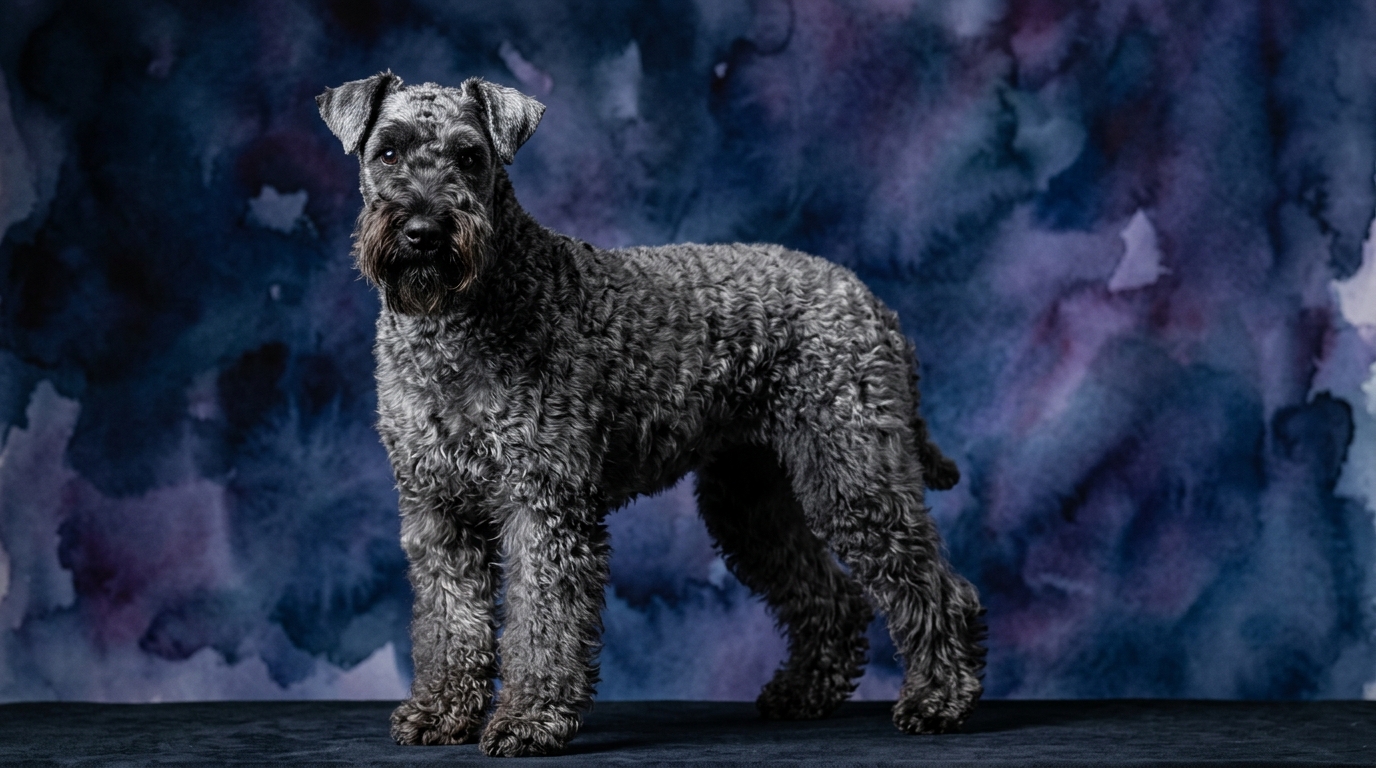

Side-by-Side IQ Profile: Kerry Blue Terrier
The Kerry Blue Terrier, originating from Ireland as an all-around farm dog, brings a resilient and adaptable mind to the table. Their intelligence is deeply rooted in their working heritage, requiring them to think independently and adapt to varied tasks. This background shapes how their moderate cognitive scores truly play out in daily life.
**Problem Solving (3/5):** This dimension reflects the Kerry Blue Terrier's capacity for resourceful thinking, often applied to achieving personal objectives. They exhibit a cleverness in navigating their environment, finding ways to access interesting areas or 'solve' the puzzle of getting to a preferred item, sometimes requiring owners to be equally resourceful in proofing their home.
**Training Speed (3/5):** Kerry Blues assimilate new commands at a moderate pace, but their independent spirit means they often weigh whether complying with a request serves their own interests. Consistent, engaging training methods that highlight the benefits of cooperation are essential to maintain their focus and enthusiasm, making the learning process a shared endeavor.
**Social Intelligence (3/5):** These terriers are observant of human emotions and household dynamics, quickly learning who provides what resources and how to elicit desired responses. While they form deep bonds with their family, their protective instincts and sometimes strong prey drive mean they can be discerning about strangers and other animals, requiring careful introductions.
**Instinctive Drive (3/5):** The Kerry Blue Terrier's moderate instinctive drive manifests as a persistent desire to chase, dig, and explore, echoing their historical role as vermin hunters. Providing appropriate outlets for these natural behaviors, such as engaging puzzle toys or secure digging areas, is crucial for their mental well-being and preventing boredom-driven antics.
**Memory (3/5):** Kerry Blues possess a solid memory for routines, learned commands, and both positive and negative experiences. They remember where a treat was hidden or the consequences of past transgressions, influencing their future choices and requiring owners to be consistent in their expectations and rewards.
Side-by-Side IQ Profile: Russian Toy
The Russian Toy, originally bred for companionship and as an aristocratic lapdog, exhibits intelligence characterized by keen observation and a strong desire for human connection. Their cognitive abilities are finely tuned to understanding and interacting within a close-knit human family, making their moderate scores quite impactful in a domestic setting.
**Problem Solving (3/5):** For a Russian Toy, problem-solving often involves navigating the intricacies of human interaction and home environments. They are clever at manipulating situations to gain attention, comfort, or treats, quickly learning which behaviors yield desired outcomes from their human companions. This often manifests as charming persistence.
**Training Speed (3/5):** Russian Toys generally pick up new commands and routines at a moderate pace, often motivated by positive reinforcement like praise and small treats. Their desire to please their primary caregiver can be a strong motivator, though their small size might sometimes lead to owners inadvertently accepting less consistent performance.
**Social Intelligence (3/5):** These small companions are highly perceptive of their owner's moods and household atmosphere, often adjusting their behavior to match. They thrive on close human interaction and can be quite sensitive to changes in routine or emotional states, acting as devoted and intuitive companions within their trusted circle.
**Instinctive Drive (3/5):** The Russian Toy's instinctive drive is typically expressed as a vigilant watchdog tendency, alerting their family to perceived intruders or unusual sounds with their surprisingly robust bark. While not driven by the same prey instincts as a terrier, they possess a lively curiosity and enjoy interactive play that engages their senses.
**Memory (3/5):** Russian Toys have a good memory for established routines, learned cues, and the preferences of their human family members. They remember past interactions, both positive and negative, which shapes their responses to different people and situations, reinforcing the importance of positive early experiences.
Where Kerry Blue Terrier Wins Cognitively
While both breeds share identical scores, the Kerry Blue Terrier’s cognitive strengths lean towards independent application of intelligence in varied environments. Their problem-solving acumen is often geared towards overcoming physical obstacles or pursuing a task with singular focus, a remnant of their working background. This means they are particularly adept at tasks requiring persistence and a degree of self-reliance, such as navigating complex agility courses or figuring out how to retrieve a toy from a challenging spot. Their memory is also robust for spatial awareness and sequences related to their independent pursuits, allowing them to recall successful strategies for hunting or exploration.
Where Russian Toy Wins Cognitively
The Russian Toy excels in the nuanced realm of social cognition and emotional intelligence within a domestic setting. Their problem-solving is often directed at understanding and influencing human behavior, making them highly effective at communicating their needs and desires to their owners. They quickly learn the subtle cues of household dynamics and human routines, often predicting their owner's next move. Their social intelligence allows them to form exceptionally strong, empathetic bonds, making them highly attuned companions who can offer comfort or elicit affection with remarkable precision. This keen awareness of human behavior is a distinct cognitive advantage in a companion role.
Which Is Easier to Train and Why
Determining which breed is 'easier' to train is less about raw intellectual capacity and more about motivational drivers and behavioral predispositions. The Russian Toy, with its strong desire for human companionship and approval, often responds well to positive reinforcement and praise, making them generally amenable to training when the owner is consistent. Their smaller stature also means that their occasional stubbornness is less physically demanding to manage.
The Kerry Blue Terrier, while equally capable of learning, presents a different training challenge due to its inherent terrier independence and strong instinctive drives. Their 'what's in it for me?' attitude requires trainers to be engaging, consistent, and creative, making training feel like a partnership rather than simple instruction. They might be more inclined to test boundaries or follow their nose if something more interesting arises. Therefore, for a novice owner, the Russian Toy might feel 'easier' due to its more direct motivation for pleasing its human, while the Kerry Blue Terrier requires a more experienced or dedicated trainer who understands terrier psychology.
Which Suits Active Owners vs Relaxed Owners
The Kerry Blue Terrier is a better match for active owners who appreciate a dog with zest and a need for engagement. Their moderate instinctive drive and problem-solving skills mean they thrive with regular exercise, mental challenges, and structured activities like agility, earthdog trials, or long, exploratory walks. Owners who enjoy an independent, spirited companion and are prepared to channel their energy will find the Kerry Blue rewarding.
Conversely, the Russian Toy is ideally suited for relaxed owners seeking a devoted, sensitive companion. While they enjoy play and short walks, their primary need is for close human interaction and comfort. They are content to be lapdogs or to observe the household from a cozy spot, making them perfect for apartment living or individuals who prefer a less physically demanding canine companion. Their social intelligence makes them excellent companions for those who value quiet devotion and emotional connection.
The Verdict
Choose the Kerry Blue Terrier if you seek an active, independent companion who thrives on engaging challenges and a partnership approach to life and learning, valuing their spirited intelligence.
Opt for the Russian Toy if you desire a devoted, perceptive companion whose intelligence shines in social interaction and who thrives on close emotional bonds within a relaxed home environment.
🧠 Find Your Pet's IQ Score
Our Pet IQ Lab assessment covers 25+ tests across 5 cognitive dimensions — personalized to your breed.
Take the Full IQ Test →Frequently Asked Questions
Do Kerry Blue Terriers learn quickly?
Kerry Blue Terriers learn at a moderate pace, but their independent nature means they require consistent, engaging training that motivates them to cooperate. They are capable of picking up commands, but their willingness to perform often depends on the perceived value of the task.
Are Russian Toys good at problem-solving?
Russian Toys are clever problem-solvers, particularly when it comes to understanding and influencing their human environment. They excel at figuring out how to get attention, comfort, or treats from their owners, often using charming persistence to achieve their goals.
Which breed is more social with strangers?
The Russian Toy, while devoted to its family, can be reserved with strangers, often preferring the company of its inner circle. Kerry Blue Terriers also exhibit discerning social intelligence and can be protective, requiring careful introductions to new people and animals due to their territorial instincts.