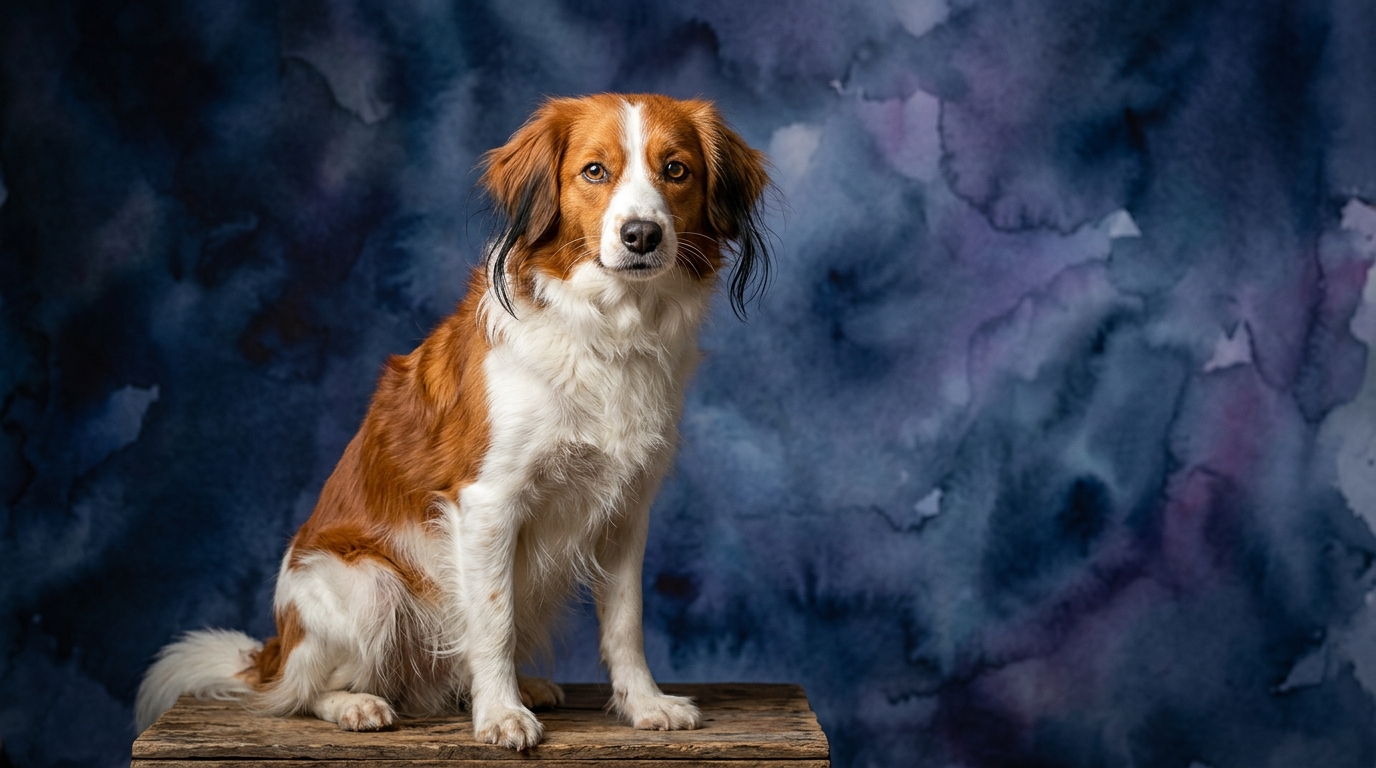
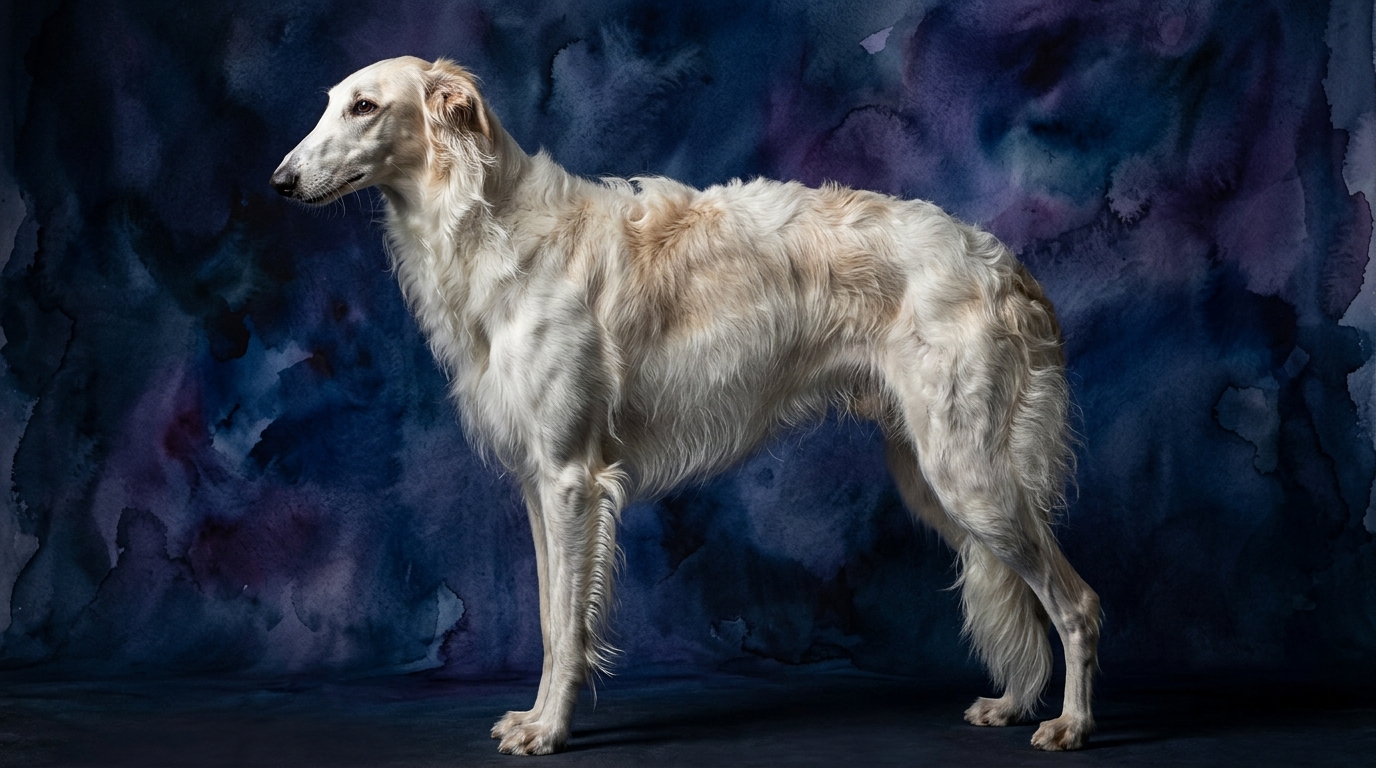
Side-by-Side IQ Profile: Unpacking Identical Scores
While both the Kooikerhondje and Borzoi achieve a consistent 3/5 across the Pet IQ Lab's five dimensions, the interpretation of these scores must be contextualized by their unique breed histories and inherent temperaments. A score of 3/5 indicates a solid, functional level of cognitive ability, but how that ability is expressed and utilized varies significantly between a Sporting dog and a Sighthound.
For **Problem Solving (3/5)**, the Kooikerhondje, a Dutch working dog originally used to lure ducks, demonstrates an adaptive intelligence focused on practical tasks. Their problem-solving often involves navigating complex environments to retrieve or locate, requiring strategic thinking within a defined, human-directed framework. The Borzoi, a Russian sighthound bred for hunting wolves and hare, displays a different kind of problem-solving; their intelligence excels in autonomous decision-making during high-speed chases, assessing terrain, anticipating prey movements, and finding the most efficient path to interception. This is less about intricate puzzles and more about rapid, instinctive analysis in dynamic, open environments.
Regarding **Training Speed (3/5)**, the Kooikerhondje's Sporting group heritage suggests a moderate willingness to engage in cooperative learning. They are generally responsive to consistent, positive reinforcement and can learn new commands and routines at a reasonable pace, though they may have independent streaks. The Borzoi, categorized by Stanley Coren as ranking #75 in working and obedience intelligence, also scores 3/5, indicating they are capable of learning but often require significant patience and understanding of their sighthound motivations. Their training speed is tempered by an inherent independence and a strong focus on their own interests, making them less inclined to perform simply to please a handler.
Their **Social Intelligence (3/5)** also diverges in manifestation. The Kooikerhondje, developed to work alongside humans in a partnership, generally exhibits good social awareness within their family unit and can be reserved but adaptable with strangers. They learn to read human cues for cooperative tasks. The Borzoi, bred to hunt independently or in small packs, often displays a more aloof and dignified social demeanor. Their social intelligence might be more about subtle observation and understanding personal boundaries rather than overt engagement, even with their closest family members, reflecting their reserved nature.
The **Instinctive Drive (3/5)** is a defining characteristic for both, but directed differently. For the Kooikerhondje, this 3/5 manifests as a strong retrieving drive, a keen interest in birds, and an affinity for water, all crucial for their decoy dog role. It's a focused, manageable drive. For the Borzoi, this 3/5 represents an incredibly powerful, inherent prey drive for fast-moving objects. This isn't just an interest; it's a fundamental aspect of their being, demanding careful management and secure environments due to their instinct to chase anything that moves with incredible speed and single-mindedness.
Finally, **Memory (3/5)** for the Kooikerhondje involves recalling specific commands, intricate routines, and environmental layouts relevant to their tasks. They remember past experiences to adapt their behavior. The Borzoi's memory shines in spatial recall, remembering familiar hunting grounds, optimal chase routes, and the visual patterns of movement. Their memory is finely tuned to the practicalities of their sighthound existence, less about remembering complex sequences of tricks and more about efficient, practical recall.
Where the Kooikerhondje Wins Cognitively
The Kooikerhondje's cognitive strengths lie in their biddability and their capacity for collaborative problem-solving within a human-centric framework. Despite sharing a 3/5 score, their Sporting dog background means their problem-solving tends to be more directed towards achieving goals set by their human companions, whether that's navigating an agility course or retrieving a specific item. Their social intelligence often translates into a more eager responsiveness to human cues and a greater willingness to engage in shared activities, making them appear more 'tuned in' to their owner's intentions. This breed excels when given a job that involves partnership and communication, demonstrating an adaptability that allows them to thrive in various dog sports and family environments where teamwork is valued.
Where the Borzoi Wins Cognitively
The Borzoi's cognitive edge is found in their remarkable autonomy, independent decision-making, and specialized sensory processing, particularly their visual acuity and response to movement. While also scoring 3/5, their problem-solving is unparalleled in situations demanding self-reliance and rapid, instinctual judgment over vast distances. A Borzoi's ability to assess a moving target, calculate its trajectory, and initiate a pursuit without direct human command showcases a profound, specialized intelligence honed for their sighthound role. Their instinctive drive, though rated 3/5, is a highly refined cognitive tool for their specific purpose, making them masters of the chase and demonstrating a memory for visual patterns and spatial layouts that is exceptional in its domain. They possess a quiet, observant intelligence, processing their environment with a nuanced understanding of movement and space.
Which is Easier to Train and Why
Between the two, the Kooikerhondje is generally considered easier to train, primarily due to their Sporting group heritage that predisposes them to cooperative work. Their 3/5 training speed, combined with a desire to engage with their handler, means they are more readily motivated by praise, toys, and food rewards, and tend to be more consistent in their responses. They are less likely to disregard a command in favor of an independent pursuit, making them more predictable and biddable in a training context.
The Borzoi, while intelligent, presents a greater training challenge. Their 3/5 training speed is often overshadowed by their profound independence and powerful instinctive drive. They learn quickly if they perceive value in the task, but their motivation is frequently internal rather than handler-focused. A Borzoi might understand a command perfectly but choose not to execute it if a squirrel darts across the yard or if they simply don't see the immediate benefit. Training a Borzoi requires immense patience, creativity to make learning intrinsically rewarding for them, and an understanding that their sighthound nature dictates a different approach than with a more biddable breed. Consistency and positive reinforcement are critical, but so is acknowledging their autonomous spirit.
Which Suits Active Owners vs. Relaxed Owners
For **active owners**, both breeds offer unique companionship. An active owner who enjoys engaging their dog in structured activities like dog sports, retrieving games, and consistent training will find the Kooikerhondje a rewarding partner. They thrive on mental stimulation and regular physical exercise, making them suitable for owners who enjoy hiking, agility, or obedience work. An active owner for a Borzoi is one who understands their need for intense, short bursts of running in a securely fenced area. While not a marathon dog, they require regular opportunities to gallop at full speed to satisfy their innate sighthound instincts. Such an owner might also enjoy lure coursing, which taps into the Borzoi's natural abilities, appreciating their independent spirit while providing appropriate outlets for their physical prowess.
For **relaxed owners**, the Borzoi often presents an appealing facade. They are frequently described as '45 mph couch potatoes,' exhibiting a calm, dignified demeanor indoors, content to lounge. This can suit a relaxed owner, provided they are committed to fulfilling the Borzoi's crucial need for high-speed exercise outdoors. Without these outlets, their calm nature can become restless. The Kooikerhondje can also adapt to a more relaxed home, but they generally require more consistent mental engagement and interaction than a Borzoi. A relaxed owner for a Kooikerhondje must still be prepared to offer daily walks, interactive play, and mental puzzles to prevent boredom and channel their moderate energy and intelligence constructively, ensuring their 3/5 scores in problem-solving and instinctive drive are adequately addressed.
The Verdict: When to Choose Each
The Verdict
Choose the Kooikerhondje if you seek a cooperative, engaging companion for active family life and enjoy structured training and dog sports, appreciating their adaptable intelligence and desire to work alongside you. They are well-suited for owners who value a dog that integrates readily into human activities and thrives on partnership.
Opt for the Borzoi if you admire a dog with profound independence, quiet dignity, and a specialized intelligence for speed and observation, provided you can offer secure spaces for their essential high-speed running. They are best for owners who appreciate an aloof yet loyal companion and understand the unique challenges and rewards of living with a sighthound.
🧠 Find Your Pet's IQ Score
Our Pet IQ Lab assessment covers 25+ tests across 5 cognitive dimensions — personalized to your breed.
Take the Full IQ Test →Frequently Asked Questions
Are Kooikerhondjes good family dogs?
Yes, Kooikerhondjes are generally loyal and affectionate with their families, though they can be reserved with strangers. Early socialization is beneficial to help them become well-adjusted family members, thriving on interaction and inclusion in daily activities.
Do Borzoi need a lot of exercise?
Borzoi need regular opportunities for intense, high-speed running in a safe, securely fenced area to satisfy their powerful sighthound instincts. While calm and relaxed indoors, these bursts of physical activity are crucial for their overall well-being and to prevent restlessness.
Which breed is better for apartment living?
Both breeds can adapt to apartment living with the right commitment. A Kooikerhondje requires consistent mental stimulation and daily walks, while a Borzoi, despite its calm indoor demeanor, absolutely needs reliable access to a large, secure space for sprinting, which can be challenging to provide consistently in an urban apartment setting without dedicated effort.