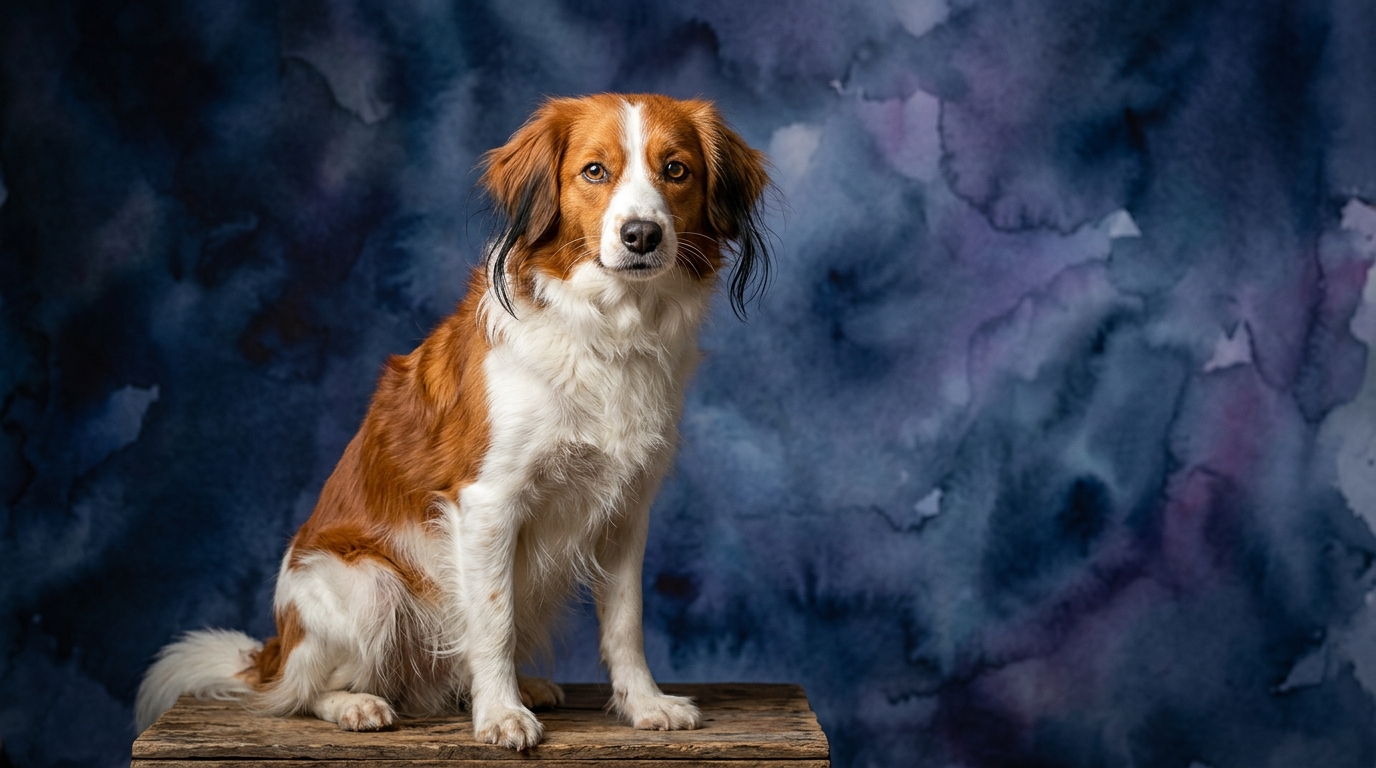

Side-by-Side IQ Profile: Interpreting Identical Scores
At first glance, the Kooikerhondje and Rhodesian Ridgeback present an intriguing puzzle: both breeds score an identical 3 out of 5 across all five dimensions of The Cosmic Pet Pet IQ Lab's assessment – Problem Solving, Training Speed, Social Intelligence, Instinctive Drive, and Memory. This parity doesn't suggest a lack of distinctiveness, but rather that their cognitive strengths manifest in different contexts, aligning with their historical roles and inherent temperaments. A '3/5' indicates a solid, functional intelligence, capable of learning and adapting, but perhaps not with the immediate flash of a top-tier working breed, nor the profound independence of some primitive types. It signifies a balanced capacity.
For the Kooikerhondje, a Sporting dog, a 3/5 in Problem Solving often translates to clever strategies for flushing waterfowl from dense reeds or navigating intricate agility courses. Their smaller stature and agility lend themselves to intricate, often handler-directed, problem-solving scenarios. Their Training Speed at 3/5 means they grasp new commands and routines with steady effort, particularly when motivated by cooperative tasks and positive reinforcement. Social Intelligence at 3/5 reflects their strong bond with family, understanding human cues within a close-knit group, though they may be reserved with strangers. Their Instinctive Drive, also 3/5, is strongly geared towards flushing and retrieving, showing persistent focus in these specific tasks. Finally, a 3/5 Memory allows them to retain complex sequences, familiar routes, and the locations of objects, crucial for their retrieving duties.
The Rhodesian Ridgeback, a powerful Hound, interprets these same 3/5 scores through the lens of their formidable hunting heritage. Their 3/5 Problem Solving manifests in independent tracking, navigating vast and challenging terrains, and making strategic decisions during a hunt. This often involves assessing situations autonomously rather than awaiting direction. Training Speed at 3/5 indicates they learn consistently but may require more persuasive motivation and a clear 'why' for tasks, as their independent streak can make repetitive drills less engaging. Their Social Intelligence (3/5) is characterized by deep loyalty to their family and a discerning, often protective, understanding of social dynamics within their household, coupled with a wary approach to unfamiliar individuals. The 3/5 Instinctive Drive is a potent force for scent work, tracking, and guarding, often self-directed and incredibly persistent. Their 3/5 Memory is excellent for recalling scents, complex routes, and the lay of their territory, essential for their historical hunting role.
Where the Kooikerhondje Excels Cognitively
Despite the identical IQ scores, the Kooikerhondje often demonstrates a particular cognitive edge in scenarios requiring intricate cooperation and fine motor skill application. Their problem-solving, while rated 3/5, is frequently directed towards tasks that involve manipulation and precision, such as figuring out how to open puzzle toys or retrieve objects from confined spaces. This is partly due to their breed's history of working closely with hunters to lure and retrieve ducks, demanding a nuanced understanding of signals and environmental cues. Their social intelligence, also 3/5, often shines in their ability to anticipate a handler's next move during structured activities like obedience or agility, displaying a harmonious working partnership that many find appealing. This cooperative spirit, combined with their steady training speed, makes them particularly adept at mastering multi-step commands and routines that require sequential actions from the dog.
The Kooikerhondje's instinctive drive, while not as overwhelming as some scent hounds, is highly focused on specific tasks: flushing and retrieving. This directed drive, coupled with their memory, means they can quickly learn and recall complex patterns of movement or scent trails associated with their 'work,' whether that's a field trial or a game of fetch in the backyard. Their cognitive strengths are often best observed in activities that leverage their agility and desire to engage with their human companions in a structured, purposeful way. They are often keen observers of human behavior, using their social intelligence to gauge mood and adjust their interactions, making them sensitive and responsive companions within a family setting.
Where the Rhodesian Ridgeback Holds a Cognitive Advantage
The Rhodesian Ridgeback, with its 3/5 scores across the board, truly distinguishes itself in cognitive areas demanding independence, endurance, and robust sensory processing. Their problem-solving, while on par numerically, is fundamentally different in its manifestation. It leans towards autonomous decision-making in vast environments, such as tracking a scent over long distances or navigating complex natural terrain without constant human guidance. This stems directly from their historical role as lion hunters, where they needed to think critically and persist independently in challenging, often dangerous, situations. Their instinctive drive, equally rated 3/5, is a powerful, persistent force focused on scenting and tracking, allowing them to maintain focus on a distant goal despite distractions, a cognitive feat requiring significant mental stamina.
The Ridgeback's social intelligence, while also 3/5, often includes a strong discerning capacity. They form deep, protective bonds with their immediate family and are adept at recognizing perceived threats or unusual situations, leveraging their memory of past interactions to inform their responses. This protective instinct is a cognitive strength, enabling them to act as vigilant guardians. Their training speed, while steady, is often accompanied by a need for clear, logical reasoning behind commands. They are not mindless followers; rather, they process information and weigh its utility, which, while sometimes perceived as stubbornness, is actually a manifestation of their independent problem-solving skills at work. Their memory excels in spatial recall and scent differentiation, allowing them to remember complex routes and specific scent profiles with remarkable accuracy over time.
Which Breed is Easier to Train and Why?
Determining which breed is 'easier' to train is nuanced, given their identical 3/5 Training Speed scores, and depends heavily on an owner's approach and expectations. The Kooikerhondje, as a Sporting dog, typically exhibits a higher intrinsic desire to cooperate and work alongside their human companions. Their historical role required them to be attentive to a hunter's signals and to perform specific tasks in a coordinated manner. This often translates into a more enthusiastic and biddable student in training sessions. They respond well to positive reinforcement, praise, and activities that involve teamwork. While they require consistency, their natural inclination is often to please and engage, making them generally more straightforward for novice or less experienced trainers.
The Rhodesian Ridgeback, conversely, presents a different training dynamic. Their hound heritage imbues them with a strong sense of independence and self-reliance. While they learn commands at a steady pace (3/5 Training Speed), they often need to understand the 'purpose' behind an exercise. Repetitive drills without clear application might bore them, leading to what some perceive as stubbornness. Their powerful instinctive drive (3/5), especially for scent, can be a significant distraction; once a Ridgeback locks onto a scent, redirecting their focus requires consistent, firm, and engaging training. They require an owner who is patient, consistent, and confident, capable of establishing clear boundaries and making training feel like a partnership rather than a command-and-obey relationship. For an experienced trainer who appreciates an independent thinker, a Ridgeback can be incredibly rewarding, but for a beginner, their strong will and drives might prove more challenging to manage effectively.
Which Suits Active Owners vs. Relaxed Owners
When considering activity levels, both breeds are far from couch potatoes, but their needs differ significantly, influencing their suitability for active versus more relaxed owners. The Kooikerhondje, while a Sporting dog, is a medium-energy breed that thrives on regular, engaging activity. They require daily walks, play sessions, and mental stimulation through training or dog sports like agility or obedience. An active owner who enjoys hiking, fetch, or structured training classes will find a Kooikerhondje to be an eager participant. However, their energy is generally manageable within a typical family setting, provided they receive consistent outlets. They can transition to a more relaxed home environment after their physical and mental needs have been met, often enjoying quiet time with their family.
The Rhodesian Ridgeback, on the other hand, is built for endurance and possesses a formidable physical presence. As a large, athletic hound, they demand substantial daily exercise to remain content and well-behaved. This isn't just a casual walk; Ridgebacks need opportunities for vigorous running, long hikes, or engaging in extensive scent work. Their inherent drive for exploration and physical exertion means they are best suited for truly active owners who can commit to providing ample physical and mental challenges every single day. A relaxed owner who cannot meet these high exercise requirements might find a Ridgeback becoming bored, restless, and potentially destructive. Their sheer size and strength also necessitate an owner capable of handling a powerful dog, regardless of their activity level.
The Verdict: When to Choose Each Breed
The Verdict
Choose the Kooikerhondje if you seek a cooperative, responsive companion for structured activities and family life, valuing a steady learner who excels in teamwork and precision tasks. They are ideal for owners who can provide consistent mental and physical engagement without requiring extreme endurance activities.
Opt for the Rhodesian Ridgeback if you are an experienced, active owner who appreciates an independent, powerful, and discerning companion, ready to commit to extensive exercise and consistent, patient training for a dog with robust drives and a protective nature.
🧠 Find Your Pet's IQ Score
Our Pet IQ Lab assessment covers 25+ tests across 5 cognitive dimensions — personalized to your breed.
Take the Full IQ Test →Frequently Asked Questions
Do Kooikerhondjes bark a lot?
Kooikerhondjes are not typically excessive barkers, but they will alert to new sights or sounds, especially if they perceive something unusual. Consistent training and early socialization can help manage their vocalizations effectively, ensuring they only bark when truly necessary.
Are Rhodesian Ridgebacks good with children?
Rhodesian Ridgebacks can be excellent family dogs and are often very patient and protective with children they are raised with. However, due to their size and strength, supervision is always recommended, especially with very young children, to prevent accidental bumps or knocks.
How much grooming does each breed require?
The Kooikerhondje has a medium-length double coat that requires regular brushing, typically 2-3 times a week, to prevent mats and reduce shedding. The Rhodesian Ridgeback has a short, dense coat that is relatively low maintenance, needing only weekly brushing to remove loose hair and maintain shine.