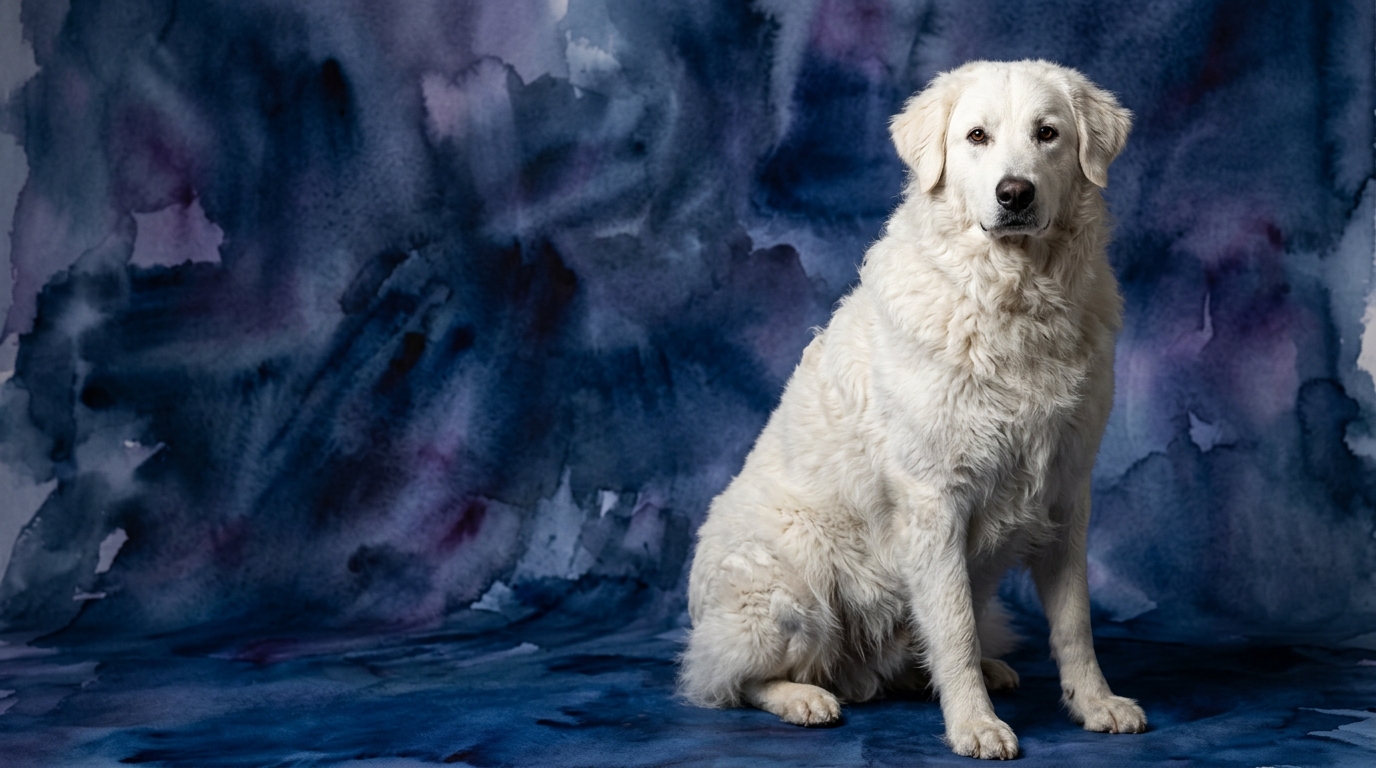

Side-by-Side IQ Profile: Kuvasz vs. Brussels Griffon
The Cosmic Pet Pet IQ Lab employs a five-dimensional framework to assess canine cognition, offering a granular view beyond simple obedience. For the Kuvasz, a Working group dog, its profile is: Problem Solving 3/5, Training Speed 3/5, Social Intelligence 3/5, Instinctive Drive 3/5, and Memory 4/5. This suggests a dog with moderate abilities across most cognitive areas, but a notable strength in retaining information over time. Its Coren ranking at #42 places it among breeds that demonstrate a solid capacity for understanding and executing commands, though with an independent streak characteristic of its guarding heritage. A 3/5 in problem solving indicates it can navigate novel situations and overcome obstacles with a reasonable degree of ingenuity, perhaps relying on a few attempts or learned experiences. Its 3/5 training speed implies it will grasp new cues at a moderate pace, requiring consistent and patient instruction. Social intelligence at 3/5 suggests an ability to interpret and respond to social cues, though perhaps with a focus on its primary role rather than nuanced human emotional mirroring. An instinctive drive of 3/5 points to a moderate but present inclination towards inherent breed behaviors, which for a Kuvasz would involve territorial guardianship. The 4/5 memory score is its standout, indicating a superior capacity to recall events, learned behaviors, and spatial information over extended periods.
In contrast, the Brussels Griffon, a delightful Toy group dog, presents a slightly different cognitive landscape: Problem Solving 3/5, Training Speed 3/5, Social Intelligence 3/5, Instinctive Drive 3/5, and Memory 3/5. Notably, this breed is not Coren-ranked, which is common for many Toy breeds whose primary role emphasizes companionship over complex working tasks. Like the Kuvasz, its 3/5 problem-solving capacity means it can find solutions to challenges within its environment, often leveraging its small stature or charming demeanor to its advantage. Its training speed, also 3/5, means it learns new commands at a similar moderate pace, thriving on positive reinforcement and engaging sessions. The 3/5 social intelligence for a Brussels Griffon is likely highly attuned to human emotional states and household dynamics, reflecting its role as a close companion. Its instinctive drive at 3/5 might manifest as a strong desire for play, attention, or exploring its immediate surroundings, rather than a strong working impulse. The memory score of 3/5 suggests a competent ability to recall information, though perhaps not with the same depth or longevity as the Kuvasz.
Where the Kuvasz Wins Cognitively
The Kuvasz truly distinguishes itself in the realm of memory, scoring 4/5 compared to the Brussels Griffon's 3/5. This superior recall capability means a Kuvasz is more likely to remember complex sequences of commands, the layout of its territory even after prolonged absence, or specific interactions with individuals over an extended period. For an owner, this translates into a dog that can retain advanced training cues with greater permanence, requiring fewer refreshers for established behaviors. Furthermore, its memory strength likely underpins its effectiveness as a livestock guardian, enabling it to remember the movements of its flock, the boundaries of its territory, and the nuances of past threats. This cognitive advantage allows the Kuvasz to build a rich internal map of its world and experiences, informing its independent decision-making in its traditional role. The capacity to hold and access a larger bank of past information grants the Kuvasz a cognitive edge in tasks requiring long-term retention and the application of past learning to current situations.
Where the Brussels Griffon Wins Cognitively
While the Brussels Griffon’s individual scores align numerically with the Kuvasz in most categories, its cognitive strengths lie in the *application* and *nuance* of these abilities, particularly within its role as a dedicated companion. Its 3/5 social intelligence, for instance, is often directed with exquisite precision towards human emotional states, allowing it to excel at reading subtle cues from its owners and responding with comforting presence or playful antics. This isn't about guarding a flock, but about fostering deep emotional bonds and understanding the intricate social fabric of a human family, making it cognitively adept at companionship. Similarly, its 3/5 problem-solving ability, while moderate, is frequently applied to navigating complex household dynamics, finding clever ways to gain attention, or solving domestic puzzles like retrieving a hidden toy. These small-scale, human-centric challenges represent a unique cognitive 'win' for a breed whose purpose is to integrate seamlessly into a home, rather than manage a vast outdoor domain. The Brussels Griffon's cognitive profile is thus optimized for intimacy and adaptability within a close human environment, demonstrating a specialized intelligence for domestic life.
Training Aptitude: Kuvasz vs. Brussels Griffon
Both the Kuvasz and the Brussels Griffon share a Training Speed score of 3/5, suggesting they learn at a moderate pace. However, the *experience* of training each breed can differ significantly due to their distinct behavioral predispositions and breed purposes. The Kuvasz, bred for independent decision-making as a livestock guardian, often exhibits a strong will and a tendency to evaluate commands rather than blindly obey. This means while it *can* learn, it might require more consistent motivation, clear purpose-driven tasks, and a handler who understands its inherent independence. Training a Kuvasz often involves building a relationship based on mutual respect and demonstrating why a command is beneficial, rather than simply enforcing it. Its 3/5 instinctive drive, focused on protection, can sometimes make it less amenable to generalized obedience without a clear 'job' or understanding of its role.
The Brussels Griffon, on the other hand, as a Toy breed, often possesses a strong desire to please its human companions, which can be a powerful motivator. However, their 3/5 training speed can still be challenged by a relatively short attention span, a tendency towards self-importance, or occasional stubbornness characteristic of small dogs. While they may be eager to engage, their smaller stature and sometimes delicate nature mean training methods must be gentle and highly positive. Their social intelligence (3/5) makes them highly responsive to praise and interaction, but also sensitive to perceived unfairness. Ultimately, neither breed is inherently 'easier' to train; rather, they require different approaches. The Kuvasz demands a patient, firm, and understanding hand that respects its autonomy, while the Brussels Griffon thrives on engaging, positive, and consistent sessions that cater to its companion-oriented nature and potential for occasional willfulness.
Suitability for Active vs. Relaxed Owners
The cognitive profiles and breed characteristics of the Kuvasz and Brussels Griffon naturally align them with different owner lifestyles. The Kuvasz, a Working group dog, is generally better suited for active owners who can provide ample mental and physical stimulation. Its instinctive drive (3/5) and historical role as a guardian mean it thrives when given a purpose or a 'job' to do, whether it's patrolling a large yard, participating in advanced obedience, or engaging in demanding dog sports. An active owner would appreciate its robust problem-solving (3/5) when tackling complex tasks and its superior memory (4/5) for retaining intricate routines. This breed requires consistent engagement to prevent boredom, which can lead to undesirable behaviors. A relaxed owner, unwilling or unable to provide significant daily engagement and outdoor activity, would likely find the Kuvasz's needs challenging to meet, potentially resulting in an under-stimulated and restless companion.
Conversely, the Brussels Griffon, a Toy breed, is an excellent match for more relaxed owners, though 'relaxed' does not mean absent of engagement. Its smaller size and companion-oriented nature mean it adapts well to apartment living and less demanding exercise routines, often content with indoor play and short walks. Its social intelligence (3/5) makes it a delightful and responsive companion for owners who enjoy constant interaction and emotional connection. While it still benefits from mental enrichment, its problem-solving (3/5) and instinctive drive (3/5) are generally focused on domestic interactions and play rather than large-scale tasks. A relaxed owner who cherishes close companionship, enjoys teaching fun tricks, and is content with moderate activity levels will find the Brussels Griffon's cognitive and behavioral makeup to be highly rewarding. However, even relaxed owners must commit to daily mental stimulation to keep this little dog engaged and prevent boredom.
The Verdict
Choose the Kuvasz if you are an active owner seeking a dog with impressive long-term memory, an independent spirit, and the capacity for complex, purposeful work, understanding its need for extensive engagement.
Opt for the Brussels Griffon if you're a relaxed owner desiring a charming, highly social companion dog whose intelligence excels in nuanced human interaction and thrives in a close, domestic setting with moderate activity.
🧠 Find Your Pet's IQ Score
Our Pet IQ Lab assessment covers 25+ tests across 5 cognitive dimensions — personalized to your breed.
Take the Full IQ Test →Frequently Asked Questions
Does the Kuvasz's higher memory score make it definitively 'smarter' than the Brussels Griffon?
Not definitively, as 'smarter' is multifaceted. The Kuvasz's 4/5 memory score indicates superior recall and retention, which is a significant cognitive advantage for tasks requiring long-term learning and independent decision-making in its guarding role. However, the Brussels Griffon's intelligence is finely tuned for different purposes, excelling in social nuances and adaptability within a domestic environment, which are equally valuable forms of cognition for its specific breed function.
Given their similar training speed scores, are both breeds equally easy to train?
While both breeds have a 3/5 training speed, the 'ease' of training them differs due to their inherent temperaments and motivations. The Kuvasz's independent nature, stemming from its guarding heritage, means it often requires a more patient, firm, and purpose-driven approach. The Brussels Griffon, despite its companionable nature, can exhibit stubbornness or a shorter attention span, necessitating highly positive, engaging, and consistent training methods tailored to its smaller size and social focus.
How does the 'instinctive drive' score impact daily life for these breeds?
For the Kuvasz, a 3/5 instinctive drive typically translates into a strong inclination towards territorial patrolling and protection, requiring owners to manage these behaviors with training and appropriate outlets. For the Brussels Griffon, its 3/5 drive often manifests as a desire for play, attention, and exploring its immediate, human-centric environment, meaning owners should provide ample interactive games and companionship to satisfy these urges, making for a lively household companion.