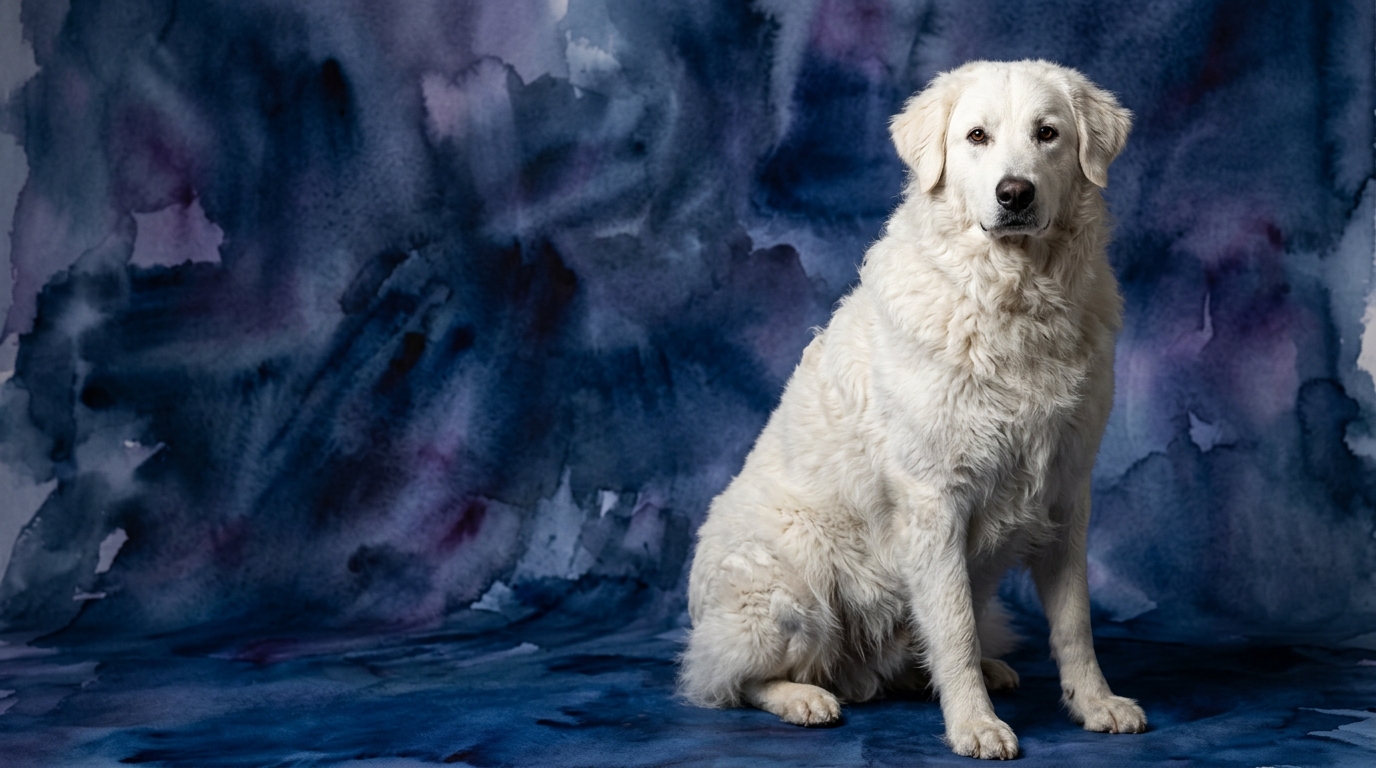
Kuvasz at a glance
| IQ Rank / Score | #42 |
|---|---|
| Trainability | ★★★☆☆ (3/5) |
| Social Intelligence | ★★★☆☆ (3/5) |
| Lifespan | 10-12 years |
| Shedding | Moderate to high |
| Exercise Needs | High (60+ min/day + training) |
| Origin | Hungary |
The Kuvasz Cognitive Blueprint: A Legacy of Independence
Originating in ancient Hungary, the Kuvasz was precisely bred for autonomous livestock and property guarding across vast, often harsh territories. This role shaped a unique cognitive blueprint, prioritizing independent decision-making and strategic thinking over rote obedience. Unlike herding dogs, the Kuvasz operates as a self-sufficient protector, constantly assessing its environment and potential threats with profound discernment, leading to an intelligence characterized by vigilance and self-reliance. Their ancestral duty demanded a sophisticated ability to differentiate friend from foe, analyze complex situations, and react appropriately without human intervention, ensuring their IQ is intrinsically linked to practical, independent problem-solving in dynamic protective contexts.
IQ Profile: Unpacking the Kuvasz Mind
The Kuvasz intelligence, as measured by our Pet IQ Lab metrics, reflects their specialized evolutionary path. A Problem Solving score of 4 indicates strong aptitude for practical, real-world solutions in territory management and threat assessment, rather than abstract puzzles. Their Training Speed of 3 signifies a discerning learning style; they learn quickly when tasks align with protective duties or strengthen their bond, but are less motivated by arbitrary drills. Social Intelligence, also at 3, highlights profound family connection versus natural wariness towards strangers, a key guarding component. Their Instinctive Drive is a perfect 5, an undeniable testament to their deep-seated impulse to protect and survey. Finally, a Memory score of 4 showcases excellent recall for threats, boundaries, and routines, vital for maintaining security.
Beyond Obedience: Understanding Kuvasz Learning Styles
Effective Kuvasz training transcends traditional obedience, demanding an approach rooted in mutual respect, clear communication, and understanding their deep motivations. They respond best to positive reinforcement techniques highlighting practical application, especially when commands align with natural protective instincts or handler bond. Rather than blindly following, the Kuvasz is a partner who evaluates requests, learning quickly when grasping the 'why.' This makes owner consistency and patience critical. Early, thorough socialization is vital, not to diminish instincts, but to teach appropriate discernment, allowing them to confidently assess new situations and people without undue anxiety, channeling formidable intelligence constructively.
The Nuances of Kuvasz Social Cognition
The Kuvasz's social intelligence is highly specialized, demonstrating profound loyalty and an almost intuitive understanding of its immediate family's needs and emotional states. They are keenly observant of their human 'flock,' picking up subtle cues and changes, often acting proactively to protect or comfort. However, this deep bond contrasts with a pronounced wariness towards outsiders, a trait essential for their guardian duties. This discernment is a cognitive strength, allowing them to differentiate between benign visitors and potential threats, making them excellent judges of character. Their social learning often occurs through observation, watching companions and environment to inform protective strategies, solidifying their role as vigilant, reserved family protectors.
Challenges and Triumphs in Kuvasz Training
The perceived 'stubbornness' of the Kuvasz is often a misunderstanding of their intelligent independence, presenting both unique challenges and rewarding triumphs. Owners embracing their dog's inherent self-reliance, rather than forcing blind submission, find greater success. The challenge lies in motivating a dog that doesn't inherently need to 'please,' requiring creative, engaging training that makes tasks relevant to their natural drives. Triumphs occur when a Kuvasz willingly participates, not from fear, but from understanding and trust, performing complex tasks with impressive discernment. Owners report profound satisfaction in forging a partnership where the dog's intelligence is respected, leading to a fiercely loyal and highly competent guardian whose independent decisions are remarkably sound.
The Future of Kuvasz Intelligence Research
Future cognitive research on the Kuvasz could unlock deeper insights into the intricacies of independent decision-making and instinct-driven intelligence in dogs. Studies focusing on their threat assessment capabilities, their ability to weigh risks autonomously, and their spatial memory for patrolling complex territories would be particularly illuminating. Understanding how their protective instincts are prioritized over immediate gratification or social compliance could offer new paradigms in canine cognition. Furthermore, research into their subtle communication methods, particularly within their family units and their warnings towards strangers, could enhance our appreciation for their nuanced social intelligence. Such studies would not only benefit the breed but also contribute significantly to our broader understanding of specialized canine intelligence and its adaptive evolutionary pathways.
3 At-Home Tests to Measure Your Kuvasz's IQ
These tests are adapted from peer-reviewed ethology research. No equipment is needed beyond items you have at home. Run each test 5–10 times for reliable results.
The Myth: "Kuvasz are 'stubborn' or 'difficult to train' because they resist conventional obedience commands."
✅ Kuvasz are highly intelligent, but their cognitive strength lies in independent judgment and strategic problem-solving for protective purposes, not in rote obedience. Training requires immense patience, consistency, and a deep understanding of their guardian mindset, focusing on building a trusting partnership rather than demanding subservience. They learn quickly when they understand the purpose and value of a command in their world.
Kuvasz vs. Similar Breeds
🧠 What's Your Dog's IQ Score?
Our full Pet IQ Lab assessment includes 12+ tests across 5 cognitive dimensions, calibrated for Kuvaszs specifically.
Take the Full IQ Test →Frequently Asked Questions
How smart is a Kuvasz?
Our Pet IQ Lab framework scores cognition across five dimensions (max 25). The Kuvasz totals 18/25 — high for a domestic dog. The full article breaks down each dimension with at-home tests.
Are Kuvaszs easy to train?
Kuvaszs can learn most cues, but expect to repeat lessons and keep sessions short. They score 3/5 on Training Speed in our breed profile.
Are Kuvaszs good with children and other pets?
Kuvaszs can live well with families when socialized early. Their Social Intelligence scores 3/5, so supervise interactions with small children and introduce new pets gradually.
Do Kuvaszs need a lot of mental stimulation?
Absolutely. With Problem Solving 4/5 and Instinctive Drive 4/5, Kuvaszs need daily mental work — puzzle feeders, scent games, training sessions, or nose-work — to avoid boredom.
How much exercise does a Kuvasz need?
Kuvaszs need active engagement. Plan for 45-60 minutes of exercise and training per day, plus mental stimulation.
How good is a Kuvasz's memory?
Kuvaszs score 4/5 on memory. They remember routines, hiding spots, and learned cues for months, sometimes years.
What is the typical lifespan of a Kuvasz?
Typical lifespan is 10-12 years for a large dog like the Kuvasz.
The Kuvasz stands as a testament to the power of independent thought and instinct-driven intelligence, a guardian whose ancient wisdom continues to shape its every action. Understanding their unique cognitive profile is not just about appreciating their distinct brilliance, but about fostering a partnership that respects their autonomous spirit and formidable protective gifts, truly celebrating the sagacity of this Hungarian sentinel.