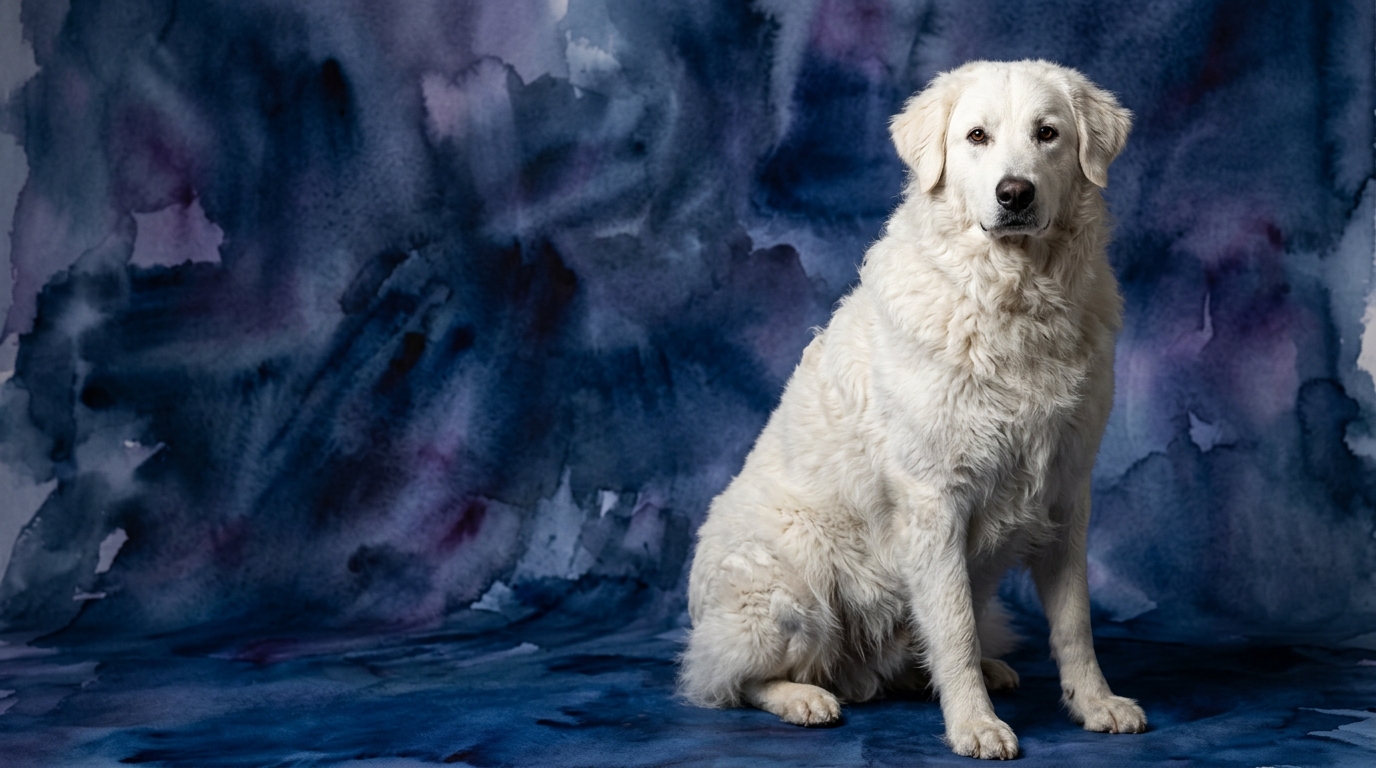

Side-by-Side IQ Profile
The Cosmic Pet Pet IQ Lab employs a five-dimensional framework to assess canine intelligence, providing a nuanced view beyond simple obedience. For the Kuvasz, a Coren-ranked breed at #42, and the Dogue de Bordeaux, currently not Coren-ranked, these dimensions reveal both similarities and subtle distinctions.
The Kuvasz, traditionally a livestock guardian, scores 3/5 in Problem Solving, indicating a moderate capacity for independent thought and adapting to novel situations, often relying on learned patterns. Their Training Speed is also 3/5, suggesting a moderate pace in grasping new commands, often influenced by their inherent independence. Social Intelligence stands at 3/5, reflecting a moderate understanding of human communication, though their primary focus remains on their perceived duty. Instinctive Drive is 3/5, guided by their innate protective nature. A notable strength is their Memory at 4/5, demonstrating a strong ability to retain information, crucial for their role in recalling threats and routines over time.
The Dogue de Bordeaux, a powerful working breed, shares several cognitive scores with the Kuvasz. They also score 3/5 in Problem Solving, displaying a moderate aptitude for navigating challenges, often through persistence and physical presence rather than complex strategizing. Their Training Speed is 3/5, meaning they learn new tasks at a moderate rate, with consistency being paramount. Social Intelligence is 3/5, indicating a moderate understanding of human social dynamics, often forming deep bonds with their family. Instinctive Drive is likewise 3/5, guided by a protective instinct coupled with a strong desire for companionship. Their Memory stands at 3/5, exhibiting a moderate capacity for recalling information, which benefits from regular reinforcement.
Where Kuvasz Wins Cognitively
The Kuvasz holds a distinct cognitive edge in memory, scoring 4/5 compared to the Dogue de Bordeaux's 3/5. This superior recall means a Kuvasz is more likely to retain complex command sequences, remember specific routines, or recall past experiences with greater detail over longer durations. For instance, a Kuvasz might more consistently remember the boundaries of their property or the specific cues for a multi-step task, even if not practiced frequently, stemming from their need to independently patrol and recall threats in their traditional guarding roles. This robust memory contributes to their reliability in established roles and expectations.
Where Dogue de Bordeaux Wins Cognitively
While both breeds share identical scores across problem-solving, training speed, social intelligence, and instinctive drive, the Dogue de Bordeaux's cognitive strengths often manifest through its specific blend of these traits within a family-oriented context. Their moderate social intelligence, combined with a strong desire for connection, often translates into a more intuitive understanding of household dynamics and a greater willingness to integrate into human routines. Unlike the more independent Kuvasz, the Dogue de Bordeaux's cognitive processing is often geared towards familial harmony and companionship, making them potentially more attuned to subtle shifts in their owner's mood or household atmosphere, even with similar foundational scores. This isn't about raw intellectual power, but how their cognition is applied to their environment.
Which is Easier to Train and Why
Assessing ease of training between the Kuvasz and Dogue de Bordeaux, both scoring 3/5 in training speed, requires looking beyond the raw score to their underlying temperaments and drives. The Kuvasz, with its history as an independent livestock guardian, often approaches training with a degree of self-reliance and skepticism. While their superior memory (4/5) means they can retain commands well, their instinctive drive (3/5) often prioritizes their own assessment of a situation over immediate obedience, meaning they might weigh a command against their perceived duty. This independence can make training a Kuvasz a test of consistency, patience, and establishing clear leadership, as they are not inherently driven to please in the same way some other breeds are.
Conversely, the Dogue de Bordeaux, also 3/5 in training speed and instinctive drive, often exhibits a strong desire to be part of the family unit and to please its owner. While they can be stubborn, their cognitive framework seems more inclined towards cooperation within their human pack. Training a Dogue de Bordeaux benefits immensely from positive reinforcement and a strong, affectionate bond, as their moderate social intelligence (3/5) allows them to connect deeply and respond to encouragement. Therefore, while both require dedicated effort, the Dogue de Bordeaux's innate inclination towards companionship often makes the process of training feel less like a negotiation and more like a collaborative effort, potentially making them feel easier to train for an average owner seeking compliance.
Which Suits Active Owners vs Relaxed Owners
When considering owner lifestyle, the Kuvasz and Dogue de Bordeaux present distinct profiles. The Kuvasz, despite its substantial size, is not typically a high-energy dog in the sense of needing constant intense physical activity. Their activity often revolves around patrolling and surveying their territory, a task that requires mental engagement and moderate physical exertion over a longer duration rather than short bursts of speed. An active owner who enjoys long, meandering walks, exploring diverse environments, or engaging in scent work that stimulates their problem-solving and instinctive drives would find a suitable companion in the Kuvasz, provided they also appreciate the breed's independent nature. However, a relaxed owner who prefers minimal daily exercise beyond a short stroll might find the Kuvasz's need for purposeful engagement challenging, potentially leading to boredom or destructive behaviors if their cognitive and physical needs are not met.
The Dogue de Bordeaux, while also a large breed, generally leans more towards the relaxed owner profile. They appreciate moderate daily walks and playtime, but are equally content to lounge with their family. Their moderate instinctive drive and social intelligence make them highly adaptable to a calmer home environment, thriving on companionship rather than constant physical challenges. Owners who prefer a strong, loyal presence and are content with shorter, consistent exercise routines, followed by ample indoor relaxation, would find the Dogue de Bordeaux an ideal match. They thrive on being close to their people, making them less demanding in terms of high-intensity activity and more suited to a tranquil, family-centric lifestyle.
The Verdict
For owners seeking a vigilant, independent guardian with a robust memory and a need for purposeful engagement, the Kuvasz is an exceptional choice.
If you prioritize a deeply loyal, companion-focused presence that thrives on familial connection and a more relaxed pace of life, the Dogue de Bordeaux will be a devoted addition.
🧠 Find Your Pet's IQ Score
Our Pet IQ Lab assessment covers 25+ tests across 5 cognitive dimensions — personalized to your breed.
Take the Full IQ Test →Frequently Asked Questions
Does the Kuvasz's Coren ranking of #42 mean it is significantly smarter than the Dogue de Bordeaux?
The Coren ranking primarily assesses obedience-command intelligence, indicating how quickly a breed learns and obeys known commands. While the Kuvasz's #42 placement suggests a stronger aptitude in this specific area compared to the Dogue de Bordeaux not being ranked, it doesn't encompass all facets of cognitive ability. Both breeds display moderate scores in problem-solving and training speed, so the difference lies more in their willingness to comply with commands rather than a vast gap in overall processing power.
Given their similar IQ scores in most categories, how can I differentiate their cognitive needs?
The primary differentiator is the Kuvasz's superior memory and their inherent independence, stemming from their guarding heritage. This means a Kuvasz benefits from mental challenges that require recall and independent decision-making, such as advanced obedience or complex scent work. The Dogue de Bordeaux, while also needing mental stimulation, often thrives more on interactive games and training that strengthens the human-dog bond, leveraging their family-centric social intelligence.
Are these breeds suitable for first-time dog owners?
Neither the Kuvasz nor the Dogue de Bordeaux are typically recommended for first-time dog owners due to their size, strength, and specific temperamental needs. Both require experienced handling, consistent training, and thorough socialization from a young age to channel their instinctive drives appropriately and ensure they grow into well-adjusted, manageable adults within a household setting.