Side-by-Side Cognitive Profiles
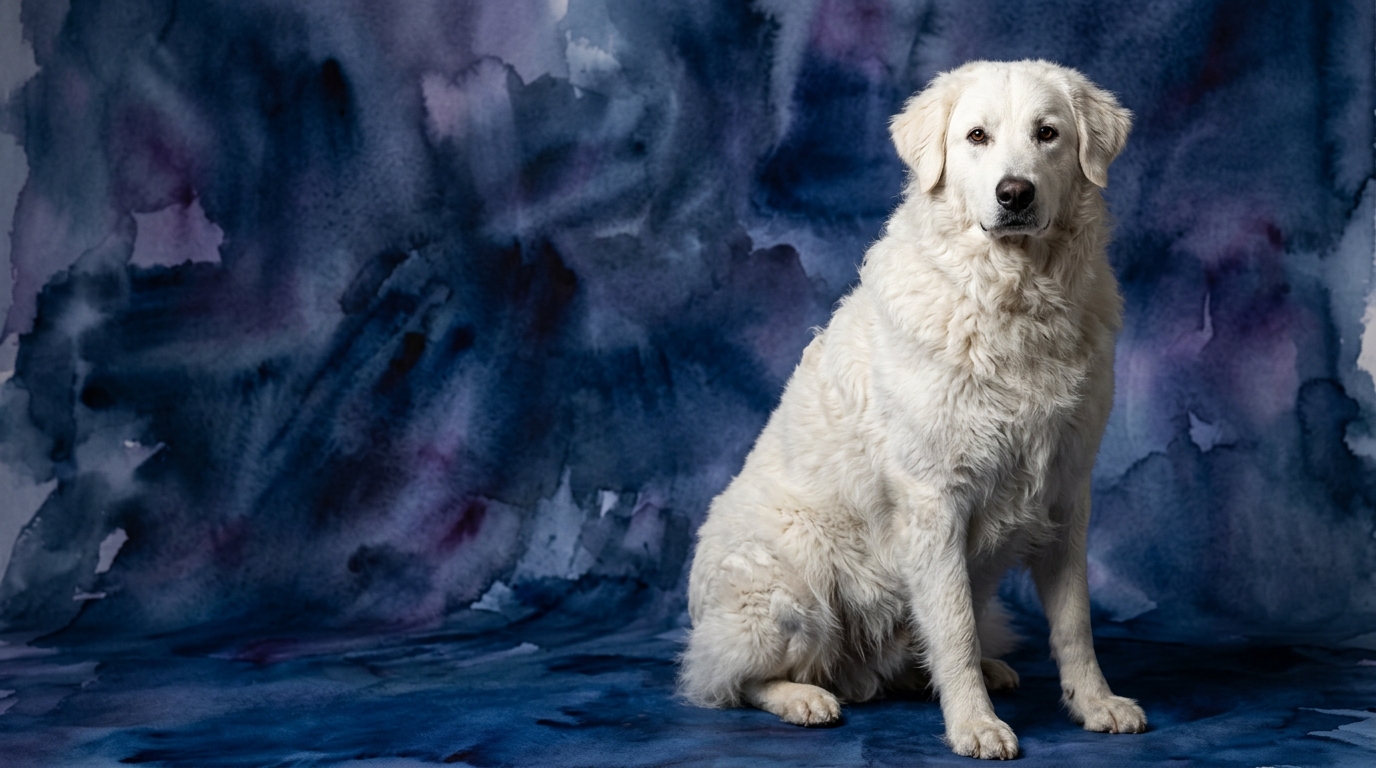
**Kuvasz:** This imposing Working breed brings a unique blend of cognitive strengths to its ancient role.
**Problem Solving (3/5):** A Kuvasz's problem-solving capacity is rooted in independent threat assessment and territory management. This score reflects its ability to evaluate environmental cues, discern friend from foe, and determine the most effective course of action to protect its charges without constant human direction. Their cognitive approach prioritizes calculated judgment in complex, real-world guarding scenarios.
**Training Speed (3/5):** The Kuvasz processes new commands and routines at a moderate pace, often requiring its handler to demonstrate the practical value of a task. Their inherent independence means they don't always offer immediate, eager compliance, necessitating patient, consistent, and respectful training methods. They learn effectively, but often after weighing the command against their own innate protective instincts.
**Social Intelligence (3/5):** A Kuvasz displays a nuanced understanding of social dynamics, particularly in assessing intentions. They are discerning with strangers, quickly categorizing individuals as safe or potentially threatening based on subtle cues. Within their family unit, they exhibit loyalty and a clear understanding of their position, though their affection may be expressed with reserved dignity rather than effusiveness. Their social acumen serves their role as a vigilant protector.
**Instinctive Drive (3/5):** The Kuvasz's instinctive drive is deeply tied to its livestock guarding heritage, manifesting as a strong territorial impulse and an unwavering protective nature towards its family or flock. This moderate yet powerful drive fuels their vigilance and influences their daily behaviors, making them keenly attuned to their surroundings and any perceived anomalies.
**Memory (4/5):** Here, the Kuvasz shows a robust capacity for recall, a significant asset in its guarding duties. They meticulously remember routines, intricate territorial boundaries, past interactions with individuals (both positive and negative), and the specific behaviors of potential threats. This strong memory allows them to build a comprehensive mental map of their world, consistently applying learned experiences to new situations and reinforcing their protective instincts over time.
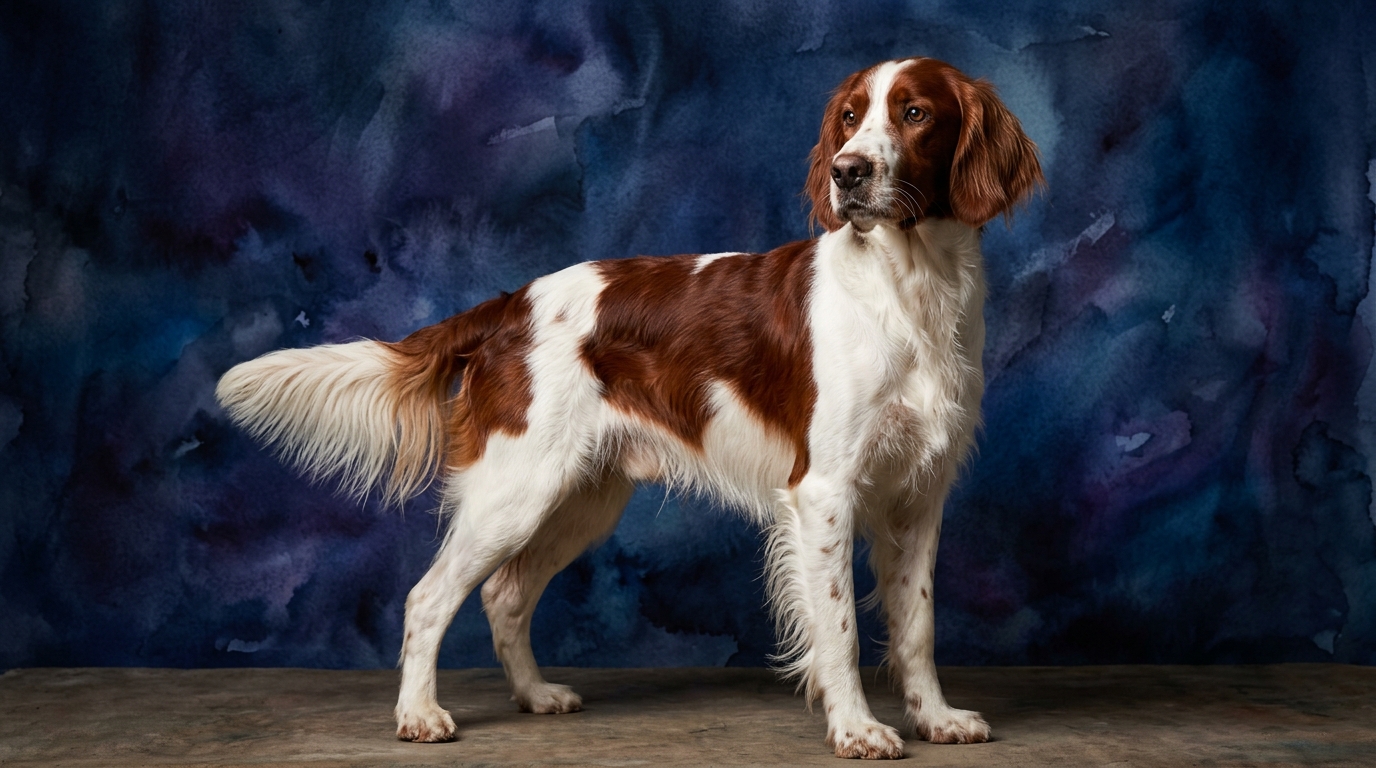
**Irish Red and White Setter:** As a Sporting breed, this Setter's cognitive attributes are finely tuned for field work.
**Problem Solving (3/5):** The Irish Red and White Setter applies its problem-solving skills primarily to its hunting tasks. This involves navigating diverse terrains, intelligently working through cover to locate game, and understanding wind direction for optimal scenting. Their cognitive approach is practical and goal-oriented, focused on efficiently achieving their objective in dynamic outdoor environments.
**Training Speed (3/5):** Similar to the Kuvasz, the Irish Red and White Setter learns at a moderate pace. They are generally eager to please their handlers, which can aid in training, but their strong prey drive and occasional distractibility demand engaging and focused sessions. They respond well to positive reinforcement and clear, consistent commands, processing information effectively once their attention is secured and maintained.
**Social Intelligence (3/5):** This breed typically exhibits a genial and outgoing social intelligence, particularly within its human family. They are generally friendly and adaptable, understanding social cues within a household setting. In a working context, their social intelligence supports their cooperative hunting efforts, enabling them to interpret a handler's subtle signals and work effectively as part of a team.
**Instinctive Drive (3/5):** The Setter's instinctive drive is intrinsically linked to its bird dog heritage, manifesting as a powerful desire to hunt, scent, point, and retrieve. This moderate drive is a potent motivator for activity and engagement, directing their energy towards tasks that mimic their historical purpose. It represents a drive for active engagement and partnership in the field.
**Memory (3/5):** The Irish Red and White Setter possesses a competent memory, enabling them to recall learned commands, familiar routes in the field, and the location of game or retrieve items within a session. Their memory effectively supports their training and field work, allowing them to build upon past experiences, though perhaps without the same long-term, detailed recall of environmental threats or intricate routines seen in the Kuvasz.
Where the Kuvasz Excels Cognitively
The Kuvasz's cognitive profile reveals a particular strength in its **memory (4/5)**, which surpasses the Irish Red and White Setter's (3/5). This enhanced recall is not merely about remembering where the treats are; it's deeply integrated into their ancient role as a livestock guardian. A Kuvasz uses this robust memory to meticulously catalog their territory, the individuals who belong there, and any changes or potential threats. They remember patterns in daily life, the specific scent of an unfamiliar animal, or the demeanor of a past visitor, allowing them to make informed, independent judgments about safety. This superior memory contributes significantly to their formidable presence as a protector, enabling them to build a comprehensive mental map of their world and apply learned experiences to new situations with precision and consistency over extended periods. Their ability to retain complex information about their environment and social dynamics underpins their reliability in a guarding capacity.
Where the Irish Red and White Setter Excels Cognitively
While the raw scores show parity or a slight difference in memory, the Irish Red and White Setter demonstrates a specialized cognitive strength in the **application of its instinctive drive and problem-solving within dynamic, cooperative hunting scenarios**. Both breeds share a 3/5 in problem-solving and instinctive drive, but for the Setter, this manifests as an exceptional ability to focus its cognitive resources on scenting, tracking, and pointing game, often in challenging and rapidly changing environments. Their problem-solving is less about independent threat assessment and more about efficiently locating and indicating birds, requiring quick, fluid decisions in the field. Their social intelligence (3/5) is finely tuned for working in partnership with a human handler, interpreting subtle cues and adjusting their behavior to the hunt's demands. This specialized application of their cognitive dimensions for a specific, active, and cooperative task represents a unique advantage, allowing them to excel in roles requiring sustained focus, agility of thought, and responsiveness in pursuit of a common goal.
Which is Easier to Train and Why
Both the Kuvasz and the Irish Red and White Setter share a **Training Speed score of 3/5**, indicating a moderate pace of learning. However, the *approach* and *perceived ease* of training diverge significantly due to their behavioral differences. The Kuvasz's independent nature, a cornerstone of its guarding role, means it often questions the necessity of commands that don't align with its perceived duties. Training a Kuvasz requires immense patience, consistency, and a deep understanding of canine behavior, focusing on building a respectful partnership rather than expecting immediate, unquestioning obedience. Their strong memory (4/5) also means they retain both positive and negative experiences, making harsh methods counterproductive and potentially damaging to the bond.
In contrast, the Irish Red and White Setter, while also having a moderate training speed, generally possesses a stronger desire to please its human companion, especially when engaged in activities related to its sporting instincts. This eagerness can make them seem "easier" to train in a traditional sense, as they are often more receptive to positive reinforcement and motivated by praise or rewards. However, their high prey drive and occasional distractibility mean that maintaining focus in training requires creativity and engaging exercises. While both require dedicated effort, the Setter's cooperative spirit often makes the training journey feel more collaborative, whereas the Kuvasz demands a handler who can earn respect and provide clear, consistent, and logical rationale for commands from the dog's perspective.
Which Suits Active Owners vs. Relaxed Owners
The choice between a Kuvasz and an Irish Red and White Setter largely depends on an owner's lifestyle and their definition of "active" or "relaxed."
The **Irish Red and White Setter** is undeniably suited for **active owners**. This breed possesses a robust instinctive drive (3/5) geared towards vigorous activity and requires substantial physical exercise daily, ideally coupled with mental stimulation that taps into their bird dog heritage. Owners who enjoy long runs, hiking, field sports, or active dog sports like agility will find a fulfilling companion in the Setter. Their moderate training speed (3/5) and cooperative nature mean they thrive when engaged in structured activities alongside their human. A relaxed owner who cannot provide this level of engagement will likely find a Setter becomes restless or destructive.
The **Kuvasz**, while not necessarily a "relaxed" dog in terms of mental engagement, is better suited for an owner who appreciates independence and a more observational, purposeful activity style. Their substantial size and guarding instincts mean they need a secure, spacious environment to patrol and manage. While they do require regular exercise for physical health, their mental stimulation often comes from overseeing their territory and family. They are not typically high-intensity, "go-go-go" dogs in the same way a Setter is, but they demand an owner who can provide consistent leadership, understand their independent problem-solving (3/5), and respect their strong memory (4/5) and discerning social intelligence (3/5). Therefore, an owner who is "active" in their commitment to consistent training, boundary setting, and providing a secure, stimulating environment for a guarding breed, rather than simply seeking a running partner, would suit a Kuvasz.
The Verdict
Choose a Kuvasz if you seek an independent, discerning guardian with a formidable memory and a calm, protective presence, and are prepared for a consistent, respectful training approach.
Choose an Irish Red and White Setter if you desire an energetic, cooperative companion for active outdoor pursuits, who thrives on engagement and a partnership in field-related activities.
🧠 Find Your Pet's IQ Score
Our Pet IQ Lab assessment covers 25+ tests across 5 cognitive dimensions — personalized to your breed.
Take the Full IQ Test →Frequently Asked Questions
Are Kuvasz dogs difficult to live with due to their guarding instincts?
Kuvasz dogs are indeed protective, a trait stemming from their instinctive drive (3/5) and robust memory (4/5) for their territory. While not "difficult," they require experienced owners who can provide consistent leadership and early socialization to channel their guarding behaviors appropriately. They are discerning and loyal to their family but can be wary of strangers.
How much exercise does an Irish Red and White Setter need compared to a Kuvasz?
An Irish Red and White Setter requires significantly more vigorous, sustained exercise, often for 1-2 hours daily, to satisfy its strong sporting instincts. A Kuvasz needs regular exercise for health and mental stimulation through patrolling its territory, but typically not the same intensity or duration of high-impact activity as the Setter.
undefined
undefined
Can an Irish Red and White Setter be an effective guard dog like a Kuvasz?
While an Irish Red and White Setter might alert to strangers, their social intelligence and instinctive drive are geared towards cooperative hunting, not independent guarding. The Kuvasz, with its specific problem-solving (3/5) and memory (4/5) for threat assessment, is bred for protection and excels in that role, unlike the more genial Setter.