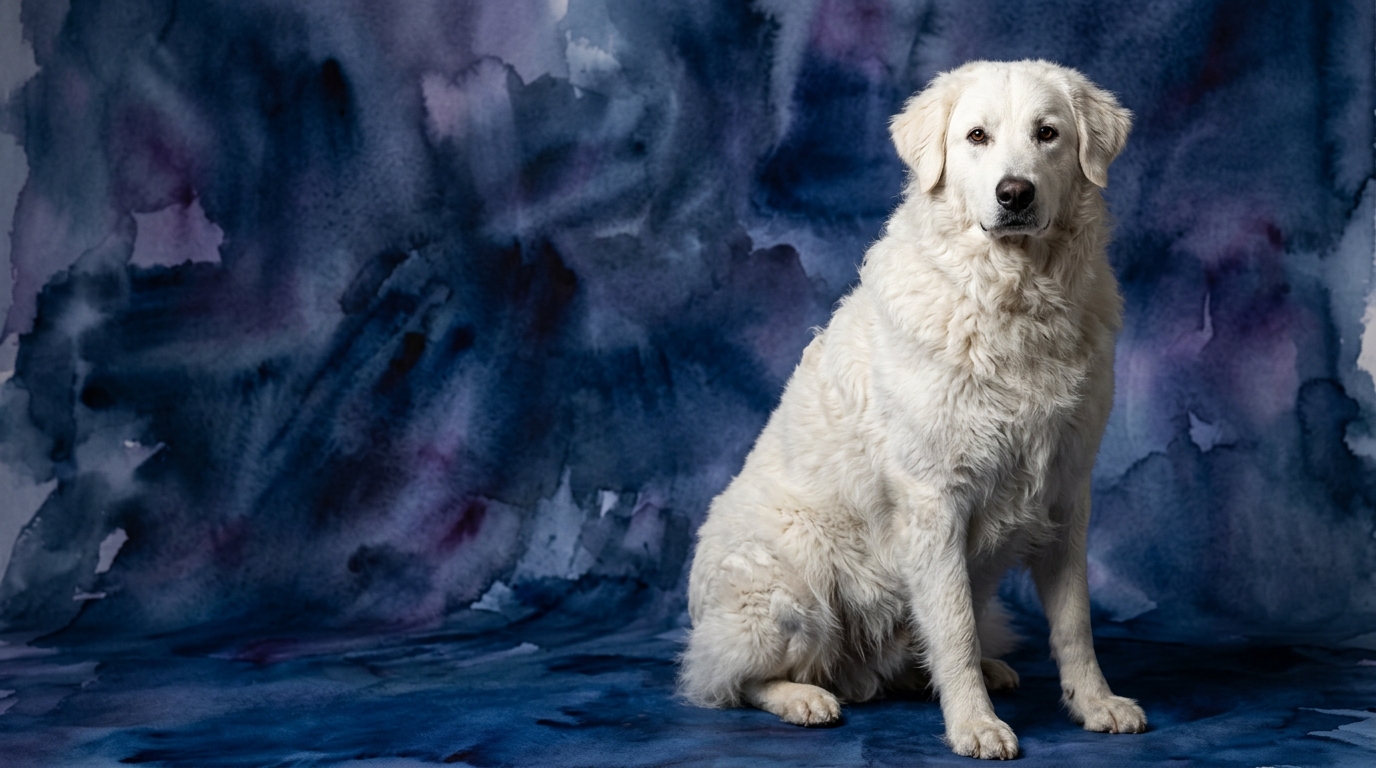

Side-by-Side IQ Profile: Kuvasz vs. Redbone Coonhound
At The Cosmic Pet Pet IQ Lab, we dissect canine cognition across five key dimensions to provide a comprehensive understanding of each breed's mental landscape. For the Kuvasz, a formidable livestock guardian, its Problem Solving ability registers a 3/5, indicating a capacity for independent thought and navigating complex situations, often through observation and self-reliance rather than strict instruction. Its Training Speed, also at 3/5, suggests it learns new commands at a moderate pace, but its independent nature means 'learning' doesn't always translate to immediate 'compliance.' Social Intelligence stands at 3/5, reflecting its ability to read human cues and bond with its family, yet maintaining a watchful distance with strangers. The Kuvasz's Instinctive Drive, rated 3/5, is powerfully geared towards protection and vigilance, a deep-seated impulse to patrol and guard its territory and charges. Finally, its Memory is a robust 4/5, allowing it to retain information about routines, boundaries, and individuals with impressive accuracy over time.
The Redbone Coonhound, a tireless pursuit specialist, shares some intriguing similarities in its cognitive scores, despite its entirely different lineage. Its Problem Solving ability also scores 3/5, demonstrating an aptitude for figuring out puzzles, often related to tracking and scent work, where persistence and sensory input guide its decisions. Training Speed mirrors the Kuvasz at 3/5, suggesting a similar rate of information uptake, though its motivation and focus are heavily influenced by its powerful instincts. Social Intelligence is likewise 3/5, indicating a sociable nature within its pack (human or canine) but without the same independent watchfulness of a guardian. The Redbone's Instinctive Drive, also 3/5, is profoundly focused on scent and tracking, an unwavering determination to follow a trail once engaged. Its Memory, however, is a 3/5, slightly lower than the Kuvasz, meaning it retains information well, but perhaps not with the same long-term precision for complex routines or subtle distinctions.
Where the Kuvasz Excels Cognitively
The Kuvasz truly shines in its exceptional Memory, scoring a 4/5 compared to the Redbone's 3/5. This enhanced recall isn't just about remembering where the treats are; it underpins its effectiveness as a guardian. A Kuvasz can consistently recall who belongs on its property, which boundaries are non-negotiable, and the specific commands associated with various scenarios, even after long periods. This superior memory allows it to build a comprehensive mental map of its environment and its role within it, contributing to its reliability in independent decision-making. Its Coren ranking of #42, while not directly reflected in our specific IQ dimensions, broadly suggests a higher capacity for obedience and working intelligence when compared to the unranked Redbone Coonhound, hinting at a more adaptable cognitive framework for diverse tasks beyond its core drives.
Furthermore, the Kuvasz's problem-solving, though rated equally at 3/5, is often applied in a context requiring more abstract reasoning for protection. It might assess a novel threat, weigh options, and make a judgment call based on past experiences and remembered rules, rather than simply following an instinctual scent trail. This blend of strong memory and context-aware problem-solving gives the Kuvasz an edge in situations demanding independent, reasoned responses.
Where the Redbone Coonhound Shows Unique Cognitive Strengths
While the Redbone Coonhound may not boast a higher numerical score in any single IQ dimension over the Kuvasz, its cognitive strengths lie in the specialized application of its abilities, particularly its Instinctive Drive (3/5) and Problem Solving (3/5) when intertwined with its sensory world. The Redbone's problem-solving is intensely focused on deciphering complex scent puzzles – tracking a faint trail over varied terrain, navigating obstacles, and differentiating target scents from myriad distractions. This is a highly specialized form of intelligence, requiring immense focus and sensory discrimination that few breeds can match.
Its 'win' is in its unwavering dedication and endurance in pursuit, a cognitive strength that allows it to maintain focus on a single objective for extended periods, even when faced with fatigue or environmental challenges. This relentless drive, combined with a social intelligence that allows it to work cooperatively within a hunting pack (human or canine), makes it an unparalleled specialist in its field. The Redbone's cognitive profile is optimized for a singular, demanding task, where its entire mental apparatus is geared towards the hunt, making it a master of its particular domain.
Which is Easier to Train and Why?
When it comes to trainability, both breeds present unique challenges, despite their identical Training Speed scores of 3/5. The Kuvasz, with its independent nature and strong guardian instincts, requires a handler who can establish clear, consistent leadership from an early age. Its problem-solving capacity means it evaluates commands rather than blindly obeying, and its social intelligence allows it to bond deeply, but it will question authority if it perceives weakness. Once a Kuvasz respects its owner and understands the 'why' behind a command, its superior Memory (4/5) ensures lessons stick, leading to a reliable, if sometimes self-willed, companion. Training a Kuvasz is about building trust and mutual respect, and overcoming its inherent self-sufficiency.
The Redbone Coonhound, conversely, is not necessarily difficult to understand, but its profound Instinctive Drive (3/5) towards scent work often overrides other considerations. Its training speed of 3/5 means it can learn commands, but its attention is easily hijacked by an interesting smell, making recall a constant battle in uncontrolled environments. Training a Redbone requires immense patience, creativity to make commands more enticing than a scent trail, and a deep understanding of its hound nature. While it possesses social intelligence (3/5) and enjoys companionship, its primary cognitive engagement is often with its nose, not directly with human directives. Therefore, while the Kuvasz might be more challenging to initially convince, the Redbone presents a continuous challenge of managing its powerful, external-focused drives.
Suitability for Active vs. Relaxed Owners
The Kuvasz, despite its imposing presence, isn't necessarily a high-octane athlete in the same vein as some other working breeds. Its physical activity requirements are more about purposeful patrolling and guarding its territory, rather than endless running. It thrives on having a job, whether it's overseeing the family or a flock, and needs regular, moderate exercise that allows it to survey its surroundings. This makes it suitable for owners who are active in their daily lives, perhaps with a large yard or property, and who can provide consistent mental stimulation through training and 'guarding' duties. A truly relaxed owner who offers minimal engagement might find a Kuvasz's independent decision-making and protective instincts challenging to manage.
The Redbone Coonhound, on the other hand, is unequivocally suited for active owners. Its instinctive drive for tracking and its robust physical build demand significant daily exercise, ideally in environments where it can safely explore scents. Long walks, runs, hikes, or engaging in scent work and tracking sports are essential for its well-being. A relaxed owner who cannot commit to providing ample physical and mental outlets for its powerful drives would likely find a Redbone to be a restless, potentially destructive, and unhappy companion. Its cognitive profile is wired for endurance and pursuit, making it a poor fit for a sedentary lifestyle.
The Verdict
Choose the Kuvasz if you seek a loyal, independent guardian with exceptional memory and are prepared to establish firm, consistent leadership for a dog that thinks for itself. It thrives with owners who appreciate its protective nature and can provide a clear role within the family.
Opt for the Redbone Coonhound if you are an active, outdoors-loving individual or family prepared to channel its powerful scent drive into demanding physical activities like hiking or scent work. This breed excels with owners who understand and celebrate its specialized tracking intelligence and endurance.
🧠 Find Your Pet's IQ Score
Our Pet IQ Lab assessment covers 25+ tests across 5 cognitive dimensions — personalized to your breed.
Take the Full IQ Test →Frequently Asked Questions
Do Kuvasz dogs make good family pets?
Yes, Kuvasz dogs can be wonderful family pets, deeply loyal and protective of their human family members. Their social intelligence allows them to bond closely, but they require early socialization and consistent training to manage their independent and protective instincts, especially around strangers or children not in their immediate 'flock'.
Are Redbone Coonhounds good for apartment living?
Redbone Coonhounds are generally not ideal for apartment living due to their high energy levels and strong instinctive drive for tracking. They thrive in environments with ample space and opportunities for extensive exercise and mental stimulation, preferably in areas where they can explore scents safely and freely.
How do Kuvasz and Redbone Coonhound intelligence differ in practical scenarios?
A Kuvasz's superior memory and independent problem-solving would make it adept at remembering complex routines or discerning familiar visitors from potential threats on its own. A Redbone Coonhound's specialized problem-solving would manifest in its ability to follow a faint, intricate scent trail for miles, demonstrating incredible focus and sensory interpretation.