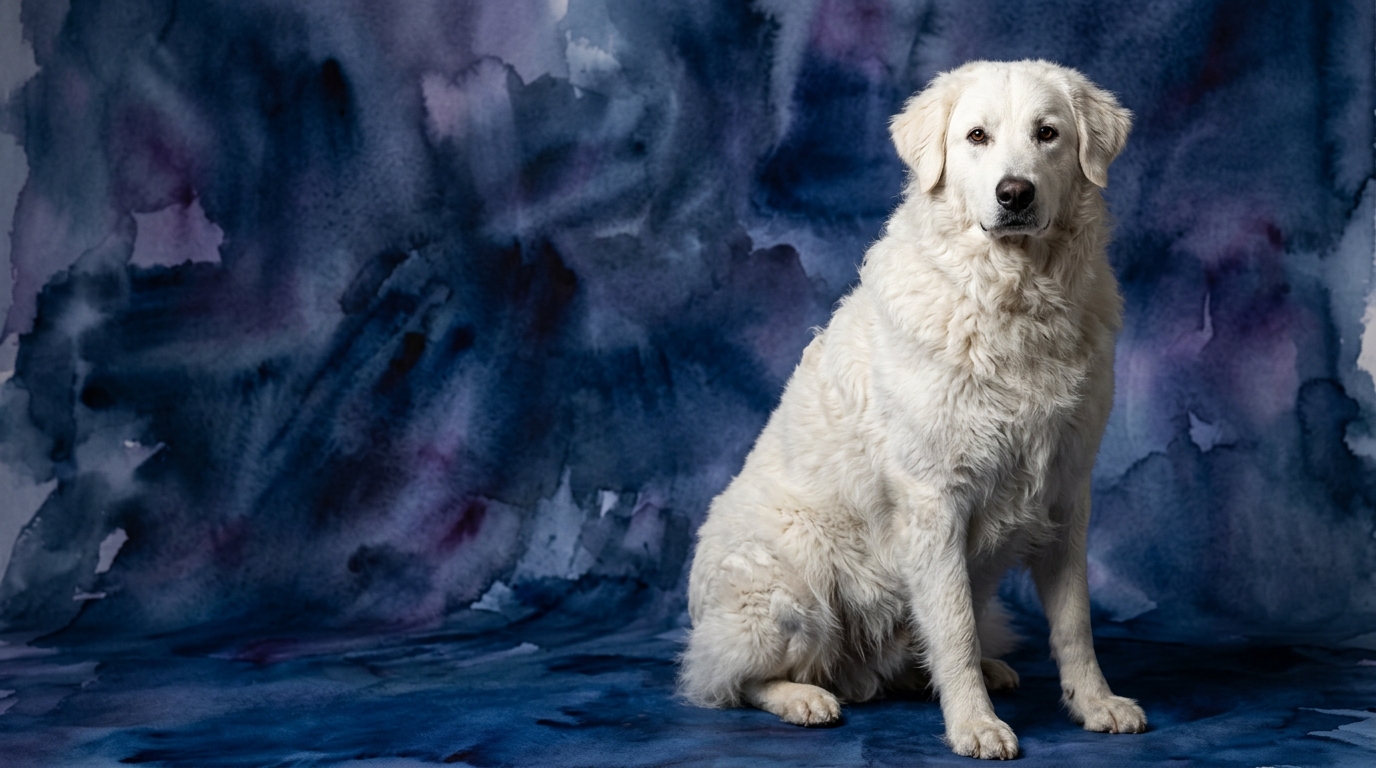

Side-by-Side IQ Profile: Kuvasz vs. Toy Fox Terrier
Hailing from the Working group, the Kuvasz is a breed historically tasked with guarding livestock, a role that profoundly shapes its cognitive profile. Their Problem Solving is rated 3/5, indicating an ability to navigate complex situations independently, often relying on their own judgment rather than constant human direction. Training Speed, also at 3/5, suggests they learn new commands at a moderate pace, but their independent nature means compliance isn't always immediate or enthusiastic; they need a compelling reason or consistent reinforcement. Social Intelligence, rated 3/5, reflects their capacity to understand and respond to social cues, particularly within their family unit, but they often maintain a dignified reserve with strangers. Their Instinctive Drive, at 3/5, is strongly channeled into protection and territorial vigilance, manifesting as a deep-seated need to survey and defend their charges. Uniquely, their Memory stands at 4/5, a critical asset for a guardian that must recall threats, safe boundaries, and the routines of their flock over extended periods.
From the Toy group, the Toy Fox Terrier is a lively, compact companion originally bred for ratting and companionship, showcasing a different kind of mental agility. Their Problem Solving is also rated 3/5, applied to different scenarios like navigating intricate home environments or figuring out how to get to a desired toy. Training Speed, matching the Kuvasz at 3/5, means they pick up commands at a similar rate, but their eagerness to please and quick, agile bodies can make them appear more responsive in certain training contexts. Social Intelligence, at 3/5, points to their ability to bond closely with their human families and adapt to various social settings, though their terrier tenacity can sometimes lead to selective hearing. Their Instinctive Drive, also 3/5, is strongly expressed as a keen prey drive and a vigilant alertness, making them excellent, if sometimes noisy, watchdogs. Their Memory, rated 3/5, is sufficient for learning routines and commands, though perhaps not as robust for long-term, complex environmental mapping as their larger counterpart.
Where the Kuvasz Wins Cognitively
The Kuvasz truly excels in the realm of memory, boasting a 4/5 rating, a full point above the Toy Fox Terrier. This superior recall isn't just about remembering a treat location; it’s fundamental to their historical role. A Kuvasz needs to remember the faces of trusted family members and livestock, distinguish them from potential threats, and recall the boundaries of their vast territory, sometimes over years. This advanced memory allows for sophisticated threat assessment and long-term strategic decision-making in their guardian duties, enabling them to make independent judgments based on cumulative past experiences rather than just immediate stimuli. Their ability to retain complex spatial information and recognize subtle changes in their environment over time gives them a distinct cognitive advantage in roles requiring sustained vigilance and independent action.
Where the Toy Fox Terrier's Cognitive Profile Shines
While the numerical scores for problem-solving, training speed, social intelligence, and instinctive drive are identical to the Kuvasz, the Toy Fox Terrier’s cognitive profile shines in its application within a different context. Their 3/5 Problem Solving, combined with their compact size and quick reflexes, translates into exceptional agility in navigating complex, often human-centric environments, such as finding a hidden toy under furniture or maneuvering through crowded spaces with ease. Their 3/5 Instinctive Drive, channeled into a sharp prey drive, means they possess an immediate, intense focus when engaging with small, fast-moving objects, demonstrating rapid information processing and swift, decisive action crucial for tasks like vermin control. This quickness of reaction and adaptability to varied, often urban or indoor, challenges allows them to leverage their cognitive abilities in ways that are distinct from a large, territorial guardian, making them adept at tasks requiring fine motor skills and rapid environmental assessment.
Which is Easier to Train and Why
Both breeds share a 3/5 rating for Training Speed, indicating a moderate learning pace. However, the practical experience of training them diverges significantly due to their inherent behavioral traits. The Kuvasz, with its deeply ingrained independent guardian instincts, often appears more challenging to train. They are bred to make autonomous decisions in the absence of human direction, meaning they might question commands or prioritize their perceived duty over immediate obedience. Training a Kuvasz requires immense patience, clear communication, and establishing a relationship built on mutual respect, rather than expecting rote compliance. Their size and powerful build also mean that any resistance during training is physically more demanding for the owner.
In contrast, the Toy Fox Terrier, while possessing typical terrier tenacity and a strong will, often has a higher motivation for human interaction and praise. Their smaller stature makes them physically easier to manage, and their quick, agile nature allows for faster execution of learned behaviors. While they can be easily distracted by their prey drive, their eagerness to engage and their ability to thrive in a structured, consistent training environment often makes them *feel* easier to train for the average owner, even if the raw learning speed is similar.
Which Suits Active Owners vs. Relaxed Owners
The distinction between these two breeds in terms of owner lifestyle preference is stark. The Kuvasz, originating from the Working group, demands an owner who is not only active but also deeply committed to providing extensive mental and physical stimulation. They require large, securely fenced spaces to patrol, fulfilling their innate guardian instincts, and benefit from regular, purposeful exercise that engages both their bodies and minds. A truly relaxed owner would struggle with the Kuvasz's need for consistent training, socialization, and an environment that allows them to express their natural behaviors. Their independence means they thrive with confident leadership and a clear understanding of their role within the family.
Conversely, the Toy Fox Terrier, while energetic and playful, is far more adaptable to a relaxed or moderately active owner. They enjoy daily walks, playtime in a secure yard, and thrive on interactive games that challenge their quick wit. Their smaller size makes them suitable for various living situations, including apartments, provided their exercise and mental stimulation needs are met through structured play and companionship. They are content to curl up with their owners after their energy has been expended, making them a better fit for those seeking a lively but less demanding companion.
The Verdict
Opt for the Kuvasz if you are an experienced dog owner with ample space, a deep understanding of independent guardian breeds, and the dedication to consistent, patient training and socialization for a loyal, protective companion.
Select the Toy Fox Terrier if you desire a spirited, adaptable companion for a moderately active household, appreciating a dog that thrives on interaction, enjoys engaging play, and offers vigilant alertness in a compact package.
🧠 Find Your Pet's IQ Score
Our Pet IQ Lab assessment covers 25+ tests across 5 cognitive dimensions — personalized to your breed.
Take the Full IQ Test →Frequently Asked Questions
Is the Kuvasz or Toy Fox Terrier more independent in their decision-making?
The Kuvasz is significantly more independent due to its historical role as a livestock guardian, requiring it to make autonomous decisions to protect its flock. The Toy Fox Terrier, while possessing terrier tenacity, is generally more inclined to seek human direction and interaction.
Can a Toy Fox Terrier be an effective guard dog for a home?
While a Toy Fox Terrier's keen alertness and vocal nature make it an excellent alarm dog, quickly alerting owners to strangers, its small size means it is not an effective physical guard dog like the Kuvasz. It primarily serves as a vigilant watch-dog.
How do their problem-solving abilities compare in daily household situations?
Both breeds share a 3/5 problem-solving rating, but apply it differently; the Kuvasz might independently assess and resolve perceived threats to its territory, while the Toy Fox Terrier might creatively figure out how to access a favorite toy or navigate household obstacles.