
Side-by-Side IQ Profile: Diving into Cognitive Dimensions
The Cosmic Pet Pet IQ Lab employs a five-dimensional framework to assess canine intelligence, moving beyond simple obedience measures to understand how breeds process information, interact socially, and apply their inherent drives. Let's explore how the Labrador Retriever and German Shepherd measure up across these specific cognitive traits.
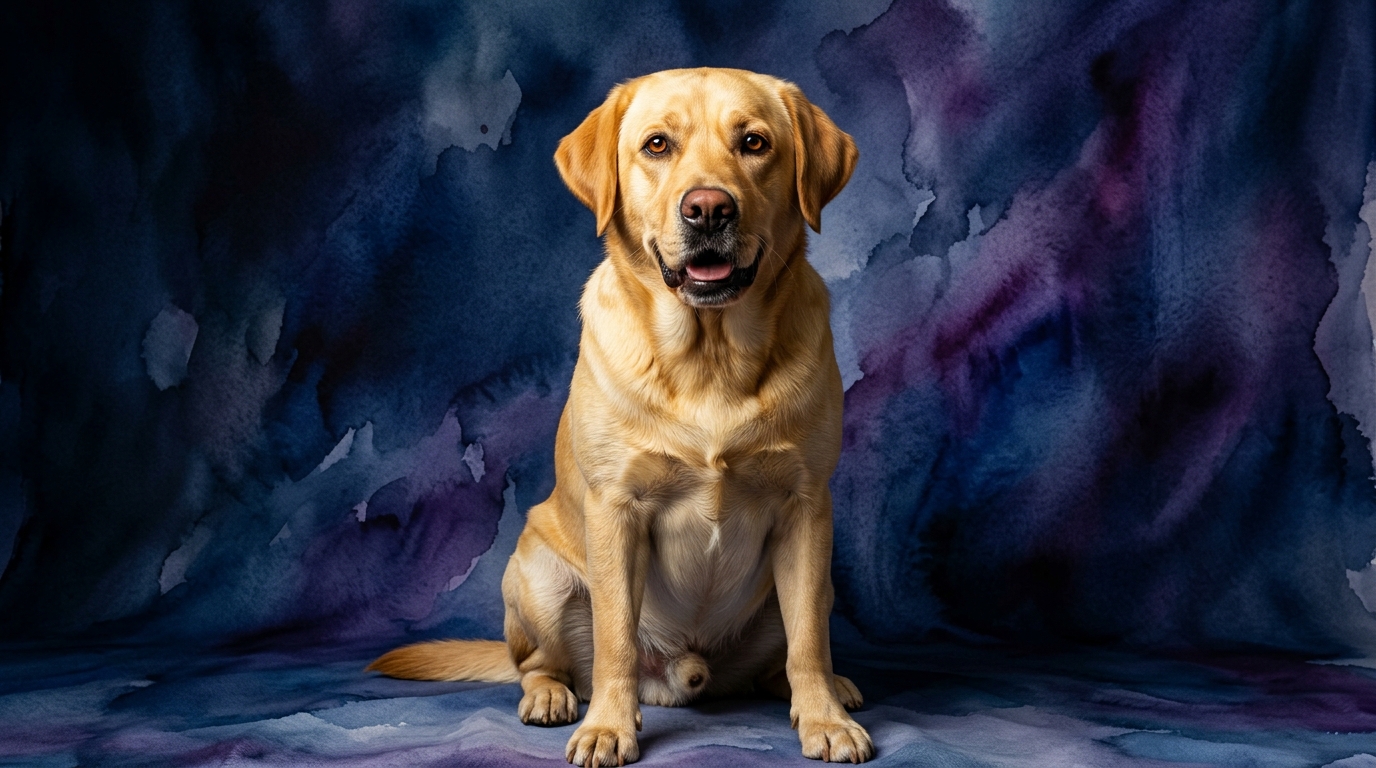
The Labrador Retriever, ranked #7 by Coren for obedience and working intelligence, exhibits a balanced and highly adaptable cognitive toolkit. Their Problem Solving score of 4/5 indicates an effective capacity to navigate novel situations and figure out solutions, typically through persistence and learned experience, though they might take a moment longer to process complex, multi-step puzzles compared to some peers. Training Speed is rated 5/5, reflecting their strong desire to cooperate and rapid acquisition of new commands and routines, making them exceptionally responsive learners. Social Intelligence, also a perfect 5/5, highlights their acute perceptiveness regarding human emotions and intentions, enabling seamless communication and empathetic companionship. An Instinctive Drive of 4/5 signifies a robust natural inclination for tasks like retrieving or tracking, providing ample motivation without overwhelming intensity, making it channelable for various activities. Finally, a Memory score of 4/5 suggests solid retention of commands, routines, and experiences, ensuring they recall past lessons and interactions reliably.
In contrast, the German Shepherd, consistently ranked #3 by Coren, presents a profile marked by intense focus and comprehensive cognitive prowess across the board. Their Problem Solving capability is a top-tier 5/5, demonstrating an exceptional aptitude for quickly analyzing complex scenarios, devising strategies, and adapting to overcome challenges, often showing remarkable ingenuity. Training Speed is likewise 5/5, indicating an incredibly swift grasp of new concepts, intricate command sequences, and behavioral expectations, allowing for rapid progression in advanced training. A Social Intelligence score of 5/5 reflects their profound understanding of human social cues, enabling deep bonds and an intuitive sense of duty and loyalty. Their Instinctive Drive, a commanding 5/5, means they possess an inherent, powerful motivation for work, protection, and specific tasks, thriving on having a purpose and requiring consistent mental engagement. Lastly, a Memory score of 5/5 denotes an outstanding ability to retain vast amounts of information, from specific commands to past events and learned associations, contributing to their reliability in high-stakes working roles.
Where the Labrador Retriever Excels Cognitively
While the German Shepherd boasts slightly higher numerical scores in several categories, the Labrador Retriever's unique cognitive blend provides distinct advantages in certain contexts. Their 5/5 Social Intelligence combined with a 4/5 Instinctive Drive makes them unparalleled in roles requiring significant emotional attunement and a gentle, persistent approach. For instance, in therapy or emotional support work, a Labrador's deep understanding of human emotional states allows them to respond with comforting actions or presence, without the intense, task-oriented drive that might sometimes overshadow nuanced emotional support. Their problem-solving, though a 4/5, often manifests as a cooperative effort, where they readily seek human guidance or approval, which can be advantageous in a companion setting. This cooperative problem-solving style, coupled with their excellent training speed, makes them exceptionally rewarding for owners who appreciate a dog that is eager to work *with* them rather than solely *for* them, particularly when the tasks involve social interaction or sustained positive reinforcement.
Where the German Shepherd Shines Cognitively
The German Shepherd's suite of 5/5 scores across Problem Solving, Training Speed, Social Intelligence, Instinctive Drive, and Memory positions them for exceptional performance in complex, demanding roles. Their superior Problem Solving (5/5) allows them to master multi-stage tasks and adapt swiftly to changing parameters, which is critical in search and rescue operations where conditions are unpredictable, or in competitive obedience where sequences of commands require precise, quick execution. The combination of a 5/5 Instinctive Drive and 5/5 Memory means they can sustain intense focus on a task for extended periods and recall intricate procedures with remarkable accuracy, making them highly effective in protection work, police K9 units, or intricate scent detection. Their social intelligence is profound, often manifesting as an unwavering loyalty and protective instinct, making them highly attuned to their handler's needs in working scenarios. This comprehensive cognitive toolkit makes them truly formidable in any field requiring precision, endurance, and an almost intuitive understanding of operational objectives.
Which Is Easier to Train and Why: Beyond Speed
Both breeds achieve a perfect 5/5 in Training Speed, indicating that both the Labrador Retriever and German Shepherd grasp new commands with impressive rapidity. However, the *experience* of training can differ significantly due to their other cognitive traits. A Labrador's 5/5 Social Intelligence and 4/5 Instinctive Drive often translate to a more universally 'easy' training experience for the average owner. They are often eager to please and highly motivated by positive reinforcement, making them very forgiving of handler inconsistencies and less prone to independent problem-solving that might deviate from the desired behavior. Their strong social bond means they are highly motivated by human interaction and approval.
Conversely, while a German Shepherd learns commands just as quickly, their 5/5 Problem Solving and 5/5 Instinctive Drive mean they approach training with a more intense and often analytical mindset. They are adept at understanding the 'why' behind a command and may attempt to 'outsmart' their handler or find shortcuts if the training is not consistently structured, engaging, and authoritative. Their high drive necessitates a clear purpose and consistent mental stimulation; without it, their intelligence and drive can lead to undesired behaviors as they create their own 'work.' For a seasoned handler, this intensity is a gift, allowing for advanced, nuanced training. For a novice, the German Shepherd’s cognitive power can feel more challenging to direct effectively, requiring more expertise to harness their full potential.
Family Pet Suitability: Active Owners vs. Relaxed Owners
For active owners seeking a canine companion, both breeds offer robust partnership, yet with distinct flavors. The Labrador Retriever's blend of high Social Intelligence, excellent Training Speed, and a strong but manageable Instinctive Drive (4/5) makes them ideal for active families who enjoy diverse activities like hiking, swimming, and fetching, alongside substantial social interaction. They thrive on being involved in family life, adapting well to varied routines, and typically possess a joyful, easygoing demeanor that makes them wonderful companions for children and other pets. They require regular exercise and mental engagement but are generally content with a more fluid schedule of activities, balancing play with periods of family relaxation.
For owners whose lifestyle leans towards a more relaxed pace, neither breed is truly suited for minimal engagement, as both are working dogs by nature. However, the Labrador Retriever, with its slightly lower instinctive drive and generally less intense mental demands, would be a *more manageable* choice than a German Shepherd. A Labrador can tolerate an occasional less active day if compensated by quality social interaction and regular exercise the rest of the week. The German Shepherd, with its pervasive 5/5 Instinctive Drive and Problem Solving, requires consistent, structured mental and physical stimulation to prevent boredom and potential behavioral issues. A relaxed owner may struggle to meet the German Shepherd's profound need for purpose and structured activity, making them a less fitting choice for a truly laid-back household, despite their deep loyalty.
The Verdict: When to Choose Each Breed
The Verdict
Choose a Labrador Retriever if you seek a highly cooperative, socially intelligent companion eager for a variety of activities and deeply integrated into family life, excelling with consistent positive reinforcement and moderate, diverse mental engagement. They thrive in homes valuing companionship and a joyful approach to training.
Choose a German Shepherd if you are an experienced, dedicated owner prepared to provide rigorous, structured training and consistent mental challenges, seeking a loyal, driven partner for advanced tasks, protection, or competitive canine sports.
🧠 Find Your Pet's IQ Score
Our Pet IQ Lab assessment covers 25+ tests across 5 cognitive dimensions — personalized to your breed.
Take the Full IQ Test →Frequently Asked Questions
Do Labrador Retrievers or German Shepherds learn faster?
Both breeds boast a 5/5 Training Speed score, indicating they learn new commands and routines with impressive rapidity. The difference often lies in the complexity of tasks they excel at and the handler's ability to manage their specific drives and problem-solving approaches, rather than the initial speed of acquisition itself.
Which breed is better for first-time dog owners?
While both require commitment, a Labrador Retriever's balanced profile, high social intelligence, and cooperative nature generally make them a more forgiving and manageable choice for first-time dog owners. Their eagerness to please and slightly less intense drive can simplify the training process and daily management compared to the German Shepherd's powerful drives and complex cognitive needs.
Is a German Shepherd's higher IQ score always an advantage?
A German Shepherd's consistently higher IQ scores across dimensions like Problem Solving, Instinctive Drive, and Memory are certainly advantages in demanding working roles, enabling complex learning and sustained focus. However, for an average pet owner, these traits necessitate significant mental stimulation and expert guidance; without appropriate outlets, these powerful cognitive abilities can lead to boredom or destructive behaviors, potentially becoming a challenge rather than an advantage.