Side-by-Side Cognitive Profiles: Leonberger and Ibizan Hound
At first glance, the Pet IQ Lab scores for both the Leonberger and the Ibizan Hound appear identical across all five dimensions: Problem Solving 3/5, Training Speed 3/5, Social Intelligence 3/5, Instinctive Drive 3/5, and Memory 3/5. However, these identical numerical ratings do not imply identical cognitive manifestation. Instead, they represent a moderate capacity for each trait, expressed distinctly through the lens of each breed's historical purpose and inherent temperament. Understanding these nuances is key to appreciating their individual mental makeup.
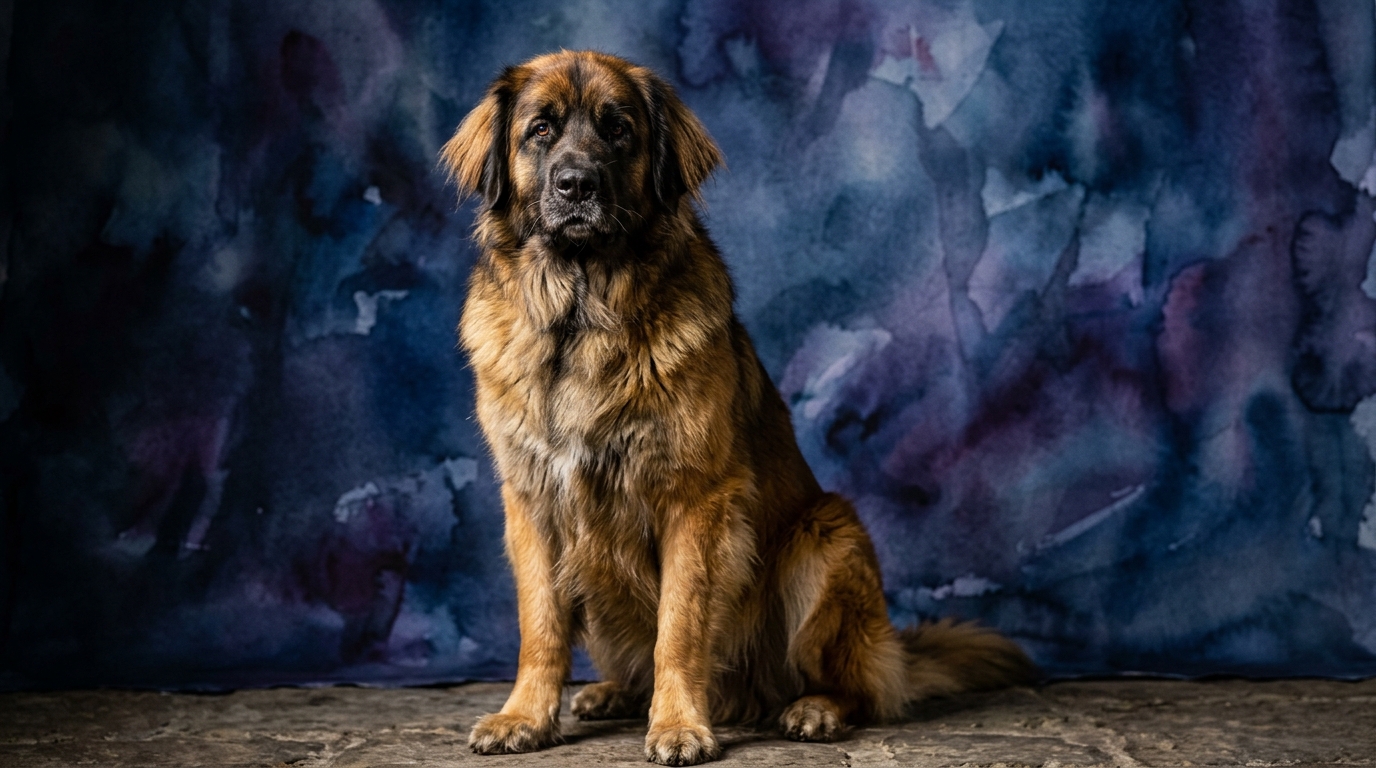
The Leonberger, a member of the Working Group, developed its cognitive traits to assist humans in various capacities, from drafting carts to water rescue and loyal companionship. Their Problem Solving at 3/5 often manifests as a practical ability to navigate household routines, understand complex family dynamics, or figure out how to access a favorite toy. This problem-solving is typically cooperative, aimed at achieving a goal that often benefits their human companions. Their Training Speed of 3/5 indicates a moderate pace of learning, but this is frequently enhanced by their strong desire to please and their biddability. Social Intelligence at 3/5 reflects their capacity for deep familial bonds, their ability to read human emotions, and their aptitude for integrating smoothly into a multi-species household. Their Instinctive Drive, also 3/5, includes a moderate protective instinct for their family and a natural inclination towards nurturing behaviors. Memory at 3/5 allows them to recall commands, routines, and the intricate social structures of their home environment with dependable consistency.
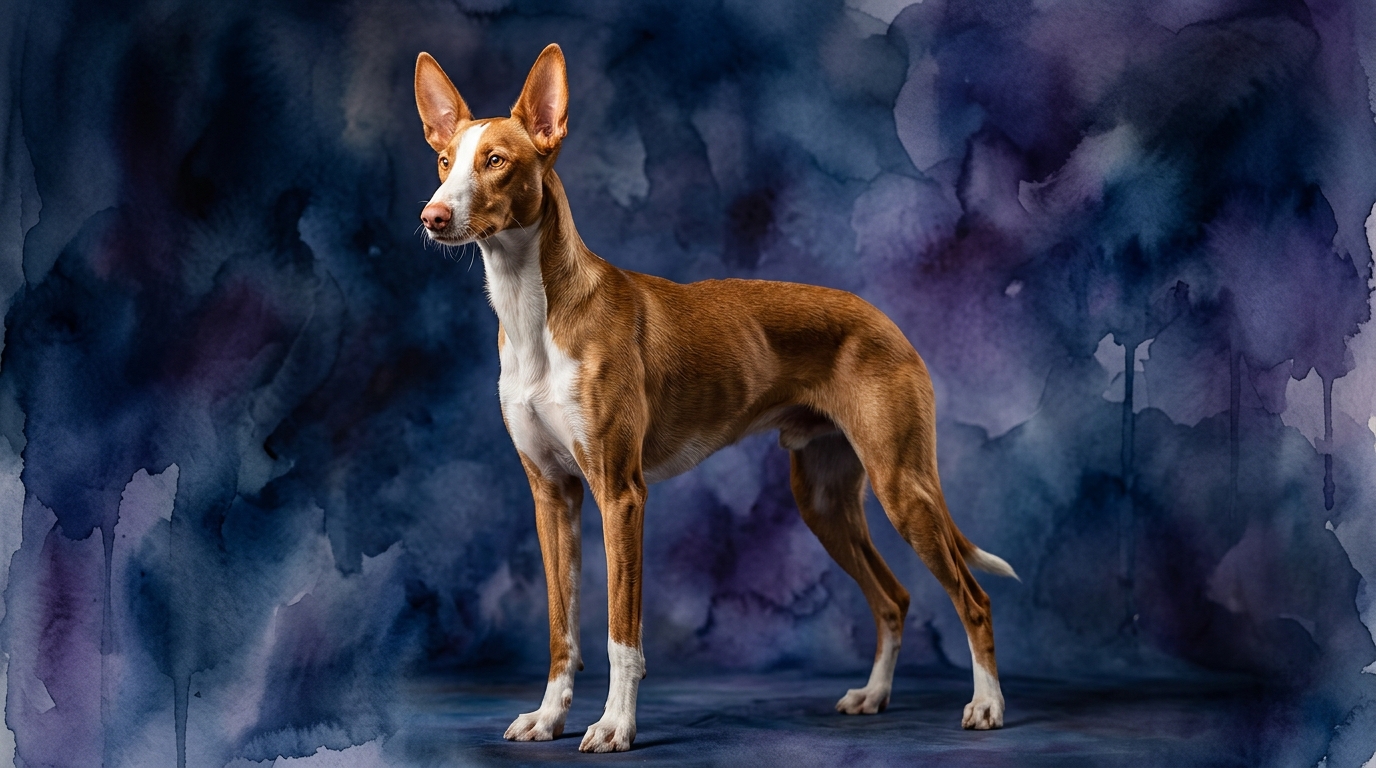
The Ibizan Hound, a distinctive Sighthound, developed its cognitive abilities primarily for the independent pursuit of game, particularly rabbits and hares, across diverse and challenging terrains. Their Problem Solving at 3/5 is less about cooperation and more about autonomous decision-making in the field, such as identifying the optimal path to intercept prey or navigating obstacles efficiently. This breed's Training Speed of 3/5 means they learn commands at a moderate rate, but their independent nature often dictates when and if they will apply that learning, especially if a more stimulating activity, like a chase, presents itself. Social Intelligence at 3/5 for the Ibizan Hound translates to a deep, often reserved, bond with their immediate family, where they can be quite perceptive of their trusted humans' moods and intentions. Their Instinctive Drive, a 3/5, is heavily weighted towards a powerful prey drive and an innate urge to chase anything that moves swiftly. Memory at 3/5 is crucial for them, enabling them to recall hunting grounds, the location of past prey, and the intricacies of their environment, contributing to their success as independent hunters.
Where the Leonberger’s Cognition Shines
The Leonberger’s cognitive strengths are deeply rooted in their history as versatile working and companion animals, making them excel in areas requiring cooperation and social perceptiveness. Their 3/5 Problem Solving, while not exceptional, is highly effective in contexts demanding collaboration with humans. For instance, a Leonberger might figure out how to subtly alert a family member to a child's distress or retrieve a specific item from another room, demonstrating an application of their cognitive capacity towards serving the family unit. This breed often exhibits a nuanced understanding of social cues and household rules, learning quickly what behaviors are encouraged or discouraged through consistent interaction.
A key cognitive advantage for the Leonberger lies in their Social Intelligence, scoring 3/5 but manifesting as a profound empathy and a capacity for deep, reciprocal relationships. They are adept at reading human emotions, often offering comfort or adjusting their behavior based on the mood of their family members. This social acumen extends to their ability to integrate seamlessly into diverse family structures, often forming gentle bonds with children and other pets. Their memory, a 3/5, reinforces this by allowing them to reliably recall the complex social dynamics and individual preferences of each family member, contributing to their role as a truly integrated and intuitive companion.
Where the Ibizan Hound’s Cognition Excels
The Ibizan Hound’s cognitive strengths are finely tuned for independent action and acute sensory processing, reflecting their ancient role as a sighthound. Their 3/5 Problem Solving capacity truly shines in scenarios demanding quick, autonomous decisions, particularly in open spaces. For example, an Ibizan Hound might independently assess the fastest route to a perceived moving object, navigating complex terrain with precision and without direct human instruction. This type of problem-solving is less about pleasing a handler and more about efficient, self-directed task completion, often driven by their strong instinctive drives.
The Ibizan Hound’s 3/5 Instinctive Drive, primarily focused on chase and prey detection, is intrinsically linked to their superior observational skills and spatial memory. They possess an exceptional ability to scan their environment, detecting subtle movements or changes that might indicate prey. This keen sensory perception is a cognitive asset, allowing them to process vast amounts of visual information rapidly. Their Memory, also 3/5, is particularly strong for recalling landscapes, scent trails, and the habits of local wildlife, enabling them to return to productive hunting grounds or remember paths taken during previous chases. This combination of independent thought, sharp senses, and spatial recall gives the Ibizan Hound a distinct cognitive edge in environments where self-reliance and quick, instinctual action are paramount.
Ease of Training: Leonberger vs. Ibizan Hound
When considering ease of training, the identical 3/5 Training Speed scores for both breeds require a deeper look into their behavioral drivers. The Leonberger, despite a moderate training speed, often presents as an easier dog to train for most owners due to their inherent desire to please and their cooperative nature. Their working group background means they are generally receptive to human direction and thrive on positive reinforcement and consistent guidance. They are motivated by companionship and praise, which translates into a willingness to engage in training sessions and apply learned commands reliably in various settings. Their relatively lower prey drive compared to the Ibizan Hound also means fewer environmental distractions during training, allowing for more focused learning.
The Ibizan Hound, while possessing the same 3/5 Training Speed, often requires a more nuanced and patient approach to training. Their independence, a hallmark of sighthound breeds, means they learn quickly but may choose to obey only when it suits them or if the motivation is compelling enough. Their strong instinctive drive, particularly prey drive, can make off-leash reliability challenging in unfenced areas, as a fleeting squirrel might instantly override any command. Training an Ibizan Hound demands creativity, high-value rewards, and a deep understanding of their sighthound instincts. Owners must make training fun and engaging, often incorporating games that tap into their natural chase drive in a controlled manner, rather than expecting eager compliance simply for the sake of pleasing.
Lifestyle Match: Active vs. Relaxed Owners
Matching a dog's needs to an owner's lifestyle is critical for a harmonious relationship, and here the differences between the Leonberger and Ibizan Hound become quite pronounced. The Leonberger, despite its substantial size, can be surprisingly adaptable for owners who are active but also appreciate periods of calm. They require moderate daily exercise, such as long walks, hiking, or swimming, but are equally content to relax indoors with their family. Their social intelligence means they thrive on being included in family activities, whether it’s a quiet evening on the couch or a weekend camping trip. They suit owners who enjoy consistent outdoor engagement but also value a loyal, gentle presence within the home, making them a good fit for families who can offer both activity and companionship.
The Ibizan Hound, conversely, is an athlete requiring specific types of activity. While they can be quiet and elegant house dogs, their need for high-intensity, bursts of exercise is non-negotiable. They are sighthounds, built for speed and chasing, and thrive when given opportunities to run at full gallop in a securely fenced area. Short walks on a leash, while necessary, will not satisfy their physical and mental need to stretch their legs. They are best suited for highly active owners who can provide regular access to a safe, expansive space for off-leash running, or who participate in dog sports like lure coursing. Owners who appreciate an independent, graceful canine athlete and can commit to fulfilling their distinct exercise requirements will find the Ibizan Hound a rewarding companion, capable of being a relaxed indoor presence once their energy needs are met.
The Verdict
Choose the Leonberger if you seek a cooperative, socially perceptive companion deeply integrated into family life, willing to engage in shared activities and offer gentle, intuitive protection within a family setting.
Choose the Ibizan Hound if you appreciate an independent, elegant athlete with a keen hunting instinct, able to provide ample opportunities for high-speed exercise and mental engagement tailored to their sighthound nature.
🧠 Find Your Pet's IQ Score
Our Pet IQ Lab assessment covers 25+ tests across 5 cognitive dimensions — personalized to your breed.
Take the Full IQ Test →Frequently Asked Questions
Do Leonbergers adapt well to apartment living?
While large, Leonbergers can adapt to apartment living if they receive sufficient daily exercise, mental stimulation, and quality time with their family. Their calm indoor demeanor helps, but a yard for stretching out and playing is often preferred.
Are Ibizan Hounds good with other pets?
Ibizan Hounds can coexist with other pets, especially if raised with them from a young age. However, their strong prey drive means careful introductions and supervision are crucial, particularly with smaller, fast-moving animals like cats or rabbits.
How do their grooming needs compare?
Leonbergers have a thick double coat requiring regular brushing (2-3 times weekly) to prevent mats and manage shedding, with occasional baths. Ibizan Hounds have a short, smooth coat that needs minimal grooming, typically weekly brushing for coat health and very infrequent bathing.