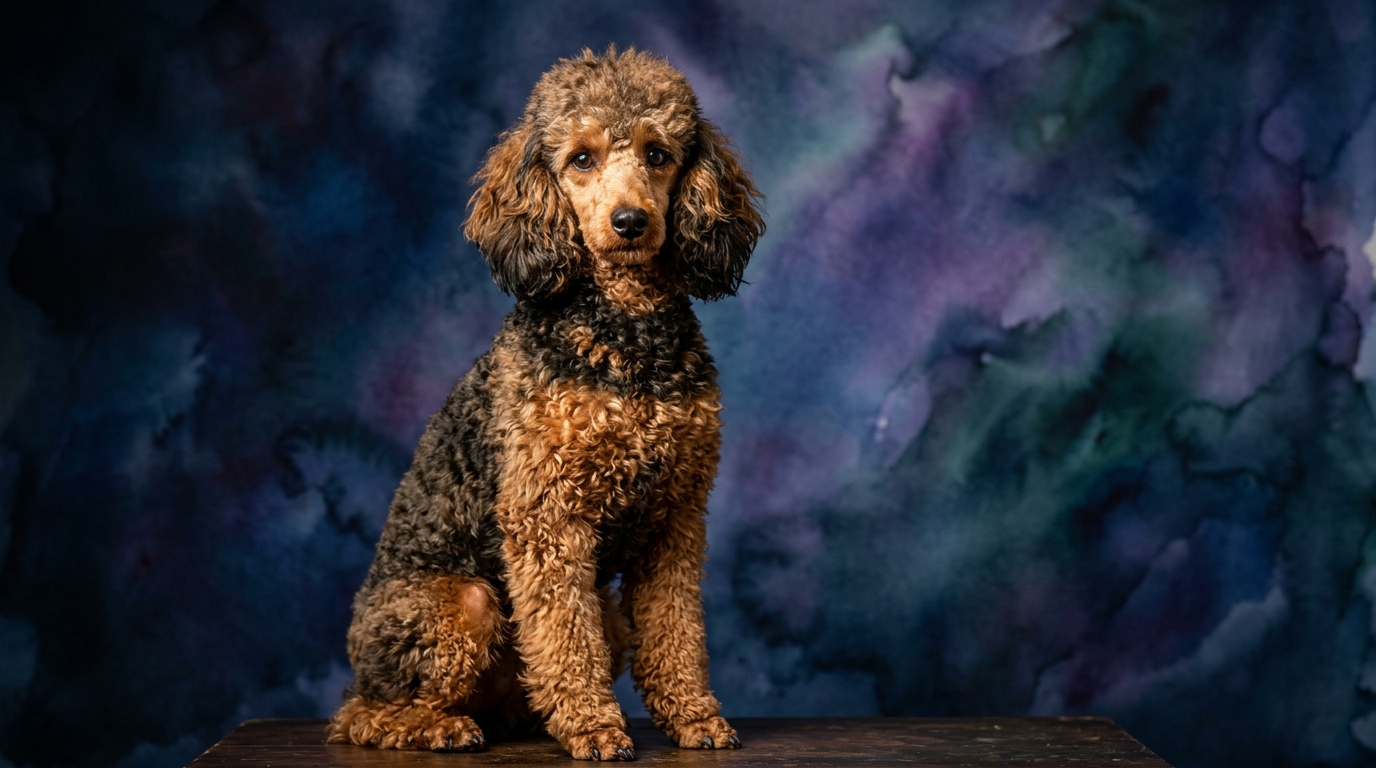
Side-by-Side IQ Profile: Standard Poodle
The Standard Poodle's cognitive blueprint, as measured by The Cosmic Pet Pet IQ Lab, paints a picture of exceptional mental agility across almost all dimensions. Their Problem Solving ability scores a perfect 5/5, indicating an outstanding capacity to independently navigate novel challenges, devise solutions, and adapt strategies. This translates to a dog that can quickly understand complex tasks or find creative ways to achieve a goal. For Training Speed, they also achieve a 5/5, meaning they grasp new commands and routines with minimal repetition, often appearing to anticipate handler cues.
Their Social Intelligence is similarly rated 5/5, reflecting an acute sensitivity to human emotions, intentions, and subtle social dynamics, making them highly responsive companions. With an Instinctive Drive of 4/5, Standard Poodles possess a strong innate motivation for engaging in activities like retrieving, herding, or performing tasks, channeled through their biddability. Finally, their Memory is also a top-tier 5/5, ensuring excellent retention of learned behaviors, associations, and experiences over long periods.
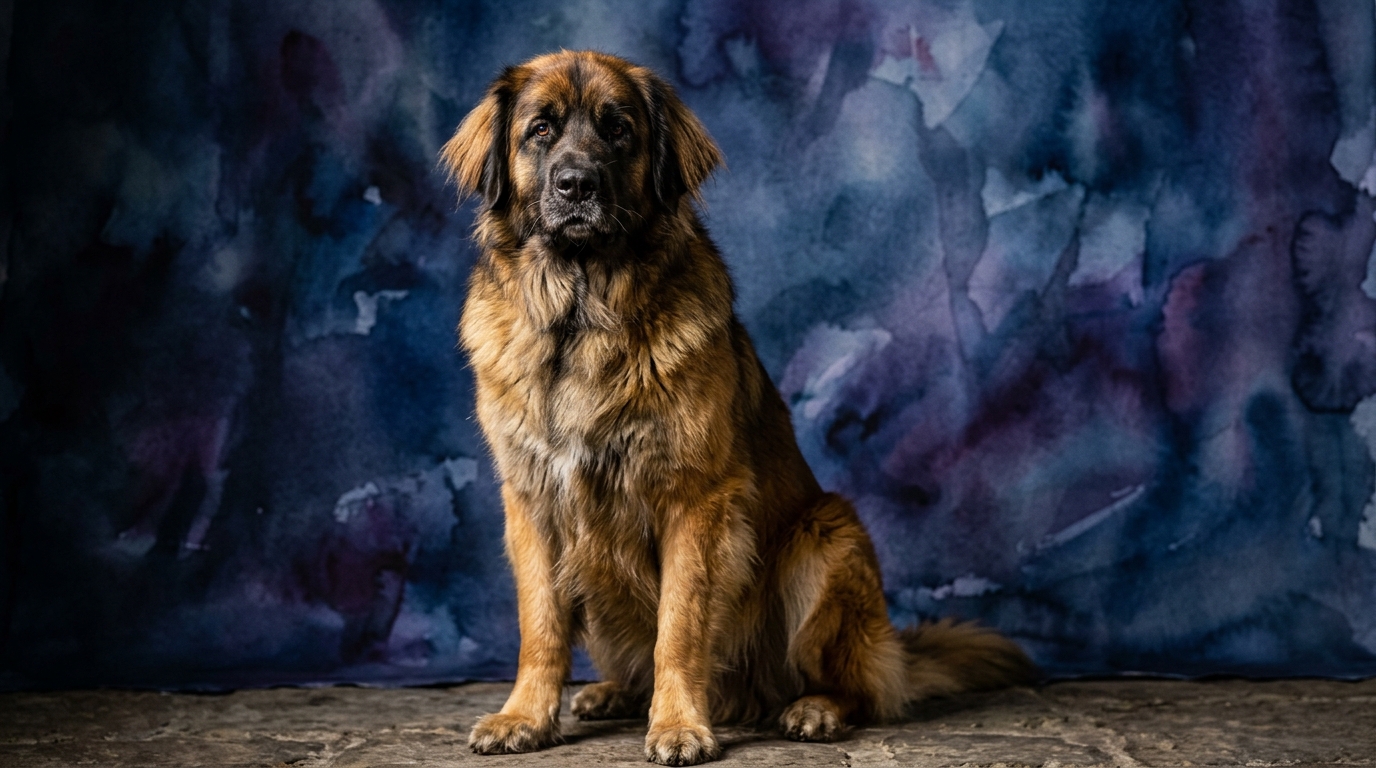
Side-by-Side IQ Profile: Leonberger
In contrast, the Leonberger presents a cognitive profile characterized by a steady, reliable approach rather than rapid-fire mental processing. Across all five IQ dimensions – Problem Solving, Training Speed, Social Intelligence, Instinctive Drive, and Memory – the Leonberger consistently scores 3/5. This 3/5 score signifies a functional and competent level of intelligence, sufficient for their traditional roles and family companionship, but without the extreme cognitive quickness seen in breeds like the Poodle.
Their Problem Solving at 3/5 means they can learn to solve routine problems but may require more guidance or repeated exposure to master complex, novel situations. A Training Speed of 3/5 indicates that while they are certainly trainable, they will benefit from patient, consistent instruction and more repetitions to solidify new commands. Their Social Intelligence at 3/5 suggests they are good at understanding direct human communication and forming strong bonds but might not pick up on the most nuanced social cues as readily. An Instinctive Drive of 3/5 implies a moderate level of innate motivation, generally focused on companionship and watchful guardianship rather than intense task-oriented drives. Lastly, their Memory at 3/5 is perfectly adequate for retaining important family routines and commands, though perhaps not for recalling intricate sequences after long breaks.
Where the Poodle (Standard) Excels Cognitively
The Standard Poodle's cognitive strengths distinctly position them for roles demanding rapid comprehension and adaptability. Their 5/5 in Problem Solving allows them to excel in complex canine sports such as agility or obedience trials, where quick decision-making and intricate sequencing are paramount. Unlike breeds that might rely on rote memorization, a Poodle can often 'figure out' a new obstacle or a tricky command variation on the first or second attempt, demonstrating a profound understanding of underlying principles. This cognitive flexibility also makes them exceptional candidates for service work, where understanding subtle human needs and adapting to unforeseen circumstances are crucial.
Furthermore, their perfect 5/5 in Training Speed combined with a 5/5 Memory means they not only learn new tasks almost instantaneously but retain that knowledge with remarkable fidelity. This translates into fewer repetitions needed during training sessions and a longer-lasting recall of commands, even after extended periods without practice. Their 5/5 Social Intelligence also gives them an edge in nuanced interactions, allowing them to interpret human body language and vocal inflections with precision, fostering a deeply communicative partnership. This cognitive advantage makes them highly responsive partners for owners who appreciate a dog that can anticipate needs and engage in sophisticated two-way communication.
Where the Leonberger's Cognition Offers Unique Advantages
While the Leonberger’s cognitive scores are consistently 3/5, this profile fosters a different, yet equally valuable, set of attributes. Their moderate 3/5 Problem Solving ability means they are less inclined to independently experiment or devise elaborate schemes, which can be an advantage in maintaining household order. Instead of constantly seeking new puzzles to solve, they tend to be content with established routines and clear boundaries, reducing potential for mischief or complex manipulative behaviors.
Moreover, their 3/5 Instinctive Drive contributes to a generally calmer and less intensely driven demeanor compared to breeds with higher scores. This means a Leonberger is less likely to be compelled by strong prey drives or an incessant need for high-intensity tasks, making them a more relaxed presence in a family setting. Their moderate Social Intelligence, while not as acutely perceptive as a Poodle’s, supports a steady, dependable bond, promoting a straightforward and affectionate companionship without the potential for overthinking or sensitivity to every minor human mood fluctuation. This consistent, unembellished approach to social interaction can be a comforting and unwavering presence for their families.
Which is Easier to Train and Why
Based on our IQ Lab metrics, the Standard Poodle is unequivocally easier to train. Their 5/5 Training Speed means they pick up commands with astonishing rapidity, often understanding the desired action after only a few repetitions. This is bolstered by their 5/5 Memory, which ensures that once a command is learned, it is retained for a considerable duration, reducing the need for constant refreshers. A Poodle's 5/5 Social Intelligence also contributes significantly to their trainability; they are acutely attuned to human cues, eager to please, and motivated by positive interaction, making them highly responsive to guidance.
In contrast, the Leonberger, with a 3/5 Training Speed and 3/5 Memory, requires a more patient and consistent approach. They are certainly trainable, but they will not grasp concepts or retain them as quickly as a Poodle. Owners of Leonbergers should be prepared for more repetitions during training sessions and understand that progress may be slower, focusing on foundational commands and clear, unambiguous communication. While they are eager to please their family, their learning process is more deliberate, meaning short, frequent, and positive reinforcement-based sessions are most effective to build and maintain their understanding of desired behaviors.
Which Suits Active Owners vs. Relaxed Owners
For owners who thrive on activity and mental engagement, the Standard Poodle is an ideal match. Their perfect scores in Problem Solving, Training Speed, Social Intelligence, and Memory mean they require substantial mental stimulation to remain content and well-adjusted. These dogs excel in dog sports like agility, competitive obedience, rally, and even scent work, where their cognitive prowess is fully utilized. An active owner who provides daily training sessions, puzzle toys, and opportunities for learning new tricks will find the Poodle a willing and enthusiastic participant, channeling their considerable mental energy constructively.
Conversely, the Leonberger is generally better suited for more relaxed owners who appreciate a calm and steadfast companion. While they still require regular exercise to maintain physical health, their cognitive needs are less demanding of intricate problem-solving or rapid-fire learning. Their 3/5 scores across the board suggest they are content with established routines, leisurely walks, and ample companionship. A relaxed owner who values a stable, affectionate presence and can provide consistent, gentle guidance will find the Leonberger’s steady temperament and moderate cognitive drive to be a harmonious fit, without the constant need for novel mental challenges.
The Verdict
Choose the Standard Poodle if you are an active owner eager to engage in advanced training, dog sports, or seeking a highly responsive companion that thrives on complex mental challenges and intricate communication. Their exceptional cognitive speed and retention make them unparalleled partners for sophisticated endeavors.
Opt for the Leonberger if you desire a calm, steady companion that offers a predictable and affectionate presence, and you are prepared to offer patient, consistent training for foundational behaviors. Their moderate cognitive needs suit a more relaxed lifestyle where companionship is prioritized over intense mental work.
🧠 Find Your Pet's IQ Score
Our Pet IQ Lab assessment covers 25+ tests across 5 cognitive dimensions — personalized to your breed.
Take the Full IQ Test →Frequently Asked Questions
Are Leonbergers difficult to train given their 3/5 training speed?
Leonbergers are not difficult to train, but they do require more patience and consistency than breeds with higher training speed scores. They respond best to positive reinforcement and clear, repetitive instruction, making steady progress over time rather than rapid acquisition.
Does a Poodle's 5/5 memory mean they remember every negative experience?
A Poodle's 5/5 memory primarily signifies their exceptional ability to retain learned behaviors, commands, and positive associations. While they certainly remember experiences, this high memory score means they excel at recalling complex sequences and routines, not necessarily that they 'hold grudges' more than other breeds.
How does the difference in instinctive drive impact daily life for these breeds?
A Poodle's 4/5 instinctive drive means they often possess a strong innate desire for tasks like retrieving or learning, requiring outlets for this energy. A Leonberger's 3/5 drive typically translates to less intense task-orientation, making them generally calmer and more focused on companionship and watchful guardianship rather than constant activity or specific work.