
Side-by-Side IQ Profile: Interpreting Identical Scores
The Cosmic Pet Pet IQ Lab assesses canine intelligence across five critical dimensions: Problem Solving, Training Speed, Social Intelligence, Instinctive Drive, and Memory. Intriguingly, both the majestic Mastiff and the versatile Spinone Italiano register a consistent 3 out of 5 in every single category. This parity doesn't suggest a lack of cognitive variation, but rather that their general capacity for learning and processing information falls squarely in the moderate, reliable range, rather than at the extremes of rapid acquisition or significant challenge.
For the Mastiff, a member of the Working group and ranked #72 by Coren, these 3/5 scores indicate a steady, thoughtful cognitive approach. Their problem-solving isn't about rapid, complex puzzle-solving, but rather deliberate decision-making in their environment. Their training speed reflects a capacity to learn routines and commands consistently, albeit without lightning-fast uptake. Social intelligence allows them to deeply understand their family unit, while a solid instinctive drive applies to their protective nature, and their memory helps them retain important associations and experiences within their home sphere.
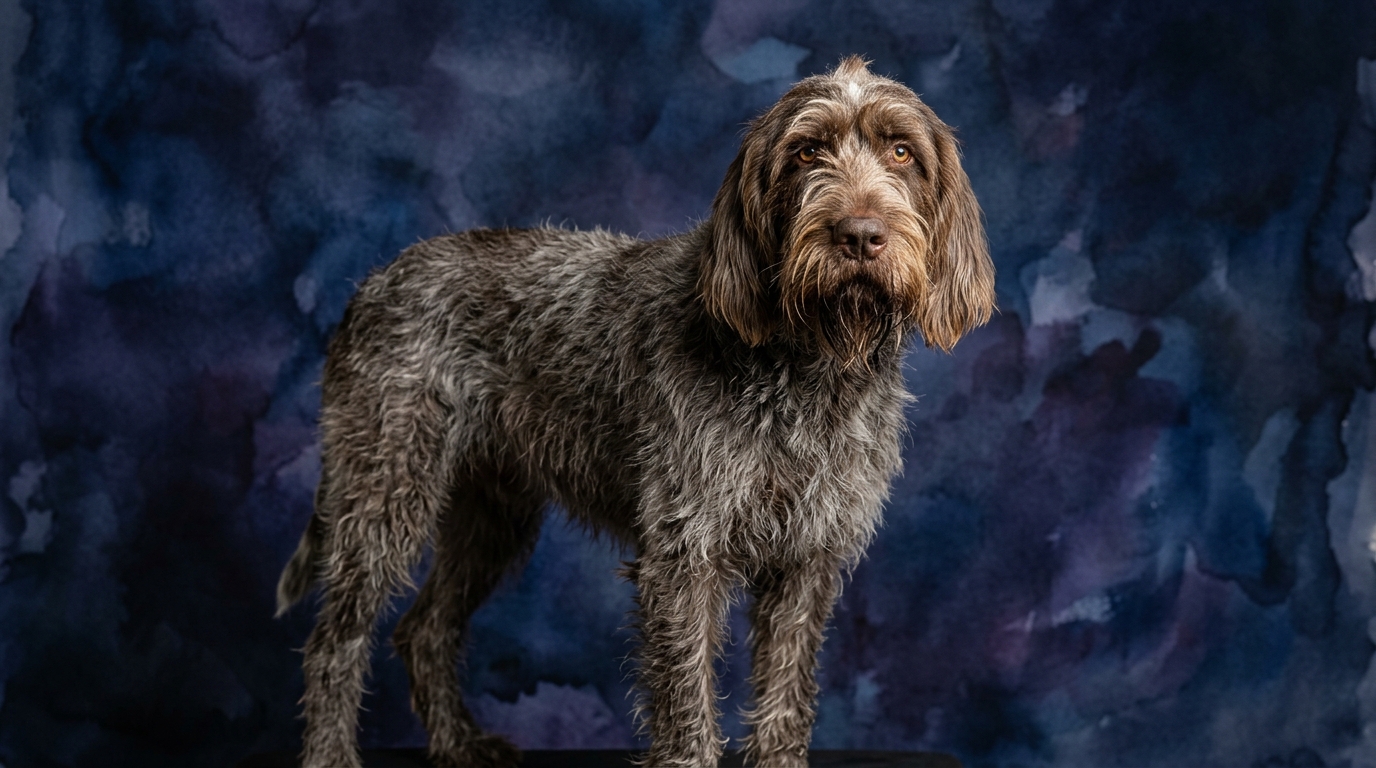
The Spinone Italiano, a Sporting group dog without a specific Coren ranking, also possesses these 3/5 scores, but their application is distinctively different. Their problem-solving manifests in navigating varied terrains and interpreting scent trails during a hunt. A 3/5 training speed means they are capable learners for field work, absorbing complex sequences with patience. Social intelligence is crucial for cooperative work with a handler, and their instinctive drive, naturally, is geared towards scenting, pointing, and retrieving. Their memory functions efficiently to recall locations and learned commands in dynamic outdoor environments.
Where the Mastiff Excels Cognitively
The Mastiff's cognitive strengths lie in their deliberate, observant nature, particularly within their established home environment. Their 3/5 social intelligence translates into a profound understanding of family dynamics and an acute ability to discern familiar faces from strangers. This isn't about flashy tricks, but rather a deep, intuitive comprehension of their social structure, enabling them to act as watchful, discerning guardians. Their problem-solving (3/5) often involves assessing situations for potential threats or discomfort, then responding with a calm, measured approach, making them excellent judges of character and situation.
Furthermore, the Mastiff's 3/5 memory is particularly robust for routines, boundaries, and the nuances of their territory. They remember who belongs and who doesn't, which paths are theirs, and the established rhythm of the household. This memory, combined with their instinctive drive (3/5) for protection, allows them to consistently uphold their role as a steadfast family sentinel. They are not prone to impulsive reactions, instead processing information with a quiet dignity, which requires sustained cognitive focus and a reliable recall of past experiences.
Where the Spinone Italiano Shines Cognitively
The Spinone Italiano's cognitive prowess is best observed in the field, where their 3/5 problem-solving skills are applied to complex, dynamic challenges. They excel at deciphering scent puzzles, navigating dense cover, and adapting their search patterns to find game, demonstrating a persistent and methodical approach. Their instinctive drive (3/5) for hunting is not just a primal urge, but a sophisticated cognitive process involving sustained focus, scent discrimination, and the ability to interpret subtle environmental cues. This requires an active, engaged mind constantly processing new information.
Their 3/5 social intelligence is critical for effective partnership with a handler, allowing them to read subtle body language and vocal commands even amidst distractions. This cooperative intelligence is a cornerstone of their working ability. Paired with a 3/5 memory, they efficiently recall training sequences, the locations of previous finds, and learned strategies for different types of terrain or game. This combination of focused problem-solving, strong instinctive drive, and reliable memory makes the Spinone Italiano a highly effective and adaptable hunting companion, consistently applying their cognitive abilities to their specific working role.
Which Is Easier to Train and Why
Given that both breeds score a 3 out of 5 in training speed, neither is inherently 'easier' or 'harder' to train in a universal sense; rather, the *approach* and *type of training* required differ significantly. A 3/5 score means both breeds learn at a moderate pace, requiring consistency, patience, and clear communication from their owners. Neither will pick up complex commands instantly, but both are capable of developing a strong understanding of expectations over time with the right methods.
Training a Mastiff often requires understanding their independent, sometimes stubborn, nature. Their 3/5 training speed means they will learn, but they often need to understand the 'why' behind a command or feel it's a worthwhile endeavor. Repetitive, drill-based training can be met with disinterest. Owners must employ positive reinforcement, short, engaging sessions, and build a relationship based on trust and respect, acknowledging their deliberate pace and immense physical presence. Their social intelligence (3/5) means they respond well to clear, calm leadership and become deeply attuned to their owner's emotional state.
The Spinone Italiano, while also 3/5 in training speed, typically possesses a more eager-to-please disposition, especially when the training taps into their natural instincts. However, their strong instinctive drive (3/5) for scent can make them easily distracted in certain environments. Training needs to be stimulating, varied, and leverage their love for exploration and scent work. They are known to be sensitive, so harsh corrections are counterproductive and can shut them down. Owners will find success by making training a fun, cooperative game that harnesses their natural curiosity and desire to work alongside their human partner, engaging their problem-solving (3/5) and memory (3/5) in practical tasks.
Matching Breeds to Lifestyles: Active vs. Relaxed Owners
When considering a Mastiff, prospective owners should lean towards a more relaxed lifestyle. Despite their imposing size, Mastiffs are generally calm and relatively low-energy indoors, content to be a quiet, watchful presence by their family's side. Their moderate instinctive drive (3/5) for protection means they are alert but not hyperactive, and their problem-solving (3/5) is often applied to monitoring their home. While they do require regular, moderate exercise to maintain health, they are not suited for owners seeking a high-octane adventure partner. They thrive in environments where they can be a steady, cherished companion, requiring consistent mental stimulation through daily routines and social interaction rather than intense physical demands.
Conversely, the Spinone Italiano is an ideal match for active owners who can provide ample physical and mental stimulation. As a sporting dog, their 3/5 instinctive drive for hunting and their practical problem-solving (3/5) necessitate regular engagement in activities that challenge both their bodies and minds. They excel in pursuits like scent work, hiking, field trials, or even long, vigorous walks that allow them to explore and utilize their keen senses. Their social intelligence (3/5) and memory (3/5) make them excellent partners in these activities, as they enjoy working cooperatively and learning new skills. Owners who can integrate their Spinone into an active outdoor lifestyle will find them to be a joyful, robust, and mentally fulfilled companion.
The Verdict
Choose the Mastiff if you seek a calm, steadfast companion and guardian, valuing a deliberate temperament and a deep, quiet understanding of family dynamics, and you can provide consistent, patient guidance.
Opt for the Spinone Italiano if you lead an active lifestyle and desire an enthusiastic, cooperative partner for outdoor adventures, particularly those involving scent work and exploration, and can provide engaging, consistent training.
🧠 Find Your Pet's IQ Score
Our Pet IQ Lab assessment covers 25+ tests across 5 cognitive dimensions — personalized to your breed.
Take the Full IQ Test →Frequently Asked Questions
Do Mastiffs make good guard dogs based on their IQ?
Their instinctive drive (3/5) for protection, coupled with solid social intelligence (3/5) for discerning threats, makes them naturally inclined towards guardianship. While not requiring complex problem-solving for this role, their memory (3/5) helps them remember routines and safe individuals, contributing to their effectiveness as a watchful family protector.
How does the Spinone Italiano's 3/5 problem-solving manifest in the field?
In a hunting context, a 3/5 problem-solving score means they can methodically navigate varied terrain, interpret scent puzzles, and adapt to changing conditions to locate game. They demonstrate persistent focus and learn from experience, applying their cognitive skills to practical, real-world challenges during a hunt rather than abstract puzzles.
Are Mastiffs and Spinone Italianos difficult to train given their 3/5 training speed?
A 3/5 training speed implies they learn at a moderate pace, meaning owners should prioritize consistency, patience, and positive reinforcement. Mastiffs might require motivation that aligns with their deliberate nature, while Spinone Italianos thrive when training taps into their natural drives and keeps them mentally engaged, avoiding monotony.