Side-by-Side IQ Profile
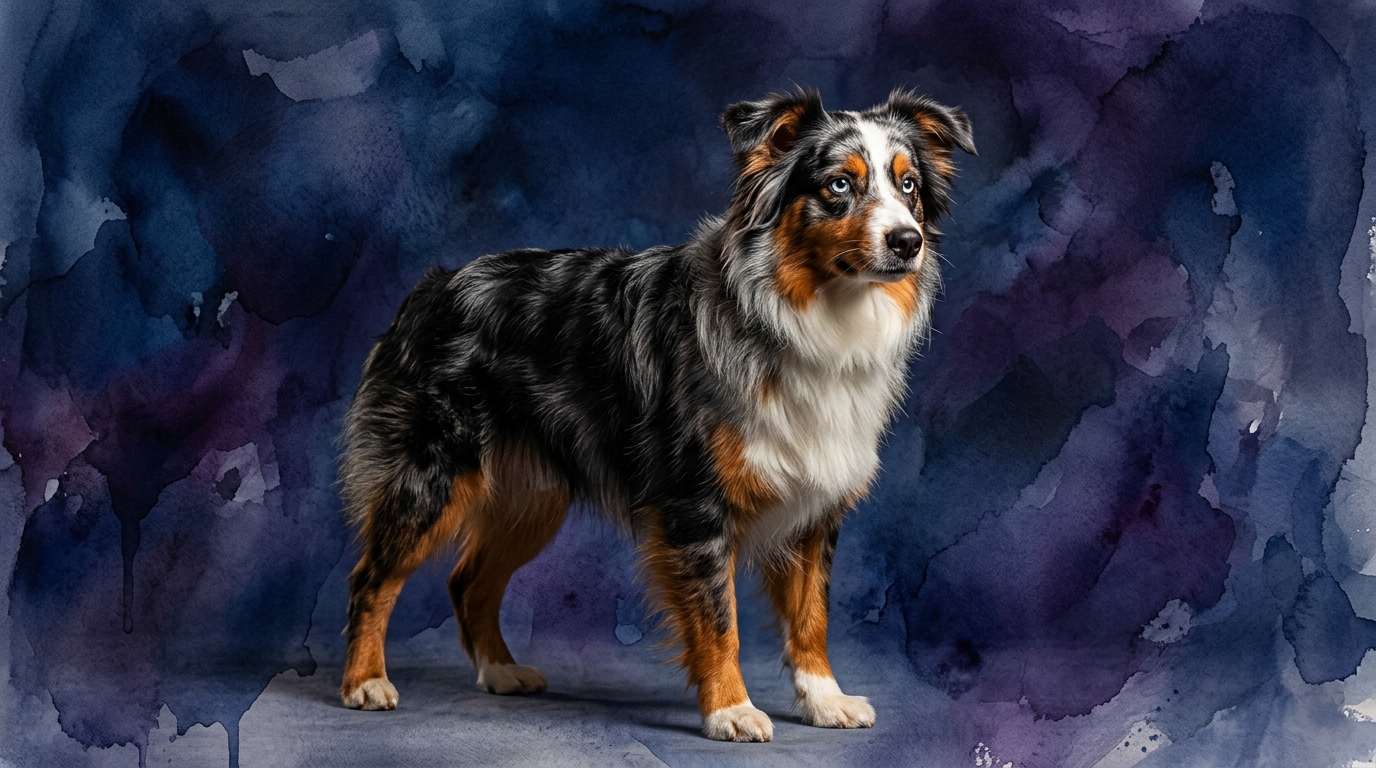
The Miniature American Shepherd, a compact herding breed, presents a balanced cognitive profile across our five key dimensions. They register a 3/5 in Problem Solving, indicating a solid capacity to navigate new challenges and adapt strategies. Their Training Speed also scores 3/5, suggesting a moderate pace for acquiring new commands and behaviors. In Social Intelligence, they achieve a 3/5, reflecting an ability to read and respond to human and canine cues with reasonable accuracy. Their Instinctive Drive, deeply rooted in their herding heritage, is likewise a 3/5, pointing to a moderate but present inclination for tasks involving control and movement. Finally, their Memory is rated at 3/5, meaning they retain learned information at a consistent, mid-range level.
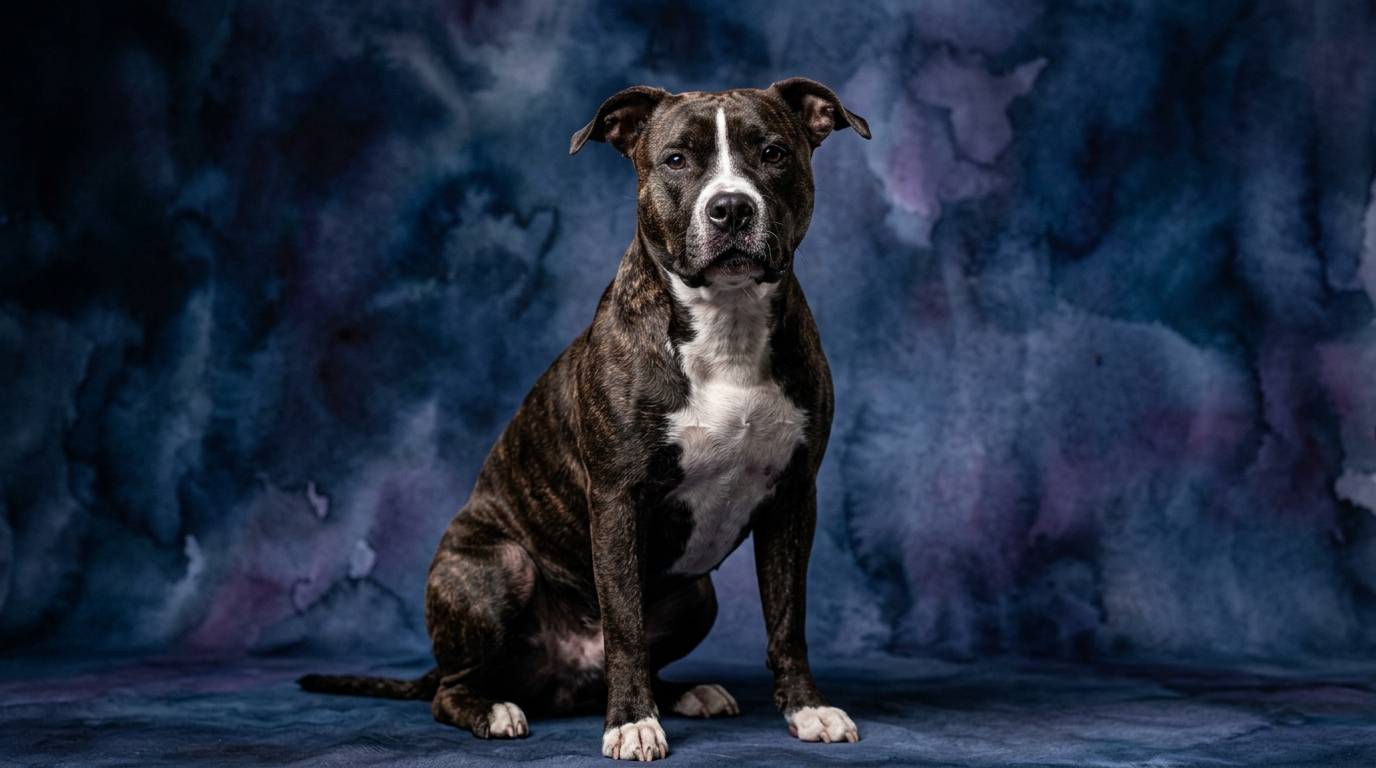
Conversely, the American Staffordshire Terrier, a powerful terrier type, shows a slightly different cerebral landscape. Like the Miniature American Shepherd, they score 3/5 in Problem Solving, demonstrating a capable approach to overcoming obstacles. Their Training Speed also stands at 3/5, indicating a similar rate for initial command acquisition. Social Intelligence for the AmStaff is 3/5, suggesting they are reasonably adept at understanding and engaging with their environment and companions. Their Instinctive Drive, reflecting their terrier background for focused work, is also 3/5. However, a notable distinction appears in their Memory, which is rated 4/5, signifying a superior ability to recall information and learned behaviors over time. This enhanced memory contributes to their Coren rank of #48, placing them in a respectable category for working and obedience intelligence.
Where the Miniature American Shepherd Wins Cognitively
While many of their raw IQ scores are similar, the Miniature American Shepherd's cognitive strengths lie in the *application* of their balanced abilities, particularly within dynamic, fluid environments. Their 3/5 Problem Solving, combined with a 3/5 Instinctive Drive rooted in herding, allows them to excel in tasks requiring continuous assessment and adjustment. Think of a herding dog subtly influencing a group of sheep; this involves not just solving a single problem but a series of evolving micro-problems, reading individual animal movements, and adapting their approach on the fly. This specific type of flexible, real-time problem-solving, driven by their innate purpose, gives them an edge in activities that mimic their ancestral role, such as agility courses with complex sequences or rally obedience requiring constant engagement and adaptation to new commands.
Their 3/5 Social Intelligence also leans towards nuanced, cooperative interaction. A Miniature American Shepherd often displays an intuitive understanding of a handler's subtle body language and intentions, making them excellent partners in activities where communication is key. This isn't just about reading a command, but about anticipating and collaborating, a strength that shines in dog sports emphasizing partnership. Their balanced cognitive profile makes them highly adaptable to varied learning situations, able to pivot between different types of tasks without significant mental strain, a distinct advantage for owners seeking a versatile companion for diverse activities.
Where the American Staffordshire Terrier Wins Cognitively
The American Staffordshire Terrier’s primary cognitive advantage lies in its superior Memory, scoring a robust 4/5. This enhanced capacity for recall means that once an AmStaff learns a command or a routine, they are likely to retain it with greater longevity and accuracy than a breed with a 3/5 memory. This translates directly into more reliable obedience and the ability to build a larger repertoire of complex behaviors over time, requiring fewer refreshers. For owners dedicated to advanced training, this memory strength is a significant asset, enabling the dog to progress to intricate sequences and multi-step tasks with greater consistency.
Furthermore, the AmStaff's Coren rank of #48 provides a concrete indicator of their capacity for working and obedience intelligence. This rank suggests they typically understand new commands with fewer repetitions (25-40 times) and obey the first command at least 50% of the time. This is a strong performance, particularly when coupled with their focused 3/5 Instinctive Drive, which, for a terrier, often translates into persistence and dedication to a specific task or object. This focused drive, combined with excellent memory, makes them highly effective in activities like scent work, competitive obedience, or even protection sports, where consistent recall of learned patterns and unwavering focus are paramount. Their cognitive strength is in the depth and reliability of learned behaviors rather than broad, adaptive problem-solving.
Which is Easier to Train and Why
When considering ease of training, the American Staffordshire Terrier holds a subtle but significant advantage, primarily due to their 4/5 Memory score and their Coren ranking. While both breeds share a 3/5 Training Speed for initial learning, the AmStaff's enhanced memory means they will retain those learned commands and behaviors more effectively over the long term. This translates to less need for constant repetition to maintain skills and a greater capacity to build upon a foundation of complex tasks. Owners will find that once an AmStaff masters a command, it is more likely to stick, making the overall training journey feel more progressive and reliable. Their terrier focus, while sometimes intense, can be channeled into dedicated training sessions, allowing them to concentrate on specific tasks with a high degree of intensity.
The Miniature American Shepherd, with a 3/5 Training Speed and 3/5 Memory, is certainly trainable but may require more consistent reinforcement to ensure long-term retention of complex commands. Their herding drive and social intelligence mean they respond well to training that is engaging and partnership-oriented, often thriving on positive reinforcement and clear communication. However, their tendency to be highly aware of their environment, a trait useful for herding, might mean they are more easily distracted by novel stimuli compared to the AmStaff's focused intensity. While both breeds are eager to learn, the AmStaff's superior memory provides a smoother path for maintaining and advancing training over months and years, making them marginally 'easier' in terms of sustained, advanced obedience.
Which Suits Active Owners vs. Relaxed Owners
Both the Miniature American Shepherd and the American Staffordshire Terrier are best suited for active owners, though their ideal activities might differ. The Miniature American Shepherd, with its 3/5 Instinctive Drive rooted in herding, thrives on mental and physical engagement that allows them to use their intellect and athleticism. Activities like agility, obedience, rally, herding trials, or even complex trick training that involves sequencing and problem-solving are excellent outlets. Owners who enjoy teaching new skills, engaging in dog sports, and providing varied, stimulating experiences will find the MAS to be an eager and capable partner. Their need for purpose means a truly relaxed owner, one who prefers minimal interaction or exercise, would likely find themselves with a bored and potentially destructive companion.
The American Staffordshire Terrier, with its 3/5 Instinctive Drive as a powerful terrier and 4/5 Memory, also requires substantial activity. They excel in vigorous play, focused training, and sports that leverage their strength and endurance. Dock diving, weight pull, advanced obedience, scent work, or long, challenging hikes are great ways to channel their energy and intelligence. Their strong memory makes them excellent candidates for mastering complex routines in competitive sports. Similar to the MAS, an AmStaff is not suited for a genuinely relaxed owner. Without consistent mental and physical stimulation, their drive can lead to boredom, manifesting as unwanted behaviors. Both breeds demand an owner committed to providing daily outlets for their considerable energy and cognitive capabilities.
The Verdict
Choose the Miniature American Shepherd if you seek a highly adaptable, collaborative partner for dynamic, varied activities that tap into their nuanced herding intellect and social awareness.
Opt for the American Staffordshire Terrier if your priority is a dog with exceptional memory and retention for consistent, advanced obedience and focused activities, thriving on clear, reliable learned behaviors.
🧠 Find Your Pet's IQ Score
Our Pet IQ Lab assessment covers 25+ tests across 5 cognitive dimensions — personalized to your breed.
Take the Full IQ Test →Frequently Asked Questions
Are Miniature American Shepherds good family dogs?
Miniature American Shepherds, with their 3/5 social intelligence, can be wonderful family companions when properly socialized and exercised. They form strong bonds with their families but their herding instincts mean they might try to 'herd' children or other pets, requiring supervision and gentle guidance.
Do American Staffordshire Terriers need a lot of exercise?
Yes, American Staffordshire Terriers require a significant amount of exercise and mental stimulation to thrive. Their 3/5 instinctive drive and robust physique mean they need vigorous daily activity to prevent boredom and channel their energy constructively, making them unsuitable for sedentary lifestyles.
How do their problem-solving abilities compare?
Both breeds score a 3/5 in problem-solving, indicating a capable but not exceptional ability to navigate new challenges. The Miniature American Shepherd tends to apply this in dynamic, adaptive scenarios related to herding, while the American Staffordshire Terrier often uses it with a focused persistence on single tasks or obstacles, leveraging their strong memory for learned solutions.