Side-by-Side Cognitive Profiles
The Cosmic Pet Pet IQ Lab employs a five-dimensional framework to assess canine intelligence, offering a nuanced view beyond simple obedience. For the Miniature American Shepherd, this framework reveals a balanced and cooperative mind, while the Border Terrier showcases a quick-witted and independently driven intellect. Let's explore these dimensions for each breed.
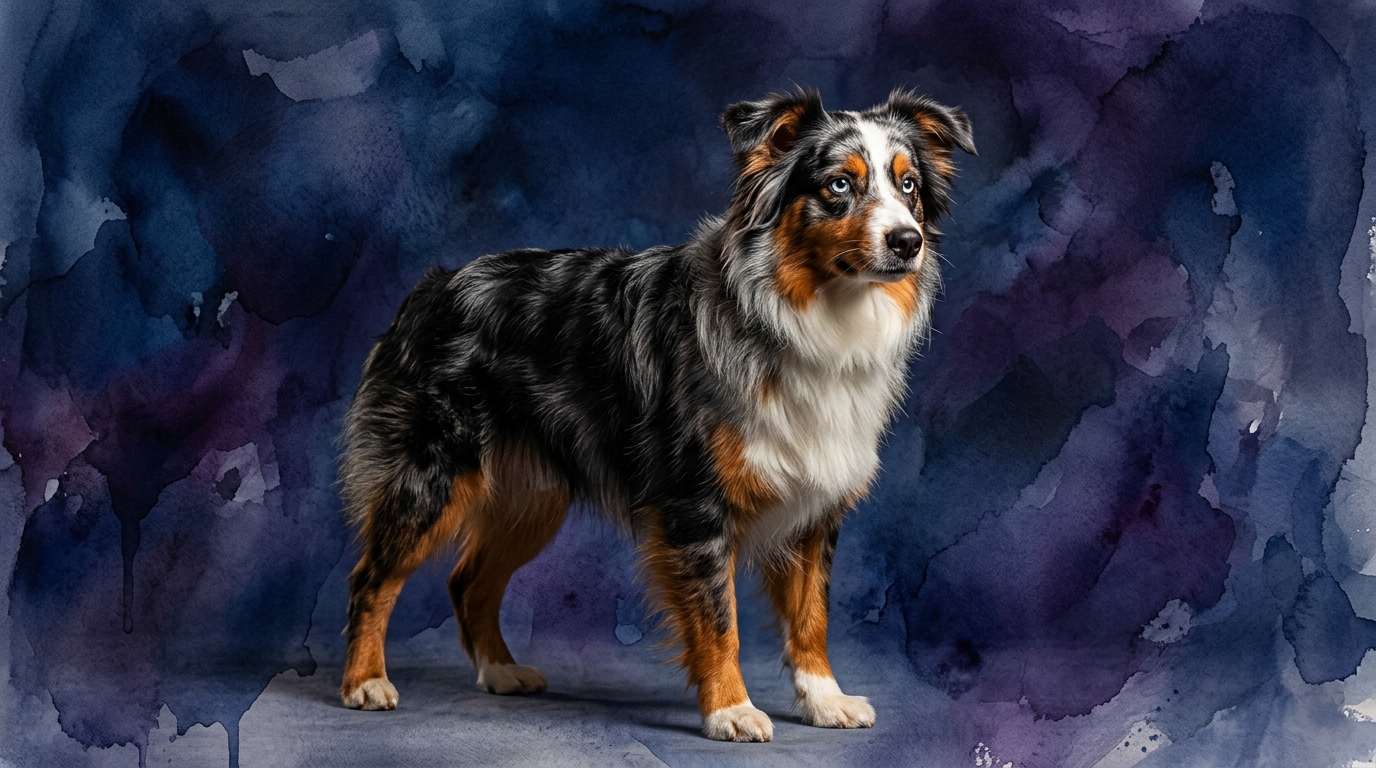
The Miniature American Shepherd's cognitive blueprint is well-suited to its herding legacy. Their Problem Solving is rated 3/5, indicating a moderate aptitude for independent thought, often preferring to follow established patterns or human direction rather than innovate spontaneously. This means they excel at solving problems related to managing group movement and maintaining order within a defined structure. Their Training Speed also stands at 3/5, signifying that they learn new commands at a steady, consistent pace, requiring regular reinforcement to solidify complex behaviors. Social Intelligence, at 3/5, points to a balanced understanding of human cues and pack dynamics, capable of forming strong bonds and interpreting emotional states, though they can be reserved with strangers. Instictive Drive is 3/5, reflecting their inherent herding impulses, manifesting as a desire to organize and control movement, sometimes leading to nipping at heels or circling. Finally, their Memory is 3/5, demonstrating good recall for learned commands and routines, retaining information effectively with consistent practice.
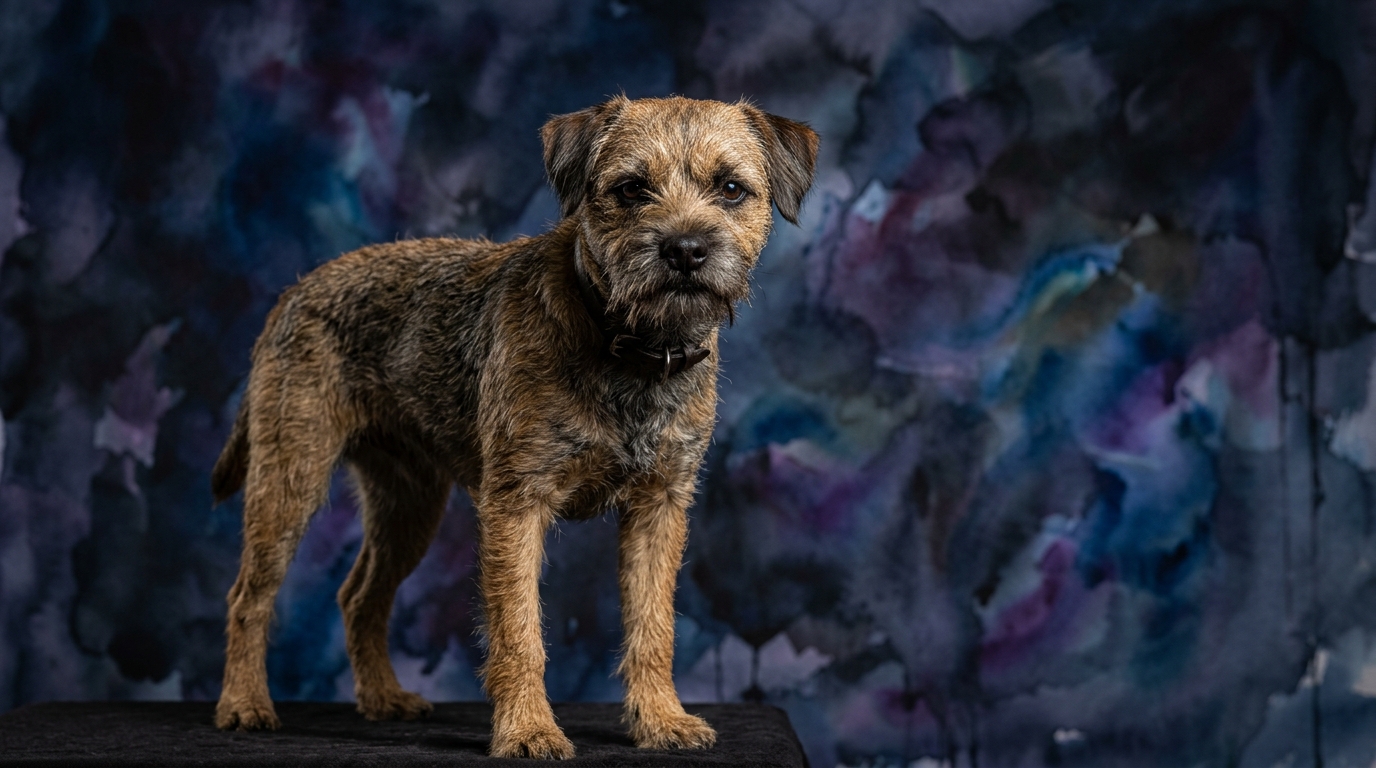
In contrast, the Border Terrier's profile reflects its earthdog heritage, prioritizing independence and tenacity. Their Problem Solving is a robust 4/5, indicating a strong capacity for devising clever ways to achieve goals, especially when motivated by exploration or prey drive. This tenacity often fuels persistent trial-and-error in their cognitive approach. Training Speed is also 4/5, meaning they learn new commands quickly, often grasping concepts in fewer repetitions than many breeds. Their alertness and desire to engage make them responsive students, though their independent streak can occasionally pose challenges. Social Intelligence is 3/5, showing a good understanding of social cues and intentions, adapting well to various social situations and reading human moods effectively. Instictive Drive is 3/5, characterized by a significant prey drive and a strong urge to dig and hunt, reflecting their original purpose of bolting foxes; this drive can sometimes override other motivations. Their Memory is 4/5, demonstrating excellent recall for commands, routes, and experiences, remembering positive and negative associations with remarkable clarity, rarely forgetting a lesson once learned.
Where the Miniature American Shepherd Wins Cognitively
The Miniature American Shepherd (MAS) truly excels in areas demanding cooperative intelligence and structured execution. Their 3/5 problem-solving and social intelligence, coupled with their herding background, make them exceptional at anticipating and managing group dynamics, whether it's livestock or a bustling family. They shine in scenarios requiring a dog to work *with* a human to achieve a shared goal, rather than independently, demonstrating a proactive cognitive style in group settings that focuses on cohesion and order.
With a 3/5 training speed and memory, the MAS finds its cognitive stride in structured environments where consistency is paramount. They methodically absorb and retain complex sequences of commands, making them outstanding candidates for precision-based activities like competitive obedience, rally, or even intricate freestyle routines. Their cognitive strength lies in reliably executing learned patterns, showing a steady, dependable application of their mental faculties over time, which fosters a sense of trust and predictability in their partnership with humans.
Furthermore, their instinctive drive (3/5), specifically geared towards herding, translates into a heightened cognitive awareness of their surroundings, particularly concerning the positioning and movement of others. This isn't just about chasing; it's about spatial reasoning and subtle influence, allowing them to 'read' an environment and make decisions that maintain order or gather dispersed elements. This specific cognitive advantage is less about individual ingenuity in novel situations and more about systemic management and maintaining equilibrium within their perceived 'flock'.
Where the Border Terrier Wins Cognitively
The Border Terrier (BT) demonstrates superior cognitive prowess in areas demanding independent problem-solving and tenacious resourcefulness. Their impressive 4/5 problem-solving score highlights a remarkable capacity for independent thought and creative solutions, especially when facing obstacles or pursuing a goal. This manifests as ingenious attempts to open gates, retrieve hidden toys from difficult spots, or navigate complex environments without direct human instruction. Their inherent terrier tenacity, driven by their earthdog heritage, fuels a persistent trial-and-error approach that often yields unexpected, clever results.
Scoring 4/5 in both training speed and memory, the Border Terrier exhibits a remarkable ability to quickly grasp novel concepts and retain them with minimal repetition. This cognitive agility allows them to adapt swiftly to new commands, environments, or challenges, often picking up complex tricks or sequences faster than many other breeds. While this speed can sometimes be paired with an independent streak, their capacity for rapid learning means they can master a diverse repertoire of behaviors efficiently if properly motivated and engaged.
Their instinctive drive (3/5), though numerically similar to the MAS, is directed differently, primarily towards scent work, digging, and pursuit. Cognitively, this translates into a powerful, focused application of their mental resources towards these specific tasks. A Border Terrier can exhibit profound concentration and strategic thinking when tracking a scent or attempting to 'bolt' perceived prey, utilizing their memory and problem-solving skills to navigate complex olfactory landscapes or underground tunnels with remarkable precision and persistence.
Which is Easier to Train and Why
For many owners, the Miniature American Shepherd generally presents as a more straightforward training partner, primarily due to their intrinsic cooperative nature. Their herding background instills a strong desire to work *with* their handler, making them eager to please and receptive to direction. While their training speed is rated 3/5, their consistent willingness to engage and follow cues often translates into steady, predictable progress, particularly in foundational obedience and structured activities. They thrive on clear communication and positive reinforcement, making them a rewarding experience for those who enjoy a methodical, partnership-based approach to teaching.
The Border Terrier, with its 4/5 training speed and problem-solving, can learn commands astonishingly quickly, often grasping new concepts in very few repetitions. However, this cognitive sharpness is frequently paired with a strong independent streak and a formidable instinctive drive (3/5), which can present unique training challenges. A Border Terrier might understand *what* you want but decide *not* to comply if something more intrinsically rewarding (like an intriguing scent trail or a promising digging spot) captures their attention. Their excellent memory (4/5) means they remember lessons, but also remember past successes at 'freelancing,' requiring a trainer to be consistently more engaging and creative than the environmental distractions.
The distinction isn't solely in raw learning ability, but in *compliance* and *focus* amidst distractions. For a novice owner seeking a biddable companion, the Miniature American Shepherd's cognitive framework, which prioritizes collaboration, might feel 'easier' to navigate. Conversely, the Border Terrier's rapid learning curve can be exhilarating for experienced trainers who can channel their sharp intellect and independent spirit through highly motivating, varied, and often game-based training methods. While the BT learns faster in principle, managing their independence requires a more nuanced approach than the MAS's cooperative disposition.
Which Suits Active Owners vs. Relaxed Owners
Both the Miniature American Shepherd and the Border Terrier are breeds that demand consistent engagement and are not well-suited for truly relaxed, sedentary owners. Their cognitive profiles and historical purposes indicate a need for both physical and mental stimulation to prevent boredom and potential behavioral issues. Therefore, neither breed would be an ideal choice for someone seeking a low-maintenance, couch-potato companion.
The Miniature American Shepherd, with its herding heritage, thrives on structured activity and a sense of purpose. An active owner for an MAS is someone who enjoys dog sports like agility, obedience, flyball, or even rally. Their cognitive need is to work collaboratively, to manage, and to move. They require regular, vigorous exercise and mental challenges that engage their problem-solving skills in a cooperative setting. Owners who appreciate a dog that is eager to participate in planned activities and enjoys having a 'job' will find the MAS a fulfilling partner.
The Border Terrier, while also active, requires a different *type* of engagement. Their earthdog instincts mean they need outlets for exploring, scenting, and digging. An active owner for a BT is someone who enjoys long, varied walks, scent work, earthdog trials, or engaging in puzzle toys and games that challenge their independent problem-solving. They need mental stimulation that allows them to use their sharp wits to figure things out for themselves. While they can enjoy structured activities, their cognitive satisfaction often comes from individual exploration and overcoming self-imposed challenges, rather than solely from cooperative tasks. Owners who appreciate a tenacious, clever companion with a strong desire for independent discovery will find the BT a rewarding match, provided they can channel that energy constructively.
The Verdict
Choose the Miniature American Shepherd if you seek a cooperative, biddable partner for structured activities like agility, obedience, or even actual herding, and appreciate a dog that thrives on working closely with you in a predictable environment.
Choose the Border Terrier if you value a clever, independent, tenacious companion with a quick wit and a strong desire to explore and problem-solve independently, and are prepared to engage their sharp mind with varied challenges and consistent, creative training.
🧠 Find Your Pet's IQ Score
Our Pet IQ Lab assessment covers 25+ tests across 5 cognitive dimensions — personalized to your breed.
Take the Full IQ Test →Frequently Asked Questions
Are Miniature American Shepherds good family dogs?
Miniature American Shepherds can be excellent family dogs, forming strong bonds with their human 'flock.' They are typically good with children if properly socialized and their herding instincts are managed, often enjoying active play and participation in family activities.
Do Border Terriers shed a lot?
Border Terriers have a wiry double coat that sheds minimally, especially with regular hand-stripping. This grooming practice helps maintain their coat texture and reduces loose hair, making them a relatively low-shedding breed compared to many others.
What kind of mental stimulation do these breeds need?
The Miniature American Shepherd thrives on mental stimulation involving cooperative tasks, such as learning complex obedience routines or participating in agility. The Border Terrier benefits from challenges that engage their independent problem-solving, like puzzle toys, scent work, or exploring new environments.