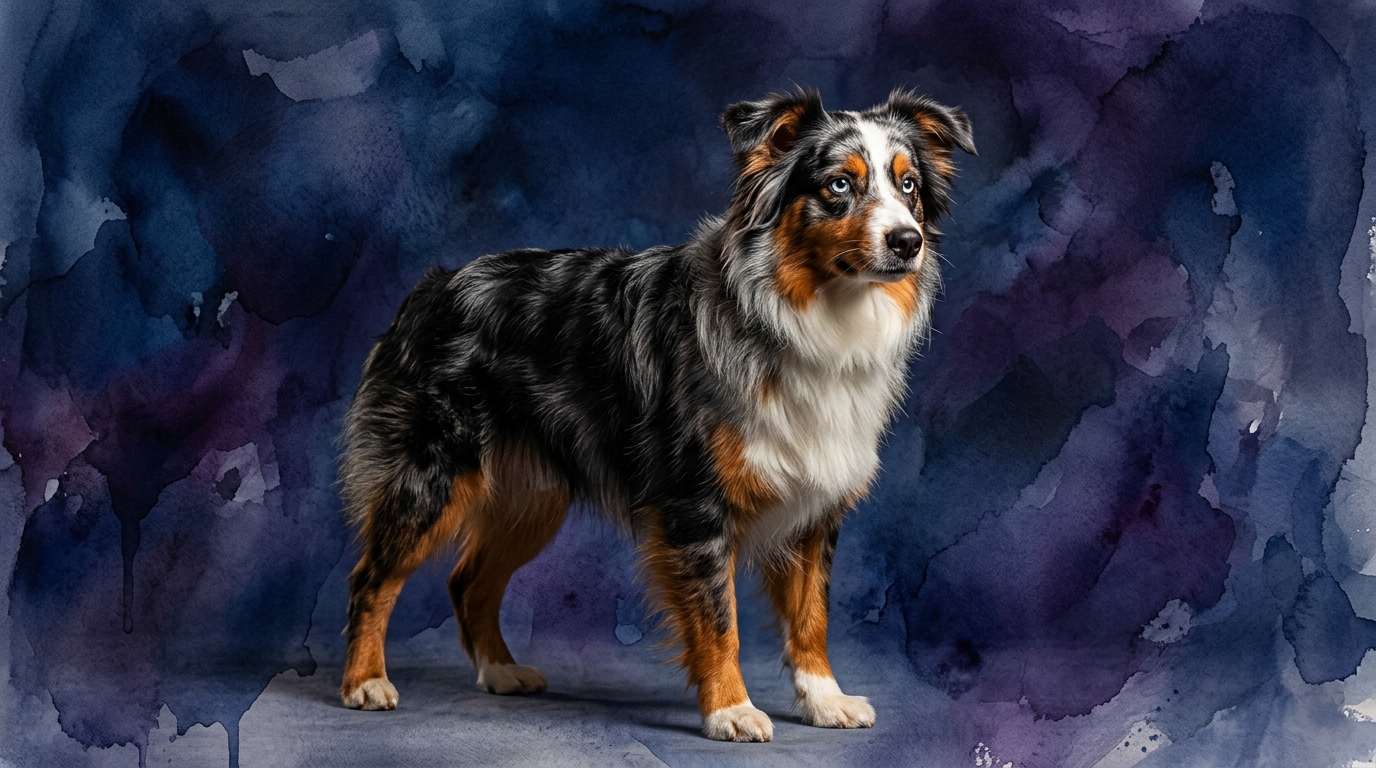

Side-by-Side IQ Profile: Herding vs. Terrier Minds
**Miniature American Shepherd (Herding Group):** This breed demonstrates a practical, task-oriented approach to challenges. They are adept at spatial reasoning, figuring out how to maneuver around obstacles to achieve a goal, often involving movement or control of others. Their solutions tend to be methodical, reflecting their herding lineage. Miniature American Shepherds generally absorb new commands and routines at a moderate pace. They are typically eager to engage with their handler and respond well to consistent, positive reinforcement, finding satisfaction in cooperative work. These dogs possess a solid understanding of social cues, both from humans and other animals. They can read intentions and moods, often adjusting their behavior to maintain harmony within their “flock,” whether that’s a family or a group of livestock. Their inherent herding instinct is pronounced, manifesting as a desire to gather, direct, and control. This drive provides a strong internal motivation for work and structured activity, making them eager participants in tasks that utilize these natural tendencies. Miniature American Shepherds exhibit a robust memory for learned behaviors, complex sequences, and routines. They recall commands reliably over time and can remember intricate patterns, which is beneficial for advanced training and sport participation.
**Manchester Terrier (Terrier Group):** Manchester Terriers approach problems with a combination of persistence and cunning. They excel at figuring out how to get to desired objects, bypass barriers, or outsmart perceived challenges, often employing creative, sometimes mischievous, tactics. Their solutions often reflect their independent, vermin-hunting heritage. Manchester Terriers learn new commands with moderate speed, particularly when the training is engaging and varied. While capable of quick uptake, they can become bored with repetitive drills, requiring a trainer who can keep sessions lively and rewarding to maintain their focus. These terriers are perceptive observers of their human companions, picking up on emotional states and routines. While they form strong bonds, their social interactions can be more on their own terms, demonstrating an independent streak rather than a constant desire to please. The Manchester Terrier’s core instinctive drive is rooted in their vermin-hunting past, displaying a strong prey drive and an investigative curiosity. This translates into a persistent desire to explore, dig, and chase, providing a powerful internal motivation for certain activities. Manchester Terriers have a good memory for learned commands, routines, and the layout of their environment. They retain information effectively, especially when it’s associated with positive experiences or opportunities for independent exploration and reward.
Where the Miniature American Shepherd Wins Cognitively
The Miniature American Shepherd's cognitive strengths truly shine in scenarios requiring cooperative problem-solving and a structured approach. Their herding background means they naturally excel at understanding spatial relationships and group dynamics. For instance, in an agility course, a Miniature American Shepherd might demonstrate superior foresight in navigating a complex sequence of obstacles, anticipating the next move and executing transitions smoothly, driven by an innate desire for precision and control. Their social intelligence is often geared towards interpreting handler cues with nuanced accuracy, making them highly responsive partners in activities that demand tight coordination. This breed's memory is particularly adept at recalling intricate patterns and long sequences of commands, crucial for advanced obedience or competitive herding trials where a missed step can mean a failed task.
Where the Manchester Terrier Wins Cognitively
Conversely, the Manchester Terrier's cognitive advantages emerge in situations demanding independent thought, resourcefulness, and a touch of mischief. Their problem-solving abilities are often directed at tasks that require cunning and persistence, such as figuring out how to open a child-proof gate or retrieve a hidden toy from a complex puzzle. This breed's instinctive drive, rooted in their vermin-hunting past, fuels an impressive tenacity; they won't easily give up on a mental challenge once engaged. Their social intelligence, while less about cooperative herding, is sharply tuned to human routines and weaknesses, allowing them to cleverly manipulate situations to their advantage, perhaps by feigning innocence or knowing precisely when to demand attention. Their memory is excellent for remembering locations of interest, such as where treats are stored or where a fascinating scent was last detected, reflecting their independent exploratory nature.
Training Dynamics: Cooperative vs. Independent Learners
While both breeds are rated 3/5 for training speed, the 'ease' of training presents differently due to their core motivations. The Miniature American Shepherd generally proves more straightforward for new trainers. Their inherent desire to work cooperatively with a handler and their strong focus on performing tasks accurately, stemming from their herding purpose, means they often find satisfaction in learning and pleasing. They thrive on clear direction and consistency, making them receptive to structured training methods. In contrast, the Manchester Terrier, while quick to grasp concepts, can challenge a trainer with their independent spirit and tendency to get bored with repetition. Their terrier stubbornness means they often need more varied training approaches, game-based learning, and strong motivation to maintain engagement. A Manchester Terrier might learn a command quickly but then decide it's not worth performing unless the reward is sufficiently enticing or the task is novel, requiring a trainer to be more creative and persistent themselves.
Matching Lifestyles: Active Partnership vs. Energetic Explorer
For active owners seeking a dynamic partner, both breeds offer considerable engagement, but with different flavors. The Miniature American Shepherd is an excellent fit for owners who enjoy structured activities like agility, obedience, flyball, or even actual herding. Their mental and physical needs are best met through purposeful 'work' and regular, vigorous exercise that engages both their body and their mind in a cooperative effort. For owners who prefer a slightly more independent, yet equally energetic companion, the Manchester Terrier shines. They thrive on varied adventures, long walks, scent work, and games that tap into their prey drive and problem-solving skills. While they can enjoy downtime, they require consistent mental stimulation to prevent boredom, which can lead to destructive behaviors. Neither breed is ideal for truly relaxed owners seeking a couch potato; both demand significant interaction and activity, but the MAS leans towards cooperative partnership, while the MT leans towards independent exploration and playful challenge.
The Verdict
Opt for the Miniature American Shepherd if you seek a cooperative, eager-to-please companion for structured activities and a strong working bond, valuing precision and shared purpose in your dog's cognitive engagement.
Select the Manchester Terrier if you appreciate an independent, resourceful, and tenacious companion who thrives on mental challenges, varied exploration, and a relationship built on mutual respect for their clever wit.
🧠 Find Your Pet's IQ Score
Our Pet IQ Lab assessment covers 25+ tests across 5 cognitive dimensions — personalized to your breed.
Take the Full IQ Test →Frequently Asked Questions
Do Miniature American Shepherds herd children?
Miniature American Shepherds possess a natural herding instinct, which can sometimes manifest as nipping at heels or trying to gather family members, including children. This behavior isn't aggressive but a display of their ingrained drive, and it can be managed with consistent training and redirection to appropriate outlets like herding balls.
Are Manchester Terriers good apartment dogs despite their energy?
Manchester Terriers can adapt to apartment living if their significant exercise and mental stimulation needs are consistently met. They require daily vigorous walks, playtime, and engaging mental puzzles to prevent boredom, which can lead to destructive habits in confined spaces.
How do these breeds differ in their approach to new people or animals?
Miniature American Shepherds are generally reserved with strangers but can be quite friendly once introduced, often observing new situations before engaging. Manchester Terriers tend to be more alert and wary of strangers, often taking time to warm up, and their terrier instincts might make them bold with other animals.