Side-by-Side Cognitive Profile
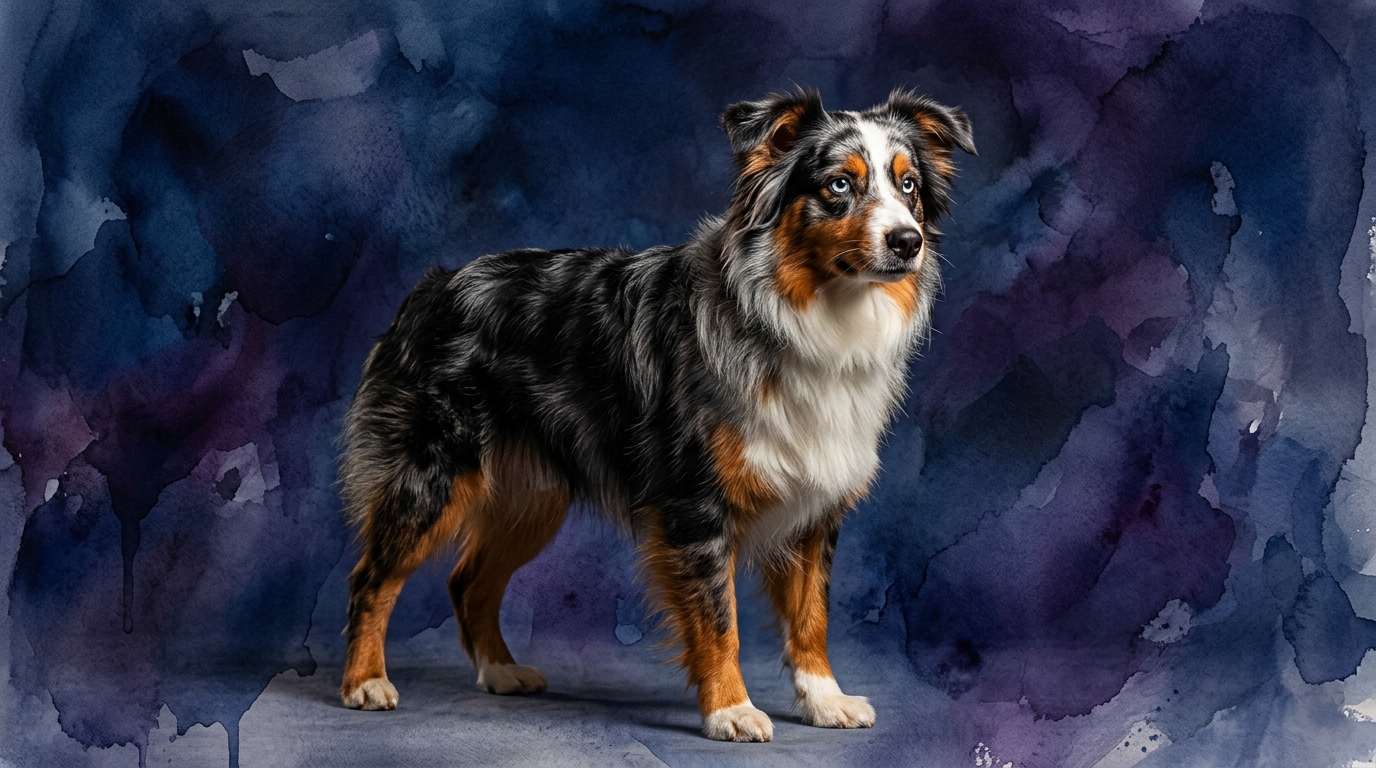
The Cosmic Pet's IQ Lab evaluates canine cognition across five key dimensions. For the Miniature American Shepherd (MAS), a Herding breed, its profile shows a balanced aptitude: Problem Solving (3/5), Training Speed (3/5), Social Intelligence (3/5), Instinctive Drive (3/5), and Memory (3/5). These scores indicate a consistent, moderate capability across the board, reflecting a practical, adaptable intelligence.
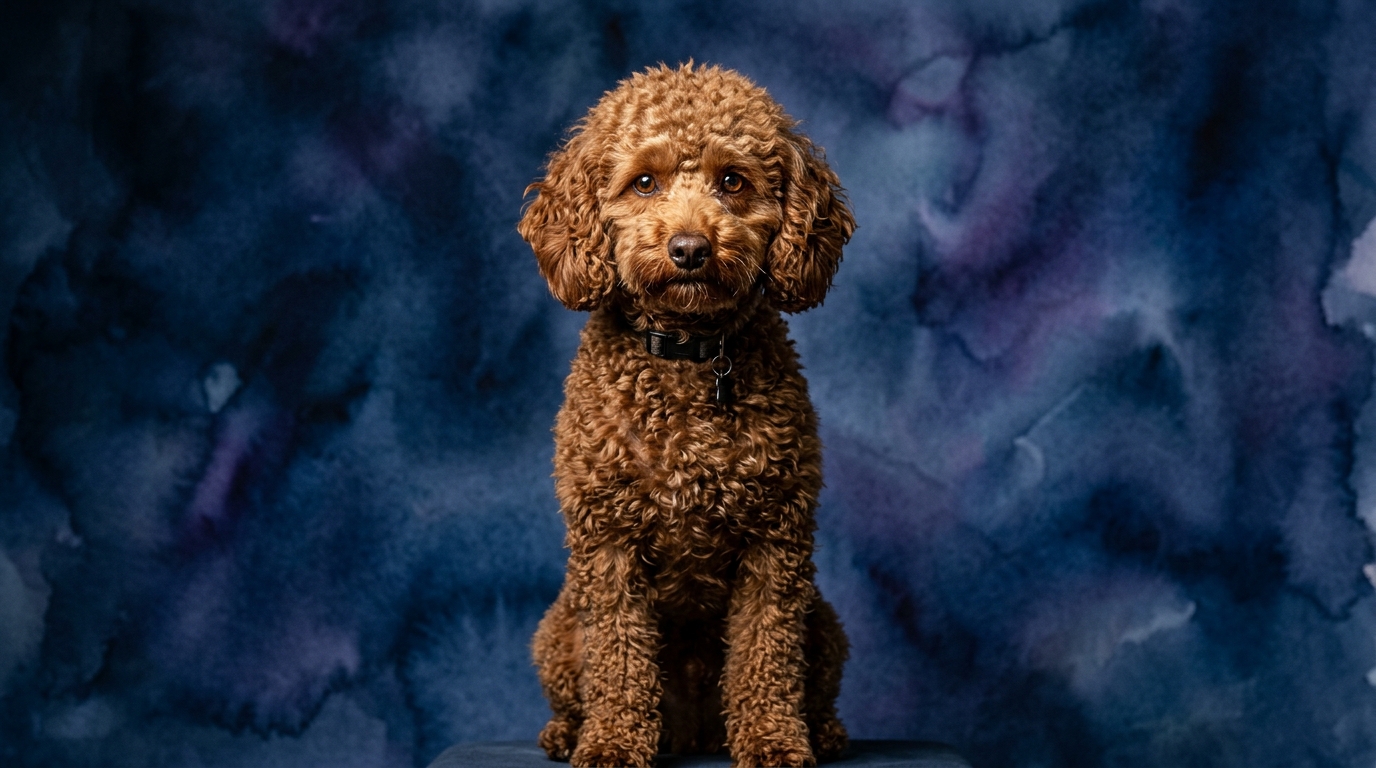
In contrast, the Miniature Poodle, a Non-Sporting breed with a Coren ranking of #2, presents a profile with distinct peaks: Problem Solving (5/5), Training Speed (5/5), Social Intelligence (3/5), Instinctive Drive (3/5), and Memory (5/5). This distribution suggests a breed with particular strengths in rapid learning and retention, alongside a solid understanding of social cues and a moderate underlying drive.
Miniature American Shepherd's Cognitive Strengths
While the Miniature Poodle boasts higher scores in specific cognitive areas, the Miniature American Shepherd's balanced cognitive profile, with consistent 3/5 scores across all five dimensions, presents a unique advantage in adaptability and practical application. Their 3/5 Instinctive Drive, specifically stemming from their herding lineage, provides a particular cognitive strength in situations requiring sustained attention to a group, proactive spatial management, or independent decision-making within a defined boundary. Unlike the Poodle's drive, which is often directed more towards human interaction, the MAS possesses an innate inclination to monitor and organize, making them particularly astute in tasks involving livestock or even managing family members in a subtle, watchful manner.
This means a MAS might naturally excel in activities like rally or agility courses where they need to navigate with purpose and initiative, often making micro-decisions based on their environment, rather than solely relying on explicit cues. Their moderate social intelligence, combined with this instinct, allows them to be acutely aware of subtle environmental shifts, making them excellent companions for outdoor adventures where situational awareness is key. This isn't about outsmarting, but about a different, highly practical form of operational intelligence.
Miniature Poodle's Cognitive Strengths
The Miniature Poodle undeniably holds a significant cognitive advantage in specific areas, particularly with its 5/5 scores in Problem Solving, Training Speed, and Memory. This powerful combination enables them to grasp intricate instructions, execute multi-step tasks, and retain those complex lessons over extended periods with remarkable efficiency. Their exceptional capacity to rapidly process new information means they often deduce solutions to novel problems or understand new commands in significantly fewer repetitions than many other breeds.
For instance, a Poodle might quickly figure out how to manipulate a complex puzzle toy, open a cabinet latch after minimal demonstration, or generalize a learned behavior, like "fetch," to a new object or location without extensive retraining. This speed of acquisition, coupled with their robust memory, contributes to their unparalleled versatility and success in advanced canine sports, where precise, rapid responses to a wide array of cues are absolutely critical. Their cognitive strength lies in their ability to absorb, analyze, and manipulate abstract concepts with impressive speed and accuracy.
Training Ease: MAS vs. Miniature Poodle
Based on The Cosmic Pet's IQ Lab data, the Miniature Poodle is demonstrably easier to train due to its superior 5/5 scores in both Training Speed and Memory, contrasting with the Miniature American Shepherd's 3/5 in these crucial categories. A Poodle's rapid acquisition of new commands means significantly fewer repetitions are needed for them to understand and reliably perform a desired behavior. This efficiency translates into quicker training sessions, faster progress through various skill levels, and considerably less potential for frustration for both the dog and the owner.
For example, teaching a complex sequence of commands for an obedience routine might be mastered by a Poodle in a matter of weeks, whereas a MAS, while capable, would likely require several months of consistent practice to reach the same level of fluency. Furthermore, the Poodle's outstanding memory ensures that once a command or skill is learned, it is retained effectively over long periods, reducing the necessity for frequent refreshers. The Miniature American Shepherd, while certainly trainable and eager to please, requires a more patient, consistent, and persistent approach, benefiting from clear, structured methods to steadily build and reinforce behaviors over time.
Suitability for Active vs. Relaxed Owners
For active owners seeking a highly engaged and cognitively challenging canine partner, the Miniature Poodle's exceptional Problem Solving (5/5) and Training Speed (5/5) make it an outstanding match. They thrive on consistent mental stimulation, excelling in demanding dog sports like advanced obedience, agility, and rally, where their quick thinking and ability to learn intricate sequences are invaluable. Their moderate Instinctive Drive (3/5) is typically channeled into enthusiastic participation with their owner in these structured activities, rather than independent ventures.
Conversely, while the Miniature American Shepherd also benefits greatly from activity, its balanced 3/5 scores across all dimensions suggest it can adapt well to owners who prefer a slightly less intense, though still purposeful, cognitive partnership. A MAS suits owners who enjoy consistent, functional activities like herding trials, long, exploratory hikes, or structured walks with a focus on environmental engagement, where their moderate drive and social intelligence can be well-utilized without the continuous demand for highly complex, novel mental challenges. For truly relaxed owners, it's important to note that neither breed is a sedentary companion; however, the MAS might require slightly less structured mental engagement to feel content, provided its substantial physical exercise needs are consistently met.
The Verdict
Choose the Miniature American Shepherd if you seek a balanced companion with a moderate, consistent cognitive approach, appreciating their herding instincts and adaptable nature for a variety of structured activities.
Opt for the Miniature Poodle if you desire a highly responsive and quick-learning partner who excels at complex problem-solving and retains information with remarkable efficiency, perfect for advanced training and dog sports.
🧠 Find Your Pet's IQ Score
Our Pet IQ Lab assessment covers 25+ tests across 5 cognitive dimensions — personalized to your breed.
Take the Full IQ Test →Frequently Asked Questions
Do Miniature American Shepherds and Miniature Poodles have similar social skills with people?
Both breeds score 3/5 in social intelligence, indicating a solid capacity to understand social cues and interact appropriately. While their expressions might differ, both breeds generally form strong bonds and adapt well to familiar social environments.
How does the instinctive drive differ between these two breeds?
Both breeds have an instinctive drive score of 3/5, but its manifestation varies. The Miniature American Shepherd's drive is rooted in herding, leading to tendencies to gather or monitor, whereas the Miniature Poodle's drive often translates into an eagerness to engage in activities with their owners.
Can a Miniature American Shepherd compete in dog sports as effectively as a Miniature Poodle?
While Miniature Poodles often excel due to their high training speed and memory, Miniature American Shepherds are also very capable in dog sports. They might require more consistent training repetitions, but their balanced cognitive profile and herding drive enable them to perform well in activities like agility, obedience, and herding trials.