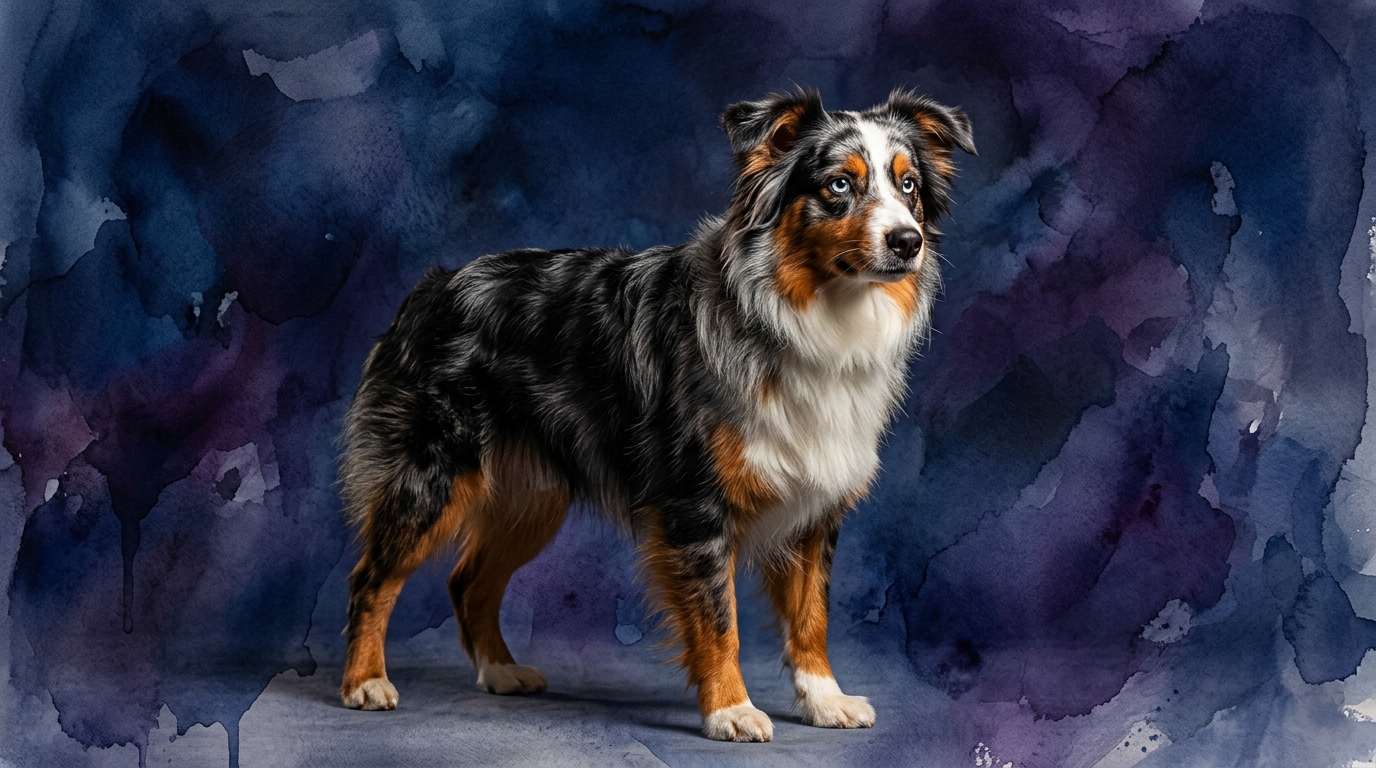

Side-by-Side IQ Profile
Both the Miniature American Shepherd (MAS), a herding dog, and the Rhodesian Ridgeback, a hound, register a consistent 3/5 across The Cosmic Pet Pet IQ Lab's five cognitive dimensions: problem-solving, training speed, social intelligence, instinctive drive, and memory. This uniform scoring suggests neither breed stands out as a cognitive outlier, but rather possesses a balanced, moderate capacity across these traits. The Rhodesian Ridgeback holds a Coren rank of #52, indicating a respectable capacity for obedience and working intelligence, while the MAS is not Coren-ranked, a common situation for newer or less widely studied breeds in that specific metric.
For problem-solving at 3/5, both breeds demonstrate an ability to learn and adapt, though the types of problems they excel at solving will likely differ based on their inherent drives. A 3/5 training speed means they are generally responsive to consistent instruction, neither instant learners nor particularly slow. Their social intelligence, also 3/5, implies they can read and respond to social cues, but might also possess a degree of independence or selective engagement. The 3/5 instinctive drive is significant; while moderate, its *direction* is breed-specific—herding for the MAS, tracking and guarding for the Ridgeback. Finally, a 3/5 memory suggests they retain learned information and routines effectively, but may not recall every detail with absolute precision.
Where the Miniature American Shepherd Excels Cognitively
The Miniature American Shepherd's cognitive strengths are deeply rooted in its herding heritage, despite its 3/5 scores. Their problem-solving ability, while moderate, is particularly effective in scenarios requiring cooperation and anticipation of a handler's needs. They excel at figuring out how to move obstacles or gather scattered items, demonstrating a practical intelligence geared towards collaborative tasks rather than independent strategizing. This cooperative problem-solving makes them adept at activities like agility courses, where sequences of commands and obstacles demand quick, handler-focused decisions.
Their social intelligence, though rated 3/5, is often expressed as a profound attunement to human emotion and direction. This isn't just about reading a cue; it's about understanding the *intent* behind the cue and adapting their behavior accordingly. This specific manifestation of social intelligence makes them highly responsive partners, eager to engage in joint activities. Their memory (3/5) serves them well in retaining complex command sequences and routines, which is crucial for herding work or competitive dog sports, allowing them to perform intricate patterns with consistency.
Where the Rhodesian Ridgeback Excels Cognitively
The Rhodesian Ridgeback's cognitive profile, while sharing the same 3/5 scores, leans towards independent thought and self-reliance, stemming from its background as a lion hunter. Their problem-solving at 3/5 often manifests as an ability to independently assess situations and devise solutions without constant human input. This could involve figuring out how to open gates, locate hidden treats, or navigate complex environments on their own terms. They are thinkers who often prefer to make their own decisions rather than always deferring to a handler, reflecting a practical, self-sufficient intelligence.
The Ridgeback's instinctive drive (3/5), though moderate, is powerful and singularly focused on scent work, tracking, and protection. This drive underpins a persistent and determined approach to tasks involving these elements. Their social intelligence (3/5) enables them to discern friend from foe, often making astute judgments about strangers and new situations. This isn't about eager-to-please cooperation, but rather a dignified assessment and a strong memory for who belongs in their established social circle, contributing to their reputation as vigilant guardians.
Training Ease: MAS vs. Ridgeback
Despite both breeds having a 3/5 training speed, the *experience* of training them can differ significantly due to their distinct behavioral drivers. The Miniature American Shepherd, with its herding instincts and strong desire to work cooperatively, generally approaches training as a partnership. They are often eager to please and highly motivated by praise and interaction with their handler, which can make them seem easier to train for obedience and complex tasks. Their focus on the handler means they often pick up new commands with fewer repetitions, provided the training is engaging and consistent.
The Rhodesian Ridgeback, conversely, presents a different training challenge. Their 3/5 social intelligence often means they are discerning rather than blindly compliant. They are independent thinkers who may question commands or choose not to comply if they don't see the immediate benefit or if the motivation isn't compelling. Training a Ridgeback requires immense patience, unwavering consistency, and a deep understanding of positive reinforcement tailored to their strong will. While they can learn just as quickly, maintaining their engagement and compliance often demands more creative and persistent effort from the trainer, especially in distracting environments, compared to the naturally more handler-focused MAS.
Lifestyle Match: Active vs. Relaxed Owners
Neither the Miniature American Shepherd nor the Rhodesian Ridgeback is suited for a truly 'relaxed' owner in the sense of minimal engagement. Both breeds require substantial physical activity and mental stimulation to thrive. The MAS, with its herding background, needs consistent mental work that engages its desire to cooperate and problem-solve alongside its owner. This could involve dog sports like agility, obedience, or even actual herding. Without an outlet for their cognitive and physical energy, MAS can become anxious or develop destructive behaviors, needing a 'job' to feel fulfilled.
The Rhodesian Ridgeback also demands significant exercise, often preferring long runs, hikes, or activities that engage their powerful tracking and scenting drives. While they can be calm indoors after sufficient exercise, their independence means they need mental challenges that respect their problem-solving abilities, such as puzzle toys or advanced scent work. An owner who doesn't provide consistent mental and physical outlets might find a Ridgeback becoming bored and inventing their own, potentially unwelcome, forms of entertainment. Both breeds require active, engaged owners, but the *nature* of that engagement differs significantly.
The Verdict
Choose the Miniature American Shepherd if you seek a highly cooperative, engaged partner for structured activities like dog sports and desire a dog keenly attuned to your direction and emotions.
Opt for the Rhodesian Ridgeback if you appreciate a dignified, independent companion with strong protective instincts, and are prepared to invest in consistent, motivating training that respects their self-assured nature.
🧠 Find Your Pet's IQ Score
Our Pet IQ Lab assessment covers 25+ tests across 5 cognitive dimensions — personalized to your breed.
Take the Full IQ Test →Frequently Asked Questions
Do both breeds require a lot of exercise?
Yes, both the Miniature American Shepherd and the Rhodesian Ridgeback are active breeds requiring substantial daily exercise. The MAS needs structured activities that engage its herding instincts, while the Ridgeback benefits from long runs or hikes that tap into its powerful physical and scenting capabilities.
Is one breed better for first-time dog owners?
The Miniature American Shepherd's cooperative nature and desire to please might make it a slightly more forgiving choice for dedicated first-time owners willing to commit to training. The Rhodesian Ridgeback's independence and strong will can be more challenging for novice owners who may struggle with consistent, firm, and positive training methods.
How do their social intelligence scores of 3/5 manifest differently?
For the MAS, 3/5 social intelligence often means a strong desire for handler interaction and an ability to read human cues to cooperate effectively. For the Ridgeback, it typically translates to a discerning nature, assessing situations and strangers with a dignified independence, and a selective but deep bond with their family members.