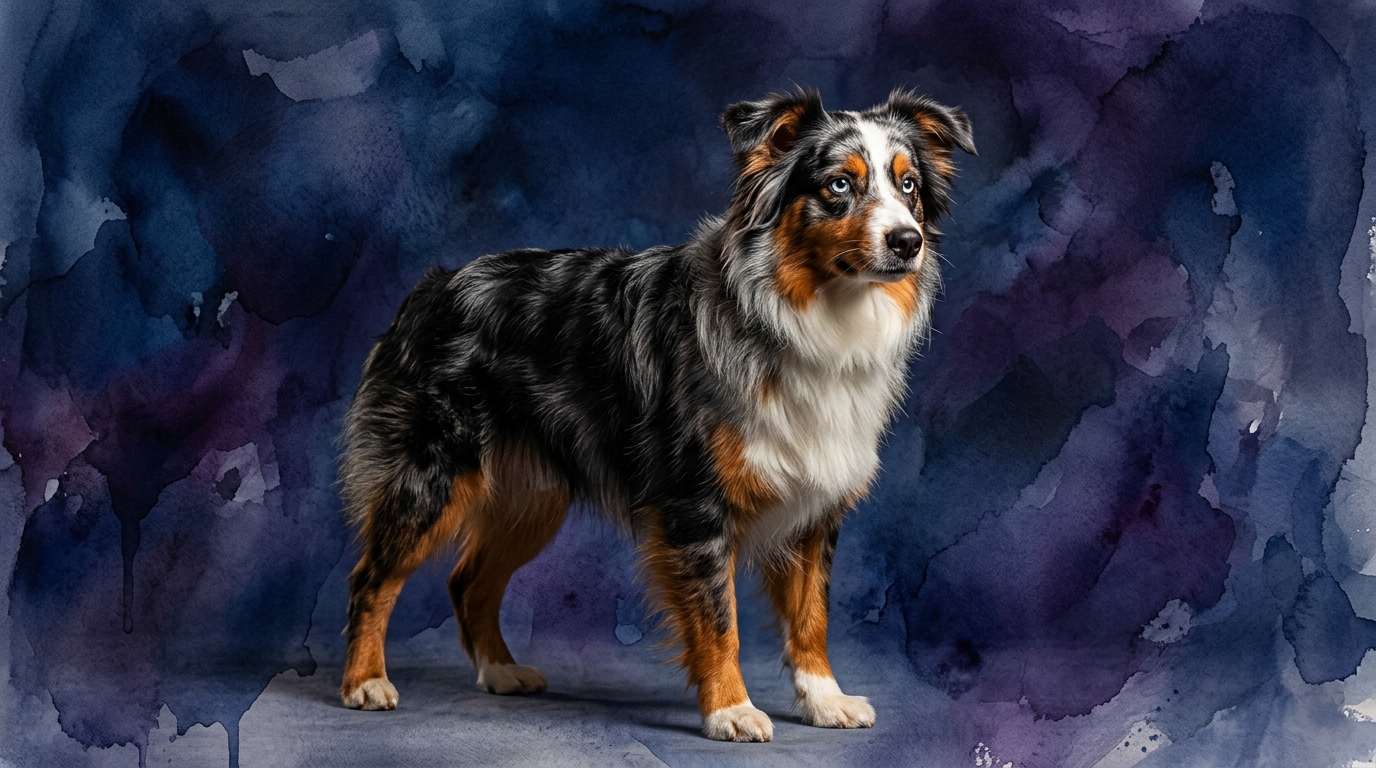
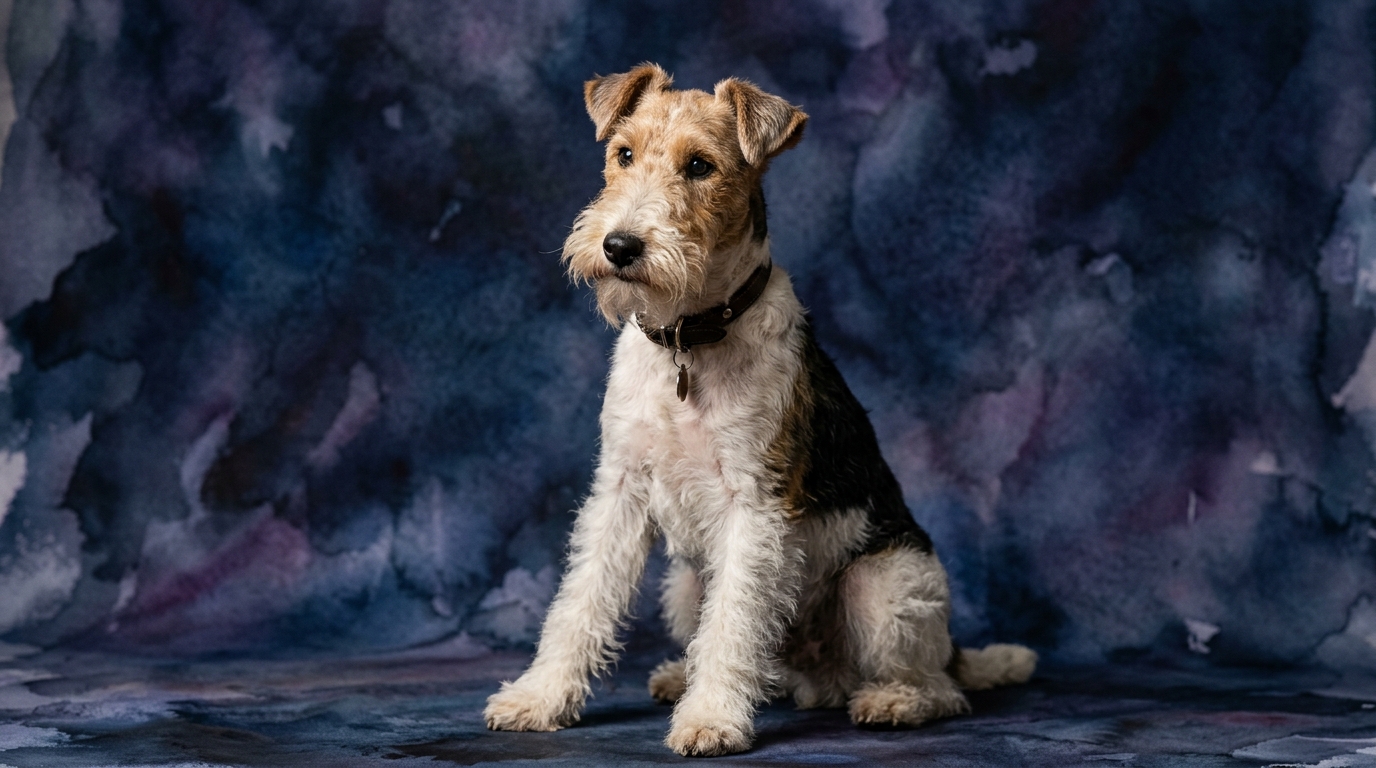
Side-by-Side Cognitive Profiles: Miniature American Shepherd vs. Wire Fox Terrier
At first glance, the cognitive assessments for the Miniature American Shepherd (MAS) and the Wire Fox Terrier (WFT) appear identical, each scoring 3/5 across all five dimensions: Problem Solving, Training Speed, Social Intelligence, Instinctive Drive, and Memory. However, these identical scores represent distinct expressions of intelligence, deeply rooted in their breed histories and original purposes. Understanding these nuances is key to appreciating their unique mental capabilities.
The Miniature American Shepherd, a member of the Herding group, exhibits its 3/5 Problem Solving by adeptly navigating complex environments to manage livestock, demonstrating spatial reasoning and strategic planning in moving a flock. Their Training Speed, also 3/5, reflects a willingness to engage and learn elaborate sequences of commands, driven by a desire for cooperative work. Social Intelligence at 3/5 manifests as a strong attunement to their handler's cues and intentions, crucial for effective herding partnerships. Their Instinctive Drive, rated 3/5, is centered around the herding instinct, which can translate into a natural tendency to gather and direct, alongside a moderate prey drive. Finally, their Memory, at 3/5, allows them to retain intricate routines and learn from past experiences, essential for consistent performance in their tasks.
In contrast, the Wire Fox Terrier, from the Terrier group, applies its 3/5 Problem Solving to independent tasks like locating and flushing quarry from dens, requiring creative solutions and persistent effort in challenging environments. Their Training Speed of 3/5 signifies that while they can learn quickly, their inherent independence means they often require more compelling motivation and diverse methods to maintain focus. Social Intelligence at 3/5 for the WFT is expressed more as observational savvy and an ability to read situations, rather than an overt desire for cooperative subservience. Their Instinctive Drive, also 3/5, is powerfully geared towards hunting, digging, and chasing, reflecting their vermin-hunting heritage. Their Memory, at 3/5, is robust for remembering locations of interest, scents, and successful strategies in their pursuits, contributing to their tenacity.
Where the Miniature American Shepherd Excels Cognitively
The Miniature American Shepherd's cognitive strengths lie in their capacity for cooperative problem-solving and their responsiveness within a human-dog partnership. Their herding lineage has instilled a deep understanding of sequential commands and an ability to anticipate movements, making them exceptional at activities requiring synchronized effort. This breed demonstrates a cognitive flexibility that allows them to adapt their herding strategies based on environmental factors or livestock behavior, showcasing a practical application of their problem-solving abilities within a team context.
Furthermore, the MAS's social intelligence, while rated similarly to the WFT, is distinctly geared towards collaboration. They are particularly adept at interpreting subtle body language and vocal cues from their handlers, which translates into a highly trainable and adaptable companion for structured activities. Their memory is finely tuned to recall complex patterns and routines, which is invaluable in dog sports like agility, obedience, or even learning intricate trick sequences, where precise execution and recall are paramount.
Where the Wire Fox Terrier Excels Cognitively
The Wire Fox Terrier shines in areas demanding independent thought, tenacity, and self-directed exploration. Their cognitive prowess is most evident in situations where they must assess a challenge and devise a solution without constant human intervention. This breed's problem-solving is characterized by a relentless drive to achieve a goal, such as figuring out how to access a hidden toy or navigating a complex scent trail, often employing trial-and-error with impressive persistence until success is achieved.
Their instinctive drive, particularly their strong prey drive, fuels a keen observational intelligence and an acute awareness of their surroundings. A WFT will meticulously scan an environment for any sign of movement or scent, demonstrating a cognitive focus on detecting and pursuing. Their memory is highly efficient at retaining information about specific locations, successful hunting strategies, and areas of interest, allowing them to return to promising spots or remember how they previously overcame an obstacle. This self-reliant cognitive style makes them formidable in tasks requiring individual initiative and determination.
Ease of Training: A Matter of Motivation and Method
When considering which breed is 'easier' to train, the distinction lies less in their raw capacity to learn and more in their inherent motivations and behavioral tendencies. Both breeds score 3/5 in Training Speed, indicating a moderate pace of learning, but their approaches to receiving instruction differ significantly due to their historical roles. The Miniature American Shepherd, with its cooperative herding background, generally presents as more amenable to traditional training methods and eager to please its handler.
The MAS thrives on having a 'job' and working in partnership. Their social intelligence and instinctive drive for cooperative tasks mean they often view training as a shared activity, responding well to positive reinforcement, clear communication, and consistent routines. They are typically more focused on their handler during training sessions and are often motivated by praise and the opportunity to engage in purposeful activities, making their training journey generally smoother for a novice owner.
Conversely, the Wire Fox Terrier's independent nature and strong instinctive drive for self-directed hunting tasks can make training a more challenging, albeit rewarding, endeavor. While they are capable of learning quickly, their inherent self-reliance means they can be easily distracted by environmental stimuli or their own agenda. Training a WFT requires creativity, patience, and making the learning process feel like a stimulating game or a problem they choose to solve, rather than a command to obey. Their training success often hinges on a handler's ability to tap into their terrier tenacity and make obedience more exciting than chasing a squirrel.
Matching Breeds to Lifestyles: Active vs. Relaxed Owners
Both the Miniature American Shepherd and the Wire Fox Terrier are active breeds that require substantial mental and physical engagement, making them unsuitable for truly relaxed, sedentary owners. However, the *type* of activity they thrive on varies, influencing which breed might be a better fit for different active lifestyles. Understanding these energy outlets is crucial for their overall well-being and preventing behavioral issues.
The Miniature American Shepherd excels with owners who can provide structured activities that tap into their herding intelligence and desire for teamwork. This includes dog sports like agility, obedience, flyball, or even herding exercises if available. They need consistent mental stimulation through training, puzzle toys, and interactive play that involves their human partner. An MAS thrives when given a 'job,' even if it's just learning complex tricks, and will become restless and potentially destructive if their cognitive and physical needs for purposeful activity are not met.
The Wire Fox Terrier, while equally active, channels its energy differently. Their instinctive drive for hunting and exploration means they flourish with owners who can provide outlets for digging, chasing, and scent work. Earthdog trials, long walks with plenty of sniffing opportunities, interactive toys that mimic prey, and vigorous play sessions that allow them to 'hunt' are ideal. While they can participate in dog sports, their independent problem-solving often means they prefer activities where they can use their own initiative. Owners must be prepared for a dog that needs to explore, dig, and chase, and will require secure fencing and vigilant supervision to prevent them from pursuing interesting scents.
The Verdict: When to Choose Each Intelligent Companion
Choosing between a Miniature American Shepherd and a Wire Fox Terrier ultimately depends on the type of cognitive partnership an owner seeks and the lifestyle they can provide. Both are bright and capable dogs, but their intelligence is expressed through different lenses.
If you are an owner who values a highly cooperative, handler-focused companion eager to engage in structured activities and work as a team, the Miniature American Shepherd is likely your ideal match. They thrive on clear direction, consistent training, and opportunities to apply their herding-based problem-solving and social intelligence in a collaborative setting, making them excellent partners for dog sports and a purposeful family life.
Conversely, if you appreciate an independent, tenacious spirit that excels at self-directed problem-solving and is driven by strong exploratory instincts, the Wire Fox Terrier may be the perfect fit. This breed thrives with owners who can provide outlets for their hunting drives, enjoy engaging with a dog that has a strong will, and are prepared for a companion who will challenge them with their ingenuity and determination, making every day an adventure.
The Verdict
Choose the Miniature American Shepherd if you seek a cooperative, team-oriented companion for structured activities and enjoy a dog that is highly attuned to your cues and eager to please. They thrive on purposeful work alongside their human partner.
Choose the Wire Fox Terrier if you value an independent, tenacious spirit with a strong self-directed drive for exploration and problem-solving, and are prepared to engage a dog with creative, stimulating training methods.
🧠 Find Your Pet's IQ Score
Our Pet IQ Lab assessment covers 25+ tests across 5 cognitive dimensions — personalized to your breed.
Take the Full IQ Test →Frequently Asked Questions
Do Miniature American Shepherds bark excessively?
Miniature American Shepherds can be vocal, particularly due to their herding instincts which involve using their voice to direct livestock. They also serve as alert guardians for their families, so they may bark at unfamiliar sights or sounds, but can be trained to moderate their vocalizations.
Are Wire Fox Terriers good with other pets?
Wire Fox Terriers possess a strong prey drive due to their hunting heritage, which means they may not always be reliable with smaller pets like cats, rabbits, or rodents. With proper socialization from a young age, they can coexist with other dogs, but their assertive terrier nature often means they prefer to be the sole canine focus.
How much exercise do both Miniature American Shepherds and Wire Fox Terriers need daily?
Both breeds require significant daily exercise and mental stimulation. Miniature American Shepherds need at least 60-90 minutes of vigorous activity, often in structured play or training. Wire Fox Terriers also need 60+ minutes, but their exercise should include opportunities for independent exploration, digging, and chasing, often with varied routines to keep them engaged.