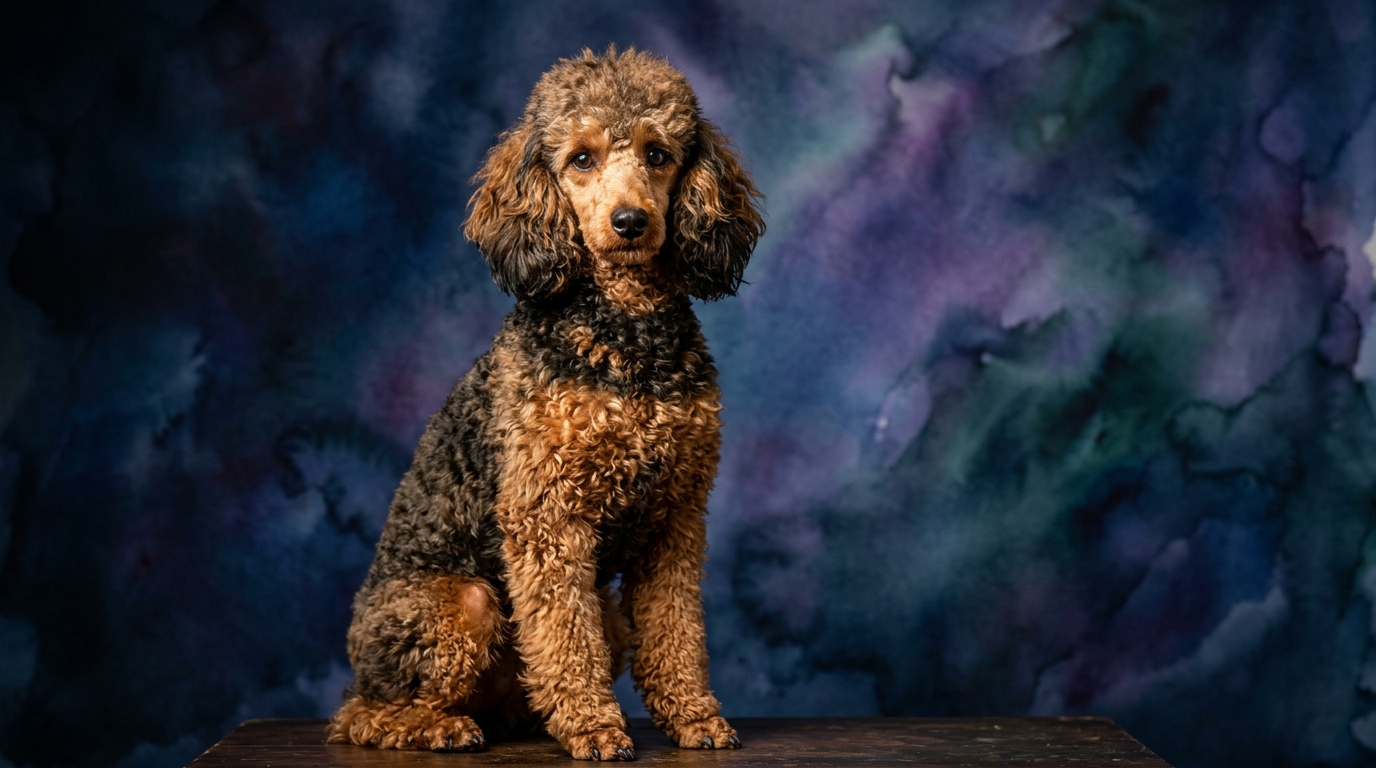
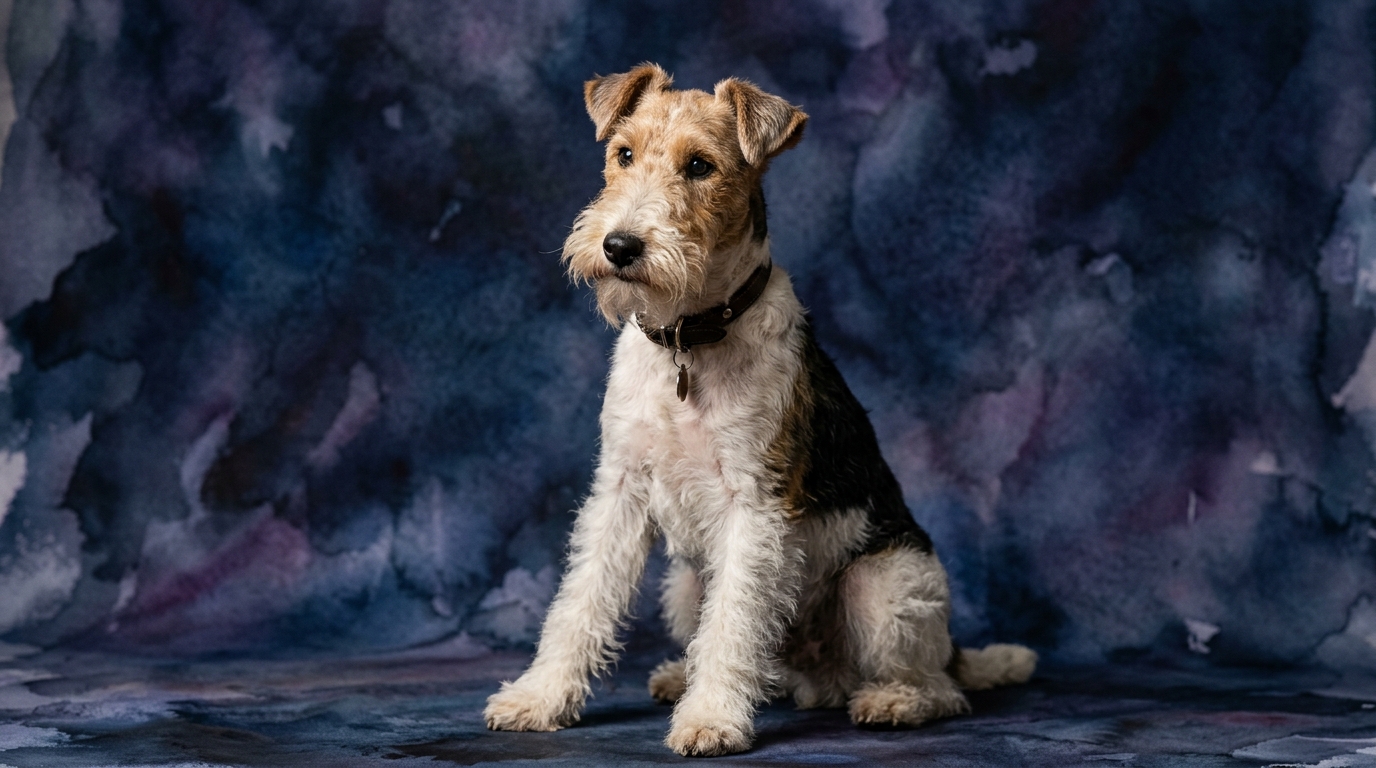
Side-by-Side IQ Profile: Poodle (Standard) vs. Wire Fox Terrier
At The Cosmic Pet Pet IQ Lab, we assess canine intelligence across five key dimensions, providing a granular view of each breed’s cognitive strengths. The Poodle (Standard), with its heritage as an astute water retriever, consistently demonstrates a profound capacity for complex thought and rapid learning. In stark contrast, the Wire Fox Terrier, bred for independent vermin control, exhibits a practical, tenacious intelligence geared towards self-directed action.
For the Poodle (Standard), Problem Solving registers a perfect 5/5. This breed doesn't just solve tasks; it often grasps the underlying principles, allowing it to apply learned solutions to novel situations with remarkable flexibility and abstract reasoning. Their Training Speed also scores 5/5, reflecting an exceptional ability to assimilate new commands and intricate sequences with minimal repetition. They often anticipate cues, demonstrating a strong desire to cooperate and engage in learning.
The Poodle (Standard)'s Social Intelligence is rated 5/5, indicating a deep attunement to human emotions and subtle social cues. They form nuanced bonds, adapting their behavior to different social contexts and often seeking to understand their human companions' intentions. Their Instinctive Drive, at 4/5, is robust but highly channelable; historically for retrieving, this drive makes them focused and biddable when engaged in tasks, rather than purely self-directed. Finally, their Memory is a stellar 5/5, exhibiting exceptional long-term retention of commands, routines, and complex associations, contributing to their consistent performance and quick re-learning.
The Wire Fox Terrier presents a different cognitive blueprint. Its Problem Solving score of 3/5 reflects a practical, hands-on approach, often favoring trial-and-error and persistent effort over abstract analysis. Their solutions are typically direct, driven by a tangible goal such as exploring or finding a hidden object. Their Training Speed, also 3/5, means they learn at a steady pace, but their independent nature often requires more patience, consistency, and motivation tailored to their natural inclinations; compliance is often contingent on their perceived value of the task.
The Wire Fox Terrier's Social Intelligence, rated 3/5, is characterized by direct and purposeful engagement. While affectionate with their chosen family, their social interactions are often less about subtle emotional attunement and more about clear communication and mutual activity, appreciating direct interaction. Their Instinctive Drive, also 3/5, is potent and primarily focused on their terrier heritage of hunting and independent exploration. This manifests as persistent pursuit of sensory input (scents, sounds) and determination to achieve self-selected goals, which often requires consistent management. Their Memory, at 3/5, retains information relevant to their immediate environment and effective strategies for independent goals, but their recall for human-directed tasks can be more selective, influenced by their current interests.
Where Poodle (Standard) Wins Cognitively
The Poodle (Standard) distinctly excels in areas demanding abstract thought and adaptability. Their 5/5 Problem Solving score means they can not only execute a sequence of actions but often understand the *why* behind them, allowing for creative adjustments in new scenarios. This cognitive flexibility makes them adept at advanced obedience, dog sports requiring complex strategy, and service work where independent decision-making based on learned principles is crucial. Their exceptional Training Speed and Memory further amplify this advantage, enabling them to master elaborate routines and retain them effortlessly, making multi-step commands or intricate agility courses a natural fit. They thrive on intellectual challenge, demonstrating a capacity to generalize learning from one context to another with remarkable ease.
Where Wire Fox Terrier Wins Cognitively
The Wire Fox Terrier's cognitive strengths lie in their tenacity and focused independence, particularly in tasks requiring sustained effort and self-reliance. While their Problem Solving is rated 3/5, this score reflects a practical, goal-oriented approach rather than a deficit. They excel at persistently working through physical challenges, such as navigating complex terrains or 'digging out' a perceived target, where their determination overrides the need for abstract solutions. Their 3/5 Instinctive Drive, though challenging to channel, provides an unwavering focus on their chosen objectives, making them formidable in activities that tap into their natural hunting instincts, like earthdog trials. They demonstrate resilience and an unwavering spirit in pursuing self-selected tasks, often showing a resourceful, 'can-do' attitude when faced with obstacles.
Which Is Easier to Train and Why
When evaluating ease of training, the Poodle (Standard) holds a clear advantage due to its confluence of high Training Speed (5/5), Social Intelligence (5/5), and Memory (5/5). They are inherently eager to engage with and please their human companions, quickly forming associations between commands and actions. Their acute social intelligence means they are highly responsive to subtle cues and emotional feedback, making them receptive partners in the training process. They learn new behaviors rapidly and retain them consistently, making them excellent candidates for advanced obedience, trick training, and complex performance disciplines. Their biddable nature and cooperative spirit streamline the learning curve, requiring less repetition and more nuanced instruction.
The Wire Fox Terrier, with a 3/5 in Training Speed, Social Intelligence, and Memory, presents a different training dynamic. Their independent nature and strong instinctive drive mean they are less inherently inclined to blindly follow commands. Training requires significant patience, consistency, and a deep understanding of their terrier mindset. Motivation often needs to be high-value and directly linked to their innate desires, such as chase games or opportunities to 'work' for a reward. While they are certainly capable of learning, their selective memory and self-directed problem-solving mean that training sessions need to be engaging, varied, and often involve channeling, rather than suppressing, their natural instincts. Real behavioral differences, like their propensity to follow scents or dig, necessitate proactive management and redirection during training.
Which Suits Active Owners vs. Relaxed Owners
The Poodle (Standard) is well-suited for owners who appreciate mental engagement and structured activities, ranging from advanced training to dog sports. While adaptable to various living situations, they thrive when their high cognitive capacity is utilized, making them excellent companions for active owners who enjoy teaching complex tasks, participating in agility, or even engaging in service work. Their need for intellectual stimulation means a relaxed owner must still provide consistent mental enrichment, even if physical activity is moderate. They are companions who enjoy being involved in their human's daily life, demonstrating a desire to learn and cooperate.
The Wire Fox Terrier is best suited for active owners who can provide consistent outlets for their robust physical energy and strong instinctive drives. These dogs require structured activities that allow them to run, chase, and explore, such as long walks, hiking, or participation in earthdog trials or lure coursing. A 'relaxed' owner who cannot meet these needs might find themselves with a bored and potentially destructive companion, as their cognitive profile is geared towards independent action and persistent pursuit of self-selected goals. They thrive with an owner who appreciates a spirited, tenacious companion and is committed to consistent training and management of their inherent terrier behaviors.
The Verdict: When to Choose Each
The Verdict
Choose a Poodle (Standard) if you seek a highly cooperative, intellectually flexible companion eager to learn complex tasks and form deep, nuanced social bonds, thriving on mental engagement and structured interaction. They are an excellent choice for owners who enjoy advanced training, dog sports, or who need a reliable and adaptable partner for service work.
Opt for a Wire Fox Terrier if you appreciate a spirited, tenacious, and independent companion with a practical problem-solving approach and a strong work ethic. They are ideal for active owners who can provide consistent physical challenges, structured outlets for their hunting instincts, and are prepared for consistent, patient training to channel their determined nature.
🧠 Find Your Pet's IQ Score
Our Pet IQ Lab assessment covers 25+ tests across 5 cognitive dimensions — personalized to your breed.
Take the Full IQ Test →Frequently Asked Questions
Do Poodles need a lot of grooming because of their intelligence?
A Poodle's grooming needs are related to their unique coat type, not their intelligence. Their dense, curly coat requires regular brushing and professional grooming to prevent matting, a trait unrelated to their cognitive abilities. However, their high intelligence and cooperative nature do make them generally patient and easy to groom.
Are Wire Fox Terriers difficult to live with due to their independent nature?
Wire Fox Terriers are not difficult to live with, but their independent nature and strong drives require consistent management and engagement. Owners who understand their terrier traits and provide ample physical and mental stimulation will find them spirited, loyal, and entertaining companions, rather than challenging. Their independence means they thrive with clear boundaries and activities that channel their energy.
Can a Wire Fox Terrier be trained for advanced tasks like a Poodle?
While a Wire Fox Terrier can certainly learn advanced tasks, their training approach differs from a Poodle's. They may require more repetition, highly motivating rewards, and training methods that appeal to their instinctive drives and independent problem-solving. While a Poodle might excel in abstract obedience, a Wire Fox Terrier might shine in tasks requiring tenacity and independent decision-making, such as advanced scent work or earthdog trials.