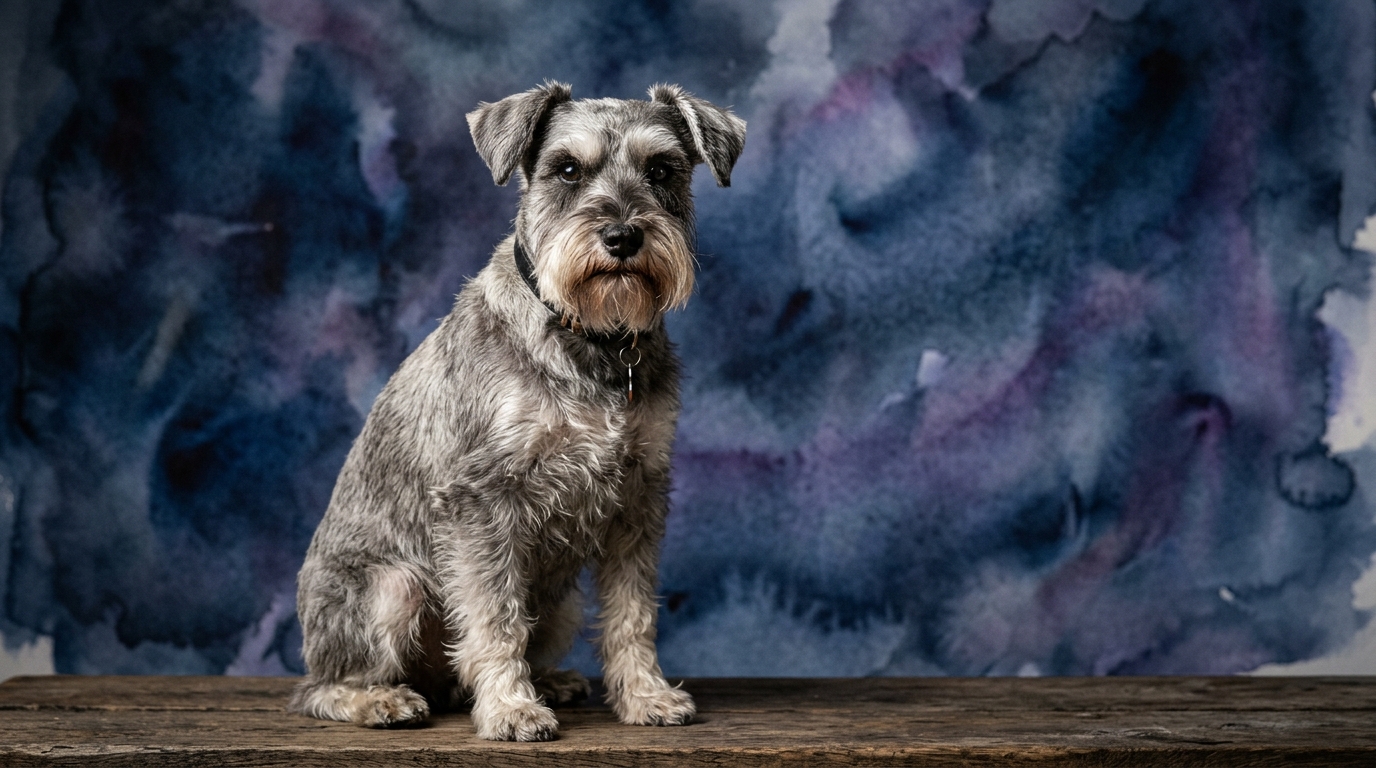

Side-by-Side IQ Profile: Miniature Schnauzer vs. Brussels Griffon
The Cosmic Pet Pet IQ Lab employs a five-dimensional framework to assess canine intelligence, providing a nuanced view of each breed's cognitive strengths. Let's examine how the Miniature Schnauzer and Brussels Griffon stack up.
The Miniature Schnauzer, a Terrier breed, boasts a Coren ranking of #12, indicating a strong capacity for learning and obedience. Their Problem Solving is rated 4/5, showing a notable ability to figure out challenges independently. Training Speed is an exceptional 5/5, meaning they grasp new commands with remarkable alacrity. Social Intelligence stands at 4/5, reflecting their adeptness at reading human cues and adapting to social situations. Their Instinctive Drive, a legacy of their working heritage, is 4/5, indicating a strong inclination for purposeful activity. Finally, their Memory is solid at 4/5, ensuring consistent recall of learned behaviors and experiences.
The Brussels Griffon, a Toy breed, does not have a Coren ranking, often characteristic of breeds whose primary role is companionship rather than complex tasks. Across all five IQ dimensions, the Brussels Griffon consistently scores 3/5. This means their Problem Solving is moderate, capable but less inclined towards independent strategizing. Their Training Speed is also 3/5, suggesting they learn at a steady but not rapid pace. Social Intelligence at 3/5 implies they are attuned to their human companions but might interpret subtle cues less finely. Instinctive Drive is moderate at 3/5, meaning they are less driven by intense urges for hunting or exploring. Lastly, their Memory is 3/5, indicating adequate recall with consistent reinforcement but perhaps less long-term retention for intricate details.
Where the Miniature Schnauzer Wins Cognitively
The Miniature Schnauzer's cognitive profile showcases several distinct advantages, particularly for owners seeking an engaged and capable canine partner. Their exceptional 5/5 Training Speed is a clear differentiator; these dogs process new information and associate actions with commands with remarkable alacrity, meaning fewer repetitions are needed to solidify a behavior, whether it's 'sit' or a more complex trick. This rapid learning curve makes them highly responsive to instruction and a joy to train.
Coupled with their superior training speed, their 4/5 Problem Solving skill allows Miniature Schnauzers to independently assess and navigate challenges. This manifests in their ability to figure out how to access a desired toy, escape a tricky gate, or even open a cabinet. This proactive cognitive approach means they are less likely to get 'stuck' on a problem and more likely to experiment with solutions, often demonstrating a clever resourcefulness. Their 4/5 social intelligence also means they often read human frustration or intent, adjusting their behavior accordingly, which can be seen as a form of social problem-solving.
Furthermore, their robust 4/5 Instinctive Drive provides a strong foundation for engagement. Rooted in their terrier heritage, this drive translates into a keen interest in activities like scent work, agility, or a vigorous game of fetch. This innate motivation provides a strong foundation for activities that require sustained focus and energy, making them excellent candidates for dog sports or working roles where their natural inclinations can be channeled productively.
Where the Brussels Griffon Wins Cognitively
While the Brussels Griffon's IQ scores are consistently moderate at 3/5, this profile offers unique cognitive advantages for specific lifestyles and owner preferences. Their moderate 3/5 in Problem Solving and Instinctive Drive often translates to a cognitive presence that is less prone to boredom-induced mischief when left to their own devices. They are generally less compelled to invent their own entertainment by dismantling furniture or orchestrating elaborate escapes, making them ideal companions for those who appreciate a calmer, less demanding mental presence in their pet.
The Brussels Griffon's 3/5 Social Intelligence often manifests as a deep, singular focus on their primary human companion, forming strong, often intense, bonds. They excel at providing unwavering affection and thrive on close physical proximity and interaction, often preferring shared quiet moments over independent exploration or complex tasks. This dedicated focus on companionship can be a profound 'win' for owners seeking a devoted and constant presence who finds contentment in shared, intimate moments.
Their 3/5 Training Speed, while not as rapid as a Schnauzer's, means they learn at a pace that is accessible and less overwhelming for owners new to dog training or those who prefer a more relaxed approach. They are not prone to quickly outsmarting their owners, which can be a relief for individuals who might find the rapid cognitive processing of a higher-rated breed challenging to keep up with. Their moderate Memory (3/5) ensures they retain basic commands adequately with consistent, patient reinforcement, rewarding a gentle, methodical training style.
Which is Easier to Train and Why?
Based on their cognitive profiles, the Miniature Schnauzer is generally easier to train. With a 5/5 Training Speed and 4/5 Problem Solving, they grasp commands quickly, often after just a few repetitions, and their strong 4/5 Memory ensures long-term retention. Their 4/5 Social Intelligence means they are attentive to human cues and eager to please, further aiding the training process. For example, a Schnauzer is more likely to pick up on the subtle body language that accompanies a command, making them highly responsive and adaptable in various training scenarios. Their terrier nature, while sometimes headstrong, can be effectively channeled into focused learning, especially with positive reinforcement methods.
The Brussels Griffon, with consistent 3/5 scores across problem-solving, training speed, and memory, presents a more moderate training challenge. They can learn, but require more patience, consistency, and positive reinforcement. They may not grasp concepts as rapidly, necessitating more repetitions to solidify a command. Their moderate social intelligence means they might not always be as finely tuned to subtle human cues, requiring clearer, more direct communication. While affectionate, their desire to please might not always translate into immediate obedience, and they can exhibit a stubborn streak. An owner training a Griffon will need to embrace a slower, more methodical approach, celebrating small victories and maintaining a consistent, reward-based routine to achieve lasting results.
Cognitive Alignment: Active vs. Relaxed Owners
The Miniature Schnauzer's robust 4/5 Instinctive Drive and 4/5 Problem Solving make them an excellent fit for active owners who enjoy engaging their pet in varied activities. They thrive on mental stimulation and physical exercise, whether it's daily brisk walks, agility training, scent work, or learning new tricks. Their cognitive energy means they need consistent outlets to prevent boredom and potential mischievousness, channeling their innate curiosity and drive into constructive behaviors. Owners who appreciate a dog that can keep up with their active lifestyle and enjoys participating in structured, stimulating activities will find a Schnauzer a fulfilling and intelligent companion.
Conversely, with their overall 3/5 cognitive ratings and generally lower instinctive drive, Brussels Griffons are better suited for relaxed owners who prefer a calmer pace of life. While they enjoy walks and playtime, their need for intense physical or mental stimulation is significantly lower than a Schnauzer's. They are content with shorter strolls, indoor play, and ample cuddle time, often preferring to be close to their human companions. Their cognitive profile makes them less likely to demand constant engagement or invent complex ways to entertain themselves, aligning well with owners who desire a devoted, low-key companion happy to share quiet moments and provide unwavering affection.
The Verdict
Opt for a Miniature Schnauzer if you're an active owner seeking a highly trainable, mentally agile companion eager to engage in structured activities and learn new things. Their quick wit and robust drives make them ideal for those who enjoy consistent training and adventurous outings.
Select a Brussels Griffon if you're a relaxed owner desiring a devoted, affectionate companion whose cognitive needs are moderate, thriving on close companionship rather than intense mental challenges. Their calmer demeanor and lower drives make them perfect for a quieter home life.
🧠 Find Your Pet's IQ Score
Our Pet IQ Lab assessment covers 25+ tests across 5 cognitive dimensions — personalized to your breed.
Take the Full IQ Test →Frequently Asked Questions
Are Miniature Schnauzers prone to being overly vocal?
Miniature Schnauzers, with their terrier heritage and protective instincts, can indeed be prone to barking, especially when alerting to strangers or unusual sounds. Their 4/5 social intelligence means they are observant of their environment, and their instinctive drive (4/5) can translate into a keen sense of territory, prompting vocal warnings. Early and consistent training can help manage this tendency, teaching them appropriate times to vocalize.
Do Brussels Griffons do well in homes with children?
Brussels Griffons can do well with older, respectful children, but their smaller size and sometimes sensitive nature mean they might not be the best fit for very young, boisterous kids. Their 3/5 social intelligence suggests they might not always interpret complex child play cues perfectly, and their moderate instinctive drive means they are less tolerant of rough play. Supervision is always recommended to ensure positive interactions for both the dog and the child.
Which breed is more independent?
The Miniature Schnauzer, with its 4/5 problem-solving and instinctive drive, generally exhibits more independence and a greater capacity for self-directed activity. They are more likely to entertain themselves or explore their surroundings on their own, often finding creative solutions to access desired items. The Brussels Griffon, with its consistent 3/5 scores, tends to be more reliant on human companionship and seeks proximity, displaying less independent exploration and preferring to be a shadow to its owner.