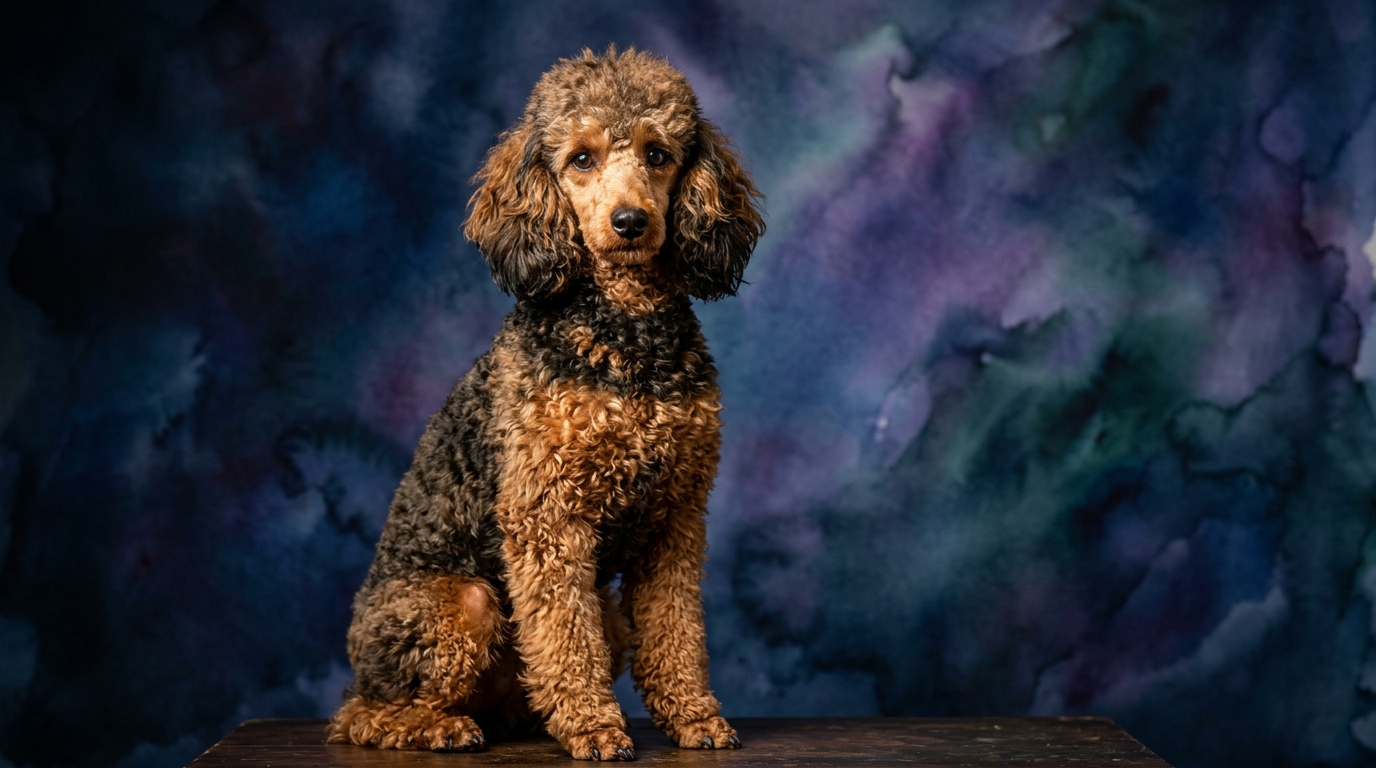
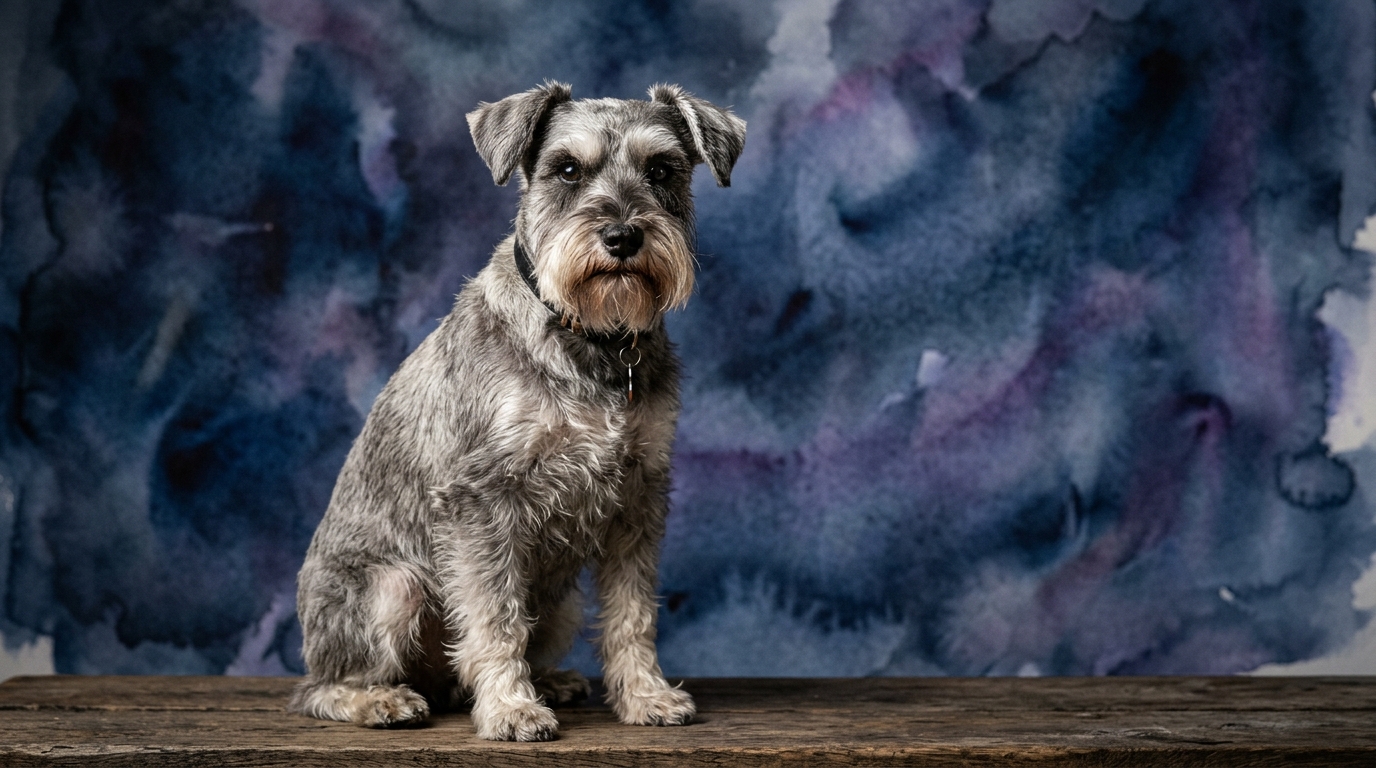
Side-by-Side IQ Profile: Standard Poodle vs. Miniature Schnauzer
The Cosmic Pet Pet IQ Lab provides a comprehensive framework to understand each breed's cognitive strengths. For the Standard Poodle, we observe a Coren rank of #2, indicating an exceptional capacity for learning and understanding new commands. Its IQ breakdown shows Problem Solving at 5/5, signifying an outstanding ability to analyze novel situations and devise effective solutions quickly. Training Speed is also 5/5, meaning they grasp new instructions with remarkable swiftness, often requiring very few repetitions. Social Intelligence is rated 5/5, reflecting their deep understanding of human cues, emotions, and social structures. Instinctive Drive is 4/5, showing a well-developed but manageable level of innate behaviors, while Memory stands at an impressive 5/5, ensuring long-term retention of learned behaviors and experiences.
The Miniature Schnauzer, with a Coren rank of #12, also demonstrates considerable cognitive prowess. Its Problem Solving score is 4/5, indicating a strong capability to tackle challenges, though perhaps with slightly more deliberation or trial-and-error than the Standard Poodle. Training Speed matches the Poodle at 5/5, highlighting their rapid learning curve for commands. Social Intelligence is 4/5, suggesting a good understanding of human interactions, though potentially less nuanced than the Poodle's. Instinctive Drive is 4/5, typical of its Terrier heritage, manifesting as a robust, independent spirit. Memory is 4/5, signifying solid retention of information, albeit potentially requiring more consistent reinforcement for complex sequences over time compared to the Poodle.
Where the Standard Poodle Wins Cognitively
The Standard Poodle's cognitive edge is most apparent in its superior Problem Solving, Social Intelligence, and Memory, all rated 5/5. This breed excels at tasks requiring abstract thought and adaptability, such as quickly deciphering complex puzzle toys or navigating intricate agility courses without prior exposure. Their 5/5 Social Intelligence allows them to pick up on subtle human emotional states and intentions, making them exceptionally attuned companions who can anticipate needs or react appropriately to mood shifts. This translates into a dog that often seems to "read your mind." Furthermore, their 5/5 Memory ensures that once a command or routine is established, it is deeply ingrained, requiring minimal refreshers even after long breaks, making them highly reliable in performing learned behaviors consistently across various contexts.
Their higher Coren rank of #2 reflects this comprehensive cognitive advantage, showcasing a breed that not only learns quickly but also processes information deeply, applies it flexibly, and understands its social environment profoundly. This makes the Standard Poodle particularly adept at roles requiring nuanced communication, independent decision-making in novel scenarios, and long-term retention of a vast repertoire of commands and experiences, such as service work or competitive obedience at the highest levels.
Where the Miniature Schnauzer Wins Cognitively
While the Standard Poodle showcases broader cognitive superiority, the Miniature Schnauzer's unique blend of traits creates specific cognitive "wins" suited for particular environments and owners. Its 4/5 Problem Solving, combined with a 4/5 Instinctive Drive rooted in its terrier heritage, makes it a tenacious and independent problem-solver, particularly when motivated by a task that aligns with its natural predispositions, such as scent work or "hunting" for hidden toys. They exhibit a determined focus in pursuing a goal, often exploring various solutions without constant human prompting, which can be a distinct advantage for owners who appreciate a dog with a robust, self-reliant approach to challenges.
Their 5/5 Training Speed ensures they absorb new commands as rapidly as the Poodle, making them quick studies in foundational obedience. Where the Schnauzer's cognitive profile truly shines is in its application of learning with a distinct terrier spirit. Their slightly lower Social Intelligence (4/5) compared to the Poodle means they might be less inclined to people-pleasing and more driven by the inherent satisfaction of the task itself, fostering a strong sense of independence. This can translate into a dog that is highly effective at tasks requiring self-direction and persistence, such as navigating complex agility sequences where they must make quick, independent decisions, or excelling in barn hunt activities where their drive and problem-solving merge to locate targets effectively without constant human guidance.
Which is Easier to Train and Why
Both the Standard Poodle and the Miniature Schnauzer boast a 5/5 rating for Training Speed, indicating that both breeds grasp new commands with remarkable swiftness. However, the overall "ease" of training extends beyond just how quickly they learn. The Standard Poodle's 5/5 Social Intelligence and 5/5 Memory contribute significantly to a smoother training experience for a wider range of activities. Their keen awareness of human cues means they are often eager to comply and understand what is expected even from subtle body language, making communication highly efficient. Their exceptional memory ensures that once a command is learned, it is retained with minimal need for repetition, allowing for rapid progression to more complex behaviors and long-term reliability in performance.
The Miniature Schnauzer, while equally quick to learn new commands (5/5 Training Speed), might present different training dynamics due to its 4/5 Social Intelligence and 4/5 Memory, coupled with its ingrained terrier Instinctive Drive. While they absorb information quickly, their slightly less nuanced understanding of human social cues may mean they require clearer, more direct communication. Their terrier drive might manifest as moments of independent thought or a tendency to follow an interesting scent over a command, requiring consistent, firm, and positive redirection. While they retain information well, complex chains of commands or behaviors might benefit from more frequent refreshers to maintain the same level of precision as a Standard Poodle. Both are highly trainable, but the Poodle's comprehensive cognitive profile often makes the *process* feel more fluid and less prone to independent detours.
Which Suits Active Owners vs. Relaxed Owners
For owners seeking a highly engaged and adaptable companion for a very active lifestyle, the Standard Poodle is an exceptional fit. Its 5/5 Problem Solving and 5/5 Social Intelligence make it thrive on diverse mental challenges, from advanced obedience and dog sports like agility and dock diving to service work or therapy roles. They enjoy learning complex routines and engaging deeply with their human partners, making them ideal for owners who want to continuously teach new skills and participate in demanding activities. While they possess a 4/5 Instinctive Drive, it is often channeled into cooperative tasks, making them eager partners in a variety of adventures. They also adapt well to varied environments, provided their mental stimulation needs are consistently met.
The Miniature Schnauzer, with its 4/5 Instinctive Drive and 4/5 Problem Solving, also suits active owners, particularly those who appreciate a dog with a robust, independent spirit and a penchant for specific tasks. They excel in activities like earthdog trials, barn hunt, or agility where their tenacity, quick learning, and independent problem-solving can shine. Owners who enjoy structured play and training that taps into their dog's natural drive will find the Schnauzer a rewarding companion. While they are trainable and enjoy activity, their independent streak might mean they are less inclined to simply "go with the flow" in every situation compared to the Poodle. For more relaxed owners, both breeds require consistent mental engagement, but the Poodle's higher social intelligence and adaptability might make it slightly more forgiving of variations in physical activity if mental stimulation remains high, whereas the Schnauzer's drive often necessitates more structured outlets for its energy and intellect.
The Verdict
Choose the Standard Poodle if you seek a highly adaptable companion for complex training, nuanced social interaction, and exceptional long-term retention across diverse activities.
Opt for the Miniature Schnauzer if you appreciate a tenacious, independent problem-solver with rapid learning capabilities, particularly for tasks that engage its spirited drive.
🧠 Find Your Pet's IQ Score
Our Pet IQ Lab assessment covers 25+ tests across 5 cognitive dimensions — personalized to your breed.
Take the Full IQ Test →Frequently Asked Questions
Are Standard Poodles better at learning new tricks than Miniature Schnauzers?
Both breeds have a 5/5 Training Speed, meaning they learn new tricks quickly. However, the Standard Poodle's 5/5 Memory and Social Intelligence often allow it to master and retain a wider variety of complex tricks with greater long-term precision and less reinforcement than the Miniature Schnauzer.
Which breed is more prone to independent thinking during tasks?
The Miniature Schnauzer, with its 4/5 Instinctive Drive rooted in its terrier heritage and slightly lower Social Intelligence, tends to exhibit more independent thinking during tasks. While the Standard Poodle is also capable of independent problem-solving, it often maintains a closer connection to human guidance.
Can a Miniature Schnauzer excel in dog sports like agility?
Absolutely. The Miniature Schnauzer's 5/5 Training Speed, 4/5 Problem Solving, and 4/5 Instinctive Drive make it a formidable competitor in dog sports like agility, where its quick reflexes, determination, and independent navigation skills are highly valued.