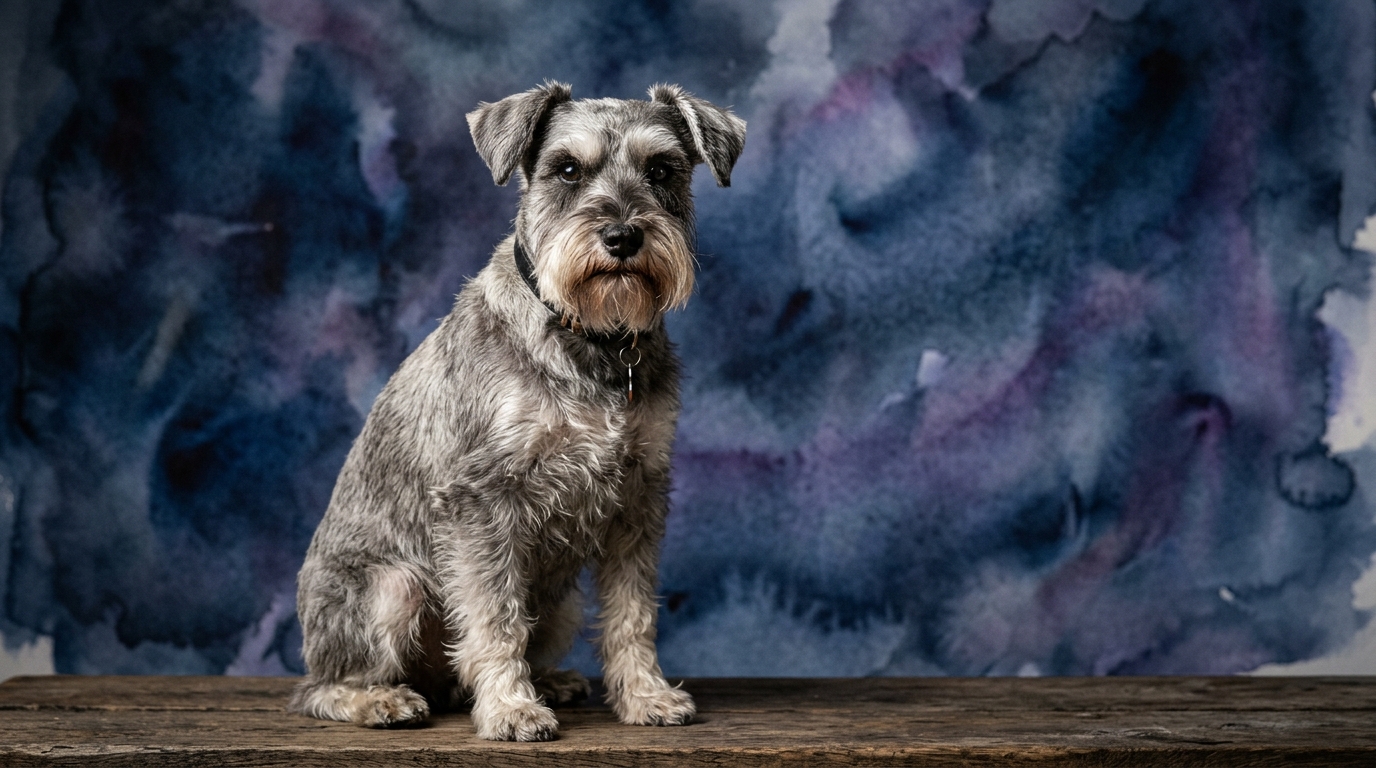
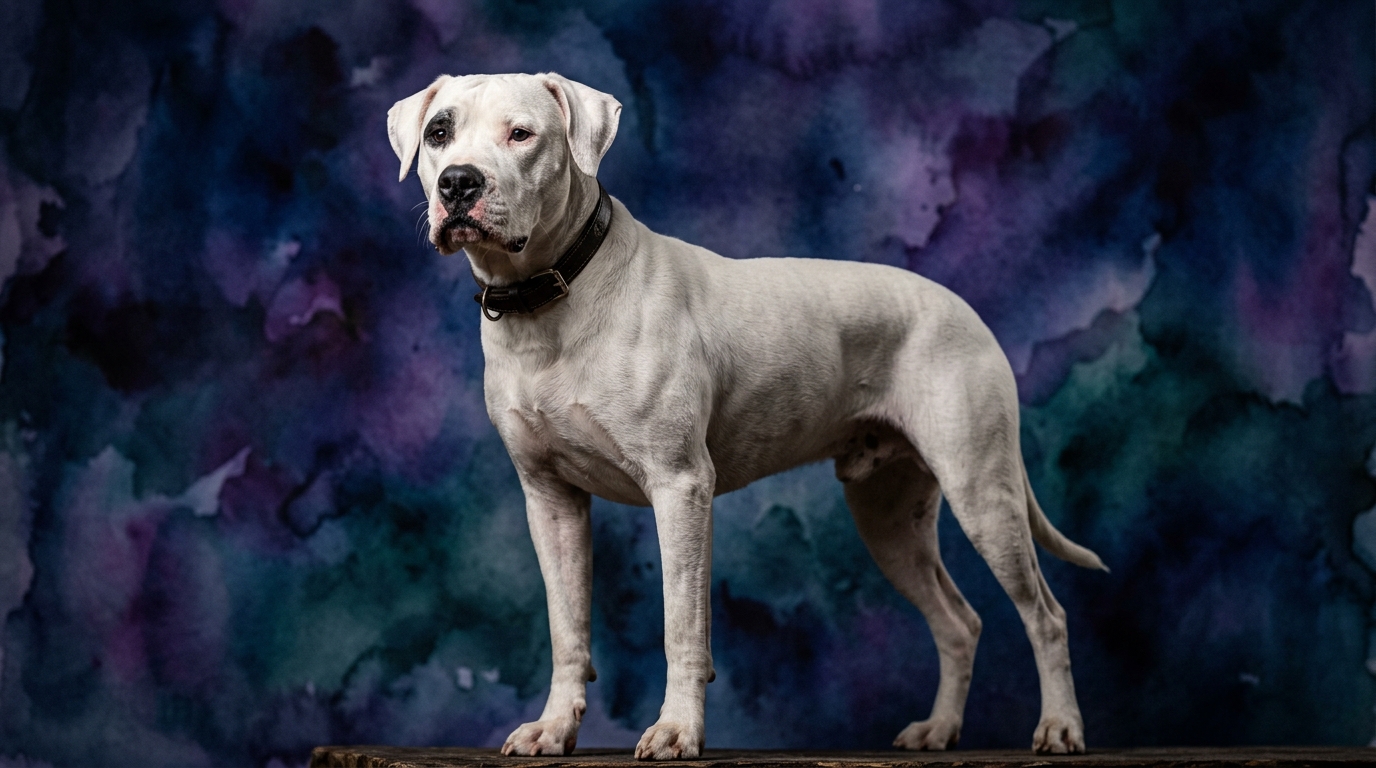
Side-by-Side IQ Profile: Miniature Schnauzer vs. Dogo Argentino
Known for their sharp wit and attentive nature, Miniature Schnauzers exhibit a strong cognitive profile, reflected in their Coren rank of #12. Their Problem Solving is rated 4/5, reflecting an ability to figure out complex tasks and navigate novel situations with resourceful thinking, often finding creative ways to achieve their goals. Training Speed, at a remarkable 5/5, highlights their rapid acquisition of new commands and routines, making them highly responsive learners. With a Social Intelligence of 4/5, they are adept at reading human emotions and intentions, fostering deep connections and understanding household dynamics. Their Instinctive Drive, also 4/5, speaks to their terrier heritage—a persistent motivation for chasing small prey or engaging in focused tasks. Finally, their Memory, rated 4/5, ensures they retain learned information and experiences effectively, building on past knowledge.
The Dogo Argentino, a powerful and purposeful breed, demonstrates a more measured yet robust intellectual capacity suited to its original role, though it is not Coren-ranked. Across all five dimensions—Problem Solving, Training Speed, Social Intelligence, Instinctive Drive, and Memory—they consistently score 3/5. This indicates a solid, functional intelligence rather than a quick-witted or highly adaptable one. Their Problem Solving at 3/5 suggests they can work through challenges, though perhaps with less spontaneous innovation than the Schnauzer, preferring a more direct approach. A Training Speed of 3/5 means they are certainly trainable, but they require consistent, clear instruction and more repetitions to solidify behaviors. Social Intelligence at 3/5 points to their ability to form bonds and understand their immediate social circle, though they might be less attuned to subtle shifts in broader social contexts. Their Instinctive Drive of 3/5 reflects a strong, focused drive, particularly for their protective and guarding instincts, rather than the varied curiosity of a terrier. Memory at 3/5 ensures they learn and recall important information, albeit potentially requiring more reinforcement.
Where the Miniature Schnauzer Wins Cognitively
The Miniature Schnauzer truly shines in areas demanding quick uptake and intricate understanding. Their superior Training Speed (5/5 vs. 3/5) means they grasp new commands and complex sequences with remarkable alacrity. This isn't just about speed; it's about processing information efficiently and linking actions to desired outcomes almost immediately. For instance, a Schnauzer might master a multi-step agility course or a complex trick in a fraction of the time a Dogo Argentino would require, due to their inherent ability to quickly form associations. Furthermore, their higher Problem Solving (4/5 vs. 3/5) and Social Intelligence (4/5 vs. 3/5) contribute to a more nuanced cognitive flexibility. A Miniature Schnauzer is more likely to independently figure out how to open a child-proof gate or manipulate objects to reach a treat, showcasing a more inventive approach to obstacles. Their enhanced social intelligence also allows them to pick up on subtle human cues, emotional states, and household routines with greater precision, making them highly responsive companions in varied social settings. This cognitive agility allows them to adapt rapidly to changing environments and expectations, often anticipating their owner's next move.
Where the Dogo Argentino Wins Cognitively
While the Miniature Schnauzer excels in speed and adaptability, the Dogo Argentino's cognitive strengths lie in a different realm: unwavering focus and purposeful application of their drives, particularly within their core roles. Their consistent 3/5 across all categories, especially Instinctive Drive, suggests a deep-seated, persistent motivation for specific tasks rather than broad, quick learning. Where a Schnauzer might be distracted by numerous stimuli, a Dogo Argentino, when engaged in a task like tracking or guarding, exhibits a singular, robust focus. This isn't about rapid learning, but about sustained, deep engagement. Their Problem Solving, while not as inventive as the Schnauzer's, is characterized by a determined, methodical approach; they will persist at a task until it's resolved, relying on strength and endurance rather than clever workarounds. This tenacity, coupled with their inherent protective instincts, translates into a formidable ability to assess and react to perceived threats with unwavering resolve. Their memory, while rated 3/5, likely includes a strong recall for individuals deemed part of their trusted circle and a clear memory of boundaries and perceived threats, crucial for their protective duties. This blend of focused drive and resolute problem-solving makes them exceptionally reliable in situations requiring steadfastness and courage.
Which is Easier to Train and Why
Based on their cognitive profiles, the Miniature Schnauzer is generally much easier to train than the Dogo Argentino, primarily due to their superior Training Speed (5/5 versus 3/5). Miniature Schnauzers possess an eagerness to learn and a rapid capacity for absorbing new commands and behaviors. They quickly connect actions with rewards and consequences, making positive reinforcement highly effective and speeding up the training process considerably. Their higher Social Intelligence also means they are more attuned to human communication and body language, often anticipating requests and responding with enthusiasm. A Schnauzer might learn "sit" in a handful of repetitions, readily offering the behavior for a treat or praise. In contrast, the Dogo Argentino, with a Training Speed of 3/5, requires more patience, consistency, and repetition. They are capable learners, but their independent nature and powerful instinctive drives mean trainers must be clear, firm, and unwavering. While they will eventually master commands, it takes a longer, more structured approach to ingrain behaviors. For example, teaching a Dogo a complex recall command in a distracting environment will demand far more consistent proofing and higher-value rewards over a longer period than for a Miniature Schnauzer, whose inherent responsiveness makes them more pliable.
Suitability for Active vs. Relaxed Owners
The choice between these breeds hinges significantly on an owner's lifestyle and their capacity for providing mental and physical engagement. The Miniature Schnauzer, with its balanced cognitive profile—high problem-solving, social intelligence, and instinctive drive—is an excellent fit for active owners who enjoy engaging their dog in various activities. They thrive on mental stimulation like puzzle toys, agility, obedience training, and learning new tricks, complementing their need for regular walks and play. Their alert nature means they are always ready for an adventure or a training session. While energetic, their smaller size means their physical exercise requirements are more manageable than a large working breed. They can adapt to moderately active households that provide consistent engagement. A completely relaxed, sedentary owner might find a Schnauzer's energy and terrier zest a bit overwhelming without sufficient outlets. The Dogo Argentino, on the other hand, demands a specific type of active, experienced owner. Their moderate cognitive scores across the board, coupled with their powerful build and strong instinctive drive (3/5), necessitate an owner committed to rigorous physical exercise and structured mental discipline. They need ample space to run and engage in purposeful activities like long hikes, structured training, or canine sports that tap into their strength and endurance. While they can be calm indoors with proper exercise, their sheer power and potential for protective instincts mean a relaxed, hands-off owner would struggle immensely. They need a confident leader who can provide consistent boundaries, extensive socialization, and channel their formidable drives into appropriate outlets, making them unsuitable for truly relaxed or first-time dog owners.
The Verdict
Opt for a Miniature Schnauzer if you seek a highly trainable, socially astute companion eager for interactive learning and varied mental challenges, fitting well into an active, engaging household.
Select a Dogo Argentino if you are an experienced, confident owner prepared for significant commitment to structured training, extensive socialization, and vigorous physical exercise, seeking a loyal, powerful guardian with unwavering focus.
🧠 Find Your Pet's IQ Score
Our Pet IQ Lab assessment covers 25+ tests across 5 cognitive dimensions — personalized to your breed.
Take the Full IQ Test →Frequently Asked Questions
Do Miniature Schnauzers bark a lot due to their alertness?
Miniature Schnauzers are indeed alert and can be prone to barking, particularly when sensing new stimuli or potential intruders. Their keen senses and protective instincts, part of their 4/5 social intelligence and instinctive drive, mean they often act as effective watchdogs. Consistent training from a young age can help manage excessive barking.
How does the Dogo Argentino's instinctive drive manifest in daily life?
The Dogo Argentino's instinctive drive (3/5) primarily manifests as a strong prey drive and protective nature towards their family and territory. This means they require secure fencing and careful management around smaller animals or unfamiliar people. Early and extensive socialization is crucial to channel these powerful drives appropriately and ensure they are well-adjusted.
Can a Dogo Argentino live in an apartment?
While a Dogo Argentino can technically live in an apartment, it is far from ideal due to their size, energy levels, and need for significant exercise and mental stimulation. Their moderate scores indicate they need purposeful engagement. An apartment lifestyle would necessitate multiple long walks, structured training sessions, and dedicated outdoor playtime daily to prevent boredom and destructive behaviors.