
Side-by-Side IQ Profiles: A Cognitive Blueprint
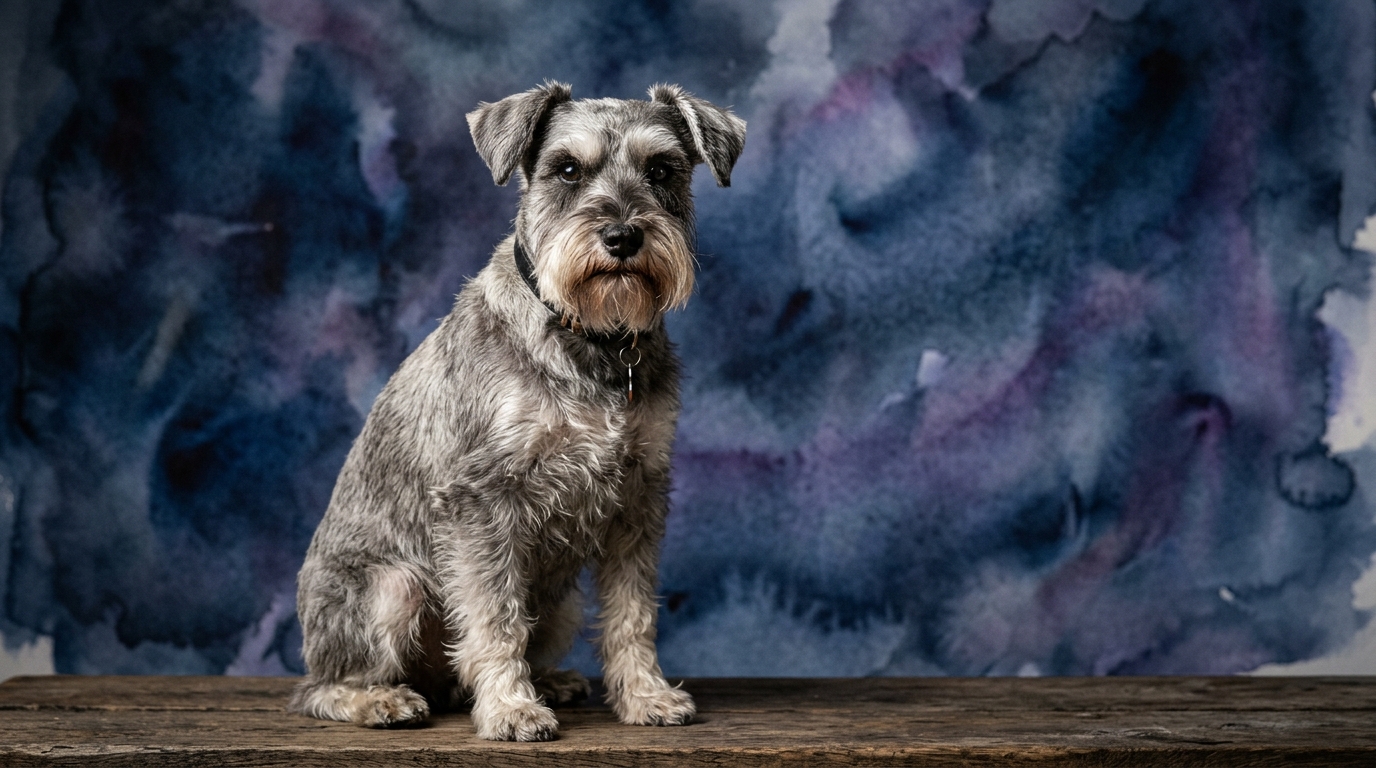
The Cosmic Pet Pet IQ Lab employs a comprehensive five-dimensional framework to assess canine intelligence, moving beyond simple obedience to understand the nuances of a breed's cognitive strengths. For the Miniature Schnauzer, ranked #12 on the Coren scale, its profile showcases a well-rounded and quick-thinking companion. Its Problem Solving is rated at 4/5, indicating a dog capable of figuring out novel situations and navigating complex environments with cleverness. Training Speed stands out at an impressive 5/5, suggesting a breed that grasps new commands and routines with remarkable alacrity. Social Intelligence, at 4/5, points to a strong ability to interpret human cues and form deep, communicative bonds. Instinctive Drive, also 4/5, highlights their inherent protective instincts and keen awareness of their surroundings, often manifesting as a vigilant watchdog. Finally, Memory is a solid 4/5, meaning they retain learned behaviors and experiences effectively, making them reliable companions in established routines.
In contrast, the English Cocker Spaniel, holding the #18 Coren rank, presents a profile geared towards its historical role as a bird-flushing specialist. Its Problem Solving ability, like the Schnauzer, is rated at 4/5, demonstrating resourcefulness, particularly in outdoor and task-oriented scenarios. Training Speed is a respectable 4/5, indicating a responsive dog that learns efficiently, though perhaps requiring a touch more patience or consistency than its terrier counterpart. Social Intelligence is rated 3/5, suggesting they are affectionate and people-oriented but might be slightly less adept at discerning subtle human intentions or emotional states compared to the Schnauzer. Instinctive Drive, at 3/5, reflects their strong drive for scent work and retrieving, rather than guarding. Where the English Cocker Spaniel truly shines is in Memory, earning a perfect 5/5. This exceptional recall underpins their effectiveness in field work, allowing them to remember complex scent trails, retrieve multiple birds, and navigate familiar territories with precision.
Where the Miniature Schnauzer Cognitively Excels
The Miniature Schnauzer's cognitive strengths lie particularly in its rapid acquisition of new skills and its nuanced understanding of human-dog interaction. With a Training Speed of 5/5, they process and internalize commands at an accelerated pace. This isn't just about repetition; it's about a quick mental uptake, allowing them to transition swiftly from learning a new trick to performing it reliably. This speed makes them particularly rewarding for owners who enjoy teaching complex sequences or participating in dog sports like agility or obedience trials where precision and quick responses are paramount.
Furthermore, the Schnauzer's higher Social Intelligence (4/5 versus the Cocker's 3/5) gives them an edge in interpreting human signals. They often seem to anticipate their owner's next move or mood, demonstrating a deeper empathetic connection. This cognitive ability allows them to adapt their behavior based on subtle changes in voice, body language, or even facial expressions, fostering a remarkably harmonious partnership. Their Instinctive Drive of 4/5 also means they possess a more pronounced inclination towards vigilance and protection of their family and territory, making them alert and proactive guardians, a direct cognitive difference from the Cocker's lower drive in this area.
Where the English Cocker Spaniel Cognitively Excels
The English Cocker Spaniel's standout cognitive strength is its truly remarkable Memory, rated at an unparalleled 5/5. This isn't just about remembering basic commands; it encompasses an extraordinary capacity for spatial memory, scent memory, and the recall of complex sequences of events. In a field setting, this allows a Cocker to remember the location of multiple fallen birds, the intricate path taken through dense cover, or the specific scent of a particular quarry over extended periods. For a family companion, this translates to excellent recall of familiar routes, the location of toys, and the consistent execution of learned routines, often with fewer refresher sessions required.
This superior memory also contributes to their effectiveness in tasks requiring sustained focus on a specific objective, such as tracking or scent discrimination. While their Problem Solving is equal to the Schnauzer's, their memory allows them to apply past solutions and learned patterns more consistently and accurately over time, especially when those patterns involve sensory input like scent. This cognitive architecture makes them exceptionally reliable in repetitive, detail-oriented tasks where long-term retention of information is crucial.
Training Dynamics: Which Breed Offers Greater Ease?
When considering ease of training, the Miniature Schnauzer generally presents a more straightforward path for many owners, primarily due to its higher Training Speed and Social Intelligence. Their 5/5 Training Speed means they absorb new information rapidly, making initial obedience training and the introduction of new skills relatively swift. They tend to be highly motivated by positive reinforcement and the opportunity for interactive engagement with their human companions. Their 4/5 Social Intelligence further aids this process, as they are keen to understand and please their owner, often proactively seeking to comply with commands once they grasp what is expected.
The English Cocker Spaniel, with a Training Speed of 4/5, is certainly trainable and responsive, but their journey might require a bit more consistency and patience. Their lower Social Intelligence (3/5) means they might not always be as finely attuned to subtle human cues, potentially requiring clearer, more direct communication. Furthermore, their powerful instinctive drive for scent and exploration can sometimes be a distraction in training environments, requiring owners to work harder to maintain focus. While they possess exceptional memory, which helps in retaining learned behaviors, their initial learning phase may not be as rapid or as intuitively collaborative as that of the Miniature Schnauzer. Owners might find themselves needing to manage environmental stimuli more carefully to prevent their Cocker from getting sidetracked by an interesting smell or sight.
Matching Breeds to Lifestyles: Active vs. Relaxed Owners
The Miniature Schnauzer is well-suited for owners who appreciate a dynamic, interactive companion and are prepared for regular mental engagement. Their high problem-solving ability and quick training speed mean they thrive on challenges like puzzle toys, advanced obedience, agility, or rally. They are adaptable to various living situations but require consistent mental stimulation to prevent boredom and channeling their substantial instinctive drive. Owners who enjoy teaching new tricks, engaging in daily training sessions, and having a vigilant, communicative partner will find the Schnauzer a fulfilling match. They are also excellent for those seeking a dog that forms a very close, almost conversational bond.
The English Cocker Spaniel, conversely, is an excellent choice for active owners who enjoy outdoor pursuits, particularly those involving scent work, retrieving, or long walks in varied terrain. Their exceptional memory and strong instinctive drive for flushing and retrieving make them ideal partners for activities like field trials, hunting, or scent detection sports. While they are affectionate and enjoy companionship, their cognitive makeup suggests they are happiest when given a 'job' that utilizes their primary strengths. Relaxed owners might find their need for consistent exercise and mental engagement (especially scent-based) challenging if not prepared to meet it. Owners who can provide opportunities for exploration and purpose-driven activity will see their Cocker truly flourish, offering devoted companionship in return.
The Verdict
Choose the Miniature Schnauzer if you desire a quick-witted, highly responsive companion that excels in rapid learning and forms a deeply communicative partnership, thriving on consistent mental engagement and interaction.
Opt for the English Cocker Spaniel if you seek a devoted partner with unparalleled memory and a strong drive for outdoor activities, particularly those involving scent work and retrieving, flourishing with owners who provide purpose-driven engagement.
🧠 Find Your Pet's IQ Score
Our Pet IQ Lab assessment covers 25+ tests across 5 cognitive dimensions — personalized to your breed.
Take the Full IQ Test →Frequently Asked Questions
Which breed is generally more alert and protective?
The Miniature Schnauzer, with its Instinctive Drive rating of 4/5, tends to be more alert and protective of its home and family. This contrasts with the English Cocker Spaniel's 3/5 rating in this dimension, which focuses more on hunting and retrieving instincts rather than guarding.
Do both breeds require significant mental stimulation?
Yes, both breeds benefit significantly from mental stimulation, but in different ways. The Miniature Schnauzer thrives on learning new commands and interactive problem-solving, while the English Cocker Spaniel excels when given tasks that engage its superior memory and scent-driven instincts.
Is one breed more prone to separation anxiety?
While individual temperament varies, the Miniature Schnauzer's higher Social Intelligence and strong bond-forming capacity might make them more prone to separation anxiety if not properly socialized and accustomed to alone time. English Cocker Spaniels are also affectionate but might cope slightly better due to their greater independence and focus on environmental exploration.