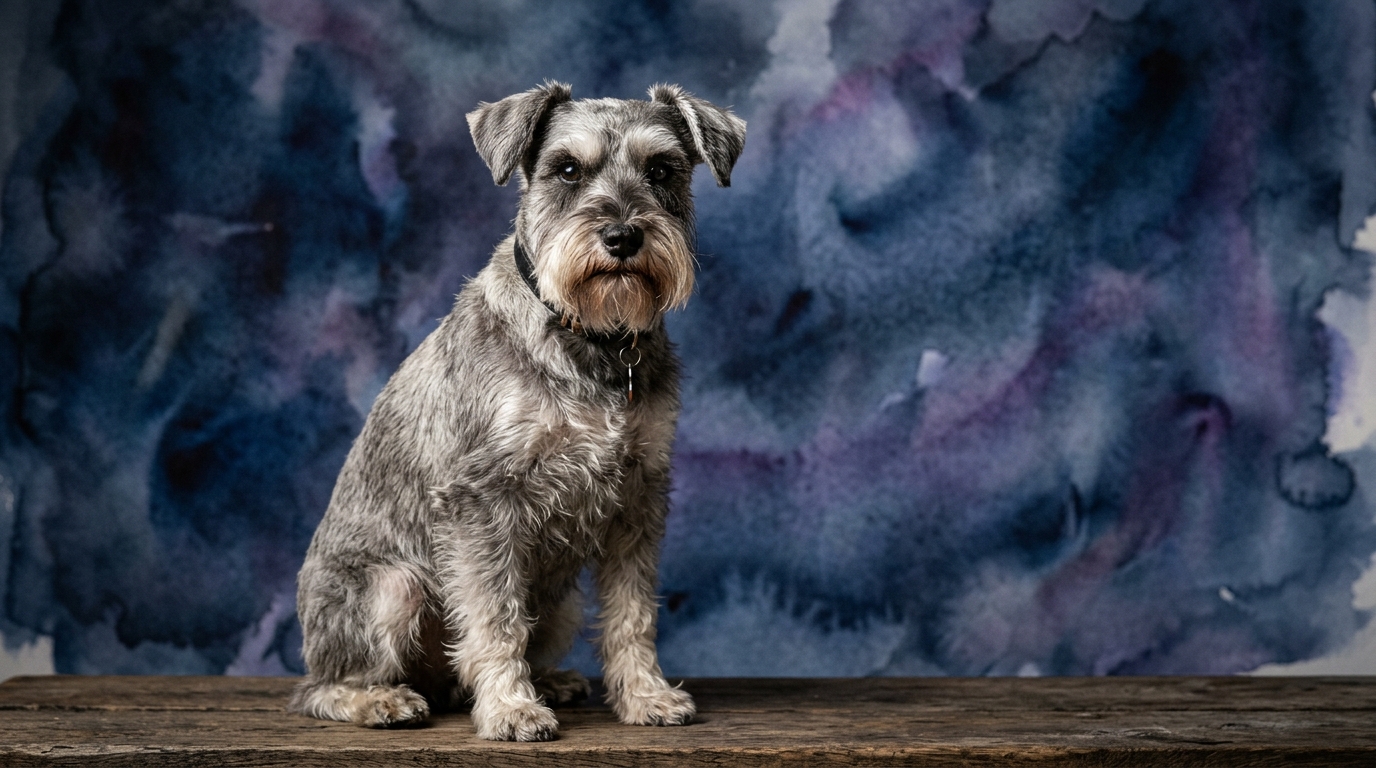
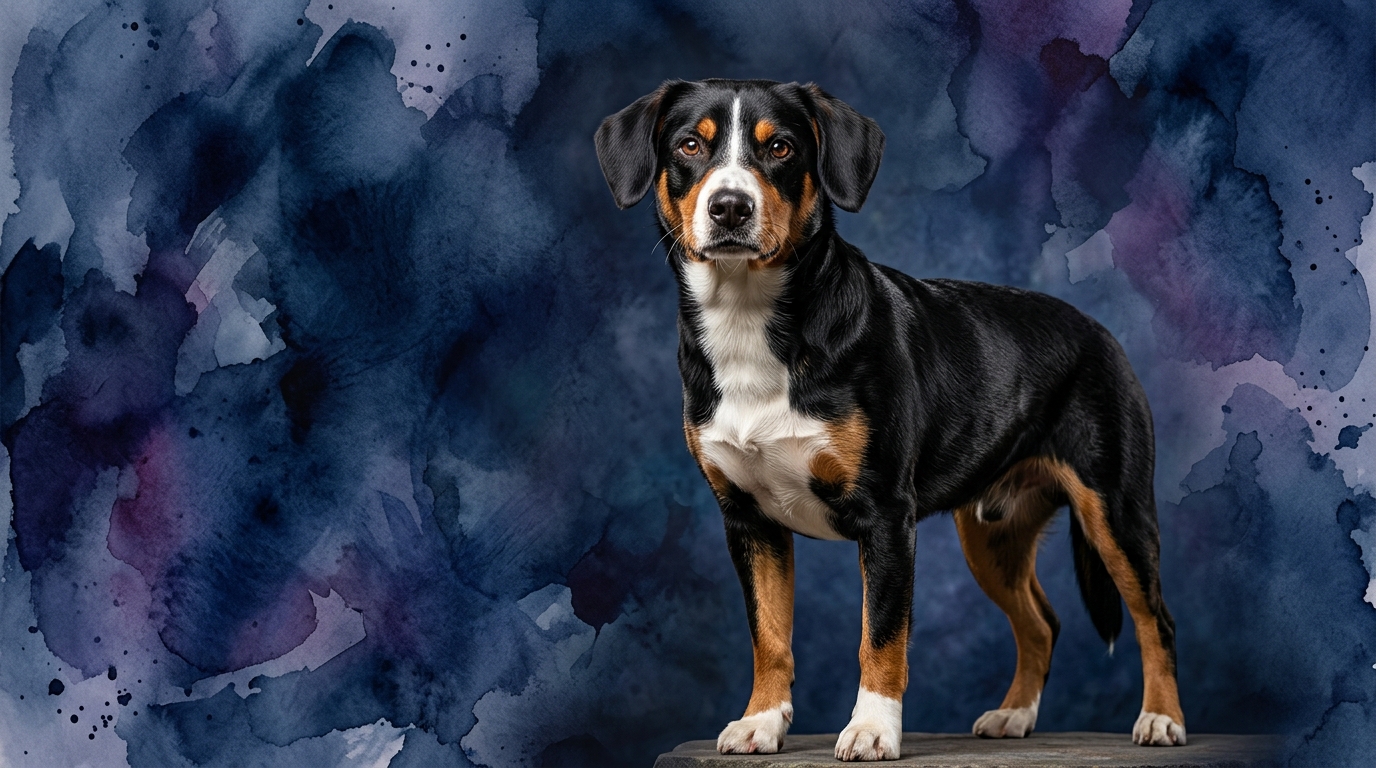
Side-by-Side IQ Profile: Miniature Schnauzer vs. Entlebucher Mountain Dog
The Cosmic Pet Pet IQ Lab employs a five-dimensional framework to assess canine cognitive abilities, offering a nuanced understanding beyond simple obedience. Let's examine how the Miniature Schnauzer, a Terrier, and the Entlebucher Mountain Dog, a Herding breed, measure up across these distinct facets of intellect.
Miniature Schnauzer (Coren Rank #12):
Problem Solving (4/5): These terriers exhibit a robust capacity for navigating novel challenges, often devising creative solutions to reach desired outcomes. Their approach to puzzles is typically quick and adaptive, reflecting a readiness to experiment with different strategies and learn from immediate feedback.
Training Speed (5/5): Miniature Schnauzers absorb new commands and routines with impressive swiftness, requiring minimal repetitions to solidify learning. This rapid assimilation makes them exceptionally responsive to consistent, engaging training methods, allowing them to master a broad repertoire of behaviors.
Social Intelligence (4/5): Their social acumen is strong, allowing them to effectively interpret human cues, understand household dynamics, and adapt their behavior in various social settings. They readily form bonds and are often attentive observers of their human companions' moods and intentions.
Instinctive Drive (4/5): The breed's instinctive drive is pronounced, often manifesting as a keen prey drive and a vigilant nature. This inherent inclination provides a strong foundation for activities like agility, scent work, or even guarding, where focus and determination are key.
Memory (4/5): Miniature Schnauzers demonstrate good retention of learned behaviors and experiences, remembering commands, routines, and past interactions over extended periods. Their robust recall contributes significantly to their trainability and consistent performance in various tasks.
Entlebucher Mountain Dog (Not Coren-Ranked):
Problem Solving (3/5): Entlebuchers approach new challenges with a steady, methodical mindset rather than spontaneous experimentation. While they may take more time to process and react, their solutions are often practical and persistent, reflecting their working dog heritage and a preference for well-understood methods.
Training Speed (3/5): Learning new tasks requires more consistent repetition and clear, purposeful instruction for an Entlebucher Mountain Dog. They thrive when training is structured, and they understand the practical application or utility of what they are being asked to do, making abstract commands less intuitive.
Social Intelligence (3/5): Their social understanding is more reserved, often translating to a discerning approach to new people and situations. They form deep, loyal bonds with their primary family but may be less effusive or immediately adaptable with strangers, valuing established relationships and trust.
Instinctive Drive (3/5): The Entlebucher's instinctive drive is rooted in their herding and guarding background, manifesting as a diligent watchfulness and a desire to keep their 'flock' or family together and safe. This drive is purposeful and persistent, rather than broadly exploratory or easily diverted.
Memory (3/5): Entlebucher Mountain Dogs possess a functional memory, retaining important commands and routines, particularly those relevant to their daily structure and tasks. Consistent reinforcement and practical application help solidify their recall of learned behaviors over time.
Where the Miniature Schnauzer Wins Cognitively
The Miniature Schnauzer’s cognitive strengths lie in their agility of thought and versatile adaptability. Their superior Training Speed (5/5) means they can grasp new concepts and commands with fewer repetitions than many other breeds, making them quick studies in obedience, tricks, and dog sports. This rapid learning curve allows them to master a broader repertoire of behaviors with relative ease.
Furthermore, their Problem Solving score of 4/5 indicates a strong capacity for navigating novel situations and devising creative solutions. Whether it's figuring out how to open a gate, retrieve a hidden toy, or adapt to a new routine, Miniature Schnauzers often demonstrate a resourceful and experimental approach. Coupled with their robust Memory (4/5), they not only learn quickly but also retain that information over extended periods, ensuring consistent performance and a reliable understanding of their environment and expectations. Their strong Social Intelligence (4/5) also provides an edge in reading human cues, allowing for more nuanced and responsive interactions in varied social contexts.
Where the Entlebucher Mountain Dog Wins Cognitively
While the Entlebucher Mountain Dog’s scores might appear lower, their cognitive strengths are distinct and deeply rooted in their working heritage, manifesting as a profound sense of purpose and unwavering loyalty. Their Instinctive Drive (3/5), though numerically lower, is intensely focused on vigilance, protection, and maintaining order within their perceived territory.
This translates to a steadfast presence and a strong sense of duty, which is a significant cognitive asset for specific roles. Their Problem Solving (3/5) is characterized by persistence and a practical, grounded approach; they may not solve a puzzle box as quickly as a Schnauzer, but they will apply consistent, deliberate effort until a solution is found, especially if it serves a clear, understood purpose. Their Social Intelligence (3/5) manifests as a deep, unwavering loyalty and a discerning judgment of character, prioritizing established bonds over general affability—a distinct cognitive filter that makes them highly devoted companions to their chosen family. These traits make them exceptionally reliable guardians and devoted family members, requiring a different, often deeper, level of cognitive processing for specific, important tasks.
Which is Easier to Train and Why
When it comes to ease of training, the Miniature Schnauzer generally holds an advantage due to their exceptional Training Speed (5/5). They grasp new commands and concepts with remarkable swiftness, often requiring minimal repetitions. Their eager-to-please nature and high responsiveness to positive reinforcement make training sessions engaging and productive, allowing them to quickly expand their repertoire of learned behaviors. Their strong memory (4/5) ensures these lessons are retained, making consistent performance more likely.
The Entlebucher Mountain Dog, with a Training Speed of 3/5, requires a more patient, consistent, and purposeful approach. Their herding background means they often need to understand the 'why' behind a command; tasks that seem arbitrary may be met with less enthusiasm. They respond best to structured training that appeals to their desire for order and their working drive, where they can see the practical application of what they are learning. While they may take more repetitions to solidify a command, once learned, their behaviors tend to be deeply ingrained and reliable, reflecting their diligent nature. Building a strong bond of trust, supported by their 3/5 social intelligence, is also paramount before effective training can truly take hold.
Which Suits Active Owners vs. Owners Seeking Purposeful Engagement
Both breeds benefit from active engagement, but their ideal owner profiles diverge based on their cognitive needs. Miniature Schnauzers thrive with owners who can provide consistent mental stimulation through varied training, puzzle toys, and dog sports, alongside regular physical exercise. Their quick minds require constant engagement to prevent boredom and channel their energy constructively. They are an excellent match for owners who enjoy dynamic, interactive training sessions and appreciate a companion that is always ready for a new challenge or game.
Entlebucher Mountain Dogs, while needing substantial physical activity, particularly suit owners who appreciate a dog with a strong working ethic and are willing to provide structured, purposeful activities that tap into their herding and guarding instincts. They are not necessarily for 'relaxed' owners in the sense of minimal engagement, but rather for those who prefer routine-driven, task-oriented interaction over constant novelty and trick training. Their cognitive profile leans towards diligence and responsibility, making them ideal for owners who can offer clear leadership and opportunities for meaningful work, whether it's herding, advanced obedience, or simply being a vigilant, devoted family protector.
The Verdict
Opt for the Miniature Schnauzer if you desire a highly adaptable, quick-learning companion eager for varied mental challenges and capable of mastering a wide range of commands and tricks with relative ease.
Select the Entlebucher Mountain Dog if you value a steadfast, discerning partner whose loyalty is earned through consistent, purposeful interaction, and who excels in roles requiring diligence and a strong sense of duty.
🧠 Find Your Pet's IQ Score
Our Pet IQ Lab assessment covers 25+ tests across 5 cognitive dimensions — personalized to your breed.
Take the Full IQ Test →Frequently Asked Questions
Are Miniature Schnauzers prone to behavioral issues due to their intelligence?
Miniature Schnauzers' quick minds and strong instinctive drive (4/5) mean they require consistent mental engagement; without it, they might devise their own 'fun,' which can manifest as barking, digging, or mischief. Channeling their cognitive energy into training and activities is key to preventing undesirable behaviors and ensuring a well-adjusted companion.
How does an Entlebucher's lower social intelligence score affect family life?
An Entlebucher Mountain Dog's 3/5 social intelligence score suggests they are more reserved and discerning, forming deep bonds with their immediate family while being wary of strangers. This means they are often devoted to their inner circle but may not be outwardly friendly or adaptable in highly social, varied environments, preferring a stable, familiar social structure.
Can an Entlebucher Mountain Dog learn complex tasks despite its 3/5 training speed?
Absolutely, an Entlebucher can learn complex tasks, but it requires more consistent repetition and a focus on making the task meaningful to their working drive. Their 3/5 training speed means patience and clear, structured instruction are essential, leading to deeply ingrained and reliable performance once a task is mastered, especially if it serves a practical purpose.