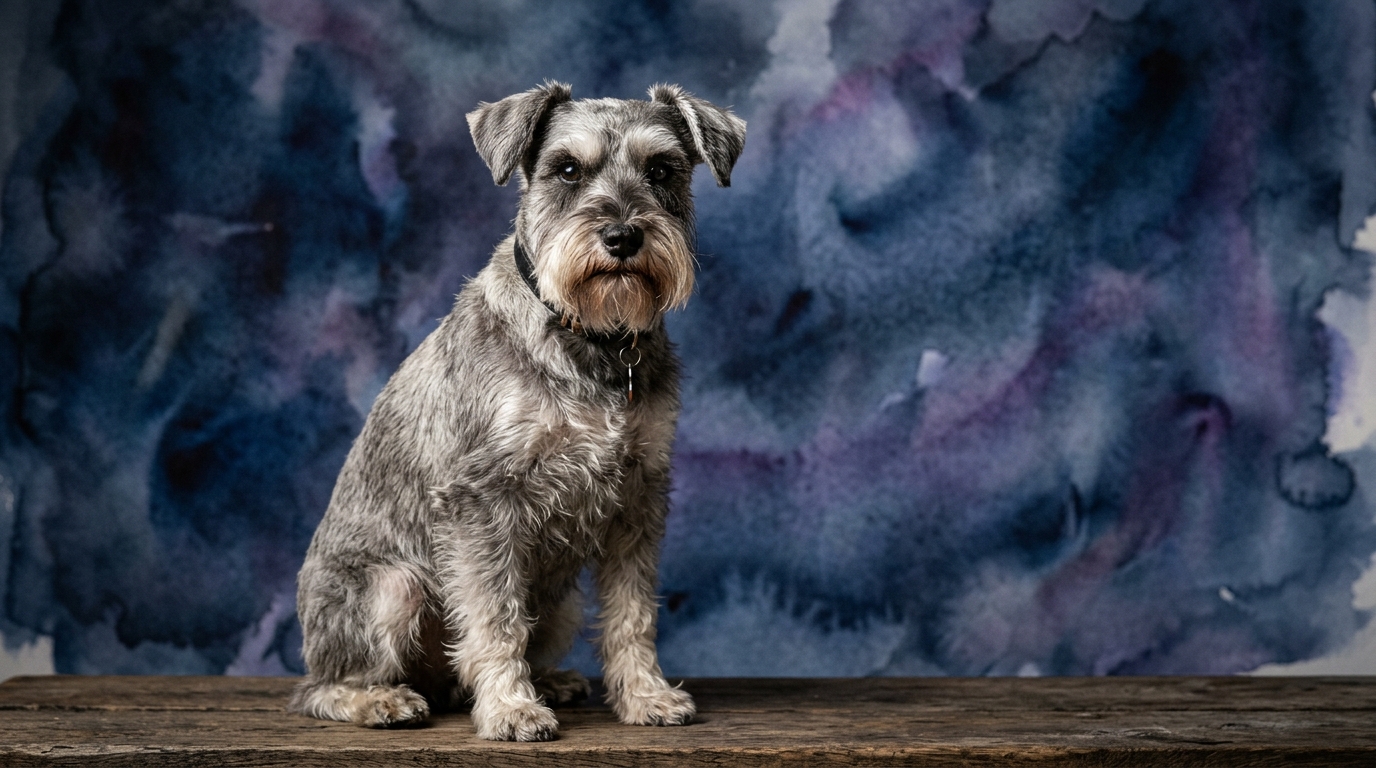
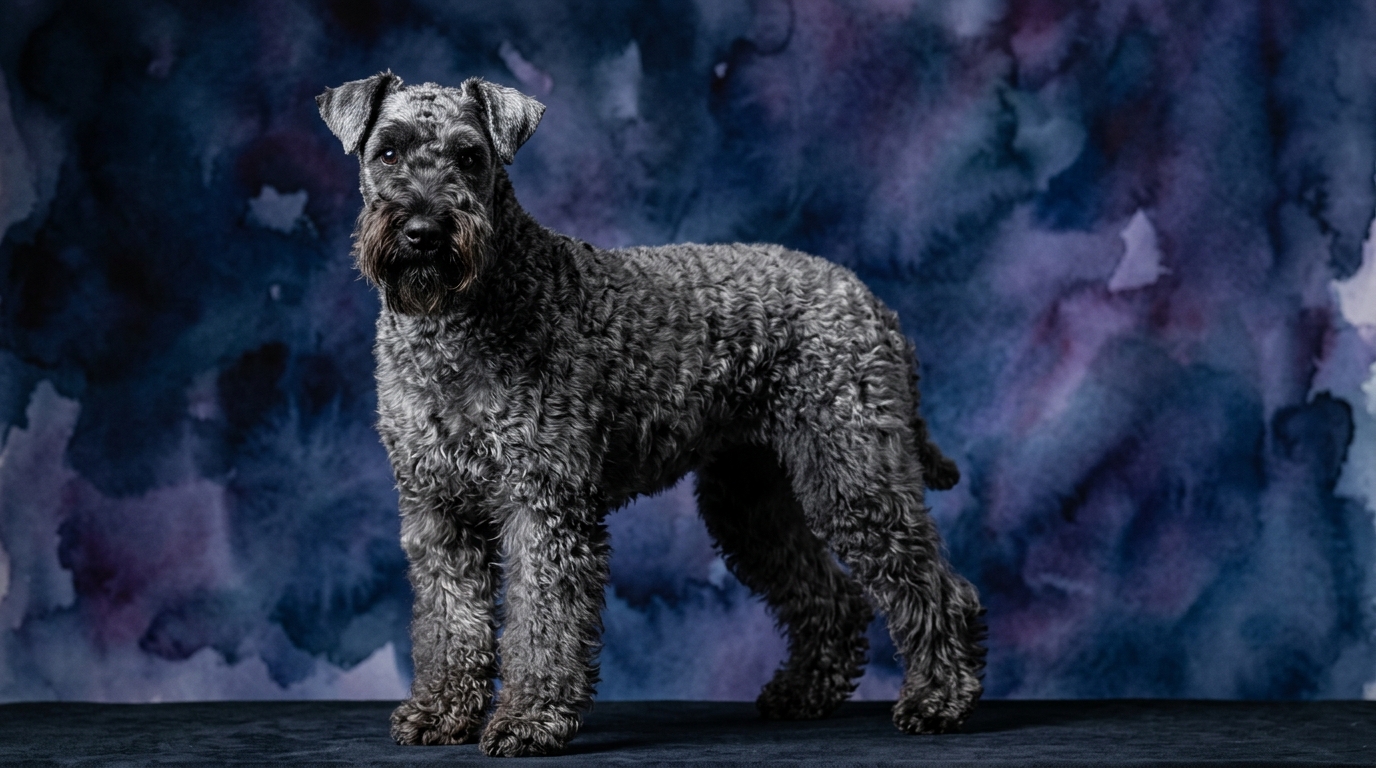
Side-by-Side IQ Profile: Miniature Schnauzer vs. Kerry Blue Terrier
The Cosmic Pet Pet IQ Lab provides a comprehensive framework for understanding canine cognition across five key dimensions. For the Miniature Schnauzer, these dimensions paint a picture of a highly adaptable and eager learner. Their Problem Solving is rated at 4/5, indicating a strong capacity for figuring out novel situations and navigating complex challenges with resourcefulness. Training Speed is an impressive 5/5, reflecting their rapid acquisition of new commands and routines, often grasping concepts in very few repetitions. Social Intelligence stands at 4/5, showcasing a solid understanding of human cues and an ability to form strong, responsive bonds. Their Instinctive Drive is also 4/5, channeling their inherent terrier instincts for tracking and guarding into focused, purposeful activities. Finally, Memory is rated 4/5, demonstrating excellent retention of learned behaviors and experiences over time. This profile is further supported by their Coren rank of #12, placing them among breeds that understand new commands with remarkable speed and consistency.
In contrast, the Kerry Blue Terrier presents a more balanced, yet equally distinctive, cognitive profile. Their Problem Solving is rated 3/5, indicating competence in tackling straightforward issues but potentially requiring more guidance for intricate puzzles. Training Speed is 3/5, meaning they learn at a moderate pace, necessitating consistent repetition and patience to solidify new commands, though they are certainly trainable. Social Intelligence also scores 3/5; they form deep attachments but might be less overtly expressive or attuned to subtle human cues compared to breeds with higher scores, often displaying a more independent demeanor. Their Instinctive Drive is rated 3/5, exhibiting the classic terrier tenacity for chasing and guarding, but perhaps with a more manageable intensity than some other working terriers. Memory is likewise 3/5, reliable for routines and familiar commands, though less frequently practiced behaviors may require more reinforcement to maintain. Notably, the Kerry Blue Terrier is not Coren-ranked, suggesting a different learning curve and cognitive approach outside the top tiers of working intelligence as defined by Coren's methodology.
Where the Miniature Schnauzer Wins Cognitively
The Miniature Schnauzer consistently demonstrates a cognitive edge in areas demanding quick uptake, complex thought, and social responsiveness. Their 4/5 Problem Solving score means they are adept at navigating environments, quickly assessing situations, and devising solutions, such as figuring out how to retrieve a toy from an enclosed space or manipulating puzzle feeders. This resourcefulness makes them engaging partners for mental games. The breed's 5/5 Training Speed is a significant advantage, allowing them to master a broad repertoire of commands and tricks with remarkable efficiency. An owner can expect rapid progress in obedience, agility, or rally, as these dogs relish the learning process and thrive on mental engagement. Furthermore, their 4/5 Social Intelligence makes them exceptionally attuned to their human companions, often anticipating needs and responding to subtle emotional shifts, fostering a deeply communicative bond. This nuanced understanding facilitates smoother interactions and quicker adaptation to household dynamics.
Where the Kerry Blue Terrier's Cognitive Profile Offers Distinct Advantages
While the Miniature Schnauzer often demonstrates more complex cognitive processing, the Kerry Blue Terrier's balanced '3/5' scores across all dimensions can present distinct practical advantages. Their moderate social intelligence, for instance, often translates into a dog that is affectionate without being overly demanding of constant interaction, fostering a comfortable independence that can suit owners who appreciate a companion content with their own space. This can mean less susceptibility to separation anxiety compared to breeds that are more intensely socially attuned. In problem-solving, their more direct approach, rated at 3/5, suggests they are less likely to overthink or engage in elaborate schemes to circumvent rules, offering a straightforward predictability in their interactions with their environment. Furthermore, their instinctive drive, also at 3/5, means they possess the inherent terrier tenacity and zest for life without the overwhelming intensity that requires constant, highly specialized management. This allows them to engage enthusiastically in physical activities and guarding behaviors, but often with a more manageable degree of focus, making them robust companions without the extreme single-mindedness sometimes seen in breeds with higher instinctive ratings.
Training Dynamics: Which Breed is Easier and Why
When it comes to ease of training, the Miniature Schnauzer holds a clear advantage due to their exceptional 5/5 Training Speed and high Coren ranking. These dogs are natural students, eager to please, and possess a keen desire to learn, making them highly receptive to positive reinforcement methods. They rapidly associate commands with actions and rewards, allowing for efficient progress in everything from basic obedience to complex dog sports. Their high social intelligence further aids this process, as they are adept at reading their handler's cues and responding appropriately, fostering a cooperative training partnership.
The Kerry Blue Terrier, with a 3/5 Training Speed, requires a different approach. While certainly trainable, they possess a more independent and sometimes stubborn terrier spirit that necessitates greater patience, consistency, and a firm yet fair hand. They may not grasp new concepts as quickly as a Miniature Schnauzer and might test boundaries more frequently. Their moderate social intelligence means they might not be as overtly eager to please, demanding a trainer who understands how to motivate a dog that values its own agency. Success with a Kerry Blue hinges on establishing clear expectations, maintaining a consistent routine, and making training sessions engaging to overcome their occasional independent streak.
Matching Breeds to Lifestyles: Active vs. Relaxed Owners
For owners seeking an active and mentally stimulating partnership, the Miniature Schnauzer is often an ideal match. Their high problem-solving abilities and rapid training speed mean they thrive on consistent mental engagement through training, puzzle toys, and dog sports like agility, obedience, or earthdog trials. While energetic, their cognitive needs are as significant as their physical ones, making them suitable for owners who enjoy teaching new things and participating in structured activities. They can adapt to more relaxed owners provided their mental exercise requirements are met through creative indoor games and regular, engaging walks, preventing boredom-induced behaviors.
The Kerry Blue Terrier, with its robust nature and moderate instinctive drive, is well-suited for active owners who appreciate a spirited companion for outdoor adventures. They need ample physical activity, such as long walks, hikes, or vigorous play sessions, but their cognitive engagement might be less focused on intricate problem-solving tasks compared to a Miniature Schnauzer. Their independent streak means they can enjoy exploring their environment without constant human direction, making them good partners for owners who enjoy a dog that is capable of some self-entertainment outdoors. They are not recommended for entirely relaxed owners who cannot provide consistent physical outlets and structured training to manage their terrier energy and strong will.
The Verdict
Choose a Miniature Schnauzer for owners seeking a highly responsive, eager-to-learn companion who excels in structured training, problem-solving games, and thrives on consistent mental engagement, offering a partner for various dog sports and intellectual challenges.
Choose a Kerry Blue Terrier for those who appreciate a spirited, independent terrier with a robust nature, offering a companion for active outdoor pursuits and a more straightforward, less complex cognitive interaction, provided they are committed to consistent training and socialization for a strong-willed breed.
🧠 Find Your Pet's IQ Score
Our Pet IQ Lab assessment covers 25+ tests across 5 cognitive dimensions — personalized to your breed.
Take the Full IQ Test →Frequently Asked Questions
How do their problem-solving abilities differ in everyday life?
A Miniature Schnauzer might quickly figure out how to open a child-proof gate or manipulate a complex treat puzzle, demonstrating strategic thought. A Kerry Blue Terrier might approach a similar challenge with more direct force or persistent trial-and-error, eventually succeeding but perhaps with less finesse or speed.
Which breed is better for first-time dog owners?
The Miniature Schnauzer, with its higher training speed and social intelligence, is generally more forgiving and adaptable for first-time owners who are committed to consistent training. The Kerry Blue Terrier's independent nature and strong will might present more challenges for an inexperienced owner, requiring a dedicated and patient approach.
Do their instinctive drives impact their suitability for family life?
Both breeds possess terrier drives, but the Miniature Schnauzer's 4/5 drive is often channeled well into focused activities and can be a strong asset in family life with appropriate outlets. The Kerry Blue Terrier's 3/5 drive, while still present, might be slightly more manageable in terms of intensity, though consistent exercise and mental stimulation are crucial for both to ensure they are well-adjusted family members.