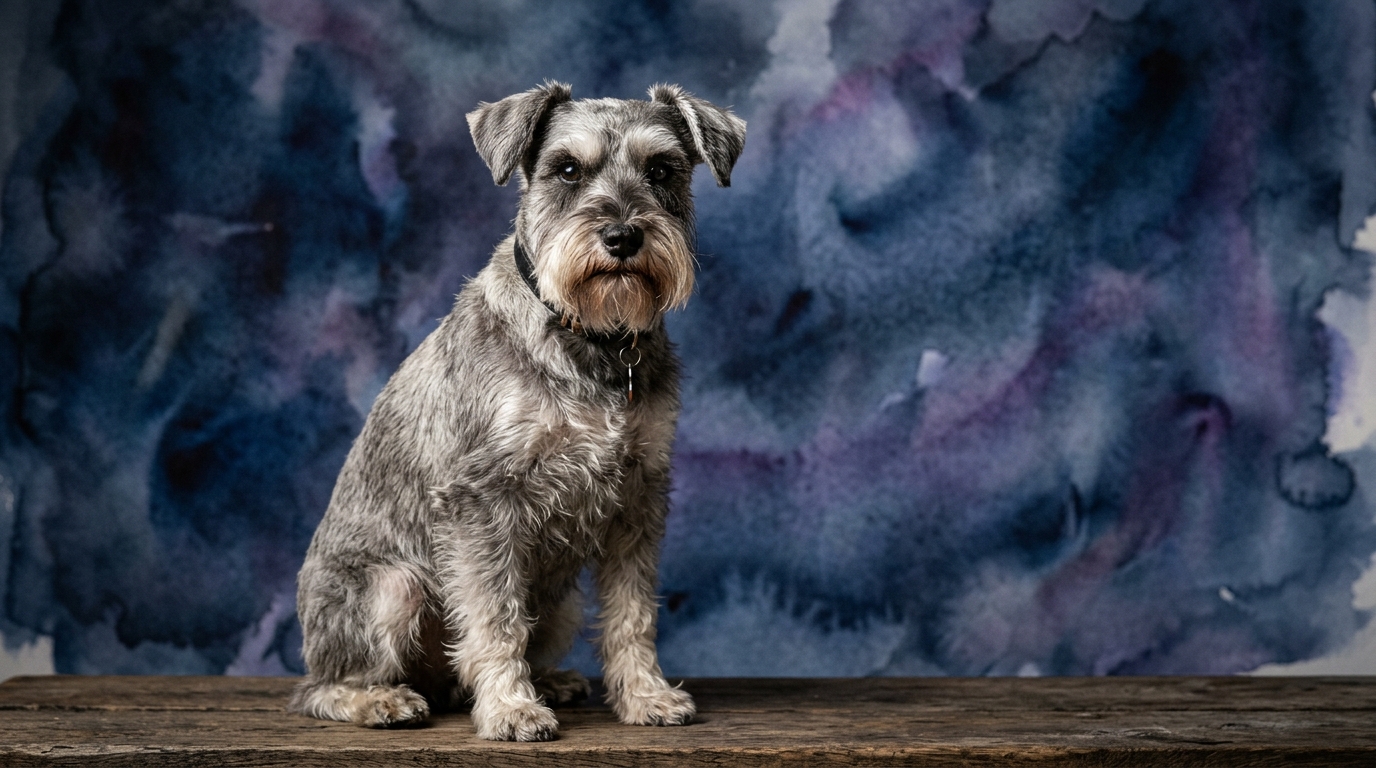
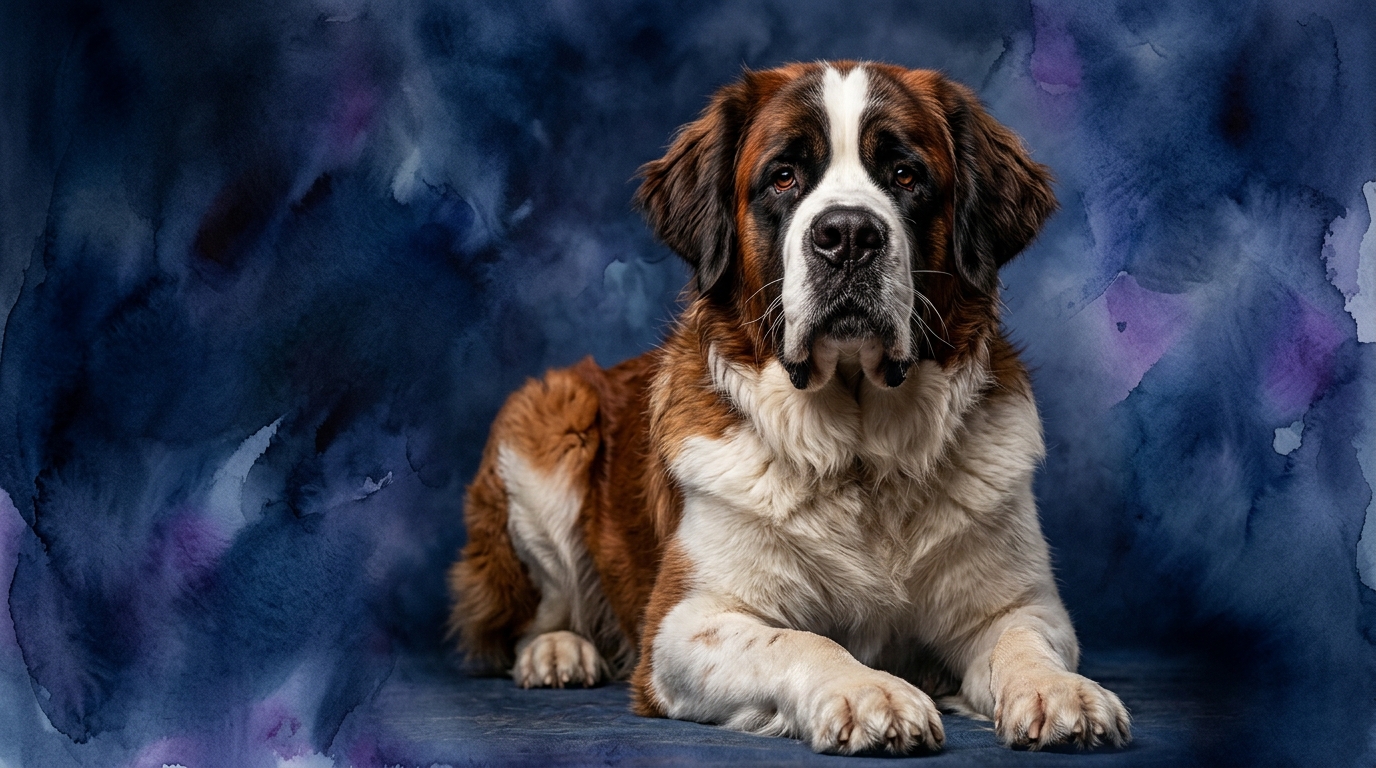
Side-by-Side Cognitive Profiles: Schnauzer vs. Saint Bernard
The Cosmic Pet Pet IQ Lab's framework allows for a detailed examination of how these two breeds approach the world. The Miniature Schnauzer, a Terrier, holds a respectable Coren rank of #12, indicating a strong capacity for obedience and working intelligence. Its IQ profile reveals a problem-solving ability of 4/5, meaning these dogs exhibit a keen aptitude for navigating novel situations and devising solutions, often displaying cleverness in achieving their goals, whether it’s figuring out how to open a cabinet or manipulating a puzzle toy. Their training speed is an exceptional 5/5, absorbing new commands and routines with remarkable rapidity, often grasping concepts in just a few repetitions. Social intelligence scores 4/5, showing they are adept at reading human cues and understanding social dynamics, forming strong bonds. An instinctive drive of 4/5 points to their terrier heritage, manifesting as a readiness to chase small animals and a watchful alertness around their home. Finally, their memory is a solid 4/5, allowing them to retain learned behaviors and routines over extended periods.
In contrast, the Saint Bernard, a Working breed, is ranked #65 by Coren, suggesting a more deliberate pace in obedience learning. Its IQ breakdown shows a problem-solving score of 3/5; while not as quick to devise novel solutions as some breeds, Saint Bernards can solve practical problems, especially those related to their environment or comfort, though they may take a more methodical approach. Their training speed is 2/5, indicating that learning new commands requires a more patient and repetitive approach, needing consistent reinforcement over a longer period to solidify new behaviors. Social intelligence is also 4/5, where these gentle giants display a profound understanding of social cues and human emotions, often acting as comforting and empathetic presences. Their instinctive drive is a standout 5/5, rooted in their heritage as mountain rescue dogs, giving them an extraordinarily strong drive for protection, guardianship, and perhaps most notably, a powerful sense of duty. Their memory is 3/5, retaining important information, particularly routines and familiar faces, but potentially requiring more frequent refreshers for less frequently used commands.
Where the Miniature Schnauzer Excels Cognitively
The Miniature Schnauzer's cognitive strengths shine brightest in areas demanding quick analytical thought and rapid assimilation of information. Their problem-solving score of 4/5 reflects an innate curiosity and a terrier's determination to overcome obstacles, whether it's figuring out how to get to a favorite toy hidden under a blanket or bypassing a baby gate. This isn't just about physical dexterity; it involves a mental mapping of their environment and a trial-and-error approach that quickly yields results, showcasing their capacity for strategic thinking.
Their standout training speed, rated a perfect 5/5, means that a Miniature Schnauzer can pick up new commands and complex sequences with remarkable efficiency. An owner might find them mastering 'sit' or 'stay' in just a handful of short sessions, and progressing to more intricate tricks or agility courses with surprising ease. This fast learning curve is a significant advantage for owners who enjoy engaging in various dog sports or require a dog that can adapt quickly to new routines and expectations. Their strong memory (4/5) further solidifies this, ensuring that once a lesson is learned, it tends to stick, making them reliable in their learned behaviors over time.
Where the Saint Bernard Shows Unique Cognitive Strengths
The Saint Bernard's cognitive profile, while different, boasts distinct advantages, particularly in their formidable instinctive drive (5/5). Originating as alpine rescue dogs, their instincts are deeply ingrained towards protection, guardianship, and an uncanny ability to navigate challenging terrains to find and assist. This drive manifests not as a frantic energy, but as a profound sense of purpose and loyalty, making them exceptional family protectors who are acutely aware of their surroundings and their charges. Their impressive intuition often guides them to comfort a family member in distress or to stand guard when an unfamiliar presence is detected.
While their social intelligence is rated similarly to the Schnauzer at 4/5, for the Saint Bernard, it often presents as a deep, empathetic connection to their human family. They possess an almost intuitive understanding of human emotions, offering a calm, reassuring presence without needing explicit commands. This ability to read subtle cues and respond with appropriate, gentle comfort is a hallmark of their character. Their problem-solving, though a 3/5, is often applied to practical, real-world scenarios related to their environment or the well-being of their family, showing a methodical rather than impulsive approach to challenges.
Training Dynamics: Miniature Schnauzer vs. Saint Bernard
When evaluating ease of training, the Miniature Schnauzer holds a clear advantage due to its exceptional training speed (5/5) and solid problem-solving skills (4/5). These traits combine to create a dog that is eager to learn, quickly grasps new concepts, and actively participates in training sessions. Their ability to rapidly connect actions with consequences means they respond well to positive reinforcement and can progress through a curriculum of commands and behaviors at an impressive pace. Their focus during training is generally high, as they find mental engagement rewarding, thriving on the interaction and mental challenge of learning.
In contrast, the Saint Bernard, with a training speed of 2/5, requires a significantly more patient and consistent approach. While they are certainly capable of learning, their deliberate processing means new commands need more repetitions and longer periods of reinforcement to become ingrained. Their high instinctive drive (5/5) means that while they are highly motivated by their protective and loyal nature, these deep-seated instincts can sometimes overshadow a trainer's immediate requests if not carefully managed. Owners must embrace short, frequent training sessions and maintain a calm, authoritative presence to guide these gentle giants effectively, acknowledging that progress will be steady rather than swift.
Matching Canine Intellect to Owner Lifestyles
For active owners seeking a canine partner for mental engagement and spirited companionship, the Miniature Schnauzer is an excellent match. Their high problem-solving capacity and rapid training speed mean they thrive on varied activities like obedience, agility, earthdog trials, or even complex puzzle toys. They require consistent mental stimulation to prevent boredom, which can manifest as undesirable behaviors. An owner who enjoys teaching new tricks, going on exploratory walks, or participating in dog sports will find the Miniature Schnauzer a willing and capable participant, eager to learn and engage. Their moderate instinctive drive means they are ready for action but also attentive to their handler, making them adaptable companions for an engaged lifestyle.
Conversely, the Saint Bernard, while physically imposing, often suits owners who appreciate a more relaxed, yet deeply loyal and protective presence, provided they can manage the physical demands of a large breed. Their lower training speed suggests that while they will learn, owners must be prepared for a marathon, not a sprint, in training, focusing on consistency over intensity. These dogs benefit from a calm, predictable environment and owners who understand their powerful instinctive drive for guardianship and companionship. While they need regular, moderate exercise, their cognitive needs lean less towards rapid-fire problem-solving and more towards being a steadfast, empathetic family member, making them ideal for those who value a gentle giant's unwavering devotion over constant mental gymnastics.
The Verdict
Choose the Miniature Schnauzer if you desire an agile, quick-witted companion eager for mental challenges and rapid learning, ideal for active engagement in training and dog sports.
Opt for the Saint Bernard if you seek a profoundly loyal, empathetic giant whose powerful protective instincts and calm presence offer unwavering companionship to a patient, consistent owner.
🧠 Find Your Pet's IQ Score
Our Pet IQ Lab assessment covers 25+ tests across 5 cognitive dimensions — personalized to your breed.
Take the Full IQ Test →Frequently Asked Questions
Does a Miniature Schnauzer's high instinctive drive make them difficult to live with?
A Miniature Schnauzer's 4/5 instinctive drive, often expressed as a prey drive and territoriality, means they benefit from early socialization and consistent training to channel these tendencies appropriately. With proper guidance, this drive translates into an alert, protective, and engaging companion rather than a problematic one.
How does a Saint Bernard's lower training speed impact their suitability as a family pet?
A Saint Bernard's 2/5 training speed means they require more patience and consistency in learning commands, but it doesn't diminish their suitability as a family pet. Their profound social intelligence and high instinctive drive for protection make them gentle, devoted family members who, with persistent training, become well-mannered and dependable.
Is Coren Rank the only measure of intelligence to consider when choosing between these breeds?
Coren Rank is a valuable indicator of 'working and obedience intelligence,' reflecting training speed and command retention, but it's not the sole measure. The Cosmic Pet Pet IQ Lab's five dimensions provide a more nuanced view, highlighting specific strengths like problem-solving, social intelligence, and instinctive drive, which are equally crucial for understanding a breed's overall cognitive profile and suitability.