Side-by-Side Cognitive Profiles: Decoding Identical Scores
In The Cosmic Pet Pet IQ Lab, both the Neapolitan Mastiff and the Bluetick Coonhound received identical scores of 3/5 across all five cognitive dimensions: problem solving, training speed, social intelligence, instinctive drive, and memory. This uniformity in quantitative assessment presents a unique opportunity to explore the qualitative differences in how these breeds apply their intelligence, shaped by centuries of selective breeding for specific roles. A score of 3/5 generally indicates a moderate level of ability in each category, suggesting neither extreme brilliance nor significant cognitive challenges, but rather a balanced capacity that is often deeply intertwined with their breed's primary function.
For the Neapolitan Mastiff, a working breed, a 3/5 in problem solving might mean a deliberate approach to assessing environmental changes or potential threats within their territory, focusing on security and family welfare. Their 3/5 training speed suggests they can learn commands with consistency, but may not be lightning-fast responders, often requiring a clear purpose behind the task. Social intelligence at 3/5 points to their ability to read family dynamics and discern strangers, while their instinctive drive (also 3/5) is strongly tied to guarding. Finally, their 3/5 memory supports recalling routines, family members, and perceived dangers over time. The Bluetick Coonhound, a hound breed, interprets these same scores through the lens of scent work. Their 3/5 problem solving is likely channeled into deciphering complex scent trails and navigating challenging terrain during a hunt, requiring focused, independent thought. A 3/5 training speed for them often means they can learn, but their powerful 3/5 instinctive drive for tracking can easily override learned commands when a compelling scent is present. Their social intelligence at 3/5 helps them work within a pack or alongside a handler, and their 3/5 memory is exceptional for recalling specific scents and successful hunting strategies, vital for their field work.
Where the Neapolitan Mastiff's Cognition Excels
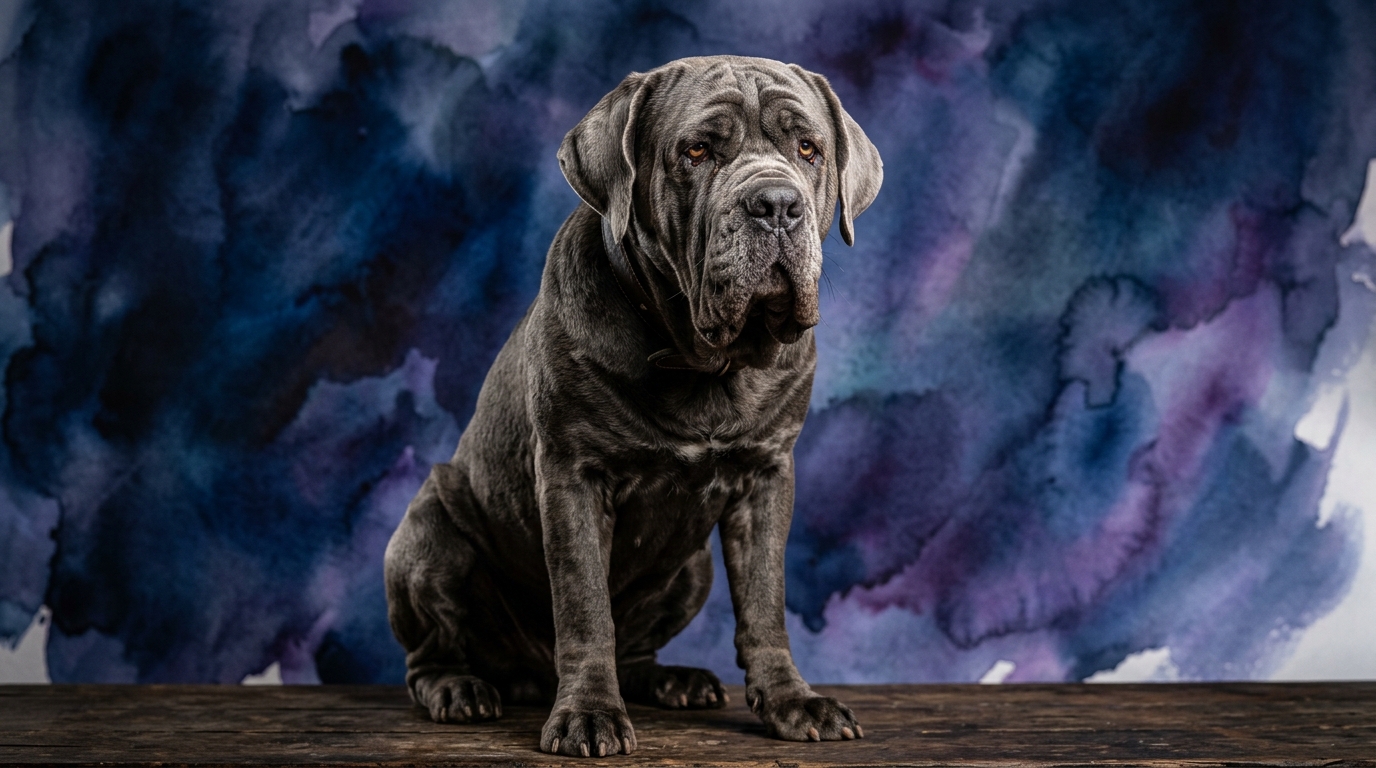
The Neapolitan Mastiff's cognitive strengths, despite sharing 3/5 scores, distinctly lie in their sophisticated application of situational awareness for protection and discernment. Their moderate problem-solving abilities are primarily directed towards evaluating their environment for security, making measured judgments about who belongs and who might pose a threat. This isn't about quick, flashy problem-solving, but rather a slow, methodical assessment that prioritizes the safety of their home and family. Their social intelligence, at a 3/5 level, allows them to keenly read human intent and social cues, forming deep bonds with their family while maintaining a natural wariness towards strangers. This combination of cognitive traits, integrated with their strong guardian instinct, allows them to act as thoughtful, vigilant protectors, often making independent decisions in crisis situations with a calm, imposing presence. Their memory serves to retain detailed information about perceived threats and territorial boundaries, contributing to their consistent protective behavior.
Where the Bluetick Coonhound's Cognition Shines
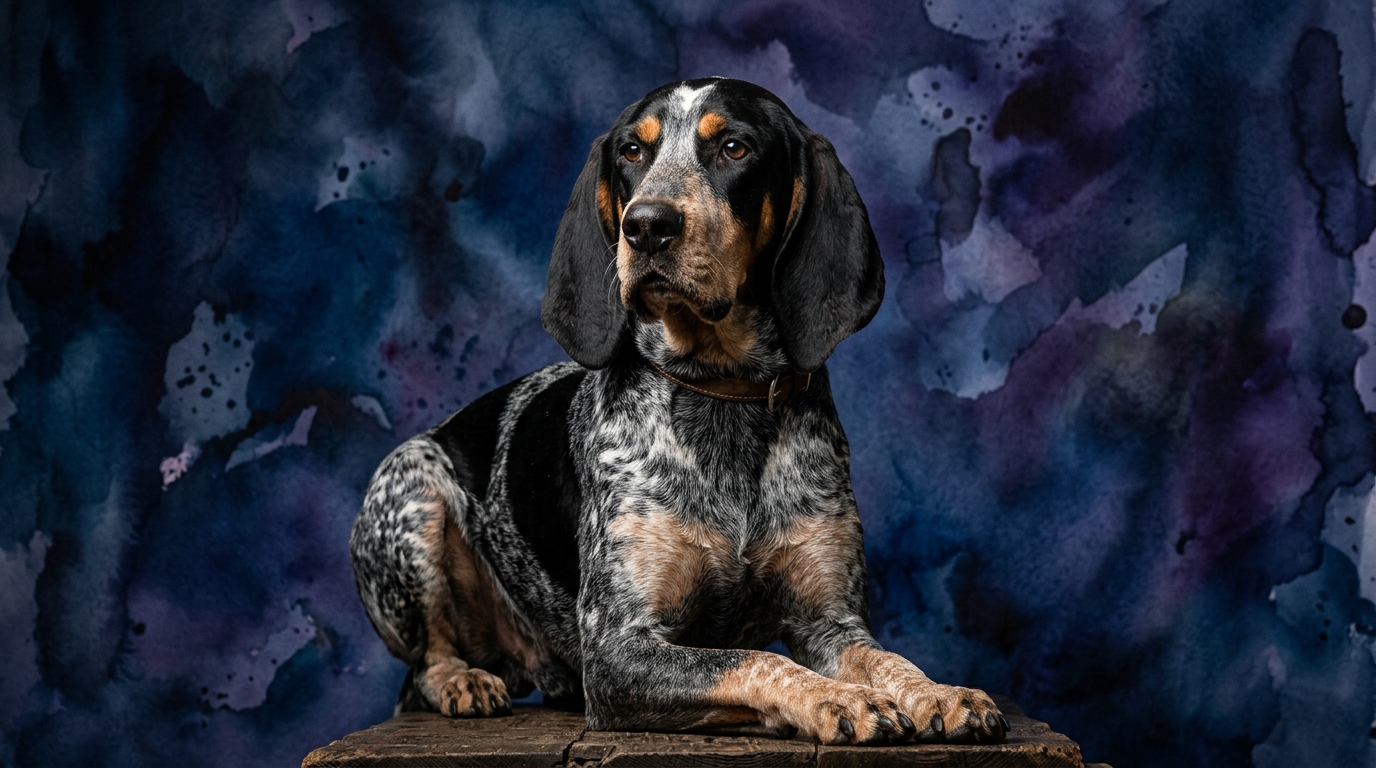
The Bluetick Coonhound's cognitive prowess, despite matching scores, manifests most powerfully in their unwavering, sustained focus on sensory input, specifically scent. Their 3/5 problem-solving capability is specialized for the intricate task of tracking, enabling them to meticulously follow faint trails over vast and varied landscapes, piecing together a complex olfactory puzzle. This dedication to a single sensory input, driven by their powerful 3/5 instinctive drive, allows them to filter out environmental distractions that would overwhelm many other breeds. Their memory, also at a 3/5, is exceptionally tuned for recalling specific scent patterns and successful tracking routes, which is crucial for their hunting efficiency. Furthermore, their social intelligence, while rated 3/5, often facilitates effective communication and cooperation within a hunting pack or with their human handler in the field, making them adept at collaborative work focused on their primary purpose. Their cognitive strengths are deeply intertwined with their physiological advantages, particularly their highly developed sense of smell.
Training Dynamics: Navigating Moderate Learning Speeds
When considering which breed is 'easier' to train, the identical 3/5 training speed scores for both breeds indicate that neither will be a 'quick study' in the traditional sense, but the nature of their training challenges differs significantly. Training a Neapolitan Mastiff demands exceptional patience, consistency, and the establishment of a clear, respectful relationship. They are not typically driven by an eager-to-please mentality; instead, they require owners to demonstrate the purpose and value of a command within their world. Their substantial size and inherent independence as guardians mean that early, consistent socialization and obedience are critical to manage their protective instincts effectively. They can also exhibit a stubborn streak if they don't perceive the relevance of a command, requiring a firm yet gentle approach that builds trust and mutual understanding.
Conversely, training a Bluetick Coonhound presents challenges primarily due to their overwhelming scent drive. While they possess a 3/5 training speed, their powerful instinct to follow a compelling scent can easily override learned commands, particularly recall. Owners must employ highly engaging, positive reinforcement methods and conduct training in increasingly distracting environments to build reliability. Their independent nature, bred for autonomous decision-making in the field, means they often prioritize a trail over a handler's voice. This requires an owner who understands and respects their innate drive, channeling it into appropriate activities rather than trying to suppress it entirely. Both breeds benefit immensely from structured, consistent training that acknowledges and works with their natural inclinations, rather than against them.
Matching Breeds to Lifestyles: Active vs. Relaxed Owners
The distinction between these two breeds becomes particularly clear when considering owner lifestyles. The Neapolitan Mastiff, despite its imposing size, generally suits owners who appreciate a more relaxed pace in terms of physical activity. While they require regular, moderate exercise to maintain health, they are not typically high-energy dogs that demand hours of intense physical exertion daily. Their cognitive needs, however, are significant; they thrive with owners who provide consistent structure, ample socialization, and clear guidance to help them understand their role and boundaries. They are best suited for owners who are prepared to invest in their mental and social development, ensuring they feel secure and confident in their environment without requiring marathon runs. Their cognitive engagement often revolves around observing, assessing, and guarding their space, making them a thoughtful, rather than overtly athletic, companion.
In stark contrast, the Bluetick Coonhound is an ideal match for active, outdoors-oriented owners. Their powerful 3/5 instinctive drive for tracking means they possess boundless energy and a profound need for physical and mental stimulation that taps into their natural abilities. Owners must be prepared for long walks, hikes, runs, or engaging in scent work and tracking sports to fulfill their cognitive and physical requirements. A Bluetick Coonhound will become frustrated, bored, and potentially destructive if their innate drives are not adequately channeled. Relaxed owners who cannot commit to significant daily exercise and mental challenges will likely find a Bluetick Coonhound's needs overwhelming, as their intelligence is intrinsically linked to their active pursuit of scents and exploration.
The Verdict
Choose the Neapolitan Mastiff if you seek a steadfast, thoughtful guardian who will assess situations with a calm demeanor and protect their home with quiet vigilance, and you are prepared for patient, purpose-driven training.
Choose the Bluetick Coonhound if you are an active, outdoors-oriented individual or family, ready to channel a powerful scent drive into engaging activities like tracking or hiking, and appreciate a dog with independent, persistent problem-solving skills in the field.
🧠 Find Your Pet's IQ Score
Our Pet IQ Lab assessment covers 25+ tests across 5 cognitive dimensions — personalized to your breed.
Take the Full IQ Test →Frequently Asked Questions
Do Neapolitan Mastiffs and Bluetick Coonhounds really have identical intelligence scores?
Yes, in our Canine IQ Lab, both breeds scored 3/5 across problem-solving, training speed, social intelligence, instinctive drive, and memory. This highlights that quantitative scores represent a baseline, and the *expression* of intelligence is deeply shaped by breed purpose and physical characteristics.
How does a Neapolitan Mastiff's 'problem-solving 3/5' differ from a Bluetick Coonhound's?
A Neapolitan Mastiff often applies its problem-solving to assessing threats and managing its territory, prioritizing security and family safety with a deliberate approach. A Bluetick Coonhound, however, uses its problem-solving to meticulously decipher complex scent trails and navigate challenging terrain during a hunt, driven by its powerful olfactory senses and independent nature.
Is one breed more independent than the other, despite similar social intelligence scores?
While both score 3/5 in social intelligence, their independence manifests differently. The Neapolitan Mastiff displays independence in its judgment as a guardian, making decisions about perceived threats. The Bluetick Coonhound's independence comes from its need to work autonomously in the field, following a scent without constant human direction, making it less reliant on immediate handler cues during a hunt.