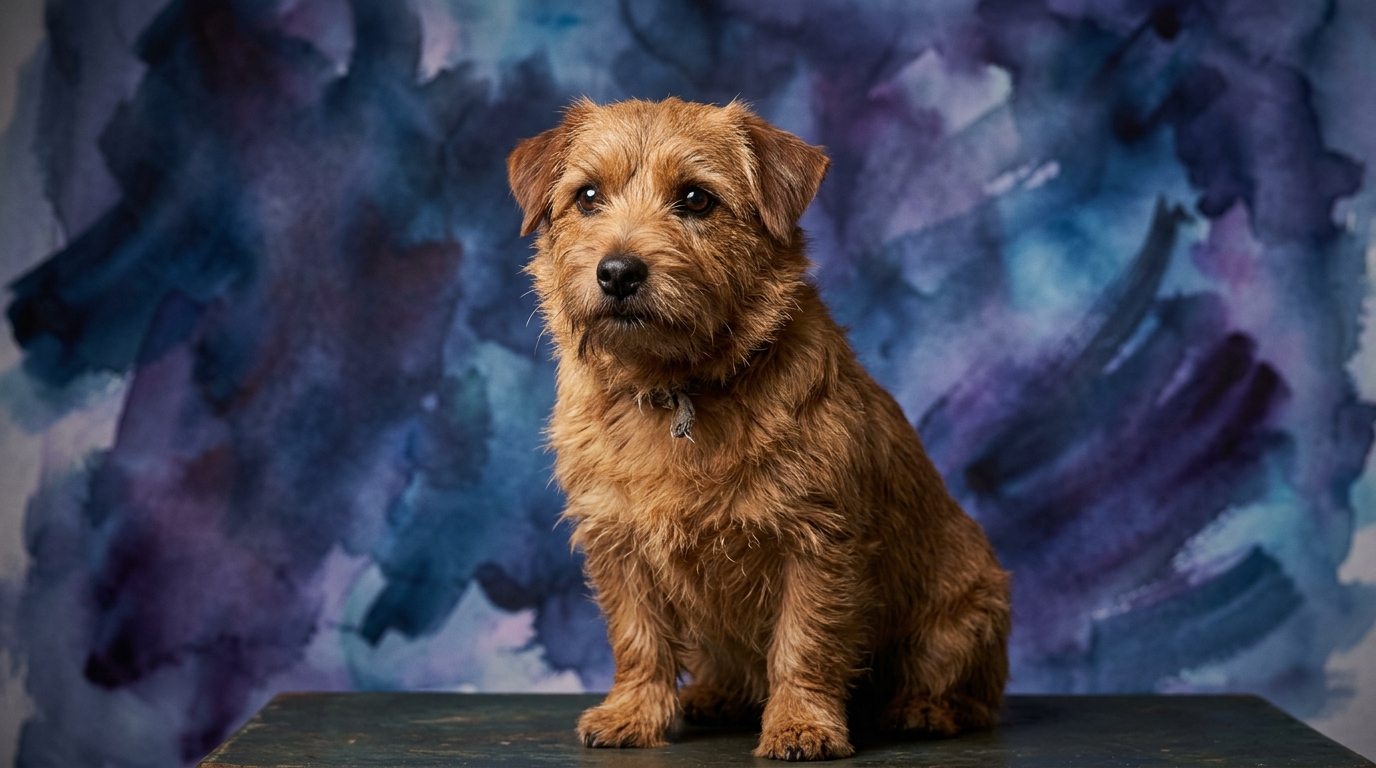
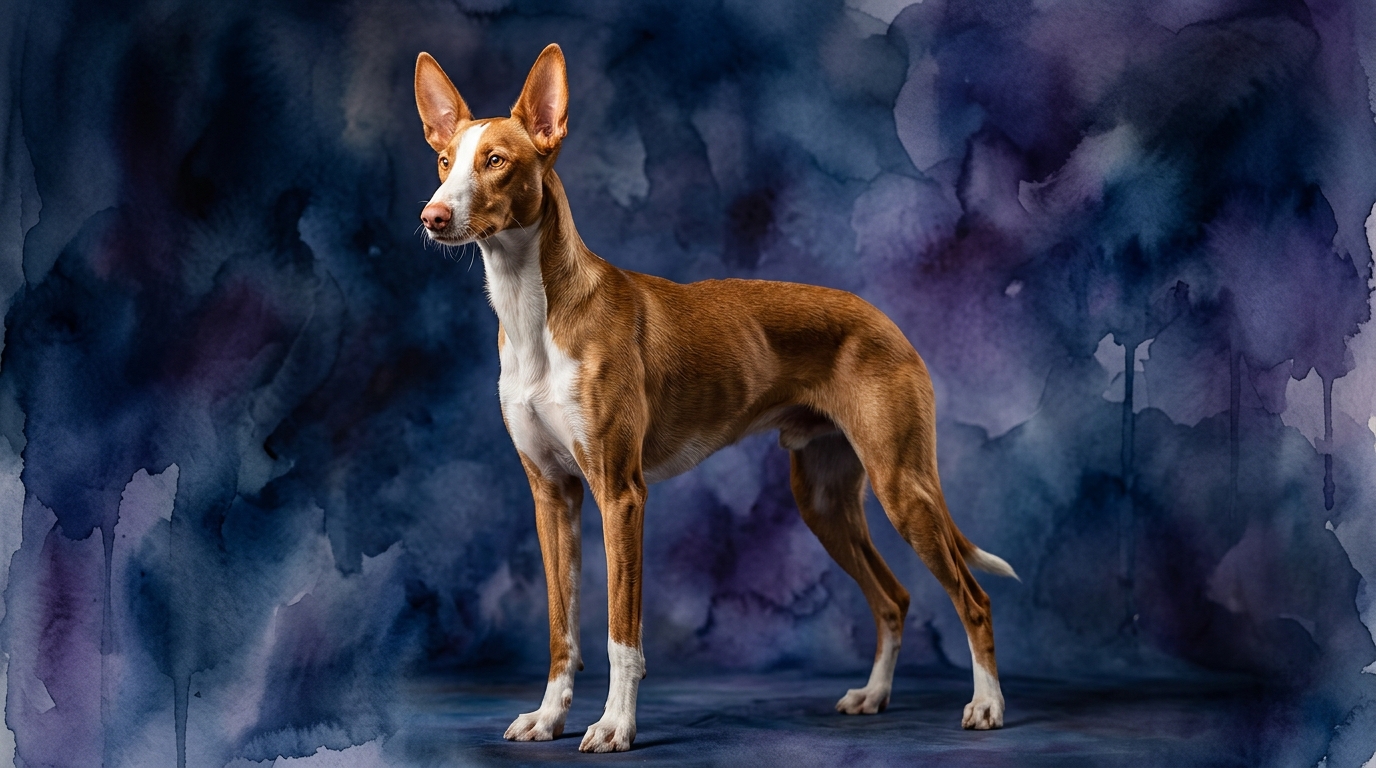
Side-by-Side IQ Profile: Norfolk Terrier vs. Ibizan Hound
Despite their differing appearances and historical functions, The Cosmic Pet Pet IQ Lab's assessment assigns both the Norfolk Terrier and the Ibizan Hound a consistent 3/5 across all five cognitive dimensions. While the raw scores are identical, understanding how these aptitudes manifest uniquely in each breed provides a richer comparison.
The Norfolk Terrier, a robust member of the Terrier group, displays its Problem Solving (3/5) through a determined approach to immediate, often confined challenges. This includes navigating complex undergrowth, figuring out how to extract a 'prey' item from a tight space, or devising methods to access hidden treats, showcasing resourceful persistence. Their Training Speed (3/5) indicates they are capable of learning commands but their independent terrier spirit means they process information quickly yet may choose to comply based on their own assessment of the situation, requiring engaging and consistent methods to maintain their focus. Social Intelligence (3/5) in a Norfolk means forming strong, discerning bonds with their human companions, understanding nuanced family dynamics, but potentially showing reserve or assertiveness with unfamiliar individuals or animals, reflecting a selective social acumen. Their Instinctive Drive (3/5) is deeply rooted in their vermin-hunting heritage, manifesting as a keen interest in digging, a responsive bark, and a pursuit instinct for small, scurrying objects, guiding many of their spontaneous actions. Finally, their Memory (3/5) ensures reliable retention of routines, learned commands, and significant locations or experiences, which contributes to their consistent character and ability to anticipate daily events within their environment.
The Ibizan Hound, a graceful sighthound, demonstrates its Problem Solving (3/5) through rapid assessment of dynamic visual information and expansive spatial reasoning. This might involve identifying the optimal path to intercept fast-moving objects or navigating open, varied terrain during a chase, prioritizing efficiency and speed. Their Training Speed (3/5) means they learn at a moderate pace, but their independent nature and powerful visual focus mean training needs to be positive, patient, and highly rewarding to capture and maintain their attention, as they are not inherently eager to please. Social Intelligence (3/5) for an Ibizan typically involves forming deep, affectionate bonds with their primary family members and showing an intuitive understanding of their human companions' emotional states, though they often maintain a quiet reserve around strangers. Their Instinctive Drive (3/5) is powerfully and visually driven, geared towards spotting and pursuing anything that moves quickly, an impulse deeply embedded from their history as nimble hunters in open landscapes. Their Memory (3/5) exhibits good recall for familiar people, places, and positive experiences, particularly those associated with running or comfortable environments, aiding their adaptability and reinforcing preferred behaviors.
Where the Norfolk Terrier Wins Cognitively
Despite identical 3/5 scores across the board, the Norfolk Terrier often demonstrates a unique cognitive advantage in tasks requiring sustained, tenacious focus on a singular, confined objective. Their problem-solving, rated at 3/5, particularly shines when it involves overcoming obstacles in tight spaces or engaging in intricate manipulation to achieve a specific goal, like extracting a toy from under furniture. This breed's specific application of its 3/5 problem-solving capability tends to be more concentrated and persistent on a small scale, reflecting their heritage of independently flushing out burrowing creatures. Furthermore, their auditory processing, while not explicitly scored, is often finely tuned to detect subtle sounds, which is a cognitive asset in environments where visual cues might be limited, allowing them to pinpoint hidden stimuli effectively and react with characteristic terrier determination.
Where the Ibizan Hound Wins Cognitively
The Ibizan Hound, also scoring 3/5 in problem-solving, demonstrates its cognitive strengths in areas demanding rapid visual processing and expansive spatial reasoning. Their ability to quickly scan and interpret vast, open environments for subtle movements, then formulate an efficient pursuit strategy, is a testament to their specialized intelligence for hunting by sight. This breed excels at dynamic problem-solving, where the solution involves predicting the trajectory of moving objects and calculating the most effective interception course across varied terrain, showcasing a different facet of their 3/5 aptitude. Their 3/5 memory also seems particularly adept at recalling landmarks and optimal running paths, essential for navigating large hunting grounds efficiently and returning home, highlighting their sophisticated spatial recall in open areas.
Which is Easier to Train and Why
Both breeds share a 3/5 rating in training speed, implying that neither is inherently 'easy' nor 'difficult' in a universal sense, but rather require distinct training approaches tailored to their unique motivations and distractions. The Norfolk Terrier's 3/5 training speed is often tempered by their independent and sometimes stubborn terrier personality; they learn quickly when engaged, but their problem-solving skills might be directed at finding ways to 'outsmart' the trainer or pursue more interesting scents or sounds. Effective training for a Norfolk requires immense consistency, making sessions feel like engaging games, and understanding that their persistence can be both a valuable asset and a challenge to harness. Their 3/5 social intelligence, while strong within their family, can lead to selective obedience when external distractions are present, demanding a trainer who can consistently hold their attention.
Conversely, the Ibizan Hound's 3/5 training speed is influenced by their sighthound independence and powerful visual prey drive, which means they can be easily distracted by anything moving in their periphery. Their sensitive nature means harsh methods are counterproductive, causing them to shut down, so training must be positive, gentle, and highly rewarding, often focusing on recall in safe, enclosed spaces to manage their instinct to chase. Their 3/5 social intelligence, though generally gentle, often manifests as a desire to collaborate on their own terms, making them less inclined to perform repetitive tasks without clear, positive reinforcement. Therefore, neither breed is 'easier,' but rather, success hinges on the owner's ability to understand and adapt to their specific breed characteristics and motivational triggers, transforming training into a partnership rather than a command-and-obey dynamic.
Which Suits Active Owners vs. Relaxed Owners
When considering lifestyle compatibility, both breeds, despite their identical IQ scores, present different levels and types of activity requirements. The Norfolk Terrier, while energetic and spirited, thrives with consistent daily walks, engaging playtime, and plenty of mental stimulation; they are not suited for entirely relaxed owners who prefer minimal interaction. They can adapt to various living situations, including apartments, provided their needs for interaction and structured activity are met, often enjoying bursts of activity followed by periods of calm companionship. Their 3/5 instinctive drive, while not requiring vast open spaces, does demand outlets for their curiosity and terrier-specific behaviors.
In contrast, the Ibizan Hound, with its heritage as a swift sighthound, demands significant and regular opportunities for high-intensity exercise, particularly in a securely fenced area where they can stretch their legs in full, uninhibited sprints. While they can be calm and elegant indoors after sufficient exercise, they are unequivocally unsuitable for truly relaxed owners who cannot commit to providing ample space and time for their intense physical requirements. Their exercise needs are more sustained and demanding, making them a better match for highly active individuals or families who embrace outdoor pursuits and understand that their 3/5 instinctive drive is profoundly tied to chasing and running.
The Verdict
The Norfolk Terrier is ideal for an owner who appreciates a spirited, tenacious companion capable of independent thought in smaller-scale problem-solving, and who can provide consistent, engaging training alongside moderate daily activity and intellectual challenges.
Conversely, the Ibizan Hound is best suited for an active owner who can fulfill their profound need for high-speed exercise in a secure environment, values their gentle yet independent nature, and understands that their intelligence manifests through visual acuity and spatial reasoning rather than eager obedience.
🧠 Find Your Pet's IQ Score
Our Pet IQ Lab assessment covers 25+ tests across 5 cognitive dimensions — personalized to your breed.
Take the Full IQ Test →Frequently Asked Questions
Do Norfolk Terriers or Ibizan Hounds excel at dog sports?
Both breeds can participate in dog sports, but their strengths differ. Norfolk Terriers often enjoy agility, earthdog trials, and obedience due to their tenacity and problem-solving in confined spaces. Ibizan Hounds excel in lure coursing and fast CAT, showcasing their exceptional speed and visual prey drive.
Are these breeds good with children?
Both breeds can be good with respectful, well-behaved children, especially if raised with them. Norfolk Terriers are sturdy and playful, but their terrier spunk requires supervision. Ibizan Hounds are generally gentle and tolerant, but their sensitivity means they often prefer quieter interactions and may retreat from boisterous play.
How do their distinctive hunting histories influence their modern behavior?
The Norfolk Terrier's history of flushing vermin makes them persistent, curious, and prone to digging and barking, often with a strong prey drive for small, scurrying things. The Ibizan Hound's sighthound heritage results in an intense visual prey drive, a need for expansive running space, and a tendency to be independent and less overtly biddable than other breeds, always scanning the horizon for movement.