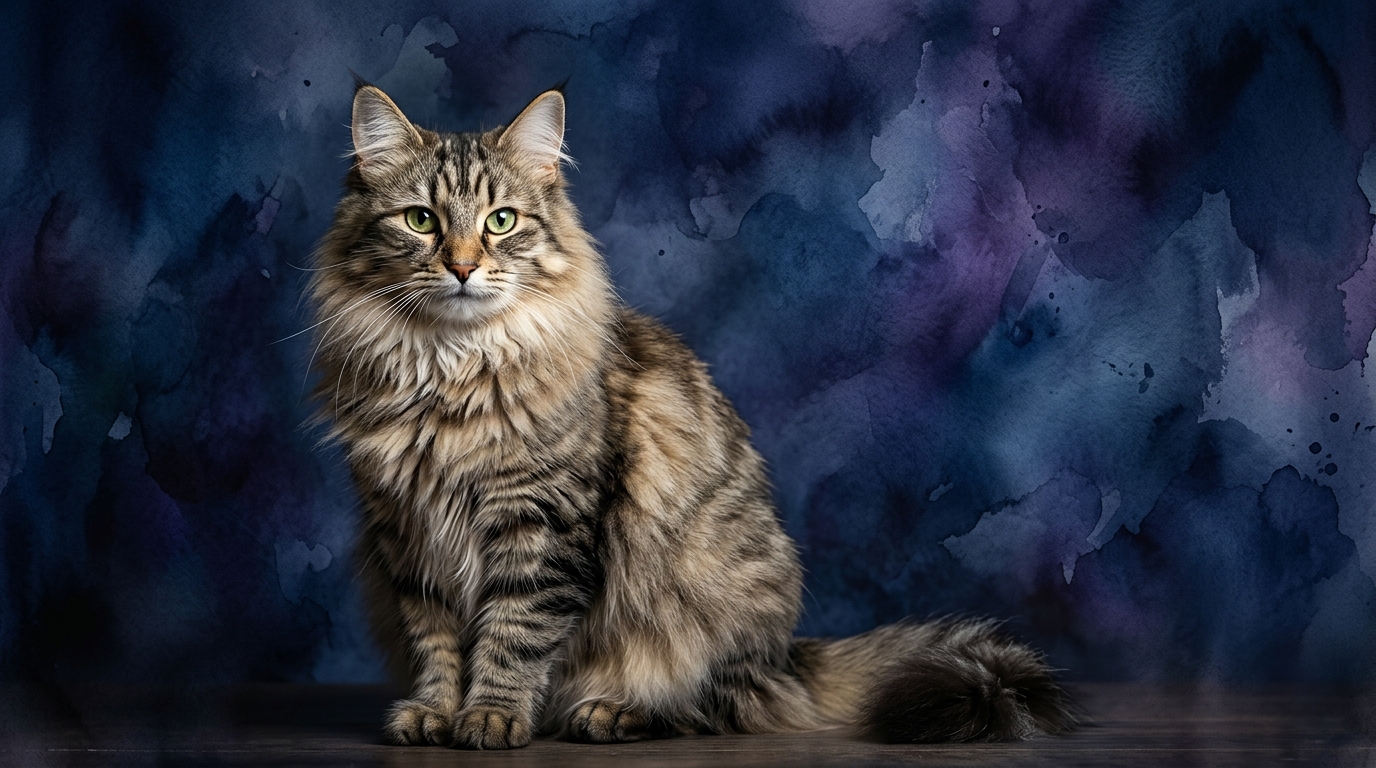
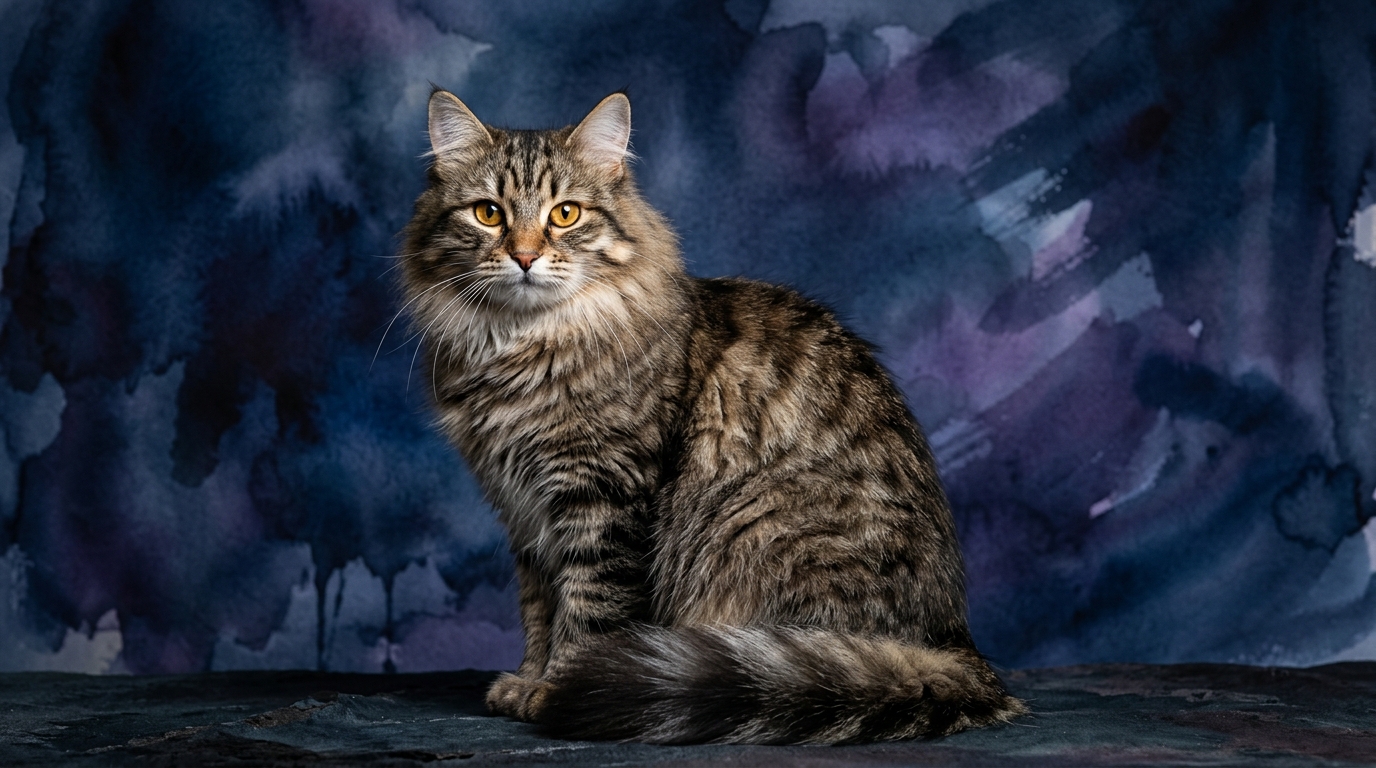
Side-by-Side IQ Profile
The Norwegian Forest Cat, a majestic 'Wegie,' showcases a compelling cognitive profile. Its problem-solving ability scores an impressive 4 out of 5, indicating a cat adept at navigating complex situations, such as figuring out intricate puzzle toys or opening tricky cabinet latches. Training speed is a moderate 3 out of 5, suggesting they can learn but require consistent, engaging methods, while social intelligence also sits at 3 out of 5, reflecting their capacity for deep bonds alongside a degree of independence. Crucially, their instinctive drive rates a perfect 5 out of 5, highlighting a powerful urge to hunt, explore, and engage with their environment, supported by a strong memory of 4 out of 5 that allows them to recall complex routines and spatial layouts.
In contrast, the Siberian, a natural treasure from Russia, presents a more balanced, albeit slightly less intense, cognitive landscape. Its problem-solving skills are rated 3 out of 5, meaning it's capable of understanding cause and effect and can learn to overcome simple obstacles, but perhaps won't devise multi-step solutions as readily as a Wegie. Similar to the Norwegian Forest Cat, its training speed and social intelligence are both 3 out of 5, indicating a trainable companion that forms affectionate bonds. The Siberian's instinctive drive is a moderate 3 out of 5, suggesting a healthy interest in play and exploration without the relentless intensity of its Norwegian counterpart, and its memory, also 3 out of 5, supports daily routines and familiar interactions.
Where Norwegian Forest Cat Wins Cognitively
The Norwegian Forest Cat unequivocally demonstrates superior cognitive prowess in several key areas. Its problem-solving score of 4/5 means these felines are often observed devising novel strategies to achieve goals, whether it's manipulating complex feeder toys or figuring out how to access elevated perches. This resourcefulness translates into a cat that actively engages with its environment, constantly assessing and adapting. Furthermore, the Wegie's exceptional instinctive drive, rated 5/5, fuels a persistent curiosity and a strong predatory sequence, making them highly motivated by interactive play that mimics hunting scenarios.
This deep-seated drive, combined with their 4/5 memory, allows them to remember sophisticated hunting techniques, preferred play routes, and the intricate layouts of their territory, making them formidable explorers and engaging companions for those who appreciate a cat with a robust inner world. Owners often report their Wegies remembering specific game routines or the location of hidden treats with remarkable accuracy over extended periods, showcasing their capacity for complex recall and strategic thinking.
Where Siberian's Cognitive Profile Offers Unique Advantages
While the Siberian's raw cognitive scores might appear lower in comparison, its profile offers distinct advantages that translate into a uniquely harmonious companionship experience. The Siberian's moderate instinctive drive, rated 3/5, means it possesses a healthy playfulness and interest in its surroundings without the overwhelming intensity that might require constant, elaborate stimulation. This makes them less prone to destructive behaviors born from boredom or unmet hunting urges, offering a more manageable energy level for many households.
Their balanced problem-solving (3/5) and memory (3/5) contribute to a generally adaptable and cooperative nature; they learn house rules efficiently and remember routines, but are less likely to 'outsmart' their owners in mischievous ways. The Siberian’s 3/5 social intelligence, often expressed through gentle interaction and a deep desire to be near their human family, ensures they integrate smoothly into diverse family dynamics, offering consistent affection without demanding complex mental gymnastics from their owners. This blend of moderate cognitive traits results in a wonderfully agreeable and emotionally present feline friend.
Which Is Easier to Train and Why
Both the Norwegian Forest Cat and the Siberian share a training speed score of 3 out of 5, indicating that neither is a 'quick study' in the same vein as some other species, but both are certainly trainable with patience and positive reinforcement. The key difference lies in *what* motivates them and *how* their other cognitive traits influence the training process. The Norwegian Forest Cat’s higher problem-solving (4/5) and instinctive drive (5/5) can sometimes be a double-edged sword; while they might quickly grasp the mechanics of a trick, their strong independent drive means they might only perform it if it aligns with their immediate interest or perceived reward. They are more likely to 'think for themselves' and test boundaries.
The Siberian, with its slightly lower instinctive drive (3/5) and problem-solving (3/5), might take the same amount of time to learn a command, but once learned, they may be more consistently compliant because they are less driven by complex internal motivations to deviate. Their moderate cognitive profile makes them generally eager to please and less prone to applying their intellect to circumvent rules or manipulate situations. Therefore, while both require consistent, positive reinforcement, owners might find the Siberian slightly more straightforward to train for basic commands due to its more amenable nature, whereas the Wegie might require more creative and highly rewarding approaches to sustain engagement.
Which Suits Active Owners vs. Relaxed Owners
The choice between these two breeds largely depends on an owner’s lifestyle and their capacity for feline engagement. Owners who lead active lives and enjoy providing extensive mental and physical stimulation will find the Norwegian Forest Cat an exhilarating companion. Its 5/5 instinctive drive and 4/5 problem-solving mean it thrives on interactive play, puzzle feeders, and opportunities to explore, whether in a secure outdoor enclosure or a stimulating indoor environment filled with climbing structures. This is a cat that will actively seek out engagement and challenge, requiring an owner who can consistently meet those needs with varied activities.
Conversely, the Siberian is often a better fit for more relaxed owners who appreciate a loving presence without the need for constant, demanding interaction. Its moderate instinctive drive (3/5) and problem-solving (3/5) mean it enjoys playtime and enrichment but isn't as relentlessly driven to seek it out. A Siberian will happily engage in a play session, then contentedly curl up for a nap or a cuddle, making it well-suited for households that prefer a calmer, more adaptable feline friend. While still needing attention and affection, their cognitive profile allows them to be content with less intensive daily stimulation compared to their Norwegian counterparts.
The Verdict
Choose the Norwegian Forest Cat if you are an active, engaging owner who thrives on a cat with superior problem-solving abilities, a powerful instinctive drive, and an exceptional memory for complex interactions, offering a rewarding, mentally stimulating partnership.
Opt for the Siberian if you desire a friendly, adaptable cat with a balanced cognitive profile, offering moderate playfulness and a generally compliant nature that integrates harmoniously into various home environments without requiring constant, intense mental engagement.
🧠 Find Your Pet's IQ Score
Our Pet IQ Lab assessment covers 25+ tests across 5 cognitive dimensions — personalized to your breed.
Take the Full IQ Test →Frequently Asked Questions
Are Norwegian Forest Cats prone to destructive behavior due to their high instinctive drive?
While their 5/5 instinctive drive can lead to intense play and exploration, destructive behavior is typically avoided if they receive adequate mental and physical stimulation through interactive toys, puzzle feeders, and engaging playtime. Their intelligence means they can be redirected effectively with consistent effort.
Can Siberians learn complex tricks despite their 3/5 problem-solving score?
Yes, Siberians can certainly learn complex tricks, but it may require more consistent repetition and patience. Their 3/5 problem-solving indicates they can understand sequences and associations, but they might not independently devise new solutions as quickly as a cat with a higher score.
Which breed is more likely to escape or open doors?
Given its 4/5 problem-solving and 5/5 instinctive drive, the Norwegian Forest Cat is generally more likely to figure out how to open doors, cabinets, or find ways to explore beyond perceived barriers. Their persistent curiosity often drives them to test household boundaries.