Side-by-Side IQ Profile
At The Cosmic Pet's IQ Lab, we evaluate feline cognitive abilities across five key dimensions, offering a clear lens into each breed's unique mental landscape. Let's examine how the Norwegian Forest Cat and Singapura stack up.
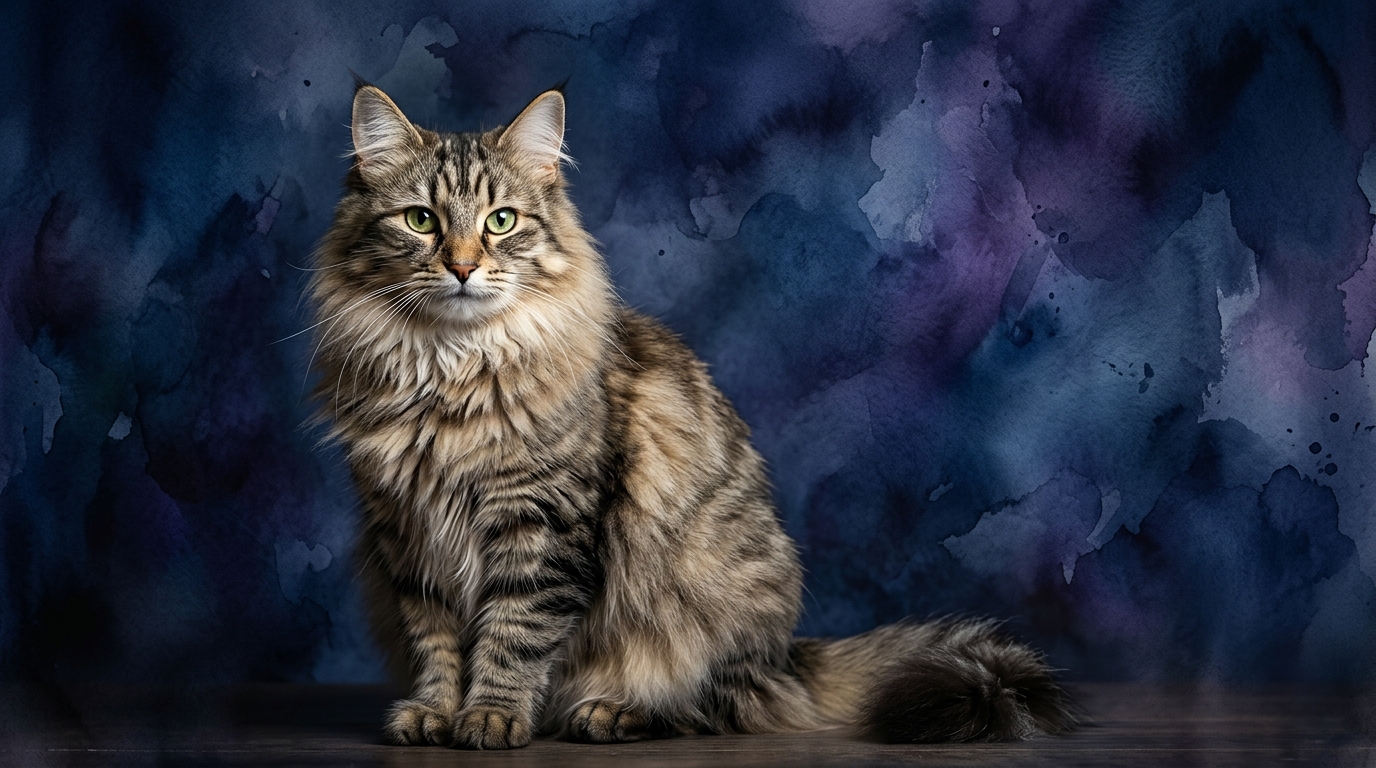
The Norwegian Forest Cat, a breed originating from the cold forests of Northern Europe, showcases a robust cognitive makeup. Its Problem Solving is rated at 4/5, indicating a strong capacity for figuring out environmental challenges, whether it's opening a tricky cabinet or navigating a complex cat tree. Training Speed is 3/5, meaning they learn new routines and commands at a moderate, steady pace. Social Intelligence also stands at 3/5, reflecting their ability to form bonds and understand household dynamics without being overly dependent. A standout feature is their Instinctive Drive, scoring a perfect 5/5, which points to a powerful urge for hunting, climbing, and exploring their territory. Finally, their Memory is rated 4/5, suggesting they retain detailed information about their surroundings, successful strategies, and the people in their lives.
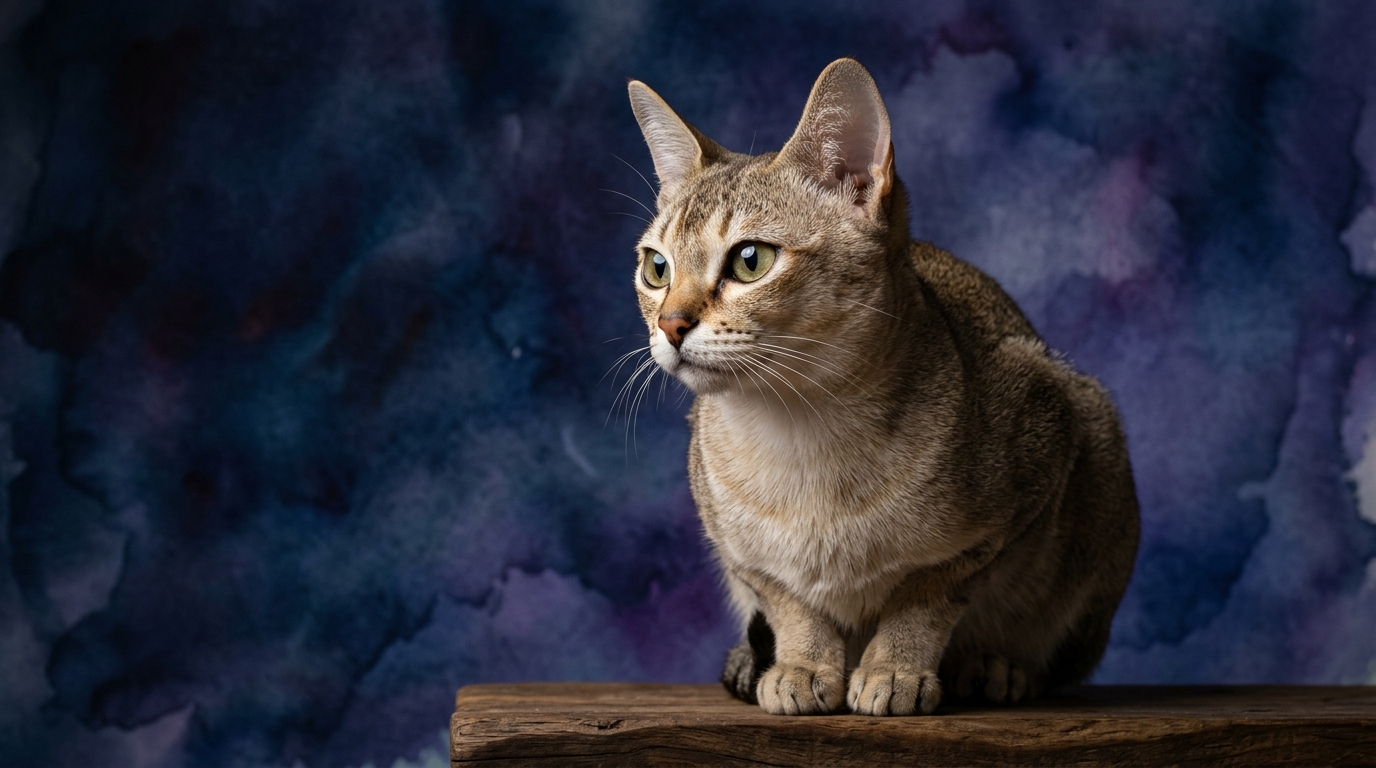
In contrast, the Singapura, one of the smallest cat breeds, presents a more balanced, albeit less intense, cognitive profile. Its Problem Solving comes in at 3/5, showing competence in tackling straightforward puzzles but perhaps less persistence with highly complex ones. Training Speed, like the 'Wegie', is 3/5, indicating a similar moderate learning curve for new behaviors. Social Intelligence is also 3/5, highlighting their affectionate and people-oriented nature, capable of nuanced interactions within their family unit. Their Instinctive Drive is 3/5, a moderate level that means they enjoy play and interaction but are not overwhelmingly driven by primal urges. Memory for the Singapura is 3/5, allowing them to recall routines, preferred people, and their immediate environment effectively, though perhaps with less detail than their larger counterpart.
Where Norwegian Forest Cat Wins Cognitively
The Norwegian Forest Cat truly distinguishes itself in areas demanding significant mental engagement with its environment. Their Problem Solving score of 4/5, compared to the Singapura's 3/5, means a 'Wegie' is more likely to methodically work through a complex puzzle feeder or figure out how to access a high shelf. This isn't just about physical agility; it's about the cognitive process of assessment, trial-and-error, and successful strategy retention. Their Instinctive Drive, a perfect 5/5 versus the Singapura's 3/5, translates into a profound curiosity and an innate desire to explore, hunt, and climb. This drive is a powerful cognitive engine, pushing them to constantly engage with their surroundings, observe prey-like objects, and map out their territory. Such a high drive fuels continuous learning and adaptation. Furthermore, their Memory, rated 4/5 compared to the Singapura's 3/5, suggests a more detailed and enduring recall of past experiences and learned solutions. This means a Norwegian Forest Cat might remember a specific successful hunting technique or the exact sequence to open a particular door for a longer period, making them highly resourceful in their domain.
Where Singapura Wins Cognitively
While the Singapura may not outscore the Norwegian Forest Cat in raw problem-solving or instinctive drive, its cognitive profile shines in other, equally valuable ways, particularly concerning its interaction with its human family. The Singapura's moderate Instinctive Drive (3/5) means they are less prone to the intense, environmentally-driven cognitive pursuits that might distract a 'Wegie'. Instead, their mental energy often centers on social dynamics and close companionship. This allows for a focus on more subtle human cues and a desire for interactive engagement that is less about 'conquering' the environment and more about 'connecting' within it. Their Problem Solving at 3/5, while not as high as the NFC, is perfectly adequate for navigating a home and engaging with interactive toys, without the potential for excessive 'over-engineering' solutions that might lead to unexpected feline ingenuity. The Singapura’s balanced cognitive scores across the board contribute to a highly adaptable and focused companion whose mental efforts are often directed towards maintaining harmonious social bonds rather than complex environmental mastery, making them exceptionally attuned to their human companions' presence and emotional states.
Which is Easier to Train and Why
Both the Norwegian Forest Cat and the Singapura share a Training Speed score of 3/5, indicating that neither breed is exceptionally quick to pick up new commands, but both are certainly trainable with consistency and positive reinforcement. The nuances in their other cognitive dimensions, however, can influence the style and focus of their training. For the Norwegian Forest Cat, their high Problem Solving (4/5) and Instinctive Drive (5/5) can present both opportunities and challenges. They might quickly understand the goal of a trick, but their strong instincts might make them more prone to distraction if a 'prey' item appears or if their natural drive to explore takes over. Training a 'Wegie' often benefits from incorporating puzzle elements or tasks that leverage their natural climbing and hunting behaviors, making the training feel like a cognitive game. Conversely, the Singapura's moderate Instinctive Drive (3/5) means they may be less distracted by environmental stimuli, potentially making them more consistently focused during a training session. Their strong social inclination, despite a 3/5 social intelligence score similar to the NFC, often means they are eager to please their human companions. Therefore, while both require patience, the Singapura might be perceived as 'easier' to train for basic household manners or simple tricks due to their more focused attention on human interaction during the learning process, whereas the 'Wegie' might require more creative, instinct-driven training approaches.
Which Suits Active Owners vs Relaxed Owners
Choosing between these two breeds often comes down to an owner's lifestyle and their preferred level of interaction with their feline companion. The Norwegian Forest Cat, with its robust Problem Solving (4/5), high Instinctive Drive (5/5), and strong Memory (4/5), is an ideal match for active owners. These cats thrive in environments where they can engage their minds and bodies through climbing structures, interactive puzzle toys, and secure outdoor exploration. Owners who enjoy providing varied mental stimulation, teaching complex tricks, or engaging in 'fetch' with a purpose will find a 'Wegie' a rewarding companion. They appreciate owners who understand their need to 'work' through their environment.
The Singapura, on the other hand, with its more moderate cognitive scores across the board and a strong social focus, is better suited for relaxed owners. While they certainly enjoy play and interaction, their moderate Instinctive Drive (3/5) means they are less demanding of constant environmental challenges. These cats are content with regular interactive play sessions, ample lap time, and being an integral, affectionate part of the household's daily rhythms. Owners who value close companionship, a less physically demanding feline presence, and a cat that thrives on social interaction will find the Singapura a perfect fit.
The Verdict
Choose the Norwegian Forest Cat if you desire an independent, resourceful feline companion that enjoys engaging with its environment through climbing, exploring, and solving puzzles, thriving on mental and physical challenges.
Choose the Singapura if you are seeking an affectionate, people-oriented cat that thrives on close companionship and finds contentment in a less physically demanding, yet mentally stimulating, home environment focused on social interaction.
🧠 Find Your Pet's IQ Score
Our Pet IQ Lab assessment covers 25+ tests across 5 cognitive dimensions — personalized to your breed.
Take the Full IQ Test →Frequently Asked Questions
Are Norwegian Forest Cats good at learning tricks?
Yes, with a training speed of 3/5 and strong problem-solving skills, Norwegian Forest Cats can certainly learn tricks, especially those that involve their natural climbing, jumping, or 'hunting' instincts. Patience and positive reinforcement are key to success, often making training feel like a collaborative game.
Do Singapuras enjoy interactive toys?
Absolutely. Despite a moderate instinctive drive (3/5), Singapuras are playful and enjoy interactive toys that stimulate their minds and encourage engagement with their owners. Toys that mimic prey or allow for batting and chasing are particularly effective, fostering mental agility and physical activity.
How do their social intelligence scores translate to household dynamics?
Both breeds have a social intelligence score of 3/5, meaning they are capable of forming strong bonds and understanding household cues. The Norwegian Forest Cat often displays this through affectionate independence, while the Singapura's small size and people-oriented nature often translate to a more constant, direct desire for companionship and lap time within the family unit.