Side-by-side IQ profile
At The Cosmic Pet Pet IQ Lab, we evaluate feline cognition across five crucial dimensions, offering a granular view beyond generic notions of cleverness. Understanding these profiles is key to matching a cat's inherent mental landscape with an owner's lifestyle.
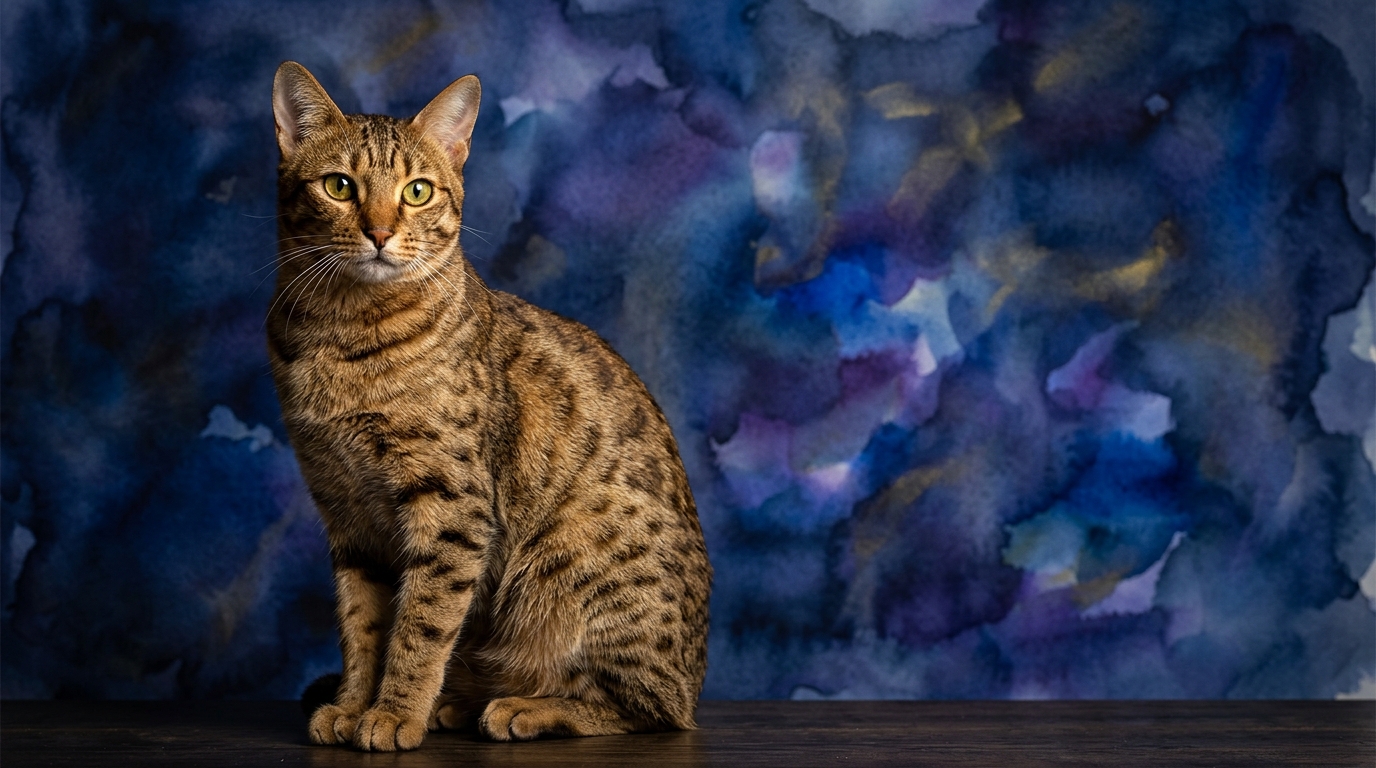
The Ocicat, a striking breed with a wild appearance but domestic heart, presents a robust cognitive profile. Its problem-solving ability scores 4/5, indicating a cat adept at navigating complex situations, figuring out how to access desired objects, and overcoming obstacles through trial and error. Training speed is an exceptional 5/5, meaning Ocicats typically pick up new commands, routines, and behaviors with remarkable alacrity, often eager to engage in learning sessions. Their social intelligence is a strong 4/5, allowing them to keenly observe and respond to human emotions, bond deeply, and often interact harmoniously with other household members. An instinctive drive of 4/5 points to a cat with a pronounced internal compass for exploration, hunting simulations, and territorial awareness, requiring appropriate outlets for these natural behaviors. Finally, their memory, rated 4/5, suggests a strong capacity to recall past events, learned skills, and the intricacies of their environment and social circle over extended periods.
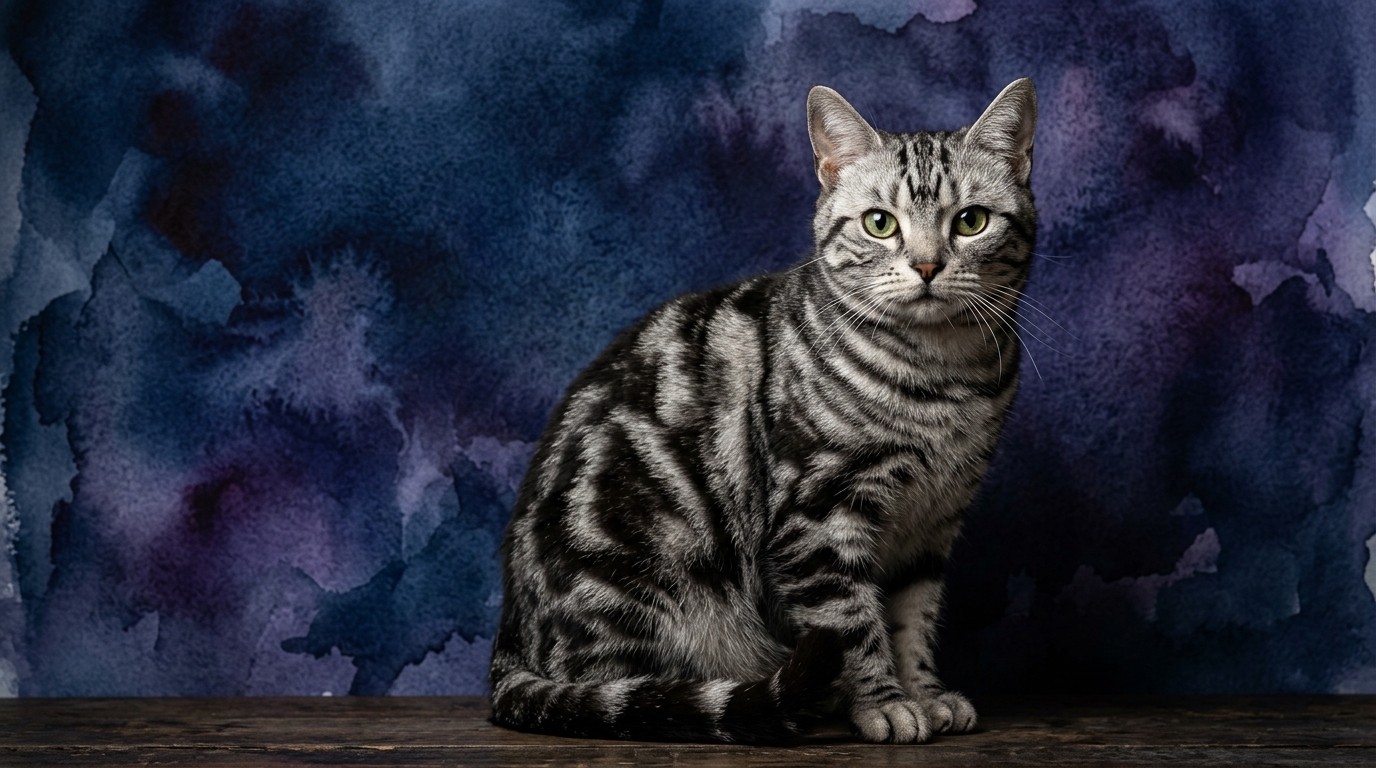
In contrast, the American Shorthair, a beloved classic known for its adaptable and amiable disposition, offers a more moderate yet consistently capable cognitive framework. Their problem-solving ability is rated 3/5, suggesting they can navigate common household challenges and learn practical solutions, though they might not actively seek out complex mental puzzles. Training speed comes in at 3/5, indicating they are receptive to learning but typically require more consistent repetition and patient guidance to solidify new behaviors. Their social intelligence also scores 3/5; American Shorthairs are generally friendly and form affectionate bonds, though they might not display the same level of perceptive nuance to human emotional states as some other breeds. An instinctive drive of 3/5 means they enjoy play, exploration, and natural cat behaviors, but typically with less intensity or urgency than breeds with higher scores, making them less prone to restlessness. Their memory, at 3/5, is sufficient for remembering routines, familiar faces, and key environmental details, ensuring a stable and predictable daily life.
Where Ocicat wins cognitively
The Ocicat's cognitive profile distinctly outperforms the American Shorthair across all five measured dimensions, translating into a cat with a significantly more active and engaged mind. Their superior problem-solving (4/5 vs. 3/5) means an Ocicat is more likely to independently figure out how to open a child-proof cabinet, manipulate a complex puzzle feeder, or navigate a novel environment with greater efficiency. This isn't just about mischievousness; it reflects a deeper cognitive processing ability to assess situations and devise solutions.
Furthermore, the Ocicat's exceptional training speed (5/5 vs. 3/5) is a clear advantage for owners who enjoy teaching their cats. An Ocicat can master a new trick, such as 'sit' or 'fetch,' in significantly fewer repetitions and often retains these skills more readily over time. Their higher social intelligence (4/5 vs. 3/5) allows for a more nuanced understanding of human communication, potentially making them more responsive to verbal cues or subtle body language, fostering a more interactive and reciprocal relationship. The stronger instinctive drive (4/5 vs. 3/5) also means they channel their energy into more sophisticated play and exploration, often demonstrating impressive agility and strategic thinking during simulated hunts. Lastly, their enhanced memory (4/5 vs. 3/5) allows them to recall intricate routines, remember specific people or places even after long absences, and apply past learning to new situations more effectively.
Where American Shorthair wins cognitively
While the Ocicat scores higher in every specific IQ dimension, framing 'wins' for the American Shorthair requires shifting perspective from raw cognitive power to the practical benefits of their moderate scores. The American Shorthair's balanced cognitive profile (all 3/5) often translates into a more predictable and less demanding companion for many households. Their moderate problem-solving abilities, for instance, mean they are less inclined to ingeniously outsmart their owners to access forbidden areas or treats, potentially leading to fewer 'cat-proofing' challenges.
Their 3/5 training speed, while not rapid, means they are still perfectly capable of learning essential household manners and routines, but they do so at a steady pace that can be less intense for owners. This predictability can be a significant 'win' for those who prefer a more relaxed training journey. Similarly, their 3/5 social intelligence often manifests as an amiable, adaptable temperament that appreciates companionship without the intense demand for constant interaction or mental stimulation that a higher-scoring cat might exhibit. This makes them excellent for households seeking a stable, comforting presence. Their moderate instinctive drive (3/5) ensures they still enjoy play and exploration, but they are generally less prone to restlessness or destructive behaviors if their mental and physical needs aren't met with the same rigor an Ocicat might require. In essence, the American Shorthair's cognitive 'win' lies in its consistent, approachable, and generally low-maintenance mental demeanor, which simplifies daily living for many owners.
Which is easier to train and why
Without question, the Ocicat is generally easier to train due to its exceptional 5/5 training speed, coupled with strong problem-solving and memory capabilities. Ocicats often exhibit a genuine enthusiasm for learning and engagement, quickly associating commands with actions and rewards. Their desire to interact and their innate curiosity make them highly responsive to positive reinforcement techniques like clicker training, allowing them to master complex tricks, walk on a leash, or even play fetch with remarkable proficiency. This ease stems from their mental agility and a strong drive to participate actively with their human companions.
The American Shorthair, with a 3/5 training speed, can certainly be trained, but the process typically requires more patience and consistency. They learn at a moderate pace, preferring clear, simple commands and a predictable routine. While they may not pick up intricate tricks as rapidly as an Ocicat, they are very capable of learning basic manners, litter box etiquette, and responding to their name with consistent, gentle reinforcement. Their amiable nature means they are generally cooperative, but their learning style is more about steady acquisition through repetition rather than rapid conceptual grasp, making the training journey a more measured, less intense endeavor compared to the Ocicat's energetic intellectual pursuits.
Which suits active owners vs relaxed owners
The Ocicat's dynamic cognitive profile makes it an ideal companion for active owners who relish interactive engagement and are prepared to provide significant mental and physical stimulation. Owners who enjoy teaching tricks, utilizing advanced puzzle feeders, engaging in regular leash walks, or participating in agility games will find an Ocicat to be an eager and capable partner. Their higher problem-solving and instinctive drives mean they thrive when challenged and can become bored or mischievous if not adequately stimulated, making them perfect for those who want a truly 'involved' feline.
Conversely, the American Shorthair's more moderate and balanced cognitive traits align perfectly with relaxed owners seeking a calm, affectionate, and relatively independent companion. These cats appreciate a stable routine, comfortable lounging spots, and gentle play sessions, but they do not typically demand the same intensity of mental stimulation as an Ocicat. Owners who prefer a cat that enjoys quiet companionship, is content to observe household activities, and offers a steady, comforting presence without requiring constant intellectual games will find the American Shorthair to be an excellent match. They are adaptable and happy to fit into a less high-octane lifestyle, making them suitable for busy individuals or those who prefer a more serene home environment.
The Verdict
If your lifestyle embraces active engagement and you desire a feline partner eager for mental challenges, learning new behaviors, and interactive play, the Ocicat's vibrant cognitive profile makes it an excellent choice.
For those seeking a calm, predictable companion who thrives on routine and offers steady, affectionate presence without demanding intense intellectual stimulation, the amiable American Shorthair is likely a better fit.
🧠 Find Your Pet's IQ Score
Our Pet IQ Lab assessment covers 25+ tests across 5 cognitive dimensions — personalized to your breed.
Take the Full IQ Test →Frequently Asked Questions
Do Ocicats require a lot of playtime?
Yes, Ocicats, with their higher instinctive drive and problem-solving abilities, benefit greatly from frequent, engaging playtime. This helps channel their energy and intelligence positively, preventing boredom.
Are American Shorthairs prone to destructive behavior if not mentally stimulated?
While any cat can exhibit destructive behaviors if neglected, American Shorthairs, with their moderate drives, are generally less prone to such issues than higher-scoring breeds like the Ocicat, provided basic needs are met.
Can an American Shorthair be an only pet?
Absolutely, American Shorthairs are typically content as only pets, forming strong bonds with their human companions. Their social intelligence allows them to thrive on human interaction without necessarily needing other animal companions.