
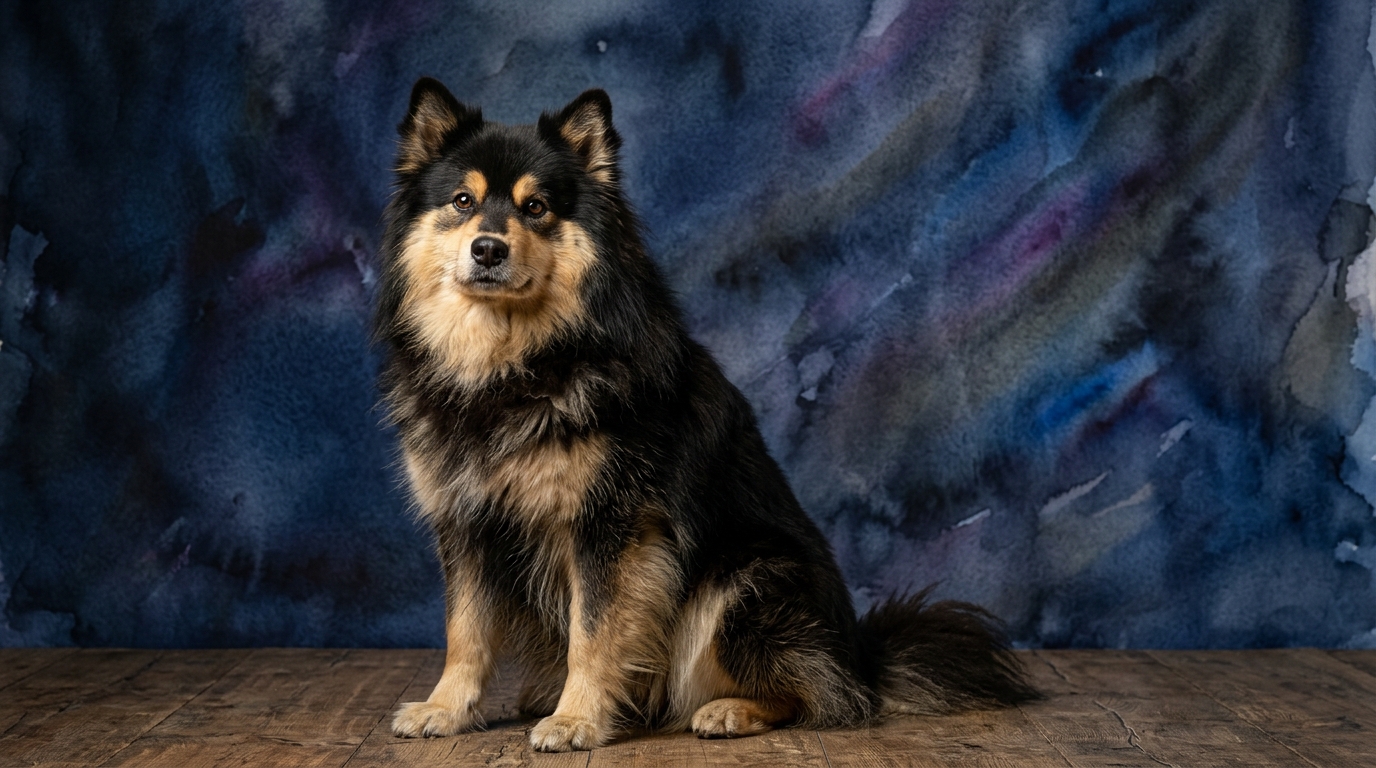
Side-by-Side Cognitive Profiles: OES vs. Finnish Lapphund
Our Cosmic Pet Pet IQ Lab data offers a granular view into the cognitive dimensions of these two distinct herding breeds. For the Old English Sheepdog, we observe a Coren ranking of #44, placing it firmly within the category of dogs with an above-average capacity for working and obedience tasks. Its individual IQ dimensions include a Problem Solving score of 3/5, indicating a solid ability to navigate moderate environmental challenges. Training Speed is also rated at 3/5, suggesting a steady learning curve with consistent effort. Social Intelligence stands at 3/5, reflecting a good understanding of human cues and interactions. Instinctive Drive, pertaining to its herding heritage, is 3/5, meaning a moderate inclination towards its ancestral tasks. A standout feature for the OES is its Memory, scoring 4/5, which points to a robust ability to retain learned behaviors and experiences over time.
The Finnish Lapphund, while not holding a Coren ranking in our current dataset, presents a similar yet distinct cognitive profile across several dimensions. Its Problem Solving ability also scores 3/5, indicating an equal capacity for tackling moderate mental puzzles. Training Speed mirrors the OES at 3/5, suggesting a similar pace of learning new commands and routines. Social Intelligence for the Lapphund is also 3/5, denoting a good aptitude for reading and responding to human emotional states and intentions. Its Instinctive Drive, like the OES, is rated 3/5, reflecting a moderate, persistent herding inclination that often manifests as watchfulness and a desire to keep its 'flock' (family) together. The primary differentiation in direct scores lies in its Memory, which is rated 3/5, indicating a solid but not exceptional recall compared to the Old English Sheepdog.
Where the Old English Sheepdog Wins Cognitively
The most apparent cognitive advantage for the Old English Sheepdog, according to our Pet IQ Lab data, lies in its superior Memory score of 4/5, compared to the Finnish Lapphund's 3/5. This higher score suggests that OES dogs are likely to retain complex sequences of commands, remember specific environmental cues, or recall past experiences with greater fidelity and for longer durations. For owners, this often translates to less frequent refreshers for previously learned skills and a greater capacity for building upon an existing repertoire of behaviors without significant backsliding. This enhanced recall is a significant asset in training progression, allowing for more efficient advancement to complex tasks once foundational skills are established. For example, an OES might more readily recall a multi-step agility course after fewer repetitions or remember the specific location of a hidden toy after several days, showcasing a highly effective cognitive retrieval system. This robust memory likely contributes significantly to their Coren ranking, as consistent obedience and task execution are heavily reliant on strong recall.
Where the Finnish Lapphund Wins Cognitively
While direct numerical scores in our Pet IQ Lab data don't show an outright 'win' for the Finnish Lapphund over the Old English Sheepdog, the absence of a Coren ranking for the Lapphund doesn't diminish its unique cognitive strengths, particularly those tied to its historical purpose. The Lapphund's herding role involved managing reindeer in vast, often challenging Arctic landscapes, demanding a keen awareness of its surroundings and a strong sense of independence. Their Problem Solving and Instinctive Drive scores of 3/5, while matching the OES, likely manifest with a distinct nuance in practical contexts due to their selective breeding for self-reliance. Lapphunds often exhibit a quiet, observational intelligence, processing their environment and making sound, independent judgments without constant human direction. This self-sufficiency, honed over centuries, suggests a cognitive resilience and adaptability to changing conditions, even if not reflected in a higher 'problem-solving' score in a standardized test. Their social intelligence, also 3/5, combines with their watchful nature to make them highly attuned to their family's dynamics and potential threats, showcasing a practical, protective form of social cognition that prioritizes the well-being of their 'flock' through alert observation.
Ease of Training: OES vs. Finnish Lapphund
Both the Old English Sheepdog and the Finnish Lapphund share a Training Speed score of 3/5, indicating that neither breed is a lightning-fast learner, but both are quite capable of acquiring new commands with consistent, patient instruction. This means owners should expect a moderate pace of learning, requiring dedication and engaging training methods. The Old English Sheepdog's superior Memory score of 4/5 provides a notable advantage in the long run; once a command or behavior is learned, it is likely to be retained more firmly. This can make subsequent training sessions more efficient, as less time needs to be spent re-establishing forgotten information, allowing for a quicker progression to more advanced concepts. For example, teaching an OES a complex sequence of tricks might take the same initial effort as a Lapphund, but the OES is less likely to forget the sequence after a period of inactivity, making them a more reliable performer of learned tasks over time.
Conversely, while the Finnish Lapphund also has a 3/5 Training Speed and a 3/5 Memory, their approach to learning is often influenced by their strong desire for a cooperative bond with their owner. Lapphunds thrive on positive reinforcement and clear, consistent guidance, responding well to training that feels like a partnership rather than strict instruction. Their herding background, which involved both close collaboration with humans and independent decision-making, means they are receptive to leadership but also value fairness. A Lapphund might require slightly more repetition to solidify new commands compared to an OES, but their eagerness to please their chosen human, coupled with their observational intelligence, can make them very rewarding to train. Neither breed responds well to harsh or inconsistent methods; both require patience, positive reinforcement, and a focus on building a strong, trusting relationship to unlock their full training potential.
Matching Breeds to Lifestyles: Active vs. Relaxed Owners
Considering their shared Instinctive Drive score of 3/5, both the Old English Sheepdog and the Finnish Lapphund possess a moderate need for mental and physical engagement, making them suitable for owners who are active but not necessarily seeking a marathon companion. The Old English Sheepdog, despite its substantial coat, is a robust herding dog that enjoys regular walks, playtime, and opportunities for mental stimulation. Its moderate drive means it can adapt to a slightly more relaxed home environment after sufficient daily exercise, making it a good fit for active families who enjoy daily outings but also appreciate downtime. They are generally not 'go-go-go' dogs, but rather enjoy participating in family activities and being involved in the household's rhythm. Their calm demeanor indoors, once exercised, makes them a pleasant presence for owners who appreciate a balanced energy level.
The Finnish Lapphund, also with a 3/5 instinctive drive, similarly thrives on activity, particularly those that engage its herding instincts like fetch, tracking games, or even canine sports. However, their historical role in the vast Arctic and their watchful nature often means they appreciate having a 'job' or purpose, even if it's just monitoring the household from a comfortable vantage point. They are generally content with regular moderate exercise, such as long daily walks, hikes, or consistent play sessions, combined with mental enrichment through puzzles or training. While both breeds can be content in a home with a yard, neither is a true couch potato; they need consistent interaction and physical activity to prevent boredom and maintain their well-being. For truly relaxed owners who prefer minimal daily activity, neither breed would be an ideal match, as their moderate drives necessitate consistent engagement to thrive.
The Verdict
Choose the Old English Sheepdog if you value a dog with a standout memory for training and routines, and appreciate a robust companion capable of moderate activity and deep family integration. Their consistent recall makes them a reliable partner for learned behaviors, fitting well into active family life.
Opt for the Finnish Lapphund if you seek a watchful, independent yet devoted companion with a keen awareness of its surroundings, suitable for moderate activity and a strong bond. Their unique blend of self-reliance and social intelligence makes them excellent, observant family members.
🧠 Find Your Pet's IQ Score
Our Pet IQ Lab assessment covers 25+ tests across 5 cognitive dimensions — personalized to your breed.
Take the Full IQ Test →Frequently Asked Questions
Does the Old English Sheepdog's Coren ranking of #44 mean it's smarter than a Finnish Lapphund?
The Coren ranking primarily measures 'working and obedience intelligence,' focusing on how quickly a dog learns new commands and obeys them. While the OES's #44 ranking indicates a strong capacity for these tasks, the Finnish Lapphund's lack of ranking doesn't imply lesser overall intelligence, but rather that it hasn't been widely included in those specific comparative studies.
How do their herding instincts manifest differently in a home environment?
Both have a 3/5 instinctive drive. The Old English Sheepdog's herding might appear as gently 'nosing' family members or attempting to keep everyone together, sometimes playfully bumping. The Finnish Lapphund, with its history of managing reindeer, might exhibit a more watchful, patrolling behavior, keeping an eye on its 'flock' (family) and its surroundings, often with a quiet, observant presence.
Are Old English Sheepdogs and Finnish Lapphunds good with children?
Both breeds, with their 3/5 social intelligence, generally do well with children when properly socialized and raised in a respectful environment. Old English Sheepdogs are often described as patient and tolerant, while Finnish Lapphunds are typically gentle and protective. Supervision is always recommended with any dog and child interaction to ensure positive experiences for everyone.