
Side-by-Side Cognitive Profiles at The Cosmic Pet Lab
The Old English Sheepdog (OES), a robust member of the Herding group, registers a Coren rank of #44, indicating a respectable capacity for working intelligence. Our Pet IQ Lab data assigns them a Problem Solving score of 3/5, suggesting they are adequately capable of figuring out new situations. Their Training Speed also stands at 3/5, meaning they learn new commands at a consistent, reliable pace. Social Intelligence is rated 3/5, reflecting their ability to understand and respond to human cues, while their Instinctive Drive is 3/5, manifesting as their innate herding tendencies. A standout trait for the OES is their Memory, which scores an impressive 4/5, indicating a strong ability to recall learned information and experiences.
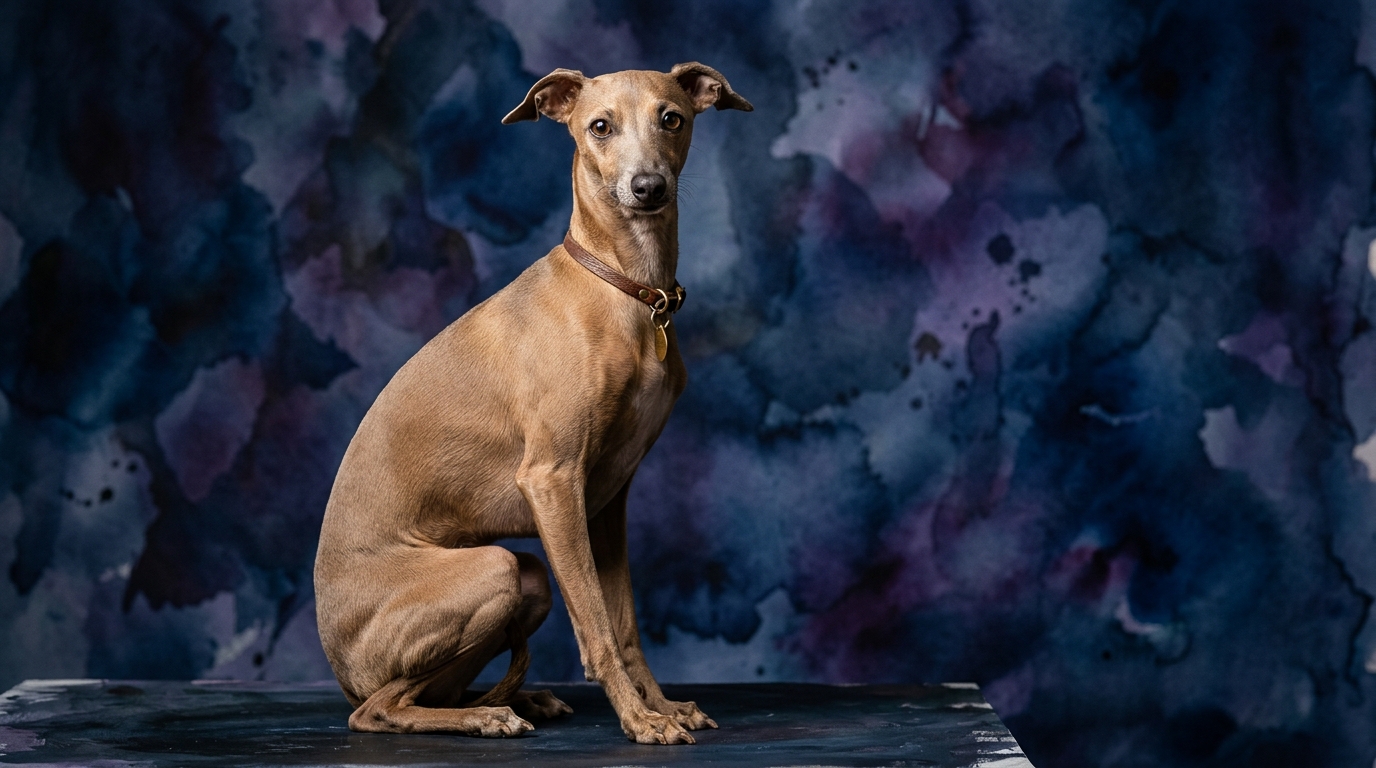
In contrast, the Italian Greyhound (IG), a graceful Toy breed, is not specifically listed in Coren's rankings, which often suggests their working obedience intelligence falls outside the top tiers, though this doesn't diminish their overall cognitive abilities. Our Pet IQ Lab assessment shows the IG with a Problem Solving score of 3/5, indicating they possess a similar foundational capacity for navigating novel situations as the OES. Their Training Speed is also 3/5, meaning they can learn new behaviors at a steady rate. Social Intelligence for the IG is 3/5, showing they are reasonably attuned to their human companions. Their Instinctive Drive is also 3/5, though this manifests primarily as a sighthound's keen visual focus and chase instinct. Their Memory is rated 3/5, reflecting a reliable but not exceptional ability to retain information.
Where the Old English Sheepdog's Mind Shines
The Old English Sheepdog's cognitive edge is most apparent in its superior memory, scoring a 4/5 on our Pet IQ Lab scale. This strong recall ability is a direct evolutionary advantage from their herding lineage, where remembering complex routes, the positions of flock members, and intricate sequential commands was crucial for their work. An OES can retain elaborate multi-step routines, making them particularly adept at advanced obedience, agility courses with multiple obstacles, or even remembering the specific locations of toys and family members within their home. This robust memory contributes significantly to their consistency in learned behaviors; once an OES masters a skill, they are likely to perform it dependably. Furthermore, their 3/5 problem-solving, combined with this memory, allows them to apply past solutions to similar future challenges with greater efficiency, rather than starting from scratch each time. Their herding instinct, rated 3/5, also means they often possess a sustained focus when engaged in tasks they perceive as having a purpose, further aiding in the application of their memory and learned skills.
Unpacking the Italian Greyhound's Cognitive Strengths
While not bred for complex working tasks, the Italian Greyhound showcases its own distinct cognitive strengths, particularly within the context of a companion animal. Their problem-solving ability, rated 3/5, often manifests in subtle yet effective ways within a domestic setting; for instance, they might cleverly figure out how to access a favorite sunbeam spot or a cozy blanket fort, demonstrating an adaptive intelligence for their environment. Their social intelligence, also 3/5, is highly attuned to their human family, allowing them to pick up on emotional cues and routines with remarkable sensitivity. This makes them exceptionally responsive to their owners' moods, often seeking comfort or offering gentle companionship precisely when needed, fostering a deep, empathetic bond. The IG's instinctive drive, rated 3/5, translates into a keen visual awareness and explosive speed. This sighthound heritage means they are incredibly quick to react to movement, making them engaging partners in chase games and surprisingly agile in navigating their surroundings. Their cognitive strengths are less about overt command execution and more about nuanced social interaction and efficient self-management within their personal sphere.
Training Dynamics: Who Learns Faster?
Both the Old English Sheepdog and the Italian Greyhound share a 3/5 rating for training speed, suggesting they learn new commands at a comparable, reliable pace. However, the *approach* to training and the *motivations* that drive them differ significantly. The OES, with its herding background and superior 4/5 memory, often thrives on consistent, structured training that leverages their ability to remember complex sequences and their desire for a 'job.' They respond well to positive reinforcement and can be quite biddable, but their independent herding spirit might occasionally manifest as a thoughtful pause before compliance if they don't immediately grasp the purpose of a command. They benefit from training that builds on prior knowledge and engages their problem-solving in a sequential manner, making them excellent candidates for advanced obedience or rally. Their consistency, once a behavior is learned, is a significant asset.
The Italian Greyhound, while equally capable of learning at a 3/5 speed, generally requires a more sensitive and engaging training approach. Their delicate nature means harsh corrections are counterproductive; they respond best to gentle, positive reinforcement, high-value treats, and short, fun-filled sessions that keep their attention. Repetitive drills might bore them, leading to disengagement. Their sighthound instincts mean outdoor distractions, particularly moving objects, can be a major challenge for recall training, necessitating early and consistent reinforcement in varied environments. While they may not have the OES's memory for intricate routines, their social intelligence (3/5) allows them to learn what pleases their human companions, making them eager to cooperate when motivated by affection and comfort. Successful IG training often relies on building a strong, trusting bond and making the learning process enjoyable and rewarding.
Lifestyle Compatibility: Active Explorers vs. Cozy Companions
Considering their cognitive profiles and historical roles, the Old English Sheepdog generally suits owners who lead an active lifestyle and are prepared for consistent mental and physical engagement. Their herding drive and cognitive capacity for complex tasks mean they benefit immensely from structured activities such as long, stimulating walks, opportunities for herding games, or participation in dog sports like agility or obedience trials. They require ample space to move and thrive on being an active, integrated participant in family life, where their problem-solving and memory can be regularly challenged. An OES that lacks sufficient stimulation may develop undesirable behaviors stemming from boredom or unspent energy, making them a better fit for individuals or families committed to a dynamic, interactive relationship.
The Italian Greyhound, despite its sighthound lineage, often aligns better with more relaxed owners who appreciate a devoted, often cuddly companion. While they enjoy short bursts of intense play, often referred to as 'zoomies,' their small size, delicate build, and preference for warmth make them less suited for strenuous, prolonged outdoor activity in all weather. They excel in comfortable home environments where they can be close to their people, often found curled up on laps or under blankets. Their social intelligence (3/5) means they thrive on close companionship and respond well to a calm, predictable routine. While they need daily walks and playtime, their primary requirement is often the comfort and security of their home and the constant presence of their human family, making them ideal for individuals seeking a sensitive, affectionate housemate rather than a high-endurance partner.
The Verdict
Choose the Old English Sheepdog if you seek a mentally engaged companion who thrives on learning complex routines and participating in structured activities, and you can provide ample space and consistent training.
Opt for the Italian Greyhound if you desire a sensitive, affectionate companion content with cozy home life, short bursts of activity, and a strong bond with their human family.
🧠 Find Your Pet's IQ Score
Our Pet IQ Lab assessment covers 25+ tests across 5 cognitive dimensions — personalized to your breed.
Take the Full IQ Test →Frequently Asked Questions
Does the Old English Sheepdog's memory help in training?
Yes, their 4/5 memory allows them to retain complex commands and routines effectively, making them consistent performers once a skill is mastered, especially in multi-step tasks like agility or advanced obedience sequences.
Are Italian Greyhounds difficult to train due to not being Coren-ranked?
Not necessarily; while not assessed for working obedience, their 3/5 training speed indicates they learn at a reliable pace, but their sensitive nature might respond better to gentle, positive reinforcement methods and shorter, engaging sessions.
How do their instinctive drives differ in daily life?
The OES's instinctive drive (3/5) often manifests as a desire to 'manage' or gently gather family members, while the IG's (3/5) appears as a strong visual prey drive, prompting them to chase small moving objects with bursts of speed.