
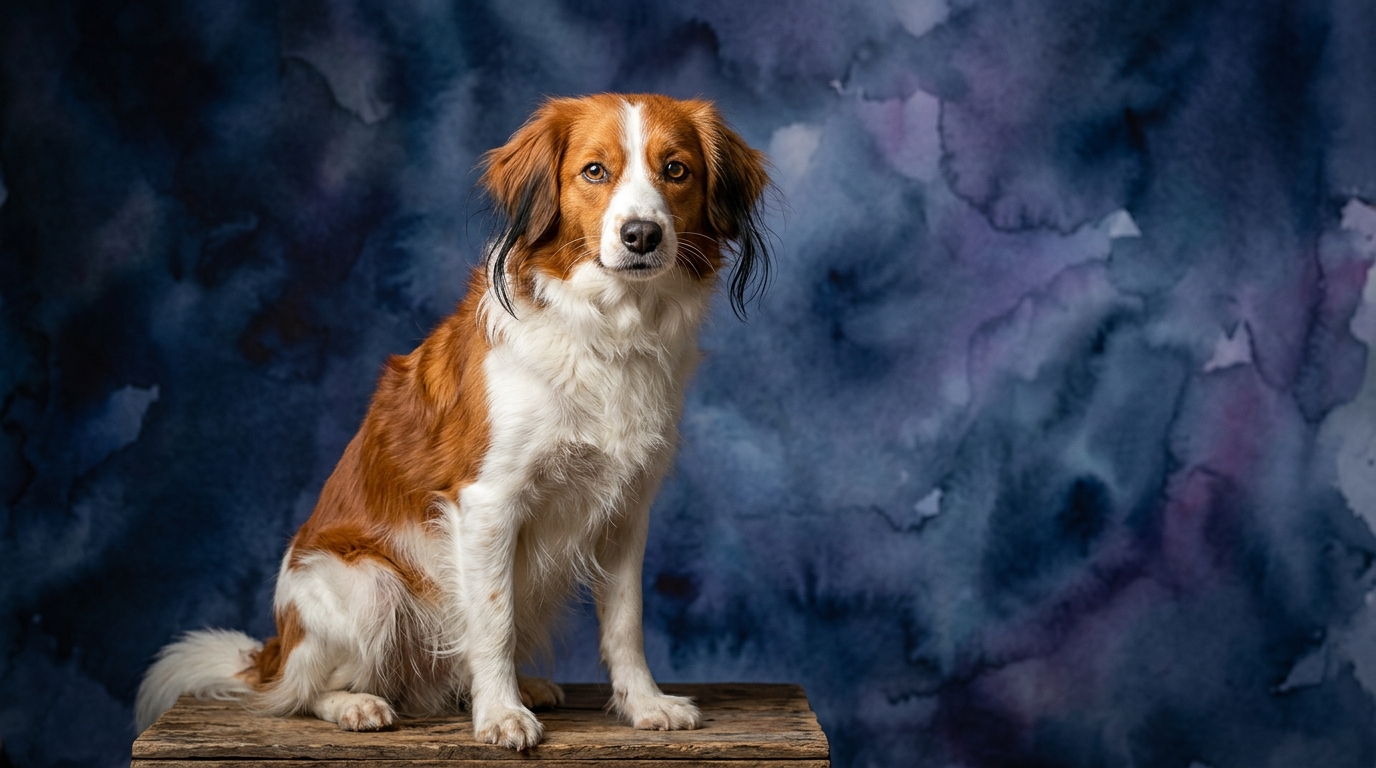
Side-by-Side IQ Profile: OES vs. Kooikerhondje
The Cosmic Pet Pet IQ Lab employs a five-dimensional framework to assess canine intelligence, offering a nuanced perspective beyond simple rankings. For the Old English Sheepdog, a breed steeped in herding tradition, we observe a Problem Solving score of 3/5, indicating a capacity for independent thought in complex situations, typical of a dog expected to make decisions in the field. Their Training Speed also stands at 3/5, suggesting a moderate learning pace that requires consistent engagement. Social Intelligence, at 3/5, reflects their ability to form strong bonds and understand human cues, while their Instinctive Drive, also 3/5, points to a moderate but present inclination towards their ancestral herding behaviors. A notable strength is their Memory, scoring 4/5, which is crucial for recalling intricate routes and patterns vital for flock management.
In contrast, the Kooikerhondje, a Sporting group member with a history as a duck decoy dog, shares some scores but expresses them differently. Their Problem Solving capability is rated 3/5, manifesting as a cleverness in engaging with tasks and figuring out how to achieve a desired outcome, often related to retrieving or luring. Training Speed is likewise 3/5, indicating they learn at a steady pace, often responding well to positive reinforcement. Their Social Intelligence is also 3/5, highlighting their capacity for connection and sensitivity to their family unit. The Kooikerhondje's Instinctive Drive is 3/5, which in their case translates to a strong desire for focused work, particularly in water or retrieving tasks. Their Memory, at 3/5, is solid and reliable for retaining commands and routines, though perhaps not with the same sustained complexity as the OES.
Where the Old English Sheepdog Wins Cognitively
The Old English Sheepdog truly distinguishes itself in the domain of Memory, scoring a commendable 4/5 compared to the Kooikerhondje's 3/5. This superior recall isn't just about remembering where the toy is; it's about retaining complex sequences of commands, the topography of a wide-ranging pasture, and the individual quirks of their flock members. For a herding dog, a robust memory allows for the execution of multi-step tasks without constant handler intervention, making them adept at nuanced boundary control or retrieving specific stragglers. This sustained cognitive mapping and recall allows them to build upon learned experiences more effectively, solving problems by drawing from a deeper well of past solutions.
Furthermore, while both breeds score 3/5 in Problem Solving, the OES's herding background infuses this score with a different flavor of cognitive strength. Their problem-solving often involves independent decision-making in dynamic, unpredictable environments, such as anticipating a sheep's movement or navigating obstacles to keep a flock together. This isn't merely about figuring out a puzzle box; it's about real-time strategic thinking under pressure, demonstrating a capacity for adaptive intelligence that is rooted in their working history. The OES's cognitive advantage here lies in their ability to process and act upon a broad array of sensory information to manage a fluid situation, a trait honed over generations of pastoral work.
Where the Kooikerhondje Wins Cognitively
The Kooikerhondje, despite not boasting higher numerical scores in most categories, demonstrates specific cognitive strengths that are tailored to its historical role. Their 3/5 in Instinctive Drive, in the context of a Sporting breed, translates into an exceptional focus and precision in tasks related to luring and retrieving. This drive is not merely a general urge to work, but a finely tuned capacity to engage with specific, repetitive actions with enthusiasm and accuracy. This translates into a dog that can maintain concentration on a task, such as retrieving a thrown object or performing an agility sequence, with a sustained intensity that is a hallmark of their purpose.
While their Social Intelligence is 3/5, the Kooikerhondje's personality often manifests this as a deep sensitivity and attunement to their immediate family. They are often described as highly empathetic and observant within their household, picking up on subtle emotional cues from their owners. This nuanced social awareness allows them to form incredibly tight bonds and respond to their human companions with a gentle understanding, making them particularly intuitive family members. Their cleverness in Problem Solving (3/5) is also noteworthy for its application in engaging with interactive toys and learning new tricks, often displaying a quick grasp of cause and effect in playful, handler-directed scenarios.
Which Is Easier to Train and Why
Both the Old English Sheepdog and the Kooikerhondje score 3/5 in Training Speed, suggesting neither is inherently 'easier' in terms of raw learning pace, but their behavioral differences dictate distinct training approaches. The OES, with its 4/5 Memory, can retain commands and routines over a longer duration once learned, potentially making the *reinforcement* phase of training more efficient. However, their herding independence can sometimes translate into a thoughtful deliberation before complying, requiring patient and consistent positive reinforcement. They thrive on understanding the 'why' behind a command, and may offer their own interpretations if not clearly guided, necessitating a trainer who appreciates their cognitive autonomy.
The Kooikerhondje, while also 3/5 in Training Speed and 3/5 in Memory, is often characterized by a greater sensitivity and eagerness to please within their chosen family unit. This can make them highly responsive to gentle, reward-based methods, as they genuinely enjoy working alongside their handler. However, their sensitivity also means they can be easily discouraged by harsh corrections or inconsistency, potentially shutting down or becoming anxious. Their strong Instinctive Drive for focused tasks, if channeled correctly, makes them excellent candidates for activities like obedience, agility, or scent work, where their attention can be directed with precision. For both, early socialization and consistent, positive methods are paramount, but the OES might challenge with independent thought, while the Kooiker might challenge with emotional sensitivity.
Which Suits Active Owners vs. Relaxed Owners
Neither the Old English Sheepdog nor the Kooikerhondje are suitable for truly relaxed, sedentary owners; both require significant engagement, albeit in different forms. The Old English Sheepdog, despite its shaggy appearance that might suggest a lumbering pace, is a Herding breed that demands substantial physical exercise and mental stimulation. Owners must be prepared for long walks, opportunities for off-leash running in secure areas, and activities that engage their problem-solving and instinctive herding drives. Their impressive memory also means they thrive on learning new tricks, participating in dog sports like agility or obedience, or even mock-herding activities. They are best suited for owners who enjoy an active outdoor lifestyle and are willing to dedicate time to consistent training and mental enrichment, complementing their cognitive strengths.
The Kooikerhondje, as a Sporting dog, also requires an active owner, but their needs might be more focused and intense rather than broad-ranging. They possess a strong instinctive drive for retrieving and enjoy activities that mimic their historical role as a decoy dog, such as fetch, swimming, or scent work. Their agile and energetic nature means they excel in dog sports like agility, flyball, and dock diving, which provide both physical exertion and mental challenge. While they might be slightly smaller and less demanding in terms of sheer endurance than an OES, they still need daily, vigorous exercise and consistent mental engagement to prevent boredom. Owners who enjoy structured activities, training sessions, and interactive play will find a highly rewarding companion in the Kooikerhondje, embracing their focused energy and cleverness.
The Verdict
Choose the Old English Sheepdog if you are an active owner seeking a thoughtful, independent companion with exceptional long-term memory for complex tasks, and are prepared for dedicated grooming and consistent, patient training.
Opt for the Kooikerhondje if you are an active individual who appreciates a sensitive, agile, and focused partner for specific dog sports or interactive play, and can provide gentle, consistent training to channel their keen instinctive drives.
🧠 Find Your Pet's IQ Score
Our Pet IQ Lab assessment covers 25+ tests across 5 cognitive dimensions — personalized to your breed.
Take the Full IQ Test →Frequently Asked Questions
Are Kooikerhondjes good for first-time dog owners?
Kooikerhondjes can be good for first-time owners who are committed to understanding their sensitive nature and providing consistent, positive reinforcement training. Their eagerness to please makes them responsive, but their need for mental stimulation and proper socialization requires dedication.
Do Old English Sheepdogs need a lot of mental stimulation?
Yes, Old English Sheepdogs require significant mental stimulation to thrive. Their background as independent herding dogs means they possess a problem-solving intellect and a strong memory that needs regular engagement through training, puzzles, and interactive play to prevent boredom.
Which breed is generally better with children?
Both breeds can be excellent with children when properly socialized and trained from a young age. The Old English Sheepdog's patient and gentle nature often makes them good family companions, while the Kooikerhondje's playful and sensitive disposition can also make them a delightful, albeit sometimes boisterous, playmate for respectful children.