
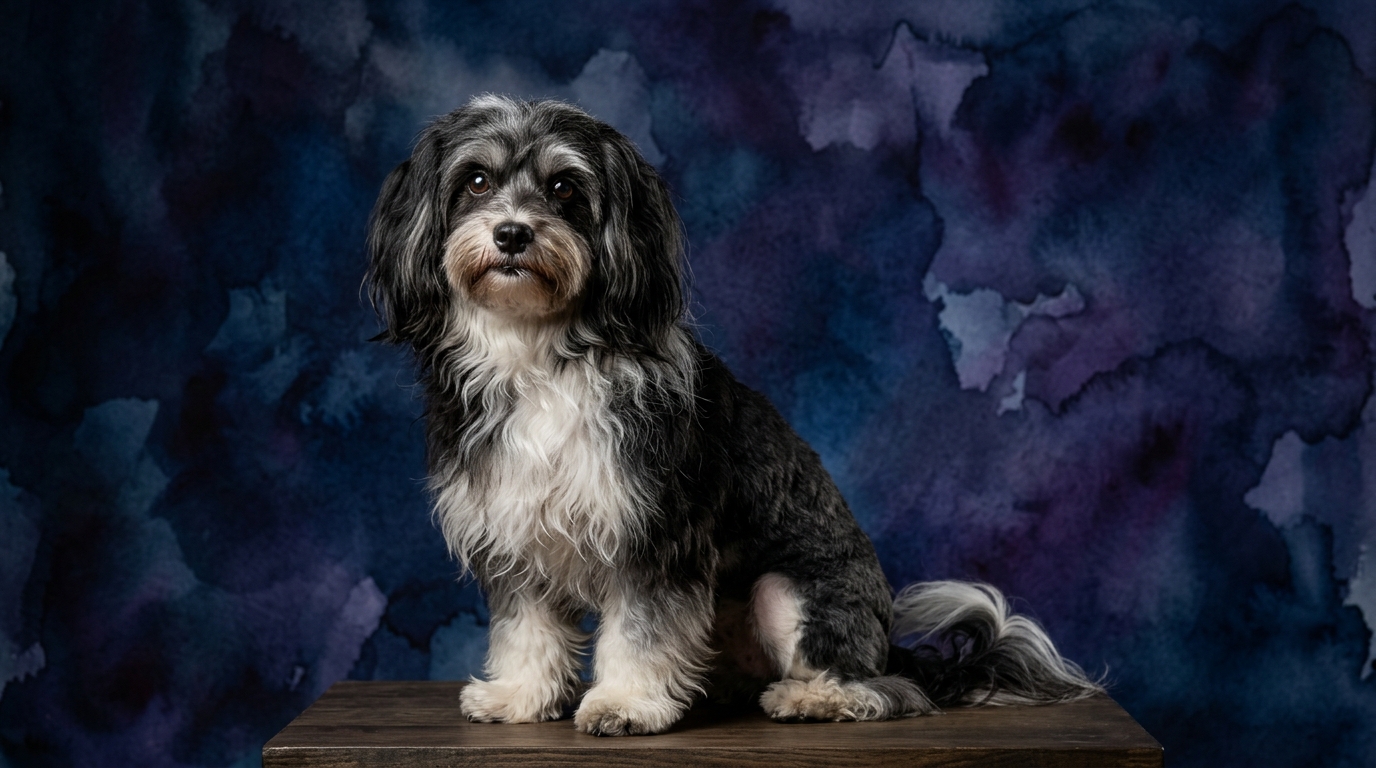
Side-by-Side IQ Profile
The Old English Sheepdog (OES), originating as a herding dog, presents a cognitive profile shaped by its working heritage. Its Problem Solving is rated 3/5, indicating a capacity for practical solutions, often demonstrated in tasks requiring spatial reasoning or obstacle navigation relevant to livestock management. Training Speed also sits at 3/5, suggesting a moderate pace of learning new commands, requiring consistent and engaging methods. Social Intelligence, at 3/5, reflects an ability to bond and interpret human cues, crucial for a working partner. A prominent Instinctive Drive of 3/5 points to an innate inclination towards specific actions, likely manifesting as herding behaviors or a strong desire for purpose-driven activity. Notably, its Memory scores 4/5, signifying a strong ability to retain learned behaviors, routes, and associations over time, which is invaluable for complex, repetitive tasks. The OES is ranked #44 by Coren, placing it in the category of “above average” working intelligence.
The Löwchen, or “Little Lion Dog,” belongs to the Non-Sporting group, bred primarily for companionship. Its IQ profile shows a consistent Problem Solving score of 3/5, suggesting a capable mind for navigating household challenges or learning complex tricks. Training Speed is also 3/5, indicating a moderate learning curve, responsive to positive reinforcement and clear instruction. Social Intelligence matches at 3/5, highlighting its aptitude for forming close bonds with its human family and interpreting their emotions, a hallmark of a good companion. An Instinctive Drive of 3/5 suggests a general enthusiasm for interaction and play, rather than a specialized working drive. Its Memory is rated 3/5, indicating a solid ability to recall commands and routines, though perhaps not with the same depth as the OES. The Löwchen is not specifically ranked by Coren, a common occurrence for breeds whose primary role is companionship rather than complex working tasks.
Where Old English Sheepdog Excels Cognitively
The Old English Sheepdog's cognitive strengths distinctly emerge from its history as a herding animal. Its standout attribute is a Memory score of 4/5, surpassing the Löwchen's 3/5. This superior recall means an OES is more likely to remember intricate sequences of commands, the layout of a complex environment, or the specific routines of its human family with greater fidelity and for longer durations. For owners engaging in advanced obedience, agility, or even trick training, this enhanced memory provides a significant advantage, allowing for the building of more complex behavioral chains. Furthermore, while both breeds share a 3/5 in Problem Solving, the OES's herding background suggests this problem-solving capacity is often applied to dynamic, real-time scenarios—like anticipating flock movements or navigating varied terrain—which might manifest as a robust spatial reasoning and environmental awareness. Its instinctive drive, though rated similarly, is often channeled into purposeful activity, giving it a cognitive edge in tasks that require sustained focus and initiative to achieve a specific outcome.
Where Löwchen Holds Its Own Cognitively
While the Löwchen doesn't present a higher numerical score in any single cognitive dimension compared to the OES, its consistent 3/5 across Problem Solving, Training Speed, Social Intelligence, Instinctive Drive, and Memory reveals a balanced and adaptable cognitive profile. This consistency can be a distinct advantage for owners seeking a companion whose intellectual capabilities are reliably moderate and evenly distributed, rather than specialized in one area. The Löwchen's social intelligence, at 3/5, is particularly noteworthy for a breed whose primary function is companionship; it speaks to an inherent ability to interpret and respond to human emotions, fostering a deep, empathetic bond. Its problem-solving, though not tied to complex working tasks, is often adept at navigating the social intricacies of a household, finding ingenious ways to solicit attention or solve puzzles related to comfort and interaction. This adaptability, coupled with a moderate instinctive drive, allows the Löwchen to integrate seamlessly into diverse family dynamics without the intense, specialized cognitive demands often seen in working breeds.
Training Ease: Old English Sheepdog vs. Löwchen
Both the Old English Sheepdog and the Löwchen share a Training Speed rating of 3/5, suggesting they are moderately receptive to learning new commands. However, the nature of their trainability differs significantly due to their underlying drives and breed purposes. An OES, with its herding heritage, often possesses a strong desire for purpose and structure. While it can learn quickly, its independent decision-making, honed from managing livestock, might sometimes lead to a “why should I?” moment if the task doesn't align with its perceived purpose or if it encounters a more compelling distraction. Owners might find success by channeling its instinctive drive into structured activities like agility or rally obedience, where its memory (4/5) can truly shine. The Löwchen, on the other hand, is a companion breed, often highly motivated by human attention and affection. Its training speed, also 3/5, benefits from positive reinforcement and engaging, game-like sessions. While it might not possess the OES's deep-seated work ethic, its desire to please and participate in family life makes it generally eager to cooperate. However, a Löwchen might be more prone to sensitivity or boredom if training is repetitive or harsh, requiring a gentle, consistent approach.
Suiting Active vs. Relaxed Owners
The cognitive profiles and breed histories of the Old English Sheepdog and Löwchen paint clear pictures for different owner lifestyles. The OES, with its herding background and a strong memory score, thrives with active owners who can provide consistent mental and physical engagement. Its instinctive drive, even at 3/5, necessitates an outlet, whether that's through structured training, dog sports, or ample opportunities for exploration and “work” in a large yard. Owners who appreciate a dog that can learn complex routines and participate in demanding activities will find the OES a rewarding partner. A relaxed owner who cannot commit to regular, stimulating activities might find an OES becomes bored or channels its considerable energy into less desirable behaviors. Conversely, the Löwchen is an excellent fit for relaxed owners who value companionship and a dog that can adapt to a less rigorous schedule. While it still benefits from regular walks and playtime, its moderate instinctive drive and balanced cognitive profile mean it's generally content with indoor activities, puzzle toys, and ample cuddle time. Its social intelligence (3/5) makes it a delightful housemate, eager to be involved in family life without demanding constant, high-intensity engagement.
The Verdict
Opt for the Old English Sheepdog if you are an active individual or family seeking a mentally robust partner for structured activities, willing to invest in consistent training to channel its formidable memory and purposeful drives.
Select the Löwchen if you prioritize an adaptable, affectionate companion with balanced cognitive abilities, ideal for a more relaxed household that values social interaction and moderate engagement.
🧠 Find Your Pet's IQ Score
Our Pet IQ Lab assessment covers 25+ tests across 5 cognitive dimensions — personalized to your breed.
Take the Full IQ Test →Frequently Asked Questions
Does the Old English Sheepdog's memory make it easier to house-train?
The OES's superior memory (4/5) can certainly aid in house-training, as they are more likely to quickly recall where and when they are supposed to eliminate. Consistent routines and positive reinforcement will leverage this strong memory for faster learning of appropriate habits.
Is the Löwchen's social intelligence different from the Old English Sheepdog's?
While both breeds score 3/5 in social intelligence, the Löwchen's is primarily geared towards close human companionship, reflecting an acute sensitivity to family dynamics. The OES's social intelligence, while also strong, is often contextualized by its working partnership, focusing on understanding commands and working alongside humans.
Considering their similar training speed, are both breeds equally challenging for a first-time owner?
Despite identical training speed scores, a first-time owner might find the Löwchen slightly less challenging due to its lower physical and mental exercise demands and its strong desire for companionship. The OES's deep-seated herding instincts and higher energy require more dedicated, consistent management and engagement, which can be more demanding for a novice.