
A Side-by-Side Look at Cognitive Dimensions
The Old English Sheepdog (OES) exhibits a Problem Solving score of 3/5, indicating a moderate capacity for navigating novel situations and figuring out solutions to everyday challenges, though they might require some prompting or trial-and-error. Their Training Speed, also at 3/5, suggests they absorb new commands and routines at a steady, consistent pace, responding well to patient, positive reinforcement. A Social Intelligence of 3/5 means they are generally adept at interpreting human cues and understanding social hierarchies within the home, making them responsive companions who form strong bonds. Their Instinctive Drive, rated 3/5, reflects their heritage as drovers, manifesting as an interest in movement and a desire to "gather," but typically not with an overwhelming intensity that demands constant work. The standout trait is their Memory at 4/5, signifying a strong ability to retain learned behaviors and recall specific experiences with remarkable fidelity over extended periods.
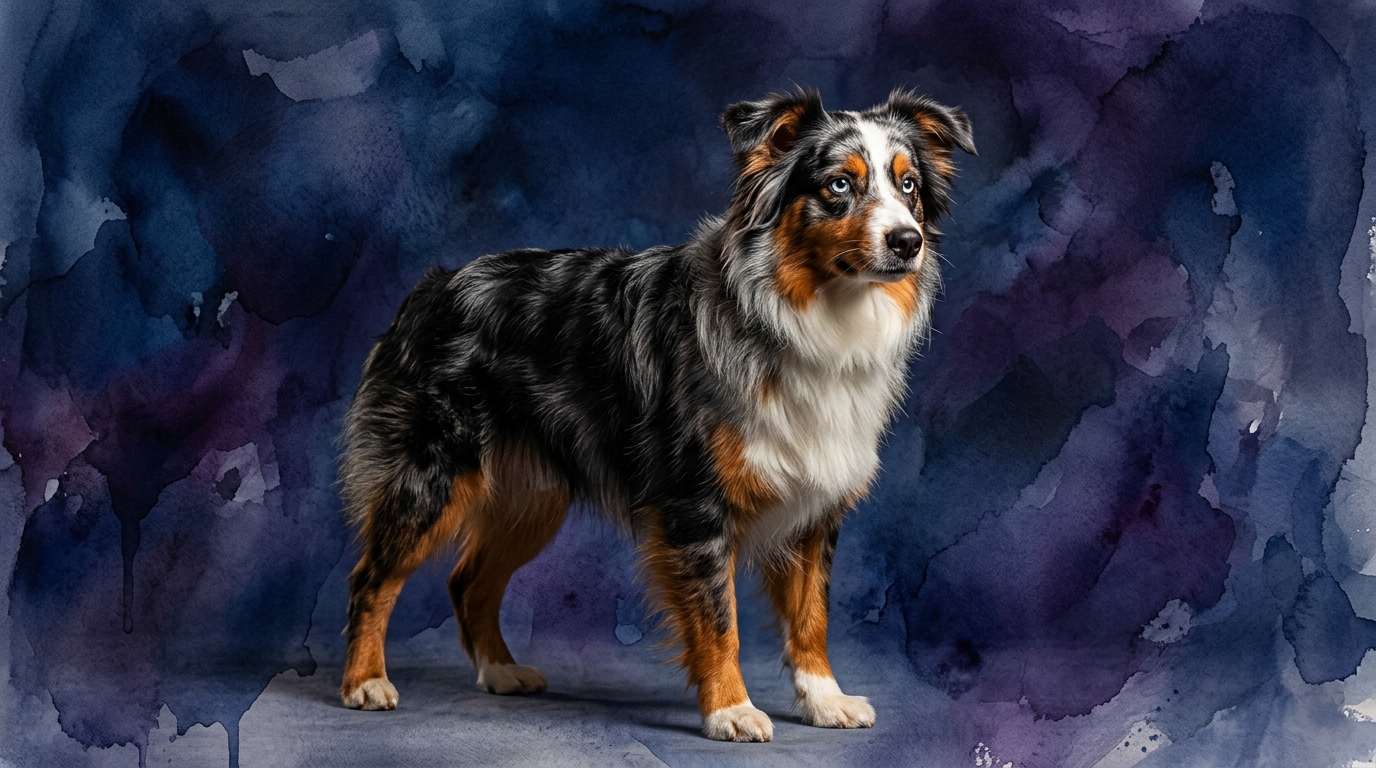
The Miniature American Shepherd (MAS) consistently scores 3/5 across all five cognitive dimensions. Their Problem Solving at 3/5 denotes a competent ability to analyze and resolve practical issues, often displaying a cleverness in achieving their goals. Training Speed, also 3/5, means they pick up new commands with a good rhythm, thriving on clear, consistent instruction. A Social Intelligence of 3/5 highlights their capacity to read and respond to their human companions and other animals, contributing to their highly adaptable nature in various social settings. The Instinctive Drive at 3/5 is a significant aspect of their character, pointing to a robust herding instinct that fuels their desire for activity, purpose, and engagement. Finally, their Memory at 3/5 indicates a solid ability to recall commands and past experiences, ensuring they maintain learned skills with regular reinforcement.
Where the Old English Sheepdog Shines Cognitively
The Old English Sheepdog's most prominent cognitive asset is its superior Memory, rated at 4/5. This elevated recall capability means an OES is exceptionally adept at retaining learned behaviors, commands, and even complex routines over prolonged periods. For owners, this translates into a dog that requires fewer refresher sessions for established skills, reliably performing tasks it mastered months or even years prior. Imagine teaching an OES a specific multi-step fetch game or a nuanced house rule; its strong memory ensures these behaviors become deeply ingrained. Beyond formal training, this robust memory aids in spatial navigation, remembering familiar routes, and recognizing individuals, contributing to their consistent understanding of their environment and social circle. While both breeds share a similar Problem Solving score (3/5), the OES's exceptional memory might grant it an advantage in applying past solutions to new but analogous problems, drawing from a more comprehensive internal database of experiences. Their Coren rank of #44 further underscores a well-rounded cognitive architecture, where memory plays a pivotal role in their overall functionality and trainability as a working breed.
Cognitive Strengths of the Miniature American Shepherd
The Miniature American Shepherd, while not featuring a single exceptionally high score like the OES's memory, demonstrates a remarkable strength in its balanced and consistent cognitive profile, scoring 3/5 across all five dimensions. This uniformity across Problem Solving, Training Speed, Social Intelligence, Instinctive Drive, and Memory results in a highly adaptable and versatile companion. Their Problem Solving at 3/5 suggests they are quite resourceful and adept at figuring out practical tasks, often exhibiting a creative approach to challenges such as opening gates or finding hidden toys. The consistent Instinctive Drive (3/5) is a core strength, meaning they possess ample motivation and focus for work and engagement without being overwhelmingly intense or difficult to manage for the right owner. This drive, coupled with their consistent social intelligence, allows them to form strong, collaborative partnerships, making them eager participants in a wide array of activities, from agility to obedience trials. Their balanced memory (3/5) ensures they retain information effectively, and their moderate training speed means they are receptive to learning new things regularly. This breed’s cognitive harmony makes them a resilient and engaged partner, always ready for the next mental or physical task.
Training Dynamics: OES vs. MAS
In the realm of training, both breeds share a Training Speed of 3/5, implying they absorb new commands and concepts at a comparable, steady pace. This means initial learning phases might feel similar for both. However, the Old English Sheepdog's superior Memory (4/5) introduces a significant long-term advantage. Once an OES thoroughly learns a command or routine, that knowledge is deeply embedded, requiring less frequent review to maintain proficiency. For instance, teaching an OES a complex trick sequence or a specific recall command means it’s highly probable they will perform it reliably weeks or months later, even without daily practice. This robust memory can make the journey toward advanced training, or simply maintaining good manners over time, less labor-intensive.
The Miniature American Shepherd, with its 3/5 Memory, still learns and retains information effectively but may benefit from more consistent reinforcement to keep complex behaviors sharp over extended periods. Their consistent Instinctive Drive (3/5), however, can be a powerful asset in training. MAS often thrive on having a "job" or purpose, channeling their natural energy and focus into learning tasks with enthusiasm. This intrinsic motivation can make them highly engaged students. Both breeds respond exceptionally well to positive reinforcement methods, but the OES’s exceptional memory means skills are less likely to erode, while the MAS’s consistent drive means they often seek out opportunities to learn and work, provided a clear and engaging training structure is in place.
Lifestyle Suitability: Active vs. Relaxed Owners
For individuals or families seeking a companion with a notable capacity for long-term behavioral recall and a generally more moderate, though still engaged, energy level in adulthood, the Old English Sheepdog often presents a compelling choice. While they possess a respectable Instinctive Drive (3/5), their overall demeanor can be somewhat less intensely demanding than some other herding breeds, especially once past their boisterous puppy phase. Their strong memory makes them excellent candidates for owners who desire to teach a wide repertoire of commands and tricks that remain ingrained over time, without necessarily requiring constant, high-octane physical output every single day. They integrate well into homes that enjoy regular, but not extreme, outdoor activities, valuing a dog that reliably remembers its house rules, social etiquette, and established routines.
The Miniature American Shepherd, with its uniformly consistent 3/5 across all cognitive dimensions, including Instinctive Drive, is decidedly better suited for more active and engaged owners. This breed thrives on having a clear purpose and consistent mental and physical stimulation, whether through structured dog sports like agility, flyball, or herding, or through frequent, vigorous exercise sessions. Their balanced cognitive profile makes them highly adaptable to various activities, and their inherent drive means they will actively seek out engagement if not adequately provided. Owners who appreciate a dog that is always "on" and ready for the next adventure, and who can dedicate significant time to channeling their substantial physical and mental energy, will find the MAS an incredibly fulfilling and rewarding companion. They are not ideal for a purely relaxed or sedentary lifestyle, as their unmet needs can lead to boredom and potentially undesirable behaviors.
The Verdict
Choose the Old English Sheepdog if you prioritize a companion with exceptional long-term memory for learned behaviors and a more moderate, though still engaged, activity level.
Opt for the Miniature American Shepherd if you seek a highly adaptable, consistently driven partner for an active lifestyle, thriving on regular mental and physical challenges.
🧠 Find Your Pet's IQ Score
Our Pet IQ Lab assessment covers 25+ tests across 5 cognitive dimensions — personalized to your breed.
Take the Full IQ Test →Frequently Asked Questions
Do Old English Sheepdogs need extensive mental stimulation?
While not as intensely driven as some herding breeds, OES possess problem-solving abilities and strong memory, benefiting from regular mental engagement. Puzzle toys, training sessions, and varied walks help keep their minds active and prevent boredom.
Are Miniature American Shepherds good for first-time dog owners?
Miniature American Shepherds are intelligent and eager to please, but their consistent drive and need for engagement can be challenging for novices. They thrive with owners committed to consistent training, socialization, and providing ample mental and physical outlets.
How do their social intelligence scores impact their family life?
Both breeds score 3/5 in social intelligence, indicating a solid capacity to understand human cues and integrate into family dynamics. They are generally responsive to their owners and capable of forming strong bonds, making them good family companions.