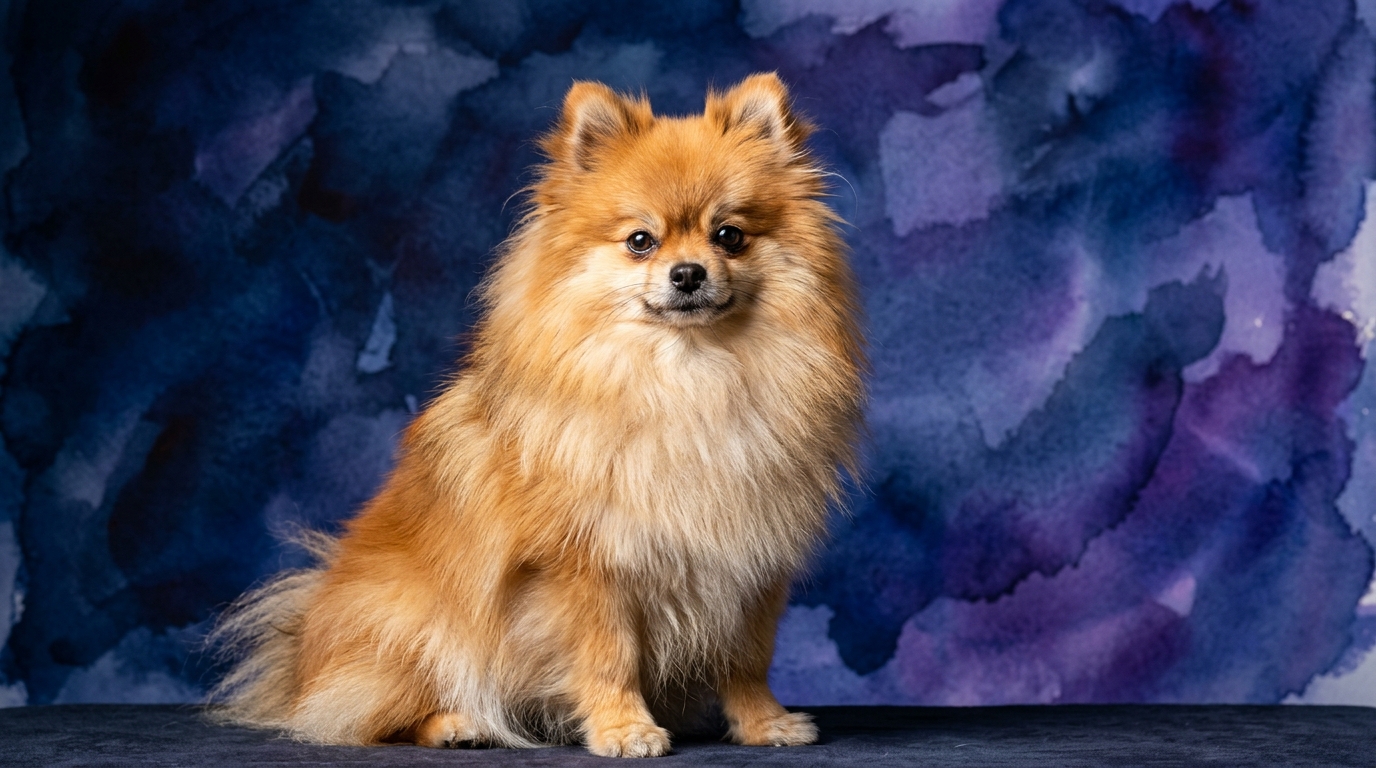

Side-by-Side Cognitive Profile: Pomeranian vs. Brussels Griffon
The Cosmic Pet Pet IQ Lab employs a five-dimensional framework to assess canine cognitive functions, offering a detailed look at how different breeds process information and interact with their environment. For the Pomeranian, recognized with a Coren ranking of #23, its profile indicates a robust mental capacity across several areas. It scores 4/5 in Problem Solving, suggesting a strong ability to independently navigate challenges. Its Training Speed also rates 4/5, indicating a quick uptake of new commands. Social Intelligence is high at 4/5, reflecting an adeptness at reading human cues. Its Instinctive Drive is a moderate 3/5, while Memory is strong at 4/5, ensuring learned behaviors are well-retained.
The Brussels Griffon, though not Coren-ranked, presents a consistent and balanced cognitive profile. Across Problem Solving, Training Speed, Social Intelligence, and Memory, this breed scores a steady 3/5. This indicates a competent but perhaps less complex cognitive approach compared to the Pomeranian. Its Instinctive Drive also stands at 3/5, aligning with the Pomeranian in terms of innate behavioral urges. This uniform scoring suggests a dog that is reliable and capable, learning at a steady pace and understanding its social environment adequately without necessarily seeking out complex mental gymnastics.
Where the Pomeranian Wins Cognitively
Pomeranians exhibit a clear advantage in cognitive agility across several domains, making them particularly engaging companions for those who enjoy mental challenges. Their 4/5 rating in Problem Solving suggests they are more inclined to independently strategize their way through minor obstacles, such as figuring out how to retrieve a toy from under furniture or manipulating puzzle feeders with greater ease. This capacity for independent thought means they might require more structured mental stimulation to prevent boredom, but it also makes them capable little strategists in their daily lives, often finding creative solutions to get what they want.
Furthermore, their 4/5 Training Speed indicates a more rapid acquisition of new commands and complex sequences compared to the Brussels Griffon. This quick uptake is often coupled with their 4/5 Social Intelligence, allowing them to more readily interpret human body language and vocal inflections. A Pomeranian is likely to pick up on subtle cues from their owner, adjusting their behavior in response, which contributes to a more fluid communication dynamic. Their 4/5 Memory also ensures that these learned behaviors and social understandings are retained over time, making advanced training and long-term behavioral adjustments more attainable and reinforcing their capacity for nuanced interaction.
Where the Brussels Griffon Wins Cognitively
While the Brussels Griffon doesn't boast higher numerical scores in our IQ metrics, its consistent 3/5 across Problem Solving, Training Speed, Social Intelligence, and Memory paints a picture of a balanced and reliable cognitive profile, particularly when compared to its Instinctive Drive, which also stands at 3/5. This consistency implies a dog that is less prone to extreme cognitive highs or lows, offering a more predictable and steady learning curve. For owners who value stability and straightforwardness in their companion's mental processes, this can be a significant advantage, as their responses are often less complex and more direct.
Their 3/5 in Instinctive Drive, matching the Pomeranian, suggests both breeds share a similar baseline for innate behaviors like chasing or guarding, meaning neither is overwhelmingly driven by primal urges that might complicate training or daily living. For owners seeking a companion whose cognitive process is straightforward and less prone to overthinking or complex emotional interpretation, the Brussels Griffon's balanced profile can be a distinct advantage. They are often perceived as less 'busy' mentally, focusing intently on their immediate environment and human interactions without the added layer of intricate problem-solving or social maneuvering that a Pomeranian might engage in. This can translate to a wonderfully present and uncomplicated companion, content in its immediate surroundings.
Which is Easier to Train and Why
Based on The Cosmic Pet Pet IQ Lab data, the Pomeranian, with its Training Speed rated at 4/5, generally presents as easier to train than the Brussels Griffon, which scores 3/5. The Pomeranian's higher score indicates a quicker grasp of new commands and a faster pace in forming associations between actions and consequences. This is often observed in their ability to master intricate tricks or advanced obedience routines with fewer repetitions. Their superior Social Intelligence (4/5) also plays a crucial role; Pomeranians are often more attuned to their owner's intentions and emotional states, allowing for a more nuanced and responsive training dynamic. They might pick up on a slight change in tone or gesture, adjusting their behavior before a verbal command is even fully issued.
In contrast, the Brussels Griffon, with its 3/5 Training Speed, requires a more patient and consistently structured approach. While certainly trainable, they may take longer to solidify new behaviors and might not respond as readily to subtle cues. Their 3/5 Social Intelligence suggests they understand basic human signals but might not interpret the full spectrum of non-verbal communication as swiftly as a Pomeranian. This means owners must be clear, direct, and repetitive, focusing on positive reinforcement to build strong behavioral patterns. A Brussels Griffon owner might find success by breaking down complex tasks into smaller, manageable steps, celebrating each small victory to maintain motivation and ensure steady progress.
Suitability for Active vs. Relaxed Owners
For active owners who enjoy engaging their pets in various activities, the Pomeranian's cognitive profile aligns well. Their 4/5 Problem Solving and 4/5 Social Intelligence make them excellent candidates for dog sports like agility, rally, or advanced obedience, where quick thinking, rapid learning, and responsiveness to handler cues are paramount. Pomeranians often thrive on mental challenges and structured activities that tap into their capacity for strategic thought and rapid skill acquisition. They enjoy being part of the action, actively participating in family outings, and can often keep pace with owners who lead moderately active lifestyles, enjoying brisk walks and exploring new environments where their curiosity can be piqued and their quick minds engaged.
Conversely, the Brussels Griffon, with its consistent 3/5 across most cognitive metrics, tends to be a better fit for more relaxed owners or those seeking a companion whose demands for mental engagement are less intense. While they certainly benefit from regular walks and basic training, they may not possess the same inherent drive for complex mental work or rapid-fire learning as a Pomeranian. Their joy often comes from quiet companionship, comfortable lap time, and predictable routines. A Brussels Griffon is content with shorter, leisurely strolls and interactive play that doesn't require extensive problem-solving. They are often described as wonderfully present and affectionate, perfectly suited for individuals or families who appreciate a loyal, steady presence without the need for constant intellectual stimulation or demanding training regimens.
The Verdict
Opt for a Pomeranian if you seek a cognitively agile companion eager to learn, responsive to nuanced cues, and capable of excelling in structured training or dog sports.
Select a Brussels Griffon if you prefer a steady, affectionate companion whose cognitive demands are moderate, thriving on consistent routines and straightforward interactions.
🧠 Find Your Pet's IQ Score
Our Pet IQ Lab assessment covers 25+ tests across 5 cognitive dimensions — personalized to your breed.
Take the Full IQ Test →Frequently Asked Questions
Are Pomeranians difficult to train because they are small?
Despite their small size, Pomeranians are rated 4/5 for Training Speed and Social Intelligence, indicating a strong capacity for learning. Their cognitive agility makes them quite trainable, often picking up commands and routines quickly with consistent positive reinforcement.
Do Brussels Griffons need a lot of mental stimulation?
Brussels Griffons have a consistent 3/5 across most cognitive metrics, suggesting they require moderate mental stimulation. While they benefit from basic training and interactive play, they are often content with less intense intellectual challenges than some other breeds.
Which breed is better for first-time dog owners?
For first-time owners, the choice depends on expectations. A Pomeranian's higher cognitive scores can make training rewarding but might also mean they require more consistent mental engagement. A Brussels Griffon offers a more predictable cognitive profile, potentially making them a steadier, less demanding companion for those new to dog ownership.