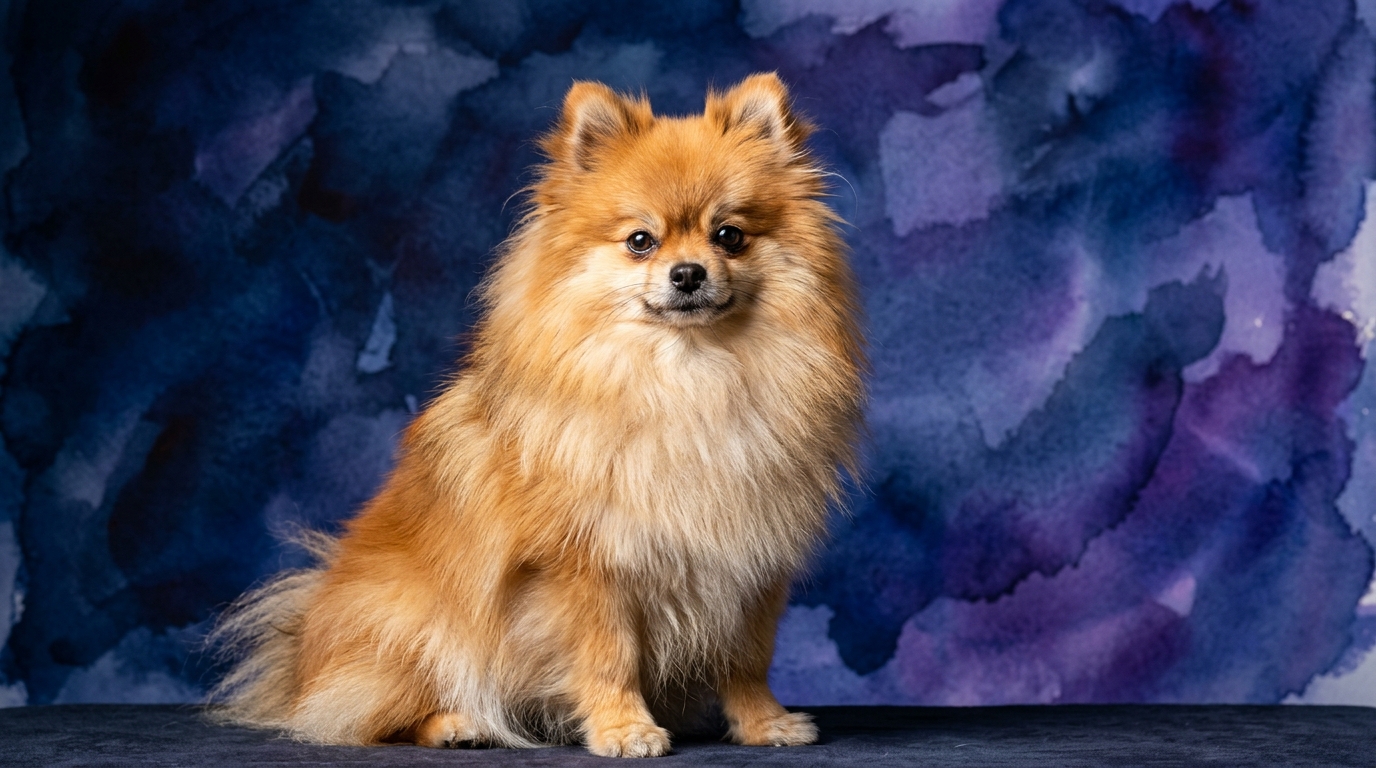

Side-by-Side IQ Profile: Pomeranian vs. Dogue de Bordeaux
**Pomeranian: A Compact Cognitive Dynamo (Toy Group, Coren Rank #23)**
**Problem Solving (4/5):** Pomeranians frequently display a nimble cognitive approach to novel situations. Their quick wit allows them to efficiently assess and overcome environmental challenges, whether it's figuring out how to retrieve a toy from a tight spot or manipulating a complex puzzle feeder. This ability to reason and adapt quickly is a hallmark of their mental agility.
**Training Speed (4/5):** These small dogs typically absorb new commands and routines with remarkable rapidity. Their enthusiasm for interaction and a desire to engage with their human companions translates into a swift understanding and execution of learned behaviors, making them a joy for those who appreciate responsive training sessions.
**Social Intelligence (4/5):** Pomeranians possess a sophisticated capacity for reading and interpreting human emotions and intentions. They can often anticipate their owner's next move or adjust their own behavior based on subtle social cues, fostering a deeply communicative and responsive relationship within the household.
**Instinctive Drive (3/5):** While Poms retain some inherent drives, such as their alert barking to strangers or small prey instinct, these are generally moderate. Their drives are more about communication and observation rather than intense pursuit or guarding, fitting their role as companions.
**Memory (4/5):** This breed demonstrates a robust memory, retaining a vast array of learned commands, household routines, and past social interactions. Their ability to recall information effectively contributes to their consistent behavior and reinforces their quick training aptitude.
**Dogue de Bordeaux: The Thoughtful Guardian (Working Group, Not Coren-Ranked)**
**Problem Solving (3/5):** Dogues de Bordeaux approach problem-solving with a deliberate and thoughtful demeanor. While they may not arrive at solutions with the same speed as some breeds, their method is often characterized by persistence and a methodical exploration of options, which, given consistent guidance, leads to successful outcomes.
**Training Speed (3/5):** Dogues learn at a steady, consistent pace. They thrive on clear, repetitive instruction and appreciate a structured training environment. While they may not pick up new commands instantaneously, their learning is solid and enduring, building a reliable foundation of behaviors over time.
**Social Intelligence (3/5):** Their social intelligence manifests as a profound, discerning bond with their immediate family. Dogues are adept at understanding the dynamics within their trusted circle, displaying deep loyalty and a calm, protective understanding of their role, though they might be more reserved with strangers or in novel social settings.
**Instinctive Drive (3/5):** The Dogue de Bordeaux's instinctive drives are primarily centered around guardianship and protection, expressed through a watchful, calm presence rather than overtly aggressive displays. They possess a natural inclination to oversee their territory and family, acting as a steadfast, reassuring presence.
**Memory (3/5):** This breed has a reliable memory for established routines, commands, and the people they trust. Once a behavior or instruction is truly ingrained through consistent practice, Dogues recall it dependably, contributing to their reputation as stable and predictable companions.
Where the Pomeranian Wins Cognitively
The Pomeranian's cognitive edge largely stems from its superior processing speed and adaptable nature, reflected in its 4/5 scores across problem-solving, training speed, social intelligence, and memory. A Pomeranian will often demonstrate a quicker grasp of abstract concepts, such as understanding the nuances of a multi-step trick or quickly inferring the meaning of a new verbal cue. For example, when faced with a novel obstacle, a Pom is more likely to rapidly experiment with different solutions until success is achieved. Their heightened social intelligence allows them to finely tune into human emotional states, enabling them to offer comfort or solicit attention with uncanny precision, making them exceptionally responsive companions in dynamic social settings.
Where the Dogue de Bordeaux Wins Cognitively
The Dogue de Bordeaux's cognitive strengths lie in its profound stability and the depth of its learned behaviors, even if its initial learning speed is more moderate. While rated 3/5 across the board, their intelligence is characterized by an unwavering consistency and a deep, discerning loyalty. For instance, once a Dogue understands a command, it is typically performed with remarkable reliability and dedication, reflecting a deeply ingrained learning rather than a fleeting understanding. Their social intelligence, though not as overtly adaptable as the Pomeranian's, fosters an intense, calm bond with their family, manifesting as a steadfast protective instinct and a quiet, reassuring presence that is profoundly comforting and dependable.
Which is Easier to Train and Why
Based on The Cosmic Pet Pet IQ Lab data, the Pomeranian, with its 4/5 Training Speed, is generally considered easier to train. Their innate curiosity and eagerness to engage mean they often pick up new commands and complex routines rapidly, requiring fewer repetitions to solidify a behavior. Their higher problem-solving score also contributes to their adaptability, allowing them to generalize learned skills to new environments or variations of a task more readily. For instance, teaching a Pomeranian to "stay" in different locations with varying distractions might progress more quickly. In contrast, the Dogue de Bordeaux, scoring 3/5 in Training Speed, demands a more patient, consistent, and structured approach. They learn steadily and reliably, but new concepts require more reinforcement sessions to be thoroughly absorbed. Their training benefits immensely from clear, unambiguous cues and a positive, reward-based methodology that builds on their desire for routine and their deep bond with their handler, rather than relying on rapid insight.
Which Suits Active Owners vs. Relaxed Owners
The spirited and cognitively agile Pomeranian is an ideal match for active owners who relish consistent mental engagement and varied activities with their pet. Their 4/5 problem-solving and social intelligence scores mean they thrive when challenged with new tricks, participating in dog sports like obedience or agility, or simply being the center of attention in dynamic family interactions. Owners who enjoy teaching intricate sequences, exploring new environments, and having a highly responsive companion who can adapt quickly to changing plans will find the Pomeranian’s zest for life and rapid learning a perfect fit. Their capacity to read human cues makes them exceptional partners in a bustling household, constantly engaging and seeking interaction.
Conversely, the Dogue de Bordeaux, with its measured pace and steady temperament, is wonderfully suited for relaxed owners who appreciate a calm, devoted, and predictable presence. While they require regular exercise to maintain their physical health, their cognitive profile suggests they flourish in predictable routines and a stable home environment, rather than constant novelty. Owners who value a loyal companion content with consistent, unhurried walks, ample cuddle time, and a quiet, watchful presence will find the Dogue de Bordeaux profoundly rewarding. Their 3/5 instinctive drive for guardianship, combined with their calm demeanor, appeals to those seeking a steadfast family protector who is more about quiet observance than high-energy intervention, requiring patience in training but rewarding with deep, unwavering affection.
The Verdict
Opt for a Pomeranian if you seek a quick-witted, highly adaptable companion eager for consistent mental engagement and capable of learning complex routines with relative ease.
Select a Dogue de Bordeaux if you prioritize a steadfast, loyal, and calm companion, valuing a deep, unwavering bond forged through patient training and a stable, predictable home life.
🧠 Find Your Pet's IQ Score
Our Pet IQ Lab assessment covers 25+ tests across 5 cognitive dimensions — personalized to your breed.
Take the Full IQ Test →Frequently Asked Questions
Are Pomeranians prone to barking due to their intelligence?
Pomeranians' social intelligence and moderate instinctive drive (3/5) mean they are often alert to their surroundings, and their communication can include barking. With proper training and early socialization, this can be managed, channeling their vocal tendencies appropriately.
How does the Dogue de Bordeaux's "Not Coren-ranked" status affect its perceived intelligence?
Not being Coren-ranked simply means the breed wasn't included in the specific study by Stanley Coren which focused on working and obedience intelligence. It does not imply a lack of intelligence, but rather that their cognitive strengths might manifest differently, such as through their profound loyalty and calm protective instincts, which are not directly measured by Coren's criteria.
Can a Dogue de Bordeaux participate in dog sports despite its 3/5 training speed?
Absolutely. While their training speed is 3/5, meaning they require more patience and consistency, Dogues de Bordeaux can certainly excel in dog sports. Their steady nature and reliable memory (3/5) mean that once a behavior is learned, it is typically well-retained, making them capable competitors in activities like obedience or even some forms of drafting.