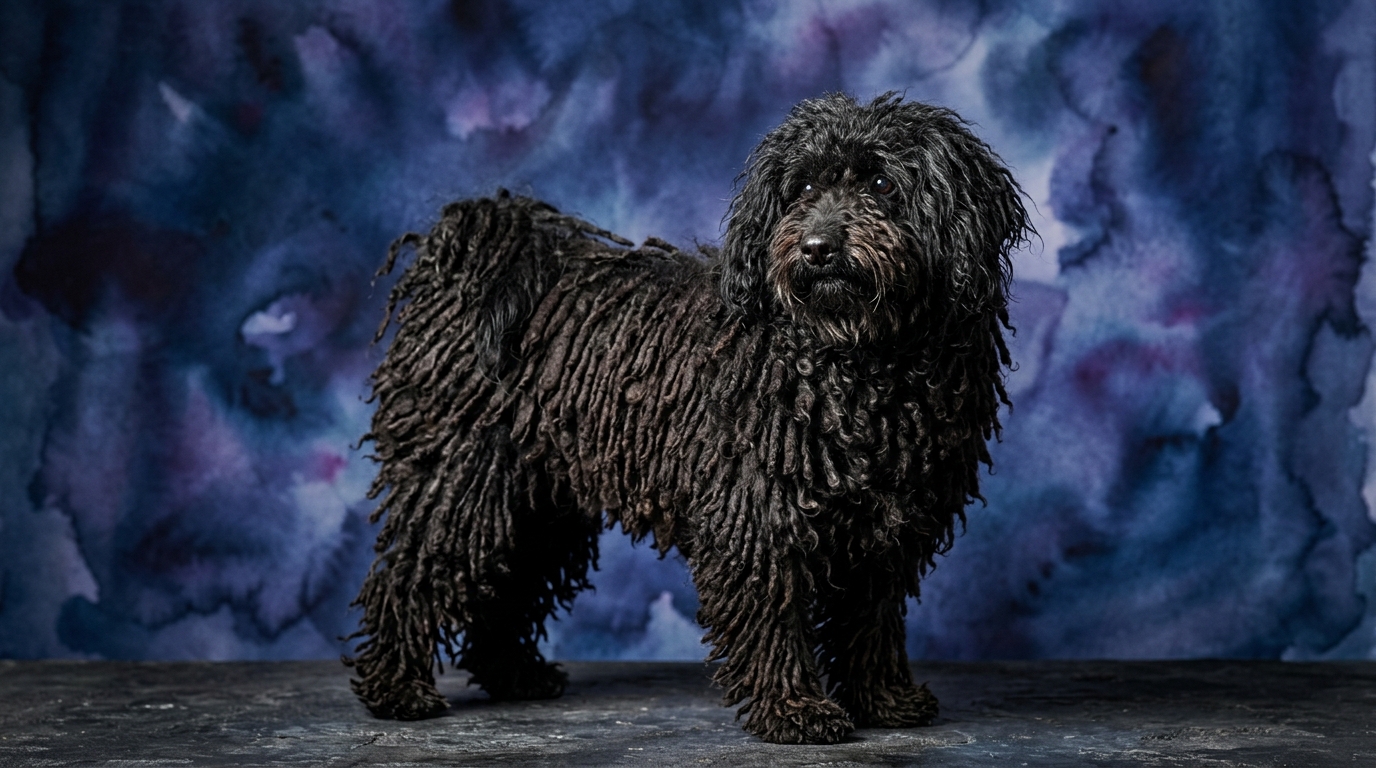
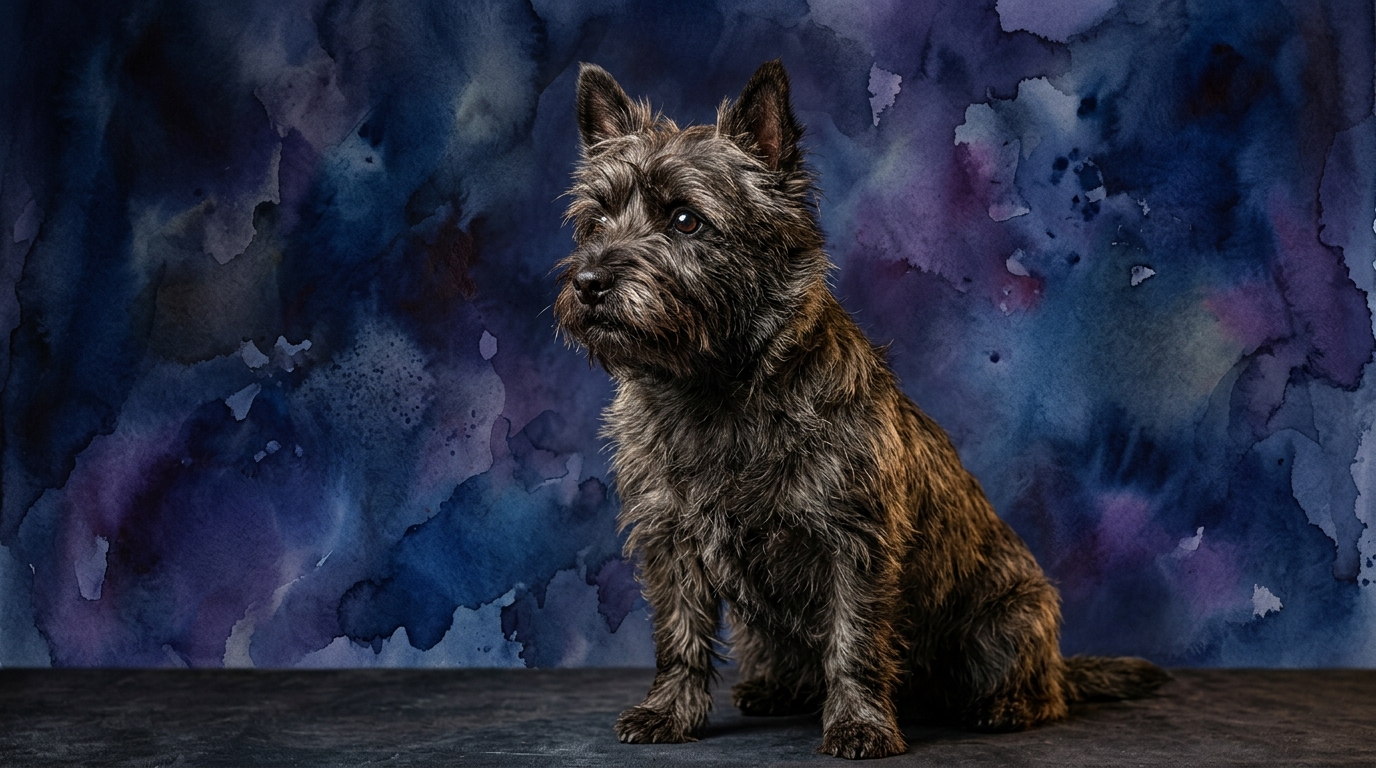
Side-by-Side IQ Profile: Puli vs. Cairn Terrier
The Cosmic Pet Pet IQ Lab assesses five crucial dimensions of canine cognition. For both the Puli and the Cairn Terrier, our data reveals a compelling symmetry: Problem Solving 4/5, Training Speed 4/5, Social Intelligence 3/5, Instinctive Drive 3/5, and Memory 4/5. While these numerical scores are identical, the *expression* of these capacities is profoundly shaped by their breed groups and historical functions, offering a rich area for exploration rather than a simple tie.
In Problem Solving (4/5), the Puli, a Herding breed, typically applies its cognitive prowess to strategic tasks involving movement, anticipation, and managing dynamic groups. Their intelligence manifests in understanding complex patterns and executing multi-step solutions in a fluid environment. The Cairn Terrier, conversely, with the same 4/5 score, excels in independent, tenacious problem-solving, often involving intricate spaces or persistent pursuit of a hidden objective. Their historical role demanded ingenuity in confined, challenging conditions.
Training Speed (4/5) for the Puli reflects their eagerness to cooperate and respond to handler direction, a hallmark of Herding breeds. They grasp new commands and routines with efficiency, driven by a desire to work in partnership. For the Cairn Terrier, their 4/5 score signifies a swift ability to learn, but it’s often paired with a strong independent streak. They quickly understand what is asked but might choose to comply only if the task aligns with their self-interest or innate drives, requiring a more persuasive training approach.
Social Intelligence (3/5) in the Puli often centers on their family unit and, historically, their flock. They form strong bonds and are attuned to the moods and intentions of their primary human companions, though they can be reserved with strangers. The Cairn Terrier’s 3/5 social score also points to deep attachments to their immediate family, often displaying a spirited, engaged demeanor within their trusted circle. Their social interactions outside this circle can be characterized by a cautious curiosity or a bold assertiveness, typical of Terriers.
Instinctive Drive (3/5) for the Puli is rooted in their herding and guarding heritage, manifesting as a watchful nature, a tendency to gather, and an alertness to their surroundings. This drive fuels their desire for purpose-driven activity. The Cairn Terrier’s 3/5 instinctive drive is powerfully channeled into their terrier roles: hunting small prey, digging, and exploring. This drive translates into boundless energy for investigation and a determined focus on objects of interest, making them persistent in their pursuits.
Finally, Memory (4/5) in the Puli is robust, allowing them to recall complex sequences of commands, intricate routes, and the habits of their charges or family members. This strong memory supports their ability to perform sophisticated tasks over time. The Cairn Terrier’s 4/5 memory is equally impressive, particularly for locations of hidden items, scent trails, or routines that lead to rewarding outcomes. They retain information critical for their independent hunting and exploratory endeavors.
Where the Puli Exhibits Cognitive Strengths
The Puli's Herding lineage imbues them with a distinct cognitive edge in scenarios demanding strategic oversight and cooperative execution. Their problem-solving (4/5) often manifests as an ability to process multiple variables simultaneously, such as anticipating the movements of several individuals or objects, and then formulating a coordinated response. This makes them adept at complex obedience routines or agility courses where sequencing and precision are paramount, reflecting a sophisticated understanding of cause and effect within a dynamic system.
Furthermore, the Puli possesses a superior capacity for understanding and responding to subtle human cues, both verbal and non-verbal. This isn't just about training speed (4/5), but about a nuanced comprehension of partnership. They excel in environments where their human companion provides direction, demonstrating a keen perception of intent and a desire to align their actions with a shared goal. Their memory (4/5) supports this by enabling them to retain intricate patterns of behavior and commands, crucial for long-term cooperative efforts.
Their instinctive drive (3/5), while numerically similar, is channeled towards vigilance and management, rather than singular pursuit. This means their cognitive energy is often directed at maintaining order and safety within their perceived 'flock,' making them excellent at monitoring their environment and reacting appropriately to perceived threats or changes. This broad situational awareness, combined with their problem-solving ability, gives them an advantage in roles requiring consistent, adaptive monitoring and response.
Where the Cairn Terrier Demonstrates Cognitive Prowess
The Cairn Terrier's cognitive strengths shine brightest in independent tasks requiring tenacity, ingenuity, and acute sensory focus. Their problem-solving (4/5) is less about managing a large group and more about overcoming specific, often physical, obstacles to achieve a self-determined goal. This can be seen in their persistent efforts to unearth a scent source or navigate a challenging terrain, showcasing a remarkable ability to adapt tactics and maintain focus despite setbacks.
Their instinctive drive (3/5) is a powerful cognitive motivator, directing their intelligence towards exploration and discovery. This translates into an exceptional aptitude for scent work and tracking, where their memory (4/5) aids them in retaining complex scent patterns and locations. They possess a reactive form of intelligence, capable of making split-second decisions and adjustments in pursuit of a target, a vital trait for their historical role in bolting quarry from burrows.
While their social intelligence (3/5) is family-centric, their cognitive independence means they can entertain themselves and solve their own immediate 'problems' without constant human input. This self-reliance is a key cognitive advantage, allowing them to engage deeply with their environment and pursue their interests with robust determination. Their training speed (4/5), when properly motivated, can be incredibly swift for tasks that appeal to their natural curiosity or desire for a reward, particularly if they perceive it as their own clever solution.
Training Dynamics: Puli's Biddability vs. Cairn's Independence
Despite identical 4/5 scores in Training Speed, the practical experience of training a Puli versus a Cairn Terrier can be quite different due to their underlying behavioral blueprints. The Puli, as a Herding breed, possesses an inherent desire to work in concert with a human handler. Their instinct is to respond to direction and to participate in a structured partnership. This natural biddability, combined with their strong memory (4/5) for commands and sequences, generally makes the Puli a more straightforward and responsive student for formal obedience and complex tasks. They tend to find satisfaction in performing a 'job' and pleasing their owner, which reinforces their rapid learning.
The Cairn Terrier, while equally capable of learning quickly (4/5 Training Speed), approaches training with a distinct terrier independence. Their historical role demanded self-reliance and the ability to make decisions without human oversight, leading to a strong will. They learn commands efficiently, but their compliance is often contingent on their assessment of the situation, their current motivation, or if the task aligns with their innate drives. Training a Cairn often requires more creativity, making learning feel like a game they choose to play, and consistent, positive reinforcement to channel their tenacious problem-solving (4/5) into desired behaviors rather than self-directed pursuits. They are not necessarily 'stubborn' but are highly discerning.
Therefore, while both breeds possess impressive cognitive speed for acquiring new information, the Puli is generally perceived as 'easier' to train for structured obedience due to their cooperative nature and eagerness to please. The Cairn Terrier requires an owner who understands their independent spirit and is prepared to engage their intelligence through engaging, varied training methods that respect their self-assured temperament, transforming challenges into opportunities for shared ingenuity.
Lifestyle Match: Active Engagement vs. Spirited Exploration
When considering which breed best fits an owner's lifestyle, it's crucial to differentiate between the *type* of activity and engagement each breed thrives on, rather than simply the quantity. Both the Puli and the Cairn Terrier require active owners, but their cognitive profiles suggest different forms of interaction. The Puli's problem-solving (4/5) and desire for cooperative work mean they flourish with owners who enjoy structured activities, advanced training, and dog sports like agility, herding trials, or competitive obedience. Their social intelligence (3/5) and memory (4/5) make them excellent partners for intricate routines, and they genuinely enjoy being given a 'job' that challenges their intellect and utilizes their herding instincts. A Puli thrives when their owner is actively involved in directing and engaging their cognitive abilities.
The Cairn Terrier, while also needing an active lifestyle, often prefers activities that cater to their independent, exploratory nature. Their problem-solving (4/5) and instinctive drive (3/5) are best satisfied by opportunities for scent work, digging, vigorous play, and exploring varied environments. They excel with owners who can provide outlets for their tenacious curiosity, perhaps through earthdog trials, extensive walks with plenty of sniffing opportunities, or puzzle toys that challenge their ingenuity. While they enjoy interaction, a Cairn can also be content with bursts of intense self-directed activity followed by relaxation, as long as their core needs for mental and physical stimulation are met.
For owners who prefer a more relaxed approach to dog ownership, neither breed is an ideal fit without significant commitment to mental enrichment. However, an owner who enjoys independent play and less formal, structured training might find the Cairn Terrier's self-sufficient nature a slightly better match, provided they can consistently channel the breed's spirited drives. Owners seeking a highly engaged, collaborative partner for shared cognitive challenges will likely find the Puli's biddability and work ethic more aligned with their preferences.
The Verdict
Choose the Puli if you seek a highly cooperative, engaged partner for structured activities, advanced obedience, or dog sports, where a strong working bond is paramount and you enjoy directing their keen intellect.
Choose the Cairn Terrier if you appreciate independent spirit, tenacious problem-solving, and a spirited companion, prepared to channel their natural drives with consistent, creative training and ample opportunities for exploration.
🧠 Find Your Pet's IQ Score
Our Pet IQ Lab assessment covers 25+ tests across 5 cognitive dimensions — personalized to your breed.
Take the Full IQ Test →Frequently Asked Questions
Do identical IQ scores mean Pulis and Cairn Terriers are equally easy to live with?
No, identical IQ scores in our lab refer to cognitive *capacity*, not temperament or biddability. Their distinct breed groups profoundly influence how that capacity manifests in daily life and interaction, affecting their responsiveness and preferred activities.
How does the Coren rank difference (Puli #25 vs Cairn #35) factor into their intelligence?
Coren rank primarily assesses 'working and obedience intelligence,' reflecting a breed's ability to learn and execute human commands. The Puli's higher rank suggests a greater eagerness and aptitude for formal instruction and cooperative tasks compared to the Cairn's more independent approach.
What's the biggest misconception about comparing breeds with similar IQ profiles?
A common misconception is that similar numerical scores translate to identical behavioral outcomes. The underlying motivations and historical functions of a breed significantly shape *how* their cognitive abilities are applied and expressed, leading to diverse temperaments and training needs.