Side-by-Side Cognitive Profiles
At first glance, the Puli and Irish Setter appear to share a remarkably similar cognitive blueprint according to The Cosmic Pet Pet IQ Lab. Both breeds achieve a solid 4/5 in Problem Solving, indicating a robust capacity to navigate novel situations and figure out solutions. Their Training Speed is also rated 4/5, suggesting a quick grasp of new commands and concepts. Social Intelligence for both is marked at 3/5, reflecting an ability to interact and understand human cues, though perhaps with a degree of independence. Instinctive Drive stands at 3/5 for both, highlighting their natural inclinations rooted in their ancestral roles. Finally, Memory scores 4/5 for both, pointing to an impressive ability to recall learned behaviors, routines, and experiences. However, their Coren ranks – Puli at #25 and Irish Setter at #35 – hint at nuanced differences in how these identical scores manifest.
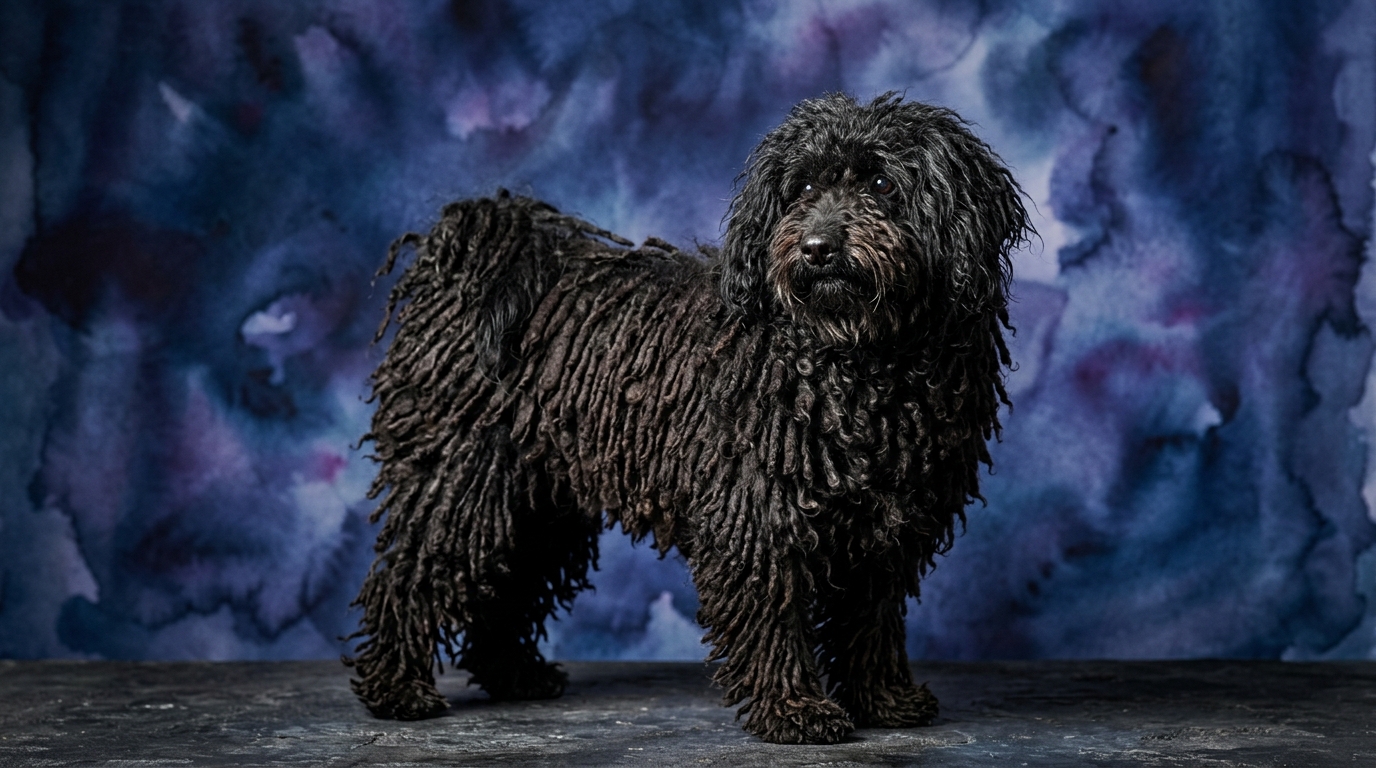
The Puli, a Herding breed, applies its 4/5 Problem Solving to complex, dynamic tasks like managing livestock, requiring strategic thinking and anticipation of movement. Its 4/5 Training Speed is often channeled into learning intricate, sequential commands vital for precise control over a flock. The 3/5 Social Intelligence in a Puli typically means a strong bond and attentiveness to its handler, crucial for cooperative work, while its 3/5 Instinctive Drive is a controlled, purposeful urge to gather and direct. Puli's 4/5 Memory is invaluable for retaining complex command sets and understanding flock patterns.
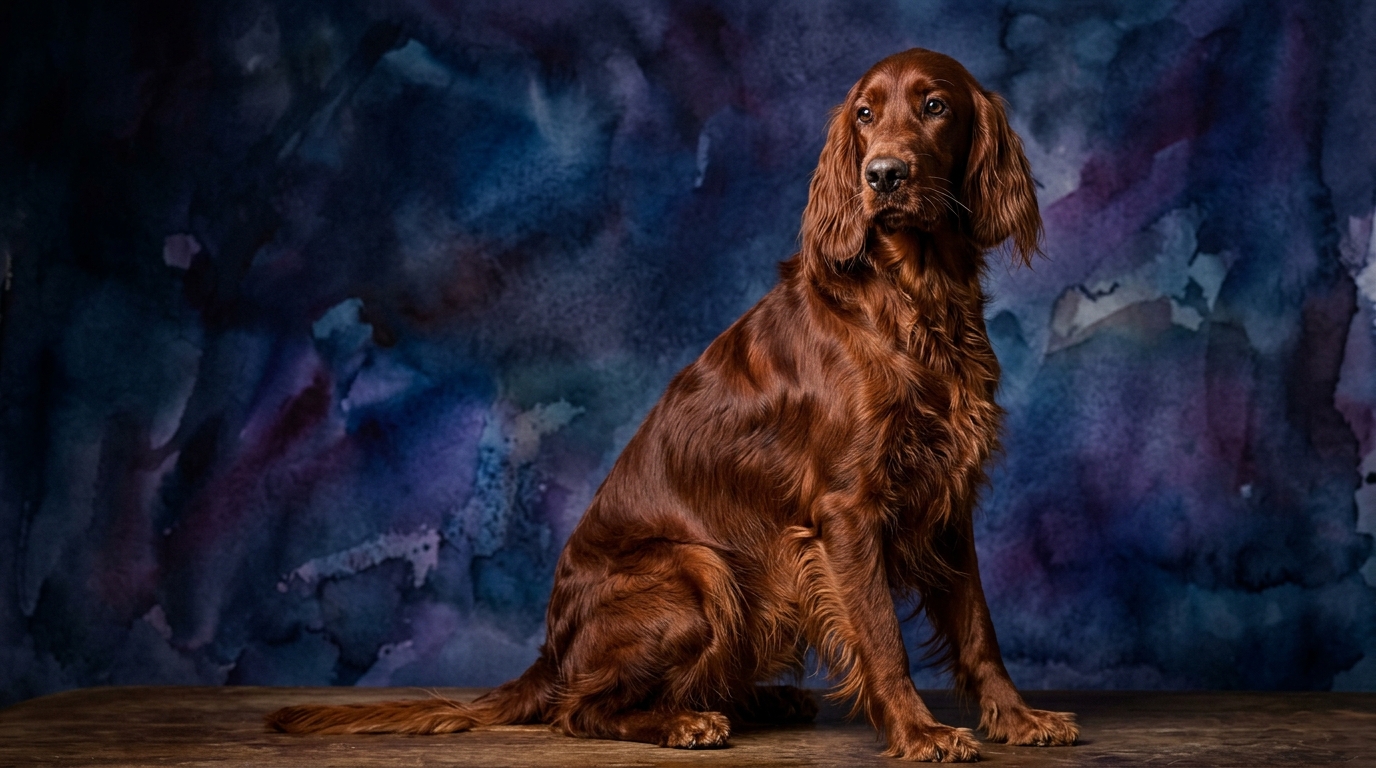
Conversely, the Irish Setter, a Sporting breed, utilizes its 4/5 Problem Solving in the field, navigating varied terrains, and locating game, often requiring independent decision-making. Its 4/5 Training Speed translates to quickly learning field commands, pointing, and retrieving techniques. The 3/5 Social Intelligence for an Irish Setter often involves a cooperative partnership with a hunter, balanced with the independence needed to range wide. Its 3/5 Instinctive Drive is expressed through scenting, pointing, and retrieving, a pursuit-oriented focus. Irish Setter's 4/5 Memory is particularly adept at recalling scent trails, mapping out hunting grounds, and remembering specific locations.
Where the Puli's Cognition Shines
While sharing identical IQ dimension scores, the Puli's cognitive strengths are distinctly shaped by its Herding heritage and its higher Coren rank of #25, which reflects superior working and obedience intelligence. The Puli's 4/5 Problem Solving capacity excels in scenarios demanding foresight and adaptability in complex, multi-variable environments. Imagine a Puli anticipating the unpredictable movements of a flock, making split-second decisions to guide them effectively. This isn't just about reacting; it's about strategic planning and executing a sequence of actions.
Furthermore, the Puli's 4/5 Training Speed is coupled with a deep-seated desire for handler cooperation. This synergy allows them to absorb and execute intricate command sequences with remarkable precision and consistency. Their ability to internalize and apply multi-step instructions, often building upon previous learnings, gives them an edge in structured obedience and dog sports. The Herding group's inherent drive to organize and control translates into a directed, purposeful application of their cognitive abilities, making them exceptionally responsive to tasks that require a methodical approach and sustained mental engagement with their human partner.
Where the Irish Setter's Cognition Excels
The Irish Setter, with its Coren rank of #35 and Sporting background, demonstrates its cognitive prowess in different, yet equally impressive, ways, despite identical IQ scores. Its 4/5 Problem Solving thrives in natural, expansive environments where it must independently navigate and interpret sensory information. Picture an Irish Setter methodically quartering a field, using its keen sense of smell to locate game, making decisions about where to search next, and adapting its strategy based on environmental cues. This form of problem-solving emphasizes perseverance, spatial reasoning, and independent initiative.
The Irish Setter's 4/5 Memory is particularly tuned to retaining vast amounts of sensory data. This includes recalling intricate scent patterns, remembering the layout of hunting territories, and pinpointing the exact location of game or retrieved items. Their 3/5 Instinctive Drive, channeled into sustained activity and focused pursuit, requires a unique kind of mental fortitude—the ability to maintain concentration over extended periods, often in stimulating outdoor settings. While their Coren rank might be lower in general obedience, it reflects a cognitive profile that values independent thought and unwavering dedication to their specialized field work over strict, constant adherence to commands in all contexts.
Trainability: Puli vs. Irish Setter
When considering trainability, both breeds score 4/5 in Training Speed, but their inherent behavioral tendencies dictate different approaches and outcomes. The Puli is generally perceived as easier to train for complex, multi-step obedience and dog sports. Their Herding instinct naturally translates into a desire for structure and a willingness to follow a leader, making them eager to engage in mental work alongside their human. Their problem-solving acumen combined with their quick learning speed allows them to grasp new concepts rapidly, especially when tasks involve logical sequences or strategic thinking, thriving on consistent mental stimulation from their handler.
The Irish Setter, while equally capable of learning quickly (4/5 Training Speed), presents a different set of training considerations. Their strong independent hunting drive (3/5 Instinctive Drive) means they can be more prone to distraction by environmental stimuli, such as compelling scents or distant movements. Their social intelligence (3/5) often manifests as a desire for partnership in the field rather than strict, unwavering adherence in a formal setting. Training an Irish Setter requires patience, creative positive reinforcement, and a deep understanding of their natural inclinations. A novice owner seeking perfect, competition-level obedience might find the Irish Setter more challenging, as their mind can sometimes be 'in the field,' making sustained focus in a distracting environment a hurdle.
Lifestyle Match: Active vs. Relaxed Owners
Both the Puli and the Irish Setter are breeds that require active engagement, but the *type* of activity they thrive on differs significantly. The Puli is best suited for active owners who can provide consistent mental and physical stimulation. Their Herding background means they possess a strong innate need for a 'job' or engaging activities that challenge their problem-solving abilities. Structured training sessions, participation in dog sports like agility, herding trials, or even advanced obedience, alongside regular, stimulating walks, are essential to keep a Puli content. An owner seeking a more relaxed companion without consistent mental tasks might find a Puli creating its own 'job,' which could manifest as undesirable behaviors like herding children or furniture.
The Irish Setter also demands an active owner, though their primary need leans heavily towards extensive physical exercise, particularly off-leash running in open spaces. Their Sporting nature means they are built for stamina and endurance, requiring ample opportunity to gallop, explore, and follow scents. While they appreciate mental engagement, their fundamental requirement is vigorous physical exertion to burn off their boundless energy. A relaxed owner who cannot commit to long daily runs or provide access to large, safe areas for exploration would likely struggle to meet an Irish Setter's exercise needs, leading to restlessness, boredom, and potentially destructive behaviors stemming from pent-up energy. Their need for sustained activity and freedom to roam is paramount for their well-being.
The Verdict
Choose the Puli if you seek a canine partner for intricate obedience, dog sports, or a structured working relationship where mental engagement and precise command execution are highly valued, and you are prepared to provide consistent, stimulating tasks.
Opt for the Irish Setter if you desire an energetic companion for extensive outdoor adventures, field activities, or a partner that combines physical endurance with a keen, independent spirit, and you can offer ample space for vigorous exercise.
🧠 Find Your Pet's IQ Score
Our Pet IQ Lab assessment covers 25+ tests across 5 cognitive dimensions — personalized to your breed.
Take the Full IQ Test →Frequently Asked Questions
Are Pulis and Irish Setters good family dogs?
Both can be wonderful family companions with proper socialization and training. Pulis tend to be more reserved with strangers and might try to 'herd' children, while Irish Setters are generally more boisterous and playful, requiring supervision with very young children due to their exuberance.
Do Pulis shed a lot?
Pulis have a unique corded or matted coat that sheds minimally, similar to human hair. However, this coat requires significant grooming to prevent matting and maintain its distinctive appearance, including regular separating of cords or professional care.
Are Irish Setters prone to any specific health issues?
Yes, Irish Setters can be predisposed to certain health conditions. These include hip and elbow dysplasia, bloat (gastric torsion), certain types of cancer, and progressive retinal atrophy, making regular veterinary check-ups and responsible breeding practices important.