Puli vs. Miniature American Shepherd: A Cognitive Side-by-Side
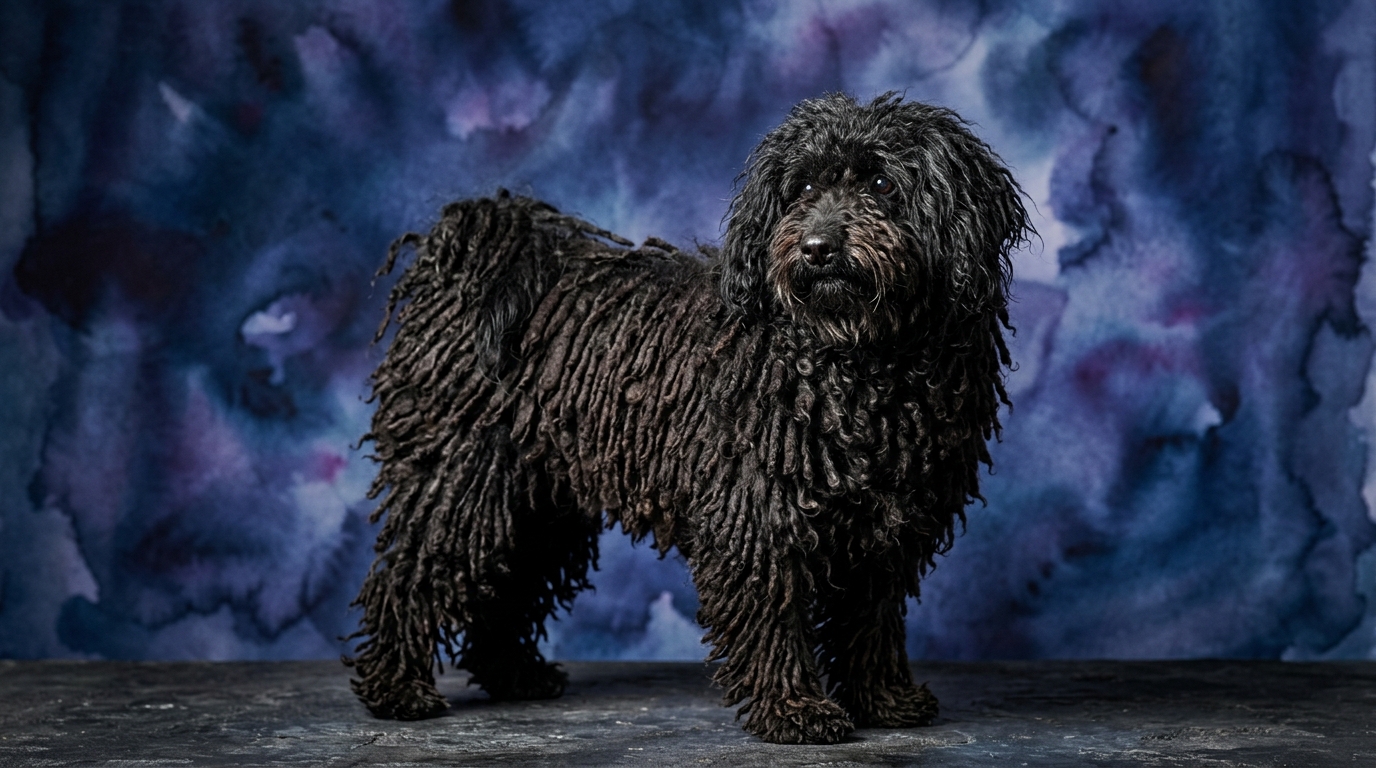
The Puli, a Hungarian herding dog, registers a formidable cognitive profile with Problem Solving at 4/5, Training Speed at 4/5, Social Intelligence at 3/5, Instinctive Drive at 3/5, and Memory at 4/5. These scores paint a picture of a dog that not only quickly grasps new concepts and retains them but also possesses a notable capacity for independent thought when faced with novel situations. Their Coren rank of #25 further underscores their standing among breeds recognized for their working intelligence.
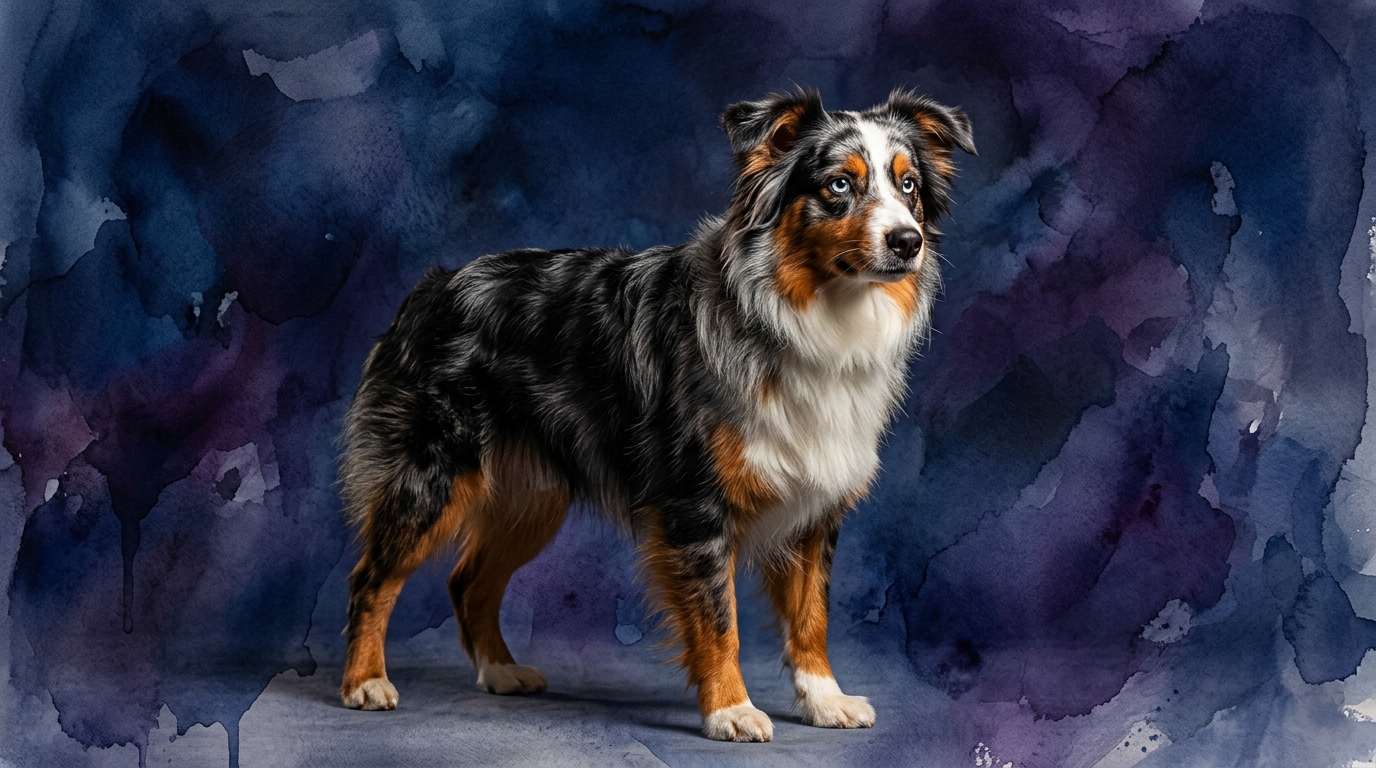
In contrast, the Miniature American Shepherd (MAS), a more recently established American herding breed, shows a consistent performance across all five dimensions: Problem Solving 3/5, Training Speed 3/5, Social Intelligence 3/5, Instinctive Drive 3/5, and Memory 3/5. While not Coren-ranked, these scores indicate a balanced and capable canine mind. The MAS demonstrates a solid foundation for learning and interaction, suggesting a reliable and adaptable companion, even if their cognitive processing isn't as rapid or outwardly inventive as the Puli's.
A quick glance at their profiles reveals a clear distinction: the Puli generally operates with a heightened cognitive intensity in problem-solving, training, and recall, while the Miniature American Shepherd presents a more uniformly capable and steady intellectual demeanor. Both are undeniably competent herding dogs, yet their approaches to mental tasks and learning diverge in intriguing ways that impact their suitability for various roles and households.
Where the Puli's Mind Shines Brightest
The Puli's exceptional Problem Solving (4/5) and Memory (4/5) are truly their cognitive hallmarks. This breed often exhibits a remarkable ability to assess complex situations and devise solutions independently, a trait honed over centuries of managing flocks with minimal human intervention. Owners might observe a Puli quickly figuring out how to open a childproof gate, navigate an intricate agility course, or even strategize during interactive puzzle toys, remembering successful approaches long after the initial attempt. Their memory ensures that once a lesson or solution is learned, it is deeply ingrained, making them incredibly efficient learners for long-term retention.
Coupled with their high Training Speed (4/5), Pulis absorb new commands and routines with impressive alacrity. They often require fewer repetitions than many other breeds to master a new skill, making them a rewarding partner for advanced obedience, trick training, or dog sports. This quick cognitive uptake means that Pulis thrive on continuous mental engagement, seeking out opportunities to apply their sharp wits. Their ability to quickly process and store information allows them to build vast repertoires of learned behaviors, making them versatile and capable working dogs and companions.
Unpacking the Miniature American Shepherd's Cognitive Strengths
While the Miniature American Shepherd's scores are consistently 3/5, this uniformity represents a significant strength: balance and reliability. A 3/5 in Problem Solving indicates a dog fully capable of adapting to new challenges and learning from experience, albeit perhaps without the Puli's immediate, inventive flair. They approach novel situations with a thoughtful, methodical disposition, often relying on learned patterns and careful observation rather than spontaneous innovation. This steady problem-solving capacity makes them dependable in various roles, from working livestock to navigating complex household routines.
Their consistent 3/5 across Social Intelligence, Instinctive Drive, and Memory translates into a highly integrated and cooperative companion. Miniature American Shepherds are typically eager to please, making their social intelligence a strong asset in family environments and training contexts. Their instinctive drive, while not as intensely focused as some herding breeds, is sufficiently present to motivate them for tasks and activities, without necessarily overwhelming a typical family setting. Their memory, while not 4/5, is solid enough for retaining commands and routines, ensuring a consistent and predictable partner once behaviors are established.
Training Dynamics: Puli's Quick Grasp vs. MAS's Steady Progress
Training a Puli often involves a rapid initial learning curve due to their 4/5 Training Speed. They pick up new commands and concepts with remarkable swiftness, which can be immensely gratifying for an owner. However, their high Problem Solving and independent nature, rooted in their herding heritage where they often worked autonomously, means they can also be prone to independent decision-making. Consistency and clear, positive reinforcement are paramount to channel their quick wit into desired behaviors, preventing them from 'solving' training challenges in ways you didn't intend.
The Miniature American Shepherd, with a 3/5 Training Speed, may require more repetitions to master a new command compared to a Puli, but their inherent eagerness to please and cooperative nature often makes the training process smoother and more consistent. They tend to be highly responsive to their owner's guidance and less inclined towards independent 'solutions.' Patience and clear communication are key, and once a MAS understands what is expected, they are typically very reliable in executing those commands, building a strong foundation of trust and partnership.
For owners seeking a partner who learns at lightning speed and thrives on complex, ever-evolving mental challenges, the Puli can be an exhilarating experience, though requiring a handler who can keep pace with their sharp mind. For those who value consistency, an eager attitude, and a dog that is highly biddable and thrives on working closely with its human, the Miniature American Shepherd offers a wonderfully rewarding training journey, proving that steady progress often leads to equally impressive results.
Matching Minds to Lifestyles: Active Explorers vs. Engaged Companions
The Puli's cognitive profile, particularly their 4/5 Problem Solving and Memory, suggests they are best suited for owners who are themselves active and eager to provide consistent, varied mental stimulation. These dogs thrive when given complex tasks, whether it's advanced obedience, agility, herding, or intricate puzzle games that challenge their intellect. A Puli without sufficient mental engagement might channel their problem-solving skills into less desirable activities, such as creatively escaping enclosures or redecorating the house. They need an owner who appreciates a thinking dog and can provide an outlet for their sharp faculties, alongside regular physical activity.
The Miniature American Shepherd, while also a herding breed requiring significant physical exercise, offers a slightly different cognitive dynamic for owners. Their balanced 3/5 scores across the board indicate a dog that is highly adaptable and thrives on being an active, engaged part of the family. They enjoy structured activities like obedience, rally, and agility, but may not demand the same level of constant, novel intellectual challenge as a Puli. They are content with consistent routines, regular playtime, and opportunities to learn new skills, making them a fantastic fit for active families who enjoy involving their dog in daily life and outdoor adventures.
Neither breed is ideal for a truly 'relaxed' owner who prefers minimal dog interaction. Both the Puli and the Miniature American Shepherd require consistent physical activity and mental engagement. However, the Puli leans towards an owner who revels in pushing cognitive boundaries and solving complex problems together, while the MAS is better suited for an owner who appreciates a reliable, enthusiastic partner for a wide range of activities and thrives on cooperative engagement rather than intense intellectual duels.
The Verdict
Choose the Puli if you are an experienced owner seeking a highly intelligent, quick-witted partner for advanced training, complex problem-solving, and continuous mental challenges, ready to manage their independent thinking.
Opt for the Miniature American Shepherd if you desire a consistently eager, biddable, and adaptable companion for various activities, valuing steady progress and a strong cooperative bond over rapid, independent cognitive leaps.
🧠 Find Your Pet's IQ Score
Our Pet IQ Lab assessment covers 25+ tests across 5 cognitive dimensions — personalized to your breed.
Take the Full IQ Test →Frequently Asked Questions
Are Pulis good for first-time dog owners?
Pulis, with their high problem-solving skills and independent nature, can be a challenge for first-time dog owners. They require consistent, knowledgeable training and ample mental stimulation to prevent them from outsmarting their humans, making them generally better suited for those with prior dog experience.
Do Miniature American Shepherds need a lot of exercise?
Yes, Miniature American Shepherds are an active herding breed and require significant daily exercise and mental engagement. They thrive on activities like long walks, runs, fetch, and dog sports, needing consistent outlets for their energy to remain balanced and happy.
How do their herding instincts manifest in a home environment?
Both breeds may exhibit herding behaviors like nipping at heels, circling family members, or attempting to 'herd' children or other pets. Pulis might be more independent in their herding attempts, while MAS tend to be more responsive to redirection, but both require consistent training to channel these instincts appropriately.