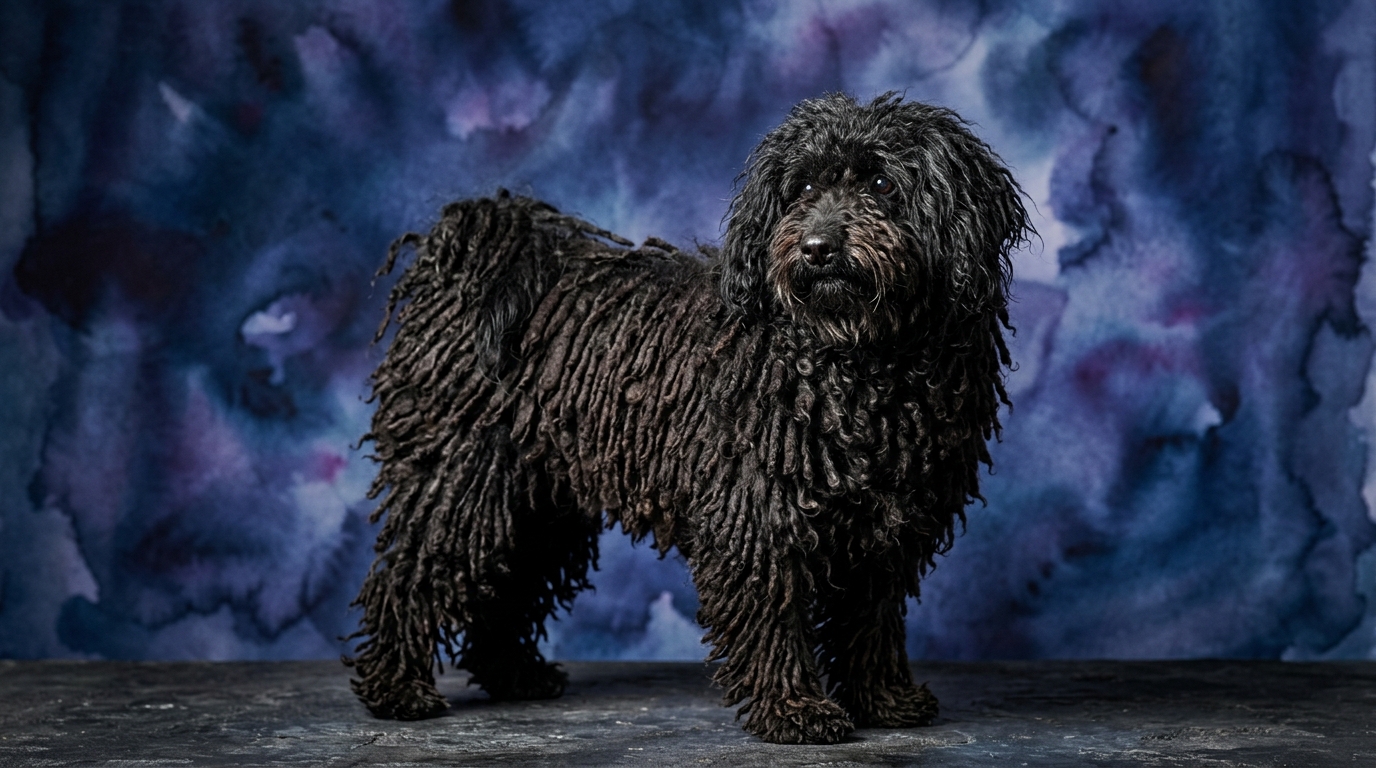

Side-by-Side IQ Profile: Puli vs. Redbone Coonhound
The Puli presents a remarkable cognitive profile, shaped by centuries of complex herding work. Their Problem Solving (4/5) indicates a dog that thinks analytically, quickly assessing situations and devising effective solutions to navigate environments or manage livestock. This translates into an impressive adaptability to novel challenges. Pulis also demonstrate a rapid Training Speed (4/5), often grasping new commands and multi-step routines with few repetitions, a testament to their eagerness to engage and collaborate with handlers. Their Social Intelligence (3/5) is characterized by strong devotion to family, demonstrating an understanding of household dynamics, though they can be reserved with strangers. The Puli's Instinctive Drive (3/5) is centered on herding, a potent force often channeled into constructive activities. Finally, their Memory (4/5) is robust, allowing for strong recollection of learned behaviors, specific cues, and established routines, contributing to their consistency and reliability.
The Redbone Coonhound's cognitive strengths, conversely, are profoundly specialized, focusing on sensory processing and endurance. Their Problem Solving (3/5) is acutely olfactory-driven; they excel at deciphering complex scent puzzles, following intricate trails, and overcoming obstacles to reach a target scent. This showcases a practical, sensory-driven intellect, rather than abstract reasoning. Their Training Speed (3/5) is moderate; while capable of learning, their independent nature and powerful instinctive drive mean that external motivators, particularly those related to scent, can sometimes override immediate compliance. Redbones generally possess good Social Intelligence (3/5), being amiable and good-natured, enjoying family company, though their focus can quickly shift if an interesting scent emerges. Their Instinctive Drive (3/5) is their defining characteristic: a profound scent drive and persistence in pursuit, guiding their actions with unwavering determination. Their Memory (3/5) is particularly strong for scent profiles and established hunting grounds, though perhaps less consistent for abstract commands when a compelling scent trail is present.
Where the Puli Wins Cognitively
The Puli’s cognitive strengths shine particularly in areas requiring abstract reasoning and rapid assimilation of new information. Ranked #25 in Coren's intelligence scale for working and obedience, these dogs demonstrate a superior capacity for understanding and executing complex, multi-step commands. Unlike breeds whose intelligence is narrowly specialized, the Puli exhibits a broader cognitive versatility. Their problem-solving prowess (4/5) allows them to quickly analyze novel situations, such as figuring out how to open a gate or navigate an intricate agility course, often through a process of trial and error that minimizes handler intervention.
Furthermore, the Puli's training speed (4/5) is a significant advantage. They don't just learn commands; they often anticipate their handler's intentions, demonstrating a collaborative intelligence that is a hallmark of effective herding breeds. This quick comprehension extends to retaining learned behaviors and routines over long periods (Memory 4/5), making them exceptionally reliable once a skill is mastered. Their ability to remember sequences of actions and apply them consistently means less reteaching and more advanced skill development, distinguishing them in competitive obedience or dog sports where precision and consistency are paramount.
Where the Redbone Coonhound Wins Cognitively
While the Redbone Coonhound may not score as high in conventional obedience metrics, their cognitive superiority lies in a highly specialized domain: olfactory intelligence and persistent pursuit. Their instinctive drive (3/5) is not merely a physical urge but a sophisticated mental process. A Redbone's ability to discriminate between countless scents, follow a faint trail for miles over varied terrain, and maintain unwavering focus on that single task, even amidst significant distractions, is a testament to their unique cognitive architecture. This isn't just sniffing; it’s complex sensory problem-solving, requiring immense concentration and information processing.
Their memory (3/5), while perhaps less about abstract commands, is exceptionally tuned to scent profiles and geographical knowledge related to tracking. They can recall the nuances of a specific animal's scent and remember the layout of areas they've previously hunted or explored. This specialized cognitive function, refined over generations for specific hunting tasks, allows them to process and interpret environmental cues in a way few other breeds can rival. Their determination and stamina, often driven by this powerful scenting ability, also represent a form of mental fortitude – a relentless cognitive focus on achieving their olfactory goal.
Ease of Training: Puli vs. Redbone Coonhound
When considering ease of training for general obedience and diverse tasks, the Puli clearly holds an advantage. Their higher scores in training speed (4/5) and problem-solving (4/5) reflect their inherent desire to understand and execute commands. Pulis typically enjoy the mental engagement of learning and working cooperatively with their human partners, often responding well to positive reinforcement and consistency. Their herding background instills a responsiveness to direction and a focus on the handler, translating into quicker mastery of cues like "sit," "stay," and "come," even in distracting environments. They often thrive in activities like agility or rally obedience, where their quick thinking and memory are assets.
The Redbone Coonhound, conversely, presents a different training landscape. While they are certainly capable of learning, their training speed (3/5) can be perceived as slower due to their independent nature and overwhelming instinctive drive (3/5) towards scent. A Redbone's mind is often primarily occupied by the world of odors, making it challenging to capture and hold their attention when a compelling scent is present. Recall, in particular, can be a significant hurdle; a Redbone on a strong trail may seem deaf to commands, not out of defiance, but because their specialized cognitive functions are entirely engaged. Successful training with a Redbone requires immense patience, understanding of their motivations, and often incorporating scent work or high-value, scent-based rewards to leverage their natural inclinations.
Suitability for Active vs. Relaxed Owners
Both the Puli and the Redbone Coonhound benefit from active owners, though the nature of that activity differs significantly. The Puli, with its high problem-solving capacity and training speed, thrives with owners who can provide consistent mental and physical challenges. They are dogs that need a "job," whether it's participating in dog sports like agility, obedience, or herding trials, or simply engaging in complex trick training and puzzle toys. An owner who enjoys collaborative activities and can dedicate time to structured training and vigorous exercise will find a Puli to be an incredibly rewarding and engaged companion. Without sufficient mental and physical outlets, a Puli can become bored and potentially develop undesirable behaviors.
The Redbone Coonhound also requires an active lifestyle, but one that specifically caters to its powerful scent drive and stamina. While they can be calm and affectionate indoors, their true contentment comes from exercising their nose outdoors. Owners who enjoy long hikes, trail running, or engaging in "nose work" games, tracking, or even field hunting will provide the ideal environment for a Redbone. A relaxed owner who cannot commit to daily, extended outdoor excursions where the dog can follow scents would find a Redbone challenging. Their need to explore with their nose is not merely physical; it's a deep cognitive requirement that, if unmet, can lead to restlessness and frustration for the dog.
The Verdict
For those seeking a highly trainable, versatile companion eager to engage in diverse cognitive challenges and collaborative activities, the Puli is an exceptional choice.
If you appreciate a dog with unparalleled scenting abilities and unwavering determination, and are prepared to channel a powerful independent drive through extensive outdoor exploration, the Redbone Coonhound will be a deeply rewarding partner.
🧠 Find Your Pet's IQ Score
Our Pet IQ Lab assessment covers 25+ tests across 5 cognitive dimensions — personalized to your breed.
Take the Full IQ Test →Frequently Asked Questions
Are Pulis good family dogs?
Pulis are typically very devoted to their families, forming strong bonds with their human companions. They can be protective and reserved with strangers, but within their trusted circle, they are affectionate and playful, making them good family members for those who understand their need for mental stimulation.
Do Redbone Coonhounds bark a lot?
Redbone Coonhounds are known for their distinctive "baying" bark, which they use to alert during hunting or when they've treed prey. While they can be quiet indoors if their exercise and mental needs are met, their vocalizations can be frequent and loud, especially if they catch an interesting scent or are left bored.
How much exercise does a Puli need compared to a Redbone Coonhound?
Both breeds require significant exercise, but the type differs. A Puli needs daily vigorous physical activity combined with mental challenges like training or dog sports. A Redbone Coonhound needs extensive daily outdoor activity, primarily focused on allowing them to use their powerful nose for tracking and exploring scents over long distances.